Tel/WeChat:
  Email:


 Home
HomeWhat Are the Strongest Metals? Type & Applications Explained

 Published:Jun 10,2026
The strongest metals are often used to manufacture high-performance parts that can bear higher loading or higher temperature. However, what metals can be considered “strongest”? Actually, the strength of metals is determined by tensile strength, yield strength, hardness, specific strength and creep strength. Read this guide to learn about common strongest metals and their applications.
What Does “Strongest Metal” Really Mean?
When talking about the strongest metal, we do not just mean how hard it is. It is really about how well the metal can withstand bending, scratching, or even breaking. Engineers have to consider all these factors when choosing a metal.
Strongest Metals vs Lightest Metals
In many applications, selecting the strongest metal might not truly satisfy the requirements. On the other hand, certain applications need a great deal of strength. Metals like Tungsten, Titanium, Chromium, or Steels belong to the list of strongest metals. They may be suitable for a range of load-bearing applications. On the other hand, lightest metals like Magnesium alloys, Aluminum alloys, or Titanium alloys give a low weight. Their composition and heat treatment can be modified to suit even high-strength applications. As an example, the strength of titanium alloys matches that of steels.
Strength: Pure Metal vs Alloy
Alloys are mechanically superior to pure metals. The alloying mixture allows for better performance. It enhances strength, hardness, and toughness. For example, maraging steel is way stronger than pure iron. In essence, alloying additions give rise to the strongest type of metal. This video explains more about the top 10 strongest metals list.
What Makes Metals Strongest?
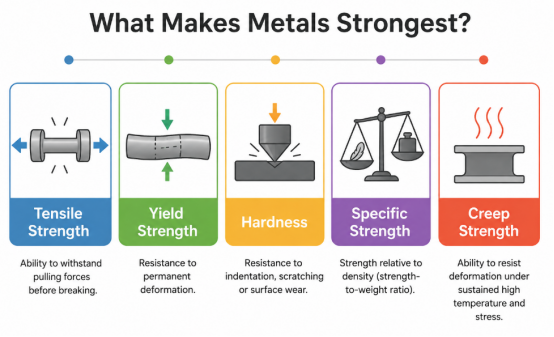
The strongest metals are evaluated based on a few mechanical properties. It is the magnitude of these properties that determines how strong a metal is. Being aware of these aspects allows manufacturers to make wise choices in material selection. Some of the aspects that determine the strength of metals include:
Tensile Strength
Tensile strength is the magnitude of how much you can pull a metal before it breaks. It means that if the metal has high tensile strength, it won't break easily under tension. Strongest metals like maraging steels or Inconel have a very high ultimate tensile strength. They can support exceptionally heavy loads under extreme conditions.
Yield Strength
Yield strength is the point at which a metal starts to deform permanently. Strongest metals have a high yield strength. They remain firm even when a lot of load is applied to them. This makes them suitable for applications requiring extreme rigidity.
Hardness
Hardness is basically resistance to scratch or indentation. Strongest metals like chromium and tungsten are exceptionally hard. They weigh 8 and 9, respectively, on Moh's scale. Their alloys are highly suitable for indentation-resistant or machining applications.
Specific Strength
Specific strength can be defined as the relation between tensile strength and density. It is a proportional relationship between the strength and mass of a material. In industries that require a high strength-to-mass ratio, specific strength is a significant aspect to consider. Examples of high-specific-strength metals include Ti6Al4V alloy and 7075 aluminum.
Creep Strength
Creep strength refers to the resistance to deformation when subjected to stresses at high temperatures over a long period of time. Superalloys like Inconel are considered one of the strongest metals in this regard. These alloys show an excellent performance to stress and heat. High creep strength metals are preferably used in jet engines and nuclear power plants.
Maraging Steel: The Strongest Metal for Toughness
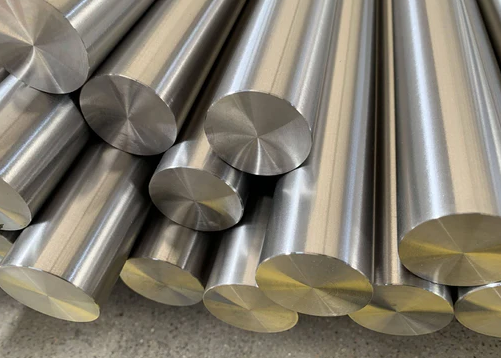
Maraging steel is one of the strongest metals. A high strength and toughness is imparted in it by a special heat treatment. This process makes it tough without making it brittle. It can handle heavy stress and hard hits. Because of this, maraging steel is used for demanding applications such as aerospace structural components, tooling dies, and military hardware.
Why Maraging Steel Is So Strong?
The word Maraging is derived from two words: “Mar “and “ageing”. “Mar” refers to the martensite phase. “Ageing “implies that this phase is slowly created after a heat treatment cycle. Before forming, freshly produced maraging steel has good formability. With the passage of the ageing process, it attains an exceptionally high yield strength in the order of 2000 MPa. It is tough and strong.
Toughness of Maraging Steel
Maraging steel demonstrates notable resistance to cracking and can absorb significant impact loads. This characteristic further underscores its suitability for high-stress environments. This is why it is used in high end industries, like military applications, aerospace parts, and high performance drilling.
Applications of Maraging Steel
The exceptionally high yield strength and toughness of this strongest metal deploy it in high-grade military applications. In other areas where very strong metals are required, maraging steels are used. Examples include drills in oil and gas extraction, landing gears in aircraft, high-performance shafts in automobiles, etc.
The table below gives properties data for maraging steel:
|
Property |
Range |
Applications |
|---|---|---|
|
Density |
8.0 g/cm³ |
Heavy industrial molds |
|
Yield Strength |
1800 - 2000 MPa |
Aerospace and Defense |
|
Hardness |
50- 55 HRC |
High -speed tools |
Tungsten: Best for Tensile Strength
This metal is one of the strongest metals in existence. It is capable of withstanding extremely high temperatures. The reason this tungsten is considered very unique. It has an incredible tensile strength and thermal stability. Its melting point is around 3400° C. This makes it one of the best-performing metals under thermal stress.
Is Tungsten the Strongest Metal on Earth?
Tungsten is one of the strongest metals on earth in its pure form. It weighs 9 on the Moh's hardness scale. But, it does not mean that it is the strongest in every aspect. It is relatively brittle, which might limit its applications.
Tungsten Carbide vs Tungsten
Tungsten carbide is very hard and does not wear out easily. It is often used to make cutting tools. Pure tungsten is strong, but when it is chemically combined with carbon it forms even stronger tungsten carbide.
The following table shows the differences in hardness and tensile strength between the two metals.
|
Property |
Hardness |
Tensile Strength |
|---|---|---|
|
Tungsten (pure) |
36 to 50 HRC |
900 - 1,500 MPa |
|
Tungsten Carbide |
69 to 81 HRC |
1800- 2200 MPa |
Titanium: Best Metal for Strength-to-Weight Ratio
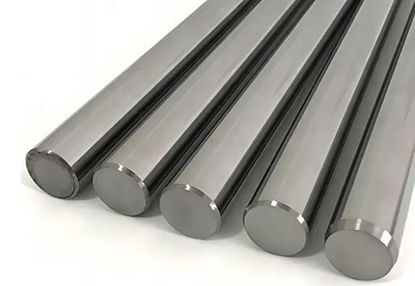
The high strength-to-weight ratio of titanium alloys makes them attractive in numerous low-weight applications. The use of titanium alloys is especially important in CNC components, aircraft, and mechanical devices.
Lightweight Feature: Specific Strength
The key feature of titanium is its low density of around 4.5g/cm³. At such a low density, its strength compares with common steel grades. As an example, a steel component with a density of 7.8g/cm³ weighs almost double than a titanium component with a similar dimension. This aspect of being both light and structurally strong makes titanium an ideal metal to use where weight is an issue.
Titanium CNC Parts: Specific Strength Matters
Materials such as Ti-6Al-4V alloys are specially used precision engineering. They offer a good durability, fatigue and deformation resistance along with a lower weight. These features contribute to the overall importance of titanium alloys.
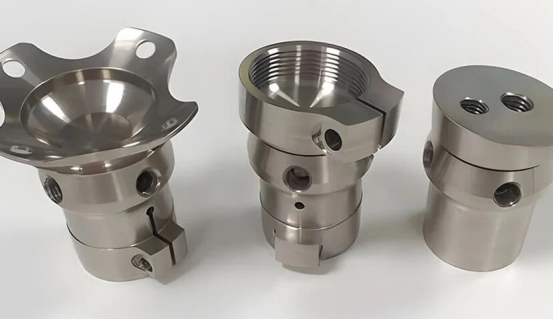
Below is a list of some uses of Ti-6Al-4V depending on their properties.
|
Property |
Ti- 6Al-4V Value |
Application Example |
|---|---|---|
|
Density |
4.43 g /cm³ |
Aircraft wings , Defense |
|
Tensile Strength |
950 MPa |
CNC parts |
|
Specific Strength |
High |
Lightweight industrial parts |
Steel: The Strongest for Fracture Toughness
Steel is the most versatile metal in the strongest metals list. It has a lot of grades and classifications. It's low cost, strong, formable, and tough. The outstanding feature of steel is its high fracture toughness, which results from the careful balance in its alloying composition and heat treatment.
Why Steel Has High Fracture Toughness
Steel resists cracking and tends to absorb the energy of shock. Instead of breaking instantaneously, steels deform to resist cracking. Even if a crack generates, steels make the crack tips blunt to impede the progress of the crack. Hence, a lot of applications reap the benefit of the high fracture toughness of steel.
Steel Applications: High Fracture Toughness
There are a lot of applications of steel. When I say “a lot of”, it actually means a lot. Out of all the strongest metals, steels have a giant share of around 90%. It is used in construction industries in the form of angles, channels, rebars, and other structural elements. It is used in heavy industries like ship building, industrial machines, oil and gas and many others. That's not all. Steels are extensively used in aerospace, automotive, high-tech applications, the medical industry, and locomotive. The list of applications is endless.
|
Steel Type |
Fracture Toughness |
Usage |
|---|---|---|
|
Alloy Steel |
80- 100 MPa |
Automotive Components |
|
Tool Steel |
50 -60 MPa |
High-speed Tools |
Inconel: The Best Alloy Against Creep Failure
Inconel maintains a high tensile strength at a high temperature range between 700°C to 1000°C. Because of such property, Inconel alloys are ideal for use in areas prone to creep, for instance, in turbines, valves, and other high temperature processing plants.
Creep Strength of Inconel
When compared to other materials like steel and titanium, the Inconel series is much more resistant to oxidation and creep deformity at elevated temperatures. As an example, Inconel 718 can withstand 550 MPa at 650 OC for up to 300 hours.
Inconel vs Other High-Temp Metals
Creep resistance, together with anti-oxidation properties, results in Inconel's durability during long-term operation. Other high-temperature metals include stainless steels, hastelloy, titanium, and tungsten. In comparison, no other metal comes close to Inconel in terms of creep resistance. Steels maintain good strength at room temperature, but they tend to soften at high temperatures. Hastelloys are good for medium temperature ranges. They are basically designed for chemical inertness. Refractory metals like tungsten can withstand fairly high temperatures, but they become brittle.
Applications of Inconel
The following table shows a few applications of Inconel based on its properties.
|
Property |
Range |
Applications |
|---|---|---|
|
Melting Point |
1,350 -1,425°C |
Turbine Blades |
|
Creep Strength |
450- 600 MPa |
Chemical Valves |
|
Density |
8.4 g /cm³ |
Aerospace, Defense |
Chromium: The Hardest Pure Metal
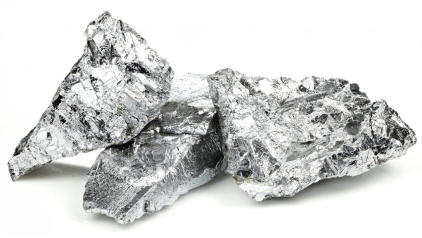
The metallic element chromium has very high hardness. It has a magnitude of 800 HV. Chromium is applied as a protective covering in situations where toughness against frictional wear is required. However, being a fragile metal, it does not offer enough strength against mechanical stresses. On the other hand, its ability to resist surface wear is one of its valuable properties.
Why Chromium Has High Hardness?
Chromium is very hard and resistant to wear. It has a unique crystal lattice structure. It possesses metallic bonds that prevent movement dislocations. It increases the ability of the element to resist physical damage and indentation.
Limitations: Brittleness
Though chrome has good wear resistance, its brittleness makes it liable to fracture. It is generally not suitable to withstand sudden impacts or heavy mechanical stress. The balance of hardness and strength forms an important factor while considering the practical uses of chromium.
How to Choose the Strongest Metals for Your Project?
Choosing the right metal for production or engineering purposes depends on numerous considerations. Among them is the strength of the metal, its location of use, how easy it is to work with, its cost, and whether or not it is environmentally friendly. The choice of the proper metal is crucial not only for successful performance of the finished product but also for efficiency and environmental reasons.
Define Required Performance of Parts
While selecting a material for a particular application, it should satisfy the key performance parameters. For instance, turbine blades must be able to withstand high impact loads and high temperatures. In some applications, like forging, a material must resist indentation at high temperature. But, for practical purposes, the cost must also be within economic viability.
Consider Machinability
High-precision parts are manufactured by CNC machining. Strongest metals need careful attention to machinability. Hard metals like chromium or tungsten are very difficult to machine. Some special grades of steel, like Maraging steel, can be machined before ageing. Other materials, like titanium, might be easier to machine. Always consult a specialist to check the feasibility. Tuofa has rich experience in machining various hard materials, if you need special materials for your high-performance parts, Tuofa will be your first choice.
Costs
Cost versus performance considerations in choosing materials are very significant. Steel is frequently chosen based on its relatively low cost. Materials like titanium are expensive. But the weight saving and energy efficiency in the long term would pay off. In critical applications like the landing gear of an aero plane, human safety concerns overshadow the cost factor.
Conclusion
Selecting a suitable strong metal for an industry-related project requires considering factors such as tensile strength, toughness, weight, machinability, and price. It often depends on the interplay of the above factors within the context of each particular project.
As an experienced manufacturer, Tuofa CNC specializes in selecting cost-effective materials for our customers. Hope you can find your desired “strongest metal” after reading this article, also, any other detailed information about other materials, feel free to contact us for choosing suitable materials for your CNC machining projects.
FAQs
Is carbide stronger than metal?
Indeed, carbide metals like tungsten carbide have better hardness and wear properties than most pure metals because of their special atomic structure that allows them to stay intact under harsh conditions.
Is bronze the strongest metal?
No, bronze is not the strongest metal. This may be because of the historical importance associated with the toughness and versatility of the metal. In contemporary times, there have been materials that can be considered stronger than bronze metal.
What is the strongest metal alloy on earth?
It is well known that Maraging steel is one of the strongest metal alloys ever developed by man today. The tremendous strength of the alloy is owed to the aging process that makes the metal tougher and more ductile at the same time.
 Permanent Magnets and Residual Magnetism in CNC Machined Parts