Tel/WeChat:
  Email:


 Home
HomeHastelloy C276: Guide for Understanding, Selection & Machining

 Published:Apr 29,2026
Hastelloy C276 is known for its remarkable corrosion resistance in harsh environments. If your project includes working under harsh chemical conditions. You can pick HASTELLOY C-276. Out of its remarkable corrosion resistance capability and ease of fabrication, it's becoming manufacturers first choice. You can understand its demand from its market value, which hit USD 3.8 billion in 2025. But why should you choose Hastelloy C276 or where it is used? Here we will help you understand the hastelloy c276 in detail.
What Is Hastelloy C-276?
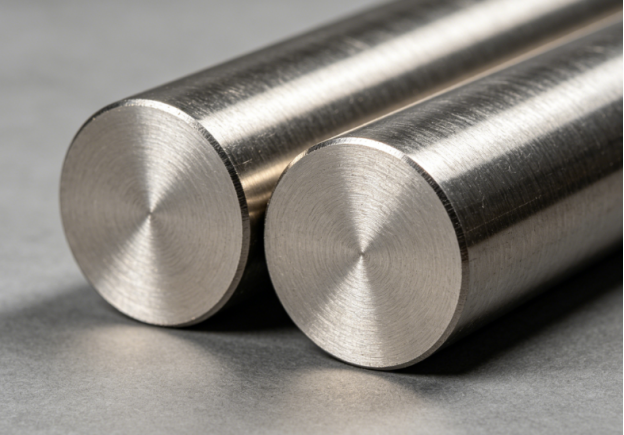
Alloy C276 is the first wrought nickel-chromium-molybdenumbased alloy. Presence of a high amount of chromium and nickel makes it resistant under oxidising or reducing environments. By making a passive layer over the surface of material. Unique chemical composition of C 276 hastelloy is what makes it fight against stress, crevice corrosion and pitting.
Chemical Composition of Hastelloy C-276
As said before, what makes Hastelloy so special is its unique chemical composition. For instance, a 15-17% presence of molybdenum makes it resist pitting. Chromium helps it maintain its structure under oxidising environments by forming chromium oxide (Cr₂O₃) layer. Finally, the low carbon content prevents the formation of carbides during welding. Making its forming and welding more efficient. Here you can view the detailed chemical composition of Alloy C276:
|
Element |
Hastelloy C-276 Composition Range / Limit (%) |
|---|---|
|
Nickel (Ni) |
Remainder (base metal) |
|
Molybdenum (Mo) |
15.0 - 17.0 |
|
Chromium (Cr) |
14.5 - 16.5 |
|
Iron (Fe) |
4.0 - 7.0 |
|
Tungsten (W) |
3.0 - 4.5 |
|
Cobalt (Co) |
≤ 2.5 |
|
Manganese (Mn) |
≤ 1.0 |
|
Carbon (C) |
≤ 0.01 |
|
Vanadium (V) |
≤ 0.35 |
|
Phosphorus (P) |
≤ 0.04 |
|
Sulfur (S) |
≤ 0.03 |
|
Silicon (Si) |
≤ 0.08 |
What Is C276 Material Equivalent to?
C276 is exceptional material, but do you know there are some equivalent materials to this? Engineers utilise them instead of hastelloy to overcome the sourcing issue and any specific certification requirements. Let's know about these equivalents so you can also pick one for your project if you face any sourcing issue.
These materials have the same alloy system (C276) but under different standardisation bodies.
|
Standard / System |
Equivalent Grade |
Region / Code System |
Material Type |
Engineering Relevance |
|---|---|---|---|---|
|
UNS |
UNS N10276 |
USA (Unified Numbering System) |
Nickel-based alloy |
Accepted for procurement and documentation |
|
EN Number |
2.4819 |
Europe (DIN/EN) |
Wrought Ni-Cr-Mo-W alloy |
Specified in European projects |
|
EN Name |
NiMo16Cr15W |
Europe (Chemical designation) |
Nickel-molybdenum-chromium alloy |
Useful for material selection and chemical verification |
|
Chinese Standard |
NS334 |
China |
Corrosion-resistant nickel alloy |
Commonly used in Asian markets; suitable alternative when sourcing constraints arise |
Hastelloy C276 Material Properties
Properties of hastelloy directly influence its machining. For instance, because of low thermal conductivity, tool wear occurs via heat buildup during cutting. Each property has different impact on its machining. We are going to discuss here in detail so you can understand why alloy C726 is a top pick as well as its machining requirements.
Physical Properties of Hastelloy C276
Here we are gonna discuss the three main physical properties influencing the maching of hastelloy c276:
Density
When it comes to density of this superalloy, it takes edge over aluminium (~0.098 lb/in³) and steel (~0.284 lb/in³). Showing a density of 0.296 lb/in³. Evidencing its high strength and hardness. Finding its applications for components working under high stress and corrosive surroundings. Such as valves and reactors in petrochemical industries.
But wait, although its high density is a win, it makes its machining a bit difficult. Such high dense material offers toughness of 160-220 HV with low thermal conductivity, requiring specialised tooling and techniques. That's why CNC machining with a specific feed rate and cutting speed is used for efficient machining of this corrosion-resistant alloy.
Melting Range
Alloy C276 is capable of maintaining its structural integrity even at elevated temperatures. It's due to its high melting range of 1325-1370°C. Finding its applications in conditions with high-temperature stress and corrosive environments is challenging. If you want material for your project that can outperform Monel 400 and 316 steel. We suggest you go with HASTELLOY C-276.
Thermal Conductivity
As said before c276 alloy shows low thermal conductivity. Its as low as 67.9 Btu•in/ft²•h•°F. Such low thermal conductivity combined with the work-hardening capability of hastelloy makes its machining challenging. Hence, requiring high-edge, strong cutting tools. Preventing tool from bending or damaging.
During CNC machining engineers utilise cryogenic CO₂ cooling or advanced lubrication (MQL - Minimum Quantity Lubrication) to prevent excessive heat buildup at tool and material interface.
But this low thermal conductivity benefits applications requiring thermal stability. For example, in lue gas desulfurisation (FGD) systems. Low heat transfer helps minimise thermal gradients. As a result thermal stress lowers service life extends under acidic, high-temperature gas handling
Hastelloy C276 Mechanical Properties
Just like physical properties, mechanical properties of hastelloy also have impact on its performance and machining.By understanding these, you can understand machining and capability of this material more deeply:
Ultimate Tensile Strength
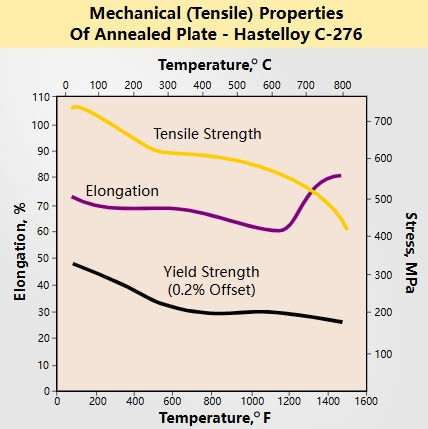
Hastelloy C276 is ductile with its ultimate tensile strength of 705 - 870 MPa. Enhancing its capability to withstand high stress in harsh conditions. At the same time, its plastic deformation during machining can cause adhesion of material to cutting tool.
Resulting in build-up edge (BUE). So when dealing with this material, you need high-speed coolant fluid to remove this buildup. Such high tensile strength requires specialised tools made with carbide for its cutting.
Yield Strength
With high tensile strength of 315-405 MPa, alloy C276 shows resistance to plastic deformation under high stress. Making it suitable for applications demanding structural stability under pressure. Such as in high-pressure reactor vessels. Such high yield strength also causes a hindrance in initiating the cutting of alloy while aching. Requiring high initial cutting force to prevent a rough surface finish.
Hardness
With its hardness of 160 - 220 HV, C276 hastelloy is considered toughest material to machine. Its machining capability is just 20% compared to SS 316. Requiring strong cutting tools and a specialised team to handle its machining effectively.
Elastic Modulus
Can you imagine this superlative shows an elastic modulus equivalent to elastic modulus of steel? 200 - 210 GPa modulus makes this material stiff. I can withstand high pressure such as in flanges and sealing surfaces. Here it helps retain contact pressure for leak-tight joints.
Hastelloy C276 in annealed condition is commonly used for CNC machining. Its tensile strength, yield strength and elongation differ with the change of temperature.
What Is Hastelloy C276 Used for?
You can't even imagine how vast the applications of hastelloy. Finding its use in number of industries out of its high corrosion resistance, ease of fabrication and stress-bearing capability.
Chemical Processing Industry
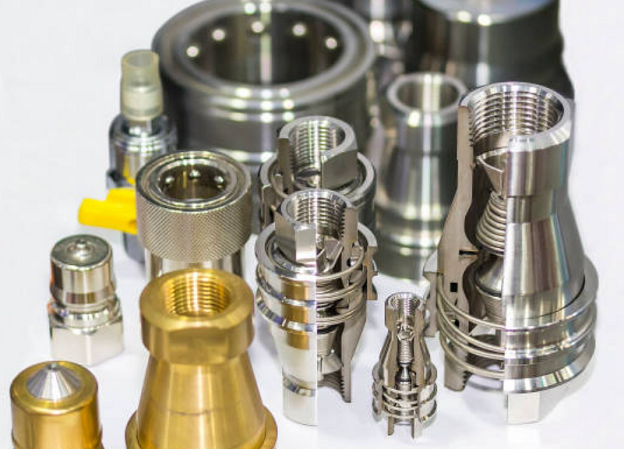
Hateloy is resistant to corrosion and pitting in both oxidising and reducing environments. Where components interact with organic, inorganic or mineral acids. So in such settings, like in chemical processing industries, engineers prefer using valve seats, valve stems and injection nozzles made with Hastelloy C276.
Marine Engineering
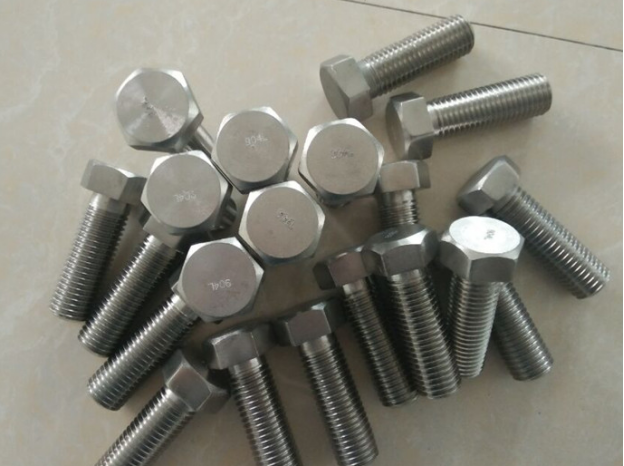
Since hastealloy is resistant to localised corrosion in chloride environments, it find its applications in marine engineering. Where components like seawater-resistant hastelloy c276 fasteners, small valve components and probe housings are manufactured using Alloy C276.
Pharmaceutical Industry
In pharmaceutical industry, a number of precision components are manufactured with C276 alloy through CNC machining:
- Sterile fittings are manufactured using c276 alloy as it prevents deformation and corrosion. With such a Hastelloy C276 fittings, you can ensure leak-tight, hygienic connections.
- Precision Fluid Connectors: To maintain tight tolerances and resist chemical attack. Ensuring accurate and reliable fluid transfer.
- Micro-Dosing Nozzles: To retain precise geometry under pressure and resist clogging, micro-dosing nozzles are made with this alloy.
Energy Industry
In energy industry instrumentation connectors, small reactor fittings and choke valve trim components are built using Hastelloy C276. Its because of its high mechanical strength, excellent corrosion resistance, and stability under extreme pressure, temperature, and chemically aggressive fluids.
Hastelloy C276 vs Other Alloys
You might be considering why to pick hastealloy over other most sed alloys in the manufacturing industry. Let's get to know and compare hastealloy with other alloys:
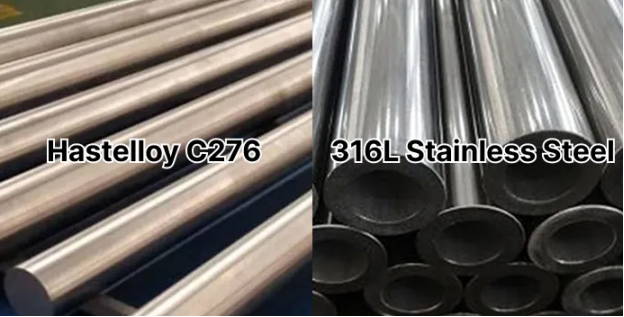
Hastelloy C-276 vs Stainless Steel
Although stainless steel offers excellent hardness and stress resistance, it's prone to corrosion in reducing environments. That's where C-276 material takes over the edge. If you need high strength and exceptional corrosion resistance, choose Hastelloy.
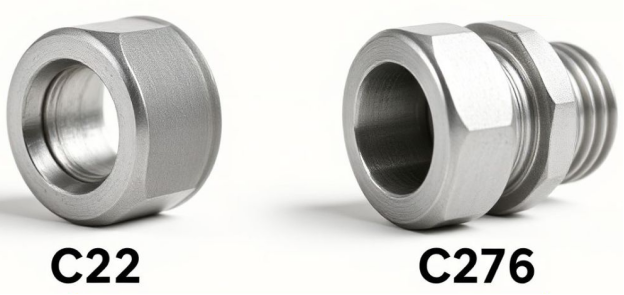
Hastelloy C22 vs C276
When comparing C22 and C276, C276 is the first choice for its weldability, which is a result of its low carbon content. Not only this, but it's more effective to prevent corrosion in reducing agents, like in marine industry.
Hastelloy B2 vs C276
Compared to B2, which provides resistance to corrosion and pitting only in reducing environment. Hastealloy offers resistance to crevice corrosion and pitting in more wider oxidising and reducing environments.
Hastelloy B3 vs C276
You can pick b3 for components demanding moderate strength and resistance to corrosion in reducing surroundings. But c276 is first choice of engineers where they need high strength, hardness and resistance over a wide range of surroundings. iss effective for applications requiring
Alloy 20 vs Hastelloy C276
You can choose Alloy 20 if you need cost-effective material offering sulphuric acid resistance. If cost is not a concern, use Hastelloy C276 to prevent extreme corrosion and mechanical stress.
When to Choose Hastelloy C276?
So under what circumstances or for what features you opt for Hastelloy C276? Here are three major causes due to which you can go for hastealloy for your next manufacturing project:
Highly Corrosive Environments
If your project includes interaction of components with aggressive chemicals or petrochemicals. It can cause pitting and corrosion to the components manufactured using stainless steel. So for harsh conditions where high stress-bearing and resistance to corrosion is required choose Hastelloy C276.
As its high content of molybdenum, chromium and tungsten makes it resistant to corrosion. By making a passive layer that hinders any further interaction of these chemicals with components.
When Stainless Steel Fails
Stainless steel (SS) forms passive layer of Cr₂O₃ under harsh conditions. It fails to prevent localised corrosion in chloride of H₂SO₄ environments. These ions or acid interact with the layer and cause corrosion. In that case Hastealloy c276 develop mixed passive layers of Chromium oxide (Cr₂O₃) and Molybdenum oxides (MoO₃ / MoO₂). Preventing localised corrosion.
Cost-Insensitive Applications
For cost-intensive applications where maintenance and downtime cost more than material cost. You should pick Hastelloy for minimising downtime and maintenance needs.
Hastelloy C276 Machinability
Machinability of hastelloy is also a big question: how to machine it and ease of machining it. Let's get to know about its matching.
Is Hastelloy C276 Easy to Machine?
No, machining Hastelloy requires specialised tooling and expertise. The material possesses high hardness, tensile strength and low thermal conductivity, making it difficult to machine alloy C276 hastelloy effectively.
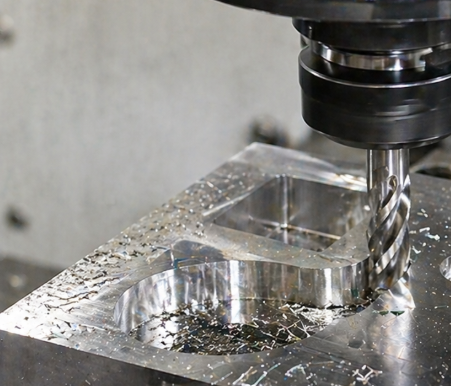
Suggested Machining Parameters for Hastelloy C276
Here are the suggested parameters by Toufa experts to machine:
|
Operation |
Surface Speed (ft/min) |
Feed Rate |
Depth of Cut (in) |
Coolant |
|---|---|---|---|---|
|
Turning |
60-70 |
0.005-0.010 in/rev |
0.05-0.10 (rough), 0.010-0.015 (finish) |
High-pressure (1000-3000 psi) |
|
Milling |
50-100 (carbide) |
0.002-0.004 in/tooth |
0.05-0.10 |
HPC or MQL |
|
Drilling |
30-35 |
0.004 in/rev |
0.05-0.10 |
Through-tool coolant delivery |
Cutting Speed
While machining alloy C276 Hastelloy, cutting speeds must remain low to reduce tool wear and heat buildup. At high speed heat builds at cutting point, leading to work hardening. Here is suggested speed:
Feed Rate
Feed rates must be stable and continuous to avoid rubbing and surface hardening. If the feed rate is high, it leads to excess load on tool, resulting into tool failure. High feed rate also results in dimensional inaccuracies. As it causes deflection of tool or workpiece, it causes tolerance loss.
Depth of Cut
While machining C276 alloy, a below-the-surface depth of cut is applied for efficient material removal. This helps in avoiding excessive tool stress.
Coolant Type
Low thermal conductivity of hastelloy traps heat at the cutting zone. Accelerating tool wear and work hardening. So, you should choose coolant strategically based on how heat is generated, chip formation and accessibility of the cutting interface.
Practice: Common Machining Problems & Solutions
Rapid Tool Wear
Machining Hastelloy requires specialised tools. Since its quite hard and have remarkable tensile strength. Tools made with carbide are preferably used. But still the tool life is unpredictable. While machining C276, the following issues are observed:
- Insert chipping before cut completion
- Sudden tool failure during finishing
- Rapid degradation of cutting edges
In order to resolve these issues we recommend using tools that have slightly edged hones of about 0.001. You can also use MQL and high-pressure coolant. This will help in reducing thermal distortion by minimising friction.
Work Hardening
Out of its high tensile strength, it shows plastic deformation at edges. Resulting in work hardening while machining. To avoid this issue, a constant feed rate is suggested. Also, premium carbide inserts should be used.
Poor Surface Finish
Another problem that engineers face while machining C276 alloy is uneven or poor surface finish. It results from combined effect of work hardening, tool wear and heat retention. Most commonly observed surface issues are:
- Inconsistent surface finish quality
- Missed or drifting dimensions
- Poor thread quality in tapped holes
Chip Control Difficulty
Cutting C276 is difficult because it has high tensile strength and ductility. Instead of breaking at once, it forms long, stretched chips. To resolve this issue manufacturers use high-quality chip breakers specially designed for nickel based alloys.
Does Hastelloy C276 Need Surface Treatment?
Usually Hastelloy C276 does not need any sort of surface treatment. Either coating or plating as its already highly resistant to corrosion and can bear high stress.
When Hastelloy C276 Parts Need Surface Treatment?
As said before, alloy c276 does not typically require any surface treatments. But its parts may undergo surface treatments to enhance their smoothness, flow performance or sealing effectiveness is required. Next we will discuss these methods.
Typical Surface Treatment Methods
Typically parts made with HASTELLOY C-276 undergo two surface finishing processes:
Polishing
Polishing is done where surface finish has direct impact on flowability and hygiene of components. Such as in injection nozzles / micro-dosing nozzles and in precision valve seats.
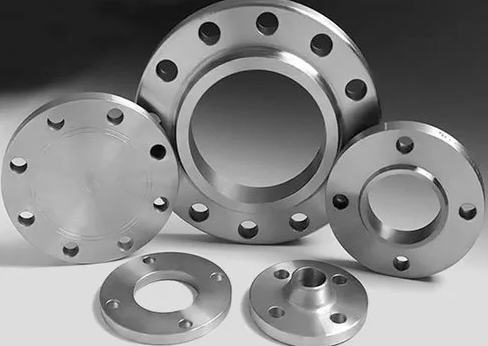
Coating
In some cases the components made with h=c276 are subjected to coating. Its to improve wear resistance in mechanically stressed components. For example, in high-friction sealing components.
Who Can Manufacture Hastelloy C276 Precision Parts?
Manufacturing hastelloy precision parts is a task that requires both technology and expertise. Only manufacturers with a highly qualified team of engineers and operators with specialised tooling can hand machine this alloy.
Good CNC Machining Capability
Manufacturers who have experience and excellent CNC machining capability, especially with nickel-based alloys, are capable of machining Hastelloy. It demands advanced CNC capability and deep material knowledge. If they are not familiar with machining such material, they will end up losing their cutting tools and wasting a lot of material.
Tuofa precision CNC machining is supported by:
- Advanced multi-axis CNCsystems
- Optimized cutting strategies for high-performance alloys
- Skilled operators familiar with Hastelloy, Inconel, and other heat-resistant materials
Flexible Production
Hastelloy C276 parts are often required in low volume, high precision. So a good manufacturer will offer prototypes as well as batch manufacturing. Manufacturers who are capable of producing complex geometries and tight tolerances
Quick Lead Time
Manufacturers who have a track record of quick lead times without making unnecessary delays are capable of producing components using hastelloy.
Standardized Quality Control System
Precision Hastelloy parts require strict quality assurance. As they are used in critical applications. We maintain quality at Toufa with our standarized inspection methods. We ensure process consistency across production batches.
Conclusion
Hastelloy C276 most in-demand, high-strength, exceptionally corrosion-resistant material. If your project includes interaction of your components with harsh conditions, like in petrochemical and marine industries. Hastelloy is a great choice. Offering a broad range of corrosion resistance in chloride, acidic and basic environments. You can reach us for more details of components manufactured using hastelloy c276 by Toufa.
FAQ
How to weld Hastelloy C276?
To weld hastelloy consider these factors:
- Weld Hastelloy C276 using TIG or MIG with low heat input.
- Maintain strict cleanliness and use ERNiCrMo-4 filler metal.
- Keep interpass temperature low to preserve corrosion resistance.
How to cut Hastelloy C276?
Efficient cutting of Hastelloy requires specialised tools made with carbide. You should maintain a continuous feed at standard speed. Otherwise, excessive stress can lead to tool wear.
Is Hastelloy harder than stainless steel?
Yes, it is, its out of its high content of nickel and molybdenum. Both components provide exceptional strength and hardness to the material.
 Inconel 600: Properties, Composition, Applications & CNC Machining