Tel/WeChat:
  Email:


 Home
HomeSerial Production: How It Benefits CNC Machining Projects

 Published:Jun 18,2026
To produce a number of parts with the same quality, serial production (also called series production) is the effective production model. Read this article to learn what is serial production and how it achieve stable production, shortens lead time, and reducing costs in CNC machining.
What Is Serial Production?
Serial production, known as series production, is a manufacturing method that is used to produce a batch of parts with the same quality. It doesn’t limit the number of parts. Low volume or high volume of parts produced with the same quality can be called serial production if they use same standard, design, and manufacturing process.
Purpose of Serial Production in CNC Machining
The production of identical parts with high precision, stable quality, and minimum cost per part is the purpose of the serial production method. Serial production results in:
- Reduced production cost per part
- Increased machining efficiency
- Supported industrial-scale demand
- Repeatable accuracy
Is Serial Production the Same as Continuous Production?
No, they are different.
- If the production is kept ongoing non-stop, 24/7, without any interruption, it is called continuous production.
- But in the case of serial production, a fixed number of identical parts are produced in one batch.
Characteristics of Serial Production
Let's discuss some of the main characteristics of serial production in this section of the article:
Repeat Production
This is the core characteristic of serial production, i.e., repeated production of identical parts with consistent quality. It does not involve redesigning a part every time.
Standardized Manufacturing Process
In serial production, a standardized manufacturing process is used in which the CNC program, tool selection, machining parameters, fixtures and workholding, inspection methods, and material specification are strictly controlled throughout the batch production.
Quality Consistency
Quality consistency is one of the characteristics of serial production because identical parts of the same quality are produced in a batch using the same equipment, CNC program, machining parameters, etc.
How Does Serial Production Work in CNC Machining?
Serial production in CNC machining follows a controlled process that starts with design validation and continues through process approval, in-process monitoring, final inspection, and batch release.
Step1: Test the Design by Prototyping
The very first step in serial production in CNC machining is the testing of the actual design by prototyping. The purpose of this testing is to validate the design and other specifications. Some issues can be identified through prototyping before the actual production starts:
- dimensional inaccuracies
- machining challenges
- material issues
- performance limitations
Achieving greater consistency, reduced waste, and lower production costs can be ensured during CNC machining when testing is done through prototyping.
Step2: Set up Machine Programming & Process
This second step involves the creation of toolpaths, selection of cutting parameters, selection of suitable tools, and selection of quality control procedures. A correct setup of machine programs and processes makes it easy to achieve consistency in parts production, minimized machining errors, reduced cycle times, and improved overall production efficiency.
Step3: Start Batch Production
Before batch production, the design of parts should pass the prototyping test and first article test. The first article helps confirm that the drawing, machining program, workholding method, material requirement, tolerance, and functional features are suitable for repeat production. After above two tests, the batch production can start.
Step4: Inspect Quality of Parts
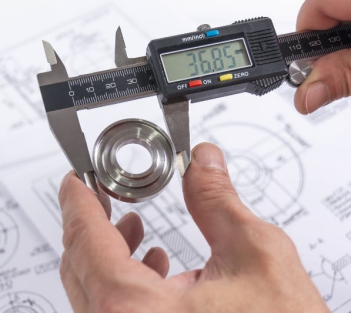
In serial production, the inspection of part quality is the most important step before leaving the factory or before being employed in the applications. The inspection of parts is done using tools, such as a vernier caliper, micrometer, bore gauge, coordinate measuring machine, hardness tester, etc.
- The inspection tools may vary with respect to the part's geometry and its applications.
Serial Production vs Mass Production vs Small Batch Production
This section provides insights into how serial production is different than mass production and small batch production.
Production Volume
Production volume refers to the number of parts produced in serial, mass, or small batch production.
|
Aspect |
Serial Production |
Mass Production |
Small Batch Production |
|---|---|---|---|
|
Production Volume |
Medium volume |
Very high volume |
Low volume |
|
Typical Quantity per Run |
Hundreds to thousands |
Thousands to millions |
Tens to hundreds |
|
Production Frequency |
Repeated at intervals |
Continuous or near-continuous |
Occasional or on demand |
Design Flexibility
Design flexibility means which production method facilitates the design of the parts better.
|
Aspect |
Serial Production |
Mass Production |
Small Batch Production |
|---|---|---|---|
|
Design Flexibility |
Moderate flexibility |
Low flexibility |
High flexibility |
|
Design Changes |
Possible between series |
Difficult and costly |
Easy to implement |
|
Product Customization |
Limited options |
Standardized products |
High customization |
Cost
Manufacturing cost refers to the production method that produces the same quality parts in a more cost-effective way.
|
Aspect |
Serial Production |
Mass Production |
Small Batch Production |
|---|---|---|---|
|
Unit Cost |
Moderate |
Lowest |
Highest |
|
Setup Cost per Product |
Moderate |
Low (spread over large volume) |
High |
|
Economies of Scale |
Moderate |
Maximum |
Limited |
When Should You Choose Serial Production?
Some factors that decide the selection of serial production. Since it requires a high initial setup cost, which includes fixtures, CNC programs, etc., that's why serial production should be chosen only when the following parameters are satisfied.
Design is Finalized
Since serial production is all about producing the same designed parts, that's why the very first step of finalizing the design should be completed. This step matters because no frequent changes in the setup can be made, tooling and fixtures are expensive, and process optimization is design-specific. So, serial production should only be chosen when the design has been finalized.
Need Repeated Orders
It is not wise to select serial production method when the order is only for one time, because the setup price of serial production is very high. In the case of repeated orders, serial production becomes a very good option because of the requirement of identical parts with the repeated consistency in the batches.
Consistent Quality Standards
When the requirement is about consistent quality standards, serial production is an ideal manufacturing method. It is an important factor because it:
- Ensures Interchangeability
- Supports standardized process control
- Prevents cumulative defects
- Reduces inspection and rejection costs.
Require Predictable Lead Time
Since in serial production, a fixed number of identical parts are produced in one batch, so it becomes easy to predict the lead time. So, when there is a requirement for predictable lead time, the serial production method should be used.
Quality Control in Serial Production
Let's learn how quality control inspection is done in serial production in this section:
First Article Inspection
First article inspection (FAI) is an important step in quality control in serial production, especially when it is related to a new product or new manufacturing process. It involves inspection and verification of the part produced with respect to specifications, drawings, tolerances, material requirements, and quality standards. It helps in determining manufacturing flaws early, verifying machine setup and programming, reducing scrap and rework, etc.
Control Critical Dimension
In this step, the dimensions, which are most important with respect to the part's functions, fit, and performance, are closely monitored. In serial production, this step is performed by:
- Performing frequent measurements during production
- Using calibrated measuring instruments
- Applying statistical process control
- Monitoring machine wear and tool wear
Sample Inspection
In this step, a small number of parts are inspected from a production batch. For instance, 5 random parts per hour are taken from the batch if 10,000 parts are being produced. Different inspection techniques are performed to find if there are any flaws. If no flaw is detected, production continues.
Traceability and Version Control
- The ability to track a part, component, or material throughout the manufacturing cycle is called traceability. Suppose a flaw is detected in a CNC-machined part; traceability is done to figure out which raw material batch was used on which machine by which operator and when.
- Version control means that the production department uses the latest approved design and CNC machine programs when changes are made in engineering drawings, CAD models, CNC programs, etc.
Key Factors that Affect Serial Production Cost
These are some of the key factors that affect serial production cost:
Material Selection
Material selection affects every stage of manufacturing.
- Raw material cost varies from material to material. For instance, Ti is far more expensive than Al.
- The machinability of every material is different, which affects the production cost.
- Then there are tooling costs and the ratio of material utilization and waste.
Tolerance Requirement
Tolerances in the parts are generally designed based on the part's application sensitivity. The parts to be used in critical applications, such as aerospace or surgical tools, often have tight tolerances. Tight tolerances refer to more machining time, so the serial production cost increases directly.
Part Design
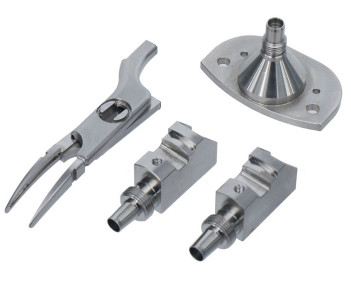
The geometry of the part is a fundamental factor in deciding the serial production cost. It's a simple rule: an easy geometry is easy to machine, so the serial production cost reduces in that case.
Set up and Tooling
CNC machining programs and the tools to be used during the manufacturing process are selected based on the material of the part, drawing, and required tolerances. The setup and tooling are different for Al and Ti metals because of their machinability.
Common Mistakes before Moving to Serial Production
If the mistakes are not covered before moving to serial production, it can lead to big failures. These mistakes are important to cover before moving to serial production:
Not Verifying the Design
When the designs are not verified before moving to serial production:
- Small errors become big production problems
- Manufacturing limitations are often ignored
- Cost of changing the design later becomes very high
- It becomes difficult to maintain quality consistency
That's why proper verification of the design should be done before entering serial production.
Ignoring Design for Manufacturability
Design for manufacturability closes a gap between what is designed and what can be consistently manufactured in serial production. Ignoring DFM leads to:
- Increased manufacturing cost
- Reduction in maintaining quality consistency
- Higher tool wear and machine load
- Longer lead times
To avoid these issues, it is better not to ignore the design for manufacturability.
Inconsistent Drawing Version
If different people are working with different revisions of the same engineering drawing, it can lead to confusion, errors, and production defects. In simple words, it is a mistake when the design is changed; not everyone gets the same updated information.
How to Choose a Supplier for Serial Production CNC Parts?
The following tips should be understood before choosing a supplier for serial production:
Check CNC Capability
Verify whether the supplier's machines, skills, and processes are able to consistently produce parts in the required quality, quantity, and tolerance at scale.
Evaluate Quality Control Processes
Check whether the supplier has the tools required in quality control processes, because this point is very important for the part's performance and safety during the application.
Confirm Repeat Production Experience
Since serial production is all about manufacturing the same parts with respect to design, specifications, etc., that's why verify first whether the supplier has produced similar or the same parts multiple times in past batches successfully.
Review Lead Time
Delays in mass production affect proper planning of inventory and demand. To avoid any negative effect, it is better to review the lead time with the supplier before choosing them for serial production for CNC machining projects.
Conclusion
Generally, serial production method is employed when the requirement is the production of identical parts with same design and specifications. CNC machines remain the first choice in serial production because of their ability to machine every material efficiently using their automatic machining operations feature. During serial production, first article inspection is done, followed by sample inspection, traceability, and control versions. Some features, such as supplier's CNC machining capabilities, past experiences, and lead time, should be checked carefully before choosing a supplier for serial production.
For projects that may move from prototype to small batch or repeat production, Tuofa provides flexible CNC machining support with material selection, process planning, surface finishing, inspection, and packaging coordination. Instead of treating each order as a one-time job, we help customers build a more stable path from early validation to repeatable CNC part production.
FAQ
Is serial production the same as mass production?
The answer is no.
- Serial production refers to producing parts in repeated batches with possible changes between batches.
- Mass production refers to continuous, very high volume, and highly standardized production of parts.
Can serial production be low volume?
Yes, because serial production is not defined by volume; it is more about repetition in batches. A defined quantity per batch is produced, which can be small or large.
 Cloud Manufacturing: Making Custom Part Production Easier