Tel/WeChat:
  Email:


 Home
HomeCloud Manufacturing: Making Custom Part Production Easier

 Published:Jun 25,2026
Cloud manufacturing is a smart manufacturing model that can simply the procurement process through digital workflows. For example, you can easily make your orders through online file submission, quotation, and engineering communication.With AI, clouding manufacturing can be connected to the devices to provide real-time production data, and in the future, generative AI may help analyze drawings, clarify requirements, and support basic engineer feedback. This model also plays important roles in CNC manufacturing. Today, we will explain the importance, advantages and future trend of cloud manufacturing.
What Is Cloud Manufacturing Today?
Cloud manufacturing(CMfg) is a customer-demand-driven manufacturing model that can make the full production process easier to access and manage. For custom CNC machining, cloud manufacturing can be especially useful for high-mix, low-volume projects. It lets you submit multiple part files online, receive quotations and engineering feedback, and track the project from production to delivery through a simple online process.
With CMfg, you have access to manufacturing services, production resources and quotations in just a few clicks. You can get your project updates from anywhere in world. All you need is an internet-connected device. You might be thinking how it is different from cloud computing? or is it same like online manufacturing. Lets know this.
Cloud Manufacturing vs Cloud Computing in Manufacturing
Cloud computing manufacturing and cloud based manufacturing you might consider both terms same. But in actual, cloud computing manages and stores your factory information. Such as how your machines are performing, your inventory records, and maintenance information. This data is stored on cloud-based software. Allowing employees and managers to access it anytime from any location.
Whereas cloud manufacturing delivers manufacturing services to customers. Connecting designs, tools, and production capability of manufacturer with buyers. You can upload product designs and obtain instant quotations. Even you can schedule production, track orders, and access manufacturing resources remotely.
Cloud Manufacturing vs Online Manufacturing
Online manufacturing is interacting with manufacturers through their online presence. Like websites or social media. You get in touch with requests for quotes and communicate through some online portal.
But cloud-based manufacturing is advance form of dealing. Here you upload your CAD design and get automated AI-generated quote. You can even observe and track manufacturing of your product. But wait, how does such clod manufacturing work? Here is how does cloud manufacturing works.
How Does Cloud Manufacturing Work?
CMfg works by connecting a number of cloud-based software programs together in one place, including data storing, design generations, machine tracking, and AI-assisted quote generators. You can utilise such platforms by following these steps. Here is how you can connect with reliable manufacturers like Tuofa through CMfgs.
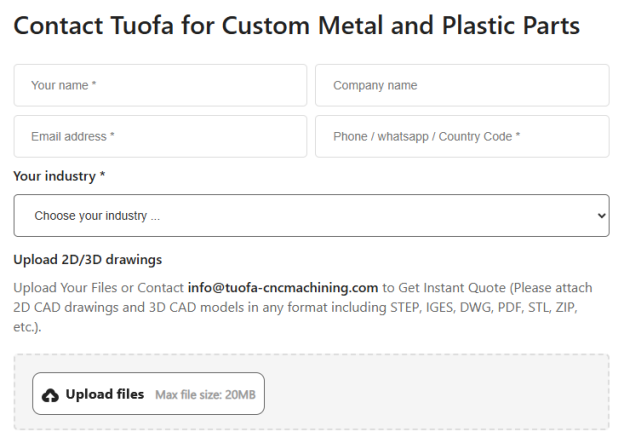
Step 1: Uploading CAD Files Online
You begin by uploading the CAD (Computer Aided Design) file of your component to your desired manufacturer online(website or App). You can upload CAD file in any of these formats, including STEP, STL, or IGES. After upload, you will set your other requirements, like material, surface finish, quantity and tolerance.
Step 2: Digital Quotation
Once you have set all your requirements. Cloud manufacturing platform will generate a preliminary quote based on:
- Part Geometry
- Selected materials
- Order Quantity
- Tolerance
- selected finishing options
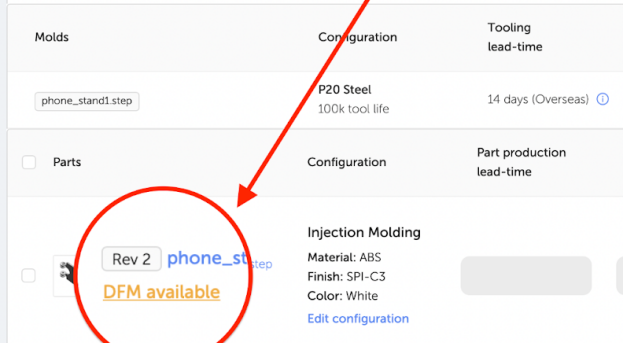
Step 3: DFM Review
In Cloud manufacturing AI assisted system also performs Design for Manufacturability (DFM) review. By analysing designed complexity and geometry thoroughly. It looks for wall thickness, edges, tolerance and material selected. And suggest either provided design will be feasible or it needs changes. You will also see suggestions to make th component's design more effective.
Step 4: Matching the Right Manufacturing Capability
In cloud manufacturing, you don't have to look for multiple manufacturers or valuate them manually. CMfg will do it for you in a few clicks. When design is finalised, system compares multiple manufacturers.
Checking their availability, machining capacity, cost, and location and finalising most feasible manufacturer for you. For instance, if your component is complete, it needs high precision. It will suggest you CNC manufacturing experts like Toufa CNC.
Step 5: Produce Parts
After approving manufacturer, manufacturing process begins and production starts. Through cloud manufacturing you can monitor production process any time and check progress. With real-time analysis you receive clearer updates on production progress and delivery status. Once order is completed, it will be packaged and delivered to you according to the confirmed delivery schedule.
What are the Main Benefits of Cloud Manufacturing?
When talking about cloud manufacturing benefits or why you should choose it. There are many reasons. Here we have put together some main benefits of CMFGs for you:
Faster Online CNC Quotation
In traditional manufacturing you need to send mail to multiple manufacturers. Waiting for 2 to 3 days to get quotations. CMfgs allow you to get quotations from most reliable manufacturers in seconds. All you need to do is set your requirements and provide a design CAD file. Rest will be done by system itself. Also, if you want to check the real quotation, you can choose to communicate with the manufacturers online for more details.
Access to Multiple Manufacturing Processes
With help of Cloud manufacturing businesses can access to number of manufacturers. Who are expert in their field. CMfg gathers a network of global suppliers into a centralised digital interface.
Whether a project requires precision CNC machining or sheet metal fabrication, CMFgs automatically routes the job to the most suitable manufacturer. Such frictionless access eliminates need for heavy upfront capital investment.
More Flexible Manufacturing Capacity
Cloud-based manufacturing has made manufacturing more flexible and accessible. Since here manufacturing is offered as a service on demand globally. Businesses can easily request prototypes without investing in additional infrastructure.
You can work with manufacturers who have required step-up for your prototype. Here you don't have to worry about a lowest-number order limit. You will find manufacturers who can help if you want low-volume manufacturing.
Support Global Communication
Here suppliers, manufacturers and buyers are connected through online platform. It has made global communication more effective and fast.
By enabling real-time interaction and information sharing. You can easily share designs and communicate with manufacturers worldwide. With cloud based manufacturing they collaborate on projects regardless of geographical location.
Despite of all these benefits, you must be aware of some key considerations. Consider these facts before placing an online order through a cloud-based manufacturing platform.
What You Should Consider before Ordering CNC Parts Online?
Before finalising your online parts manufacturing order, you must clearly mention key requirements. Consider these requirements to get max from your parts:
Material Requirements
Clearly mention material with which you want your components to be manufactured. Don't just say Aluminium or steel. Write specific grades like 320 steel. Decide your material requirements based on the usage of part. Ether should be strong and resistant to heat or corrosion, or it needs to be lightweight and strong.
Tolerance Requirements
Setting tolerance requirements are what decide manufacturing process. State your component's tolerance in digits like '10 mm' or '0.1 mm'. System will then decide whether components will be manufactured using CNC or metal fabrication. Keep in mind tighter tolerance means a higher cost. So don't set tight tolerance where it not a major concern.
Surface Finish Requirements
You can set surface finish requirements based on functionality of component. If it needs to slide and avoid friction, go for ultra smooth finish. But remember utra smooth finish requires post-treatments, including clearing cost of manufacturing process.
Quantity and Lead Time
Carefully consider required quantity and lead time. How many parts you want to manufacture will affect cost and time. For instance, low-volume orders are suitable for prototyping and testing as they are costly.
Select a lead time carefully too. Because it also impacts cost. Shorter lead times mean increase in cost increase costs. You can optimize production by longer lead time.
Challenges and Risks of Cloud Manufacturing
Although cloud manufacturing is adopted by numerous manufacturers and suppliers. But there are still some risks it carries, such as data confidentiality and design copyright protection.
Data Security and IP Protection
Working through cloud-based manufacturing includes risk of losing your sensitive data. Since you are sharing your design blueprints and other info to a third party, security risks arise. Sending production blueprints into the cloud means giving up physical control of your core assets. Unscrupulous partners or compromised vendor accounts can lead to IP theft.
Supplier Quality Variation
Cloud-based manufacturing connects multiple suppliers at one platform. All supplier my have different quality control standards, leading to inconsistencies in parts. Strict verification and standardized evaluation systems across different suppliers become difficult.
Tolerance Miscommunication
Sometimes cloud-based systems may misunderstand tolerance specified by standards. Leading to manufacturing of components with unwanted finishes and tolerances. Resulting in misalignment and functioning failure. That's why choosing a reliable manufacturing partner is a key step. Lets talk about how you can choose a reliable partner for your next manufacturing project.
How to Choose Reliable Cloud Manufacturing Partner for Your Project?
Choosing right manufacturing partner from a number of manufacturers is crucial. Ending up with a manufacturer with low-quality manufacturing will result in getting components lower than your marked standards. Not only this, but it can cause numerous other problems like delayed delivery, unwanted surface finish, higher costs and more.
Check Real Manufacturing Capability
Before you finalise a manufacturing partner from provided suggestions by system. Make sure they have enough equipment to fulfil your order within provided timeline. You can check machinery availability details of manufacturer.
Look for Engineering Support
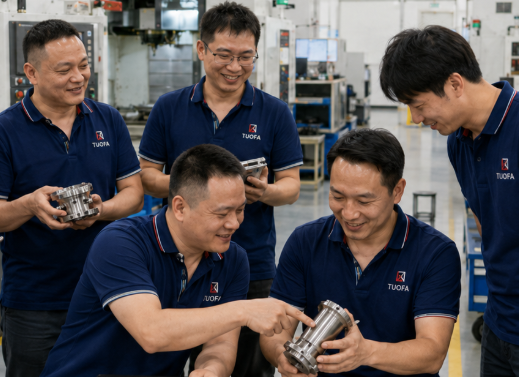
Check if the manufacturer offers engineering support. As you may need help in design upgrades, discuss prototype results. Especially when your parts have complex design, experienced engineer team is very important. Engineers will help you determine whether tolerances are appropriate, whether materials offer sufficient cost-effectiveness, and whether certain features can be machined.
Confirm Quality Control Standards
As said before, a little misunderstanding in material and tolerance values can result in useless parts. That's why you check if the manufacturer works on the same standard that you have set. Before sending an order, you should first confirm the critical dimensions, tolerance, surface finish, and material requirements because they are significantly affect the quality of parts.
For CNC projects, it is useful to ask whether the supplier can provide:
- First article inspection
- Dimensional inspection reports for key features
- Material certificates when required
- Surface finish verification
- Batch traceability for repeat orders
Review Material and Finishing Capabilities
Each manufacturer has its expertise in specific materials and post-processing. Some may offer steel or aluminium; others may work with iron and brass. So based on your component requirements, choose a supplier who has access to that material.
AI-Powered Future of Cloud Manufacturing
Integration of AI in cloud manufacturing is future of cloud manufacturing. Such integration allows one to make better decisions. With the integration of AI, manufacturers are moving towards more sustainable manufacturing. Because here they perform predictive maintenance, a pre-optimisation of resources.
AI Drawing Analysis
In cloud manufacturing once you upload a design, it's AI that is going to analyse this 2D or 3D design. It checks the material information, the bills of material (BOMs), and if the selected material is suitable or not. Mechanical and physical requirements like tolerance and hardness, and surface finish is analysed by AI. Work which is manually done by engineers is now handled by AI.
Generative AI Assistants for Online RFQ
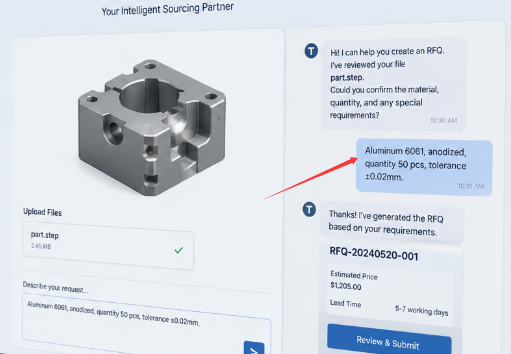
Generative AI (GenAI) acts as a co-pilot in cloud manufacturing. It analyses the provided drawing or CAD file. Extract data and analyse it. If it has some missing information. It start a conversation instead of rejecting the request for quotations (RFQ). If you are stuck at some point, it offers you suggestions. By analysing its previously stored data from other projects.
AI-Based DFM Review for Faster Quotation
Once all is done, Gen AI will analyse realistic approach of design and help you know DFM. Predicting realistic changes for more efficient manufacturing. With all its features, it works as an assistant to maintain workflow and save time and cost. Design finalisation still needs expert suggestions for which CNC engineers review final design.
How Cloud Manufacturing Supports AI-Driven Equipment Upgrades
With the growing prevalence of artificial intelligence, automation, and cloud-connected systems, numerous enterprises are upgrading existing equipment or developing new intelligent machines. This article outlines which devices require optimization in light of AI advancements and how cloud manufacturing in CNC machining support the procurement of custom CNC parts.
AI+Devices Upgrade
AI is being applied not only to CNC machines, but also to inspection devices, warehouse robots, automated packaging systems, and logistics equipment. As these devices become more connected and data-driven, they often need upgraded housings, brackets, sensor mounts, adapters, and other custom mechanical parts.
Custom Parts Are Needed for Equipment Upgrades
However, these machines always need to be upgraded with higher-performance components like electrical enclosures, mounting brackets, sensor holders, etc. In this situation, the required parts are often different and are not standard parts.
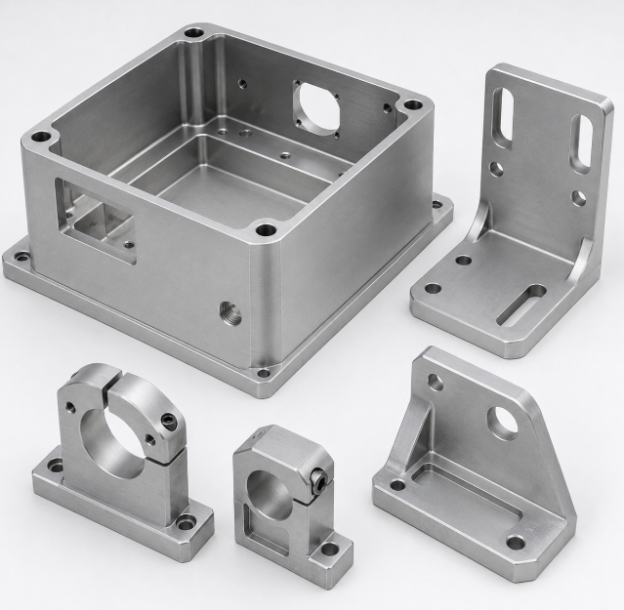
These components may seem simple, but they often need to match limited installation space, existing machine interfaces, and specific environmental conditions. This creates demand for low-volume custom CNC parts rather than mass-produced standard hardware.
How Cloud Manufacturing Helps Source Custom Parts
Cloud Manufacturing enables you to submit multiple drawings online, receive multiple quotes quickly and rapid basic engineering feedback. What's more, you can also select various manufacturing processes and surface treatments with AI-assistance.
How Does Tuofa Support Cloud Manufacturing?
At Tuofa we support several cloud manufacturing-related services. We help customers to move from design to production more quickly and conveniently through our online tools and flexible manufacturing capabilities.
Online Quick Quotation
Tuofa provides online quotation services. So, you can upload design files. Receive fast cost estimates for manufacturing projects. Tuofa provides fast quotation for customers based on materials, machining techniques, surface treatments, and package requirements. All quoted prices are accurate; shipping costs will be negotiated separately with our customer. If you have any questions about the quote, you can contact our business team directly. A quote is usually provided within 2 hours.
Provide Online Engineering Feedback
We also provide online engineering feedback by reviewing design files. Our Engineers and experts are always there to provide you recommendations, either related to manufacturability, material selection, or design optimization.
Support Small-Batch Production
At Tuofa we just support small-batch and low-volume production. Helping you with effective prototypes and limited manufacturing runs. So by collaborating with Tuofa you can test product designs, validate performance. Make improvements before moving to large-scale production. For multiple small-batch orders with diverse requirements, Tuofa provides detailed quotes for each item, eliminating concerns about order confusion caused by complex requirements.
Conclusion
In short, cloud manufacturing has changed the way manufacturing was once done. It has revolutionised traditional manufacturing by integrating generative AI, supporting effective and easy production of parts by on demand manufacturing, connecting manufacturers and suppliers with machines in real time.
FAQ
Is cloud manufacturing the same as cloud computing?
No, both are different. Cloud computing is to provide computing services like storage and software. It offers manufacturing services on demand.
Is cloud manufacturing suitable for CNC machining?
Yes, it is, it helps streamline the production fro prototyping to final batch production with real-time analysis.
Is cloud manufacturing only for large manufacturers?
Cloud manufacturing is for both large and small manufacturers. You can find a manufacturer even if you want just a few pieces. There are little or no minimum order requirements in CMFgs.
Can cloud manufacturing replace traditional CNC suppliers?
Not completely, but cloud manufacturing is making its way to prepaid prototyping and smooth workflow. Still, traditional manufacturing has its edge for securing IP. Manufacturing for high-end precision parts requires complex traditional machinery.
 What Are End Caps? Types, Materials, and Manufacturing