Tel/WeChat:
 Email:



 Home
Is Bronze Magnetic? Choose the Right Bronze for Your Parts

 Published:Nov 05,2026

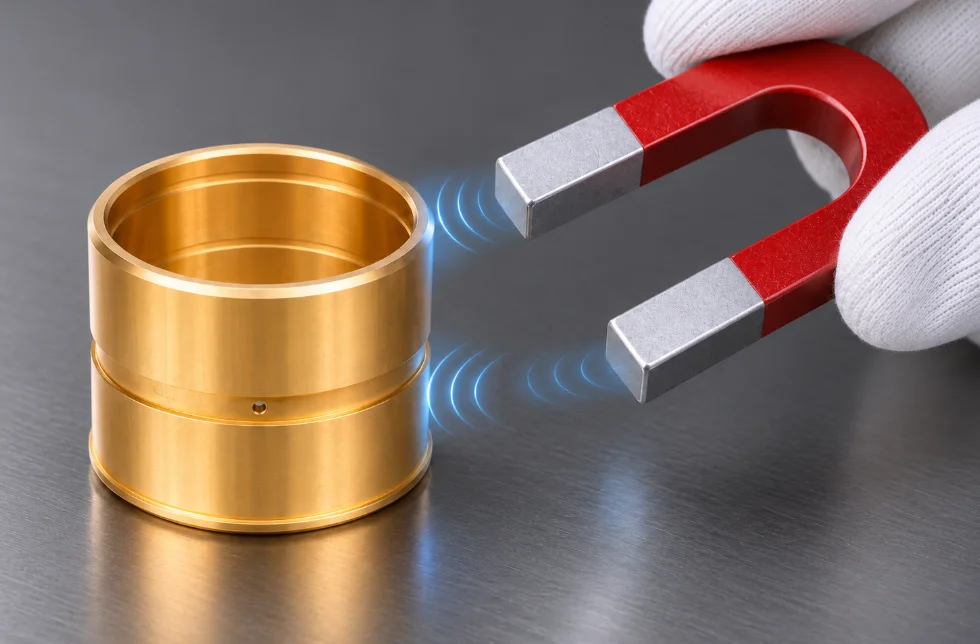
Most standard bronze doesn't stick to a magnet. It shows only weak diamagnetic behaviour at best. But not every grade behaves the same. Phosphor bronze stays non-magnetic. Aluminium bronze often doesn't, because it usually contains iron. That difference matters when you're choosing material for sensors, navigation gear or anything that can't tolerate stray fields.
In this article you will get help in understanding magnetism of different grades of bronze along with effect of magnetic behaviour of bronze on quality of product and CNC machining and much more.
Is Bronze Magnetic? Quick Answer for You
No, standard bronze is nonmagnetic. Basically bronze has two base metals named copper with 88% composition and tin with 12% composition. Both of these contributing metals are non ferromagnetic with no unpaired electrons to respond to applied magnetic field hence giving bronze its non magnetic nature.
In fact, the non-magnetic property of bronze does not affect its machining, but workholding methods used during processing need to be considered. Its non-magnetic nature makes bronze widely used for marine equipment parts.
You might be wondering if it's non magnetic, so should you consider its magnetism while designing specific products? Well, definitely we will talk about this in next section, where you must keep in mind it magnetism.
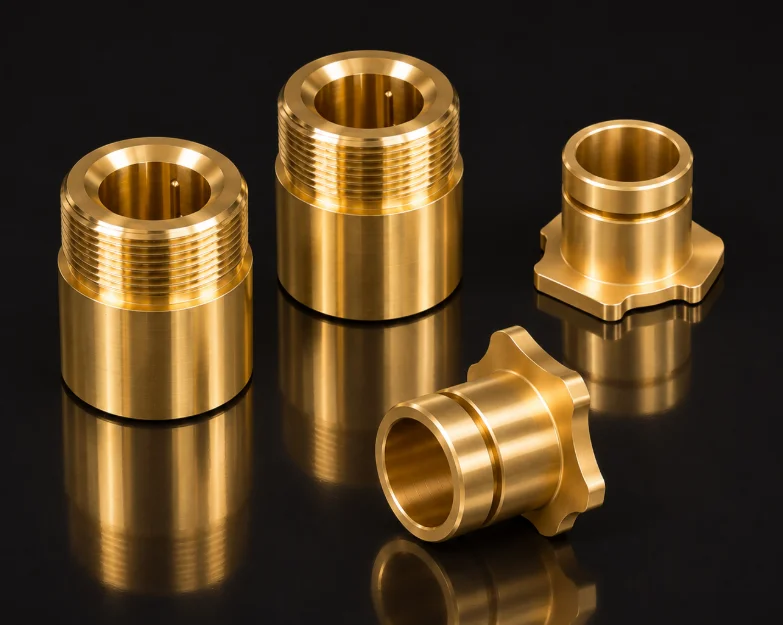
When Should You Consider Magnetism of Bronze?
When designing customized parts for projects like season housing or sensitive medical equipment like MRI machines or navigation equipment, you must consider magnetism. As using bronze even with a trace of metallic impurities will lead to inappropriate results.
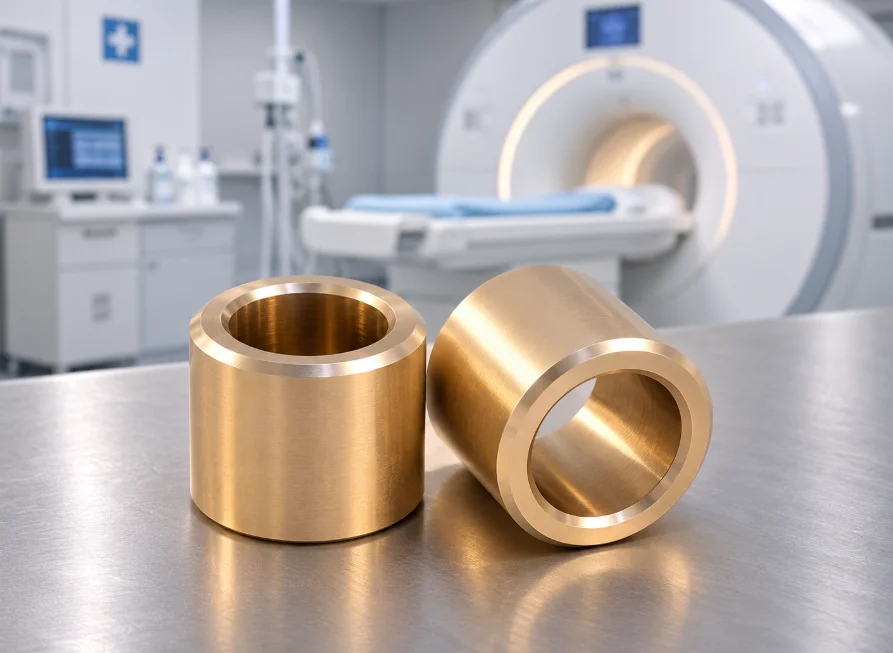
Magnetic Sensors
Using impure bronze with magnetic properties or other components made with magnetic properties will cause signal distortion, flux leakage or measurement errors. So, Engineers use standard bronze grades specified for magnetic sensors like phosphor bronze or silicon bronze for electronic contacts, connectors, and housings.
Real Case study:
Even small amounts of residual magnetism can disrupt sensitive instruments. A clear example comes from Duncan Aviation's October 2019 technical article. The company documented recurring compass errors on aircraft after maintenance. Root cause was often incorrect hardware mechanics had replaced specified fasteners with steel-alloy substitutes that retained residual magnetism. Those parts interfered with the magnetic compass readings.
Marine Navigation Equipment
Introducing weakly magnetic bronze component near aerospace or marine navigation instruments leads to compass deviation and throwing off navigation data. Engineers prefer a bronze grade with a strict nonmagnetic behaviour.
For instance, phosphor bronze (C51000 / C52100) made with copper, tin and phosphorous are all non-magnetic in nature. Therefore it is considered excellent for springs, electrical components, and fasteners.
Why Is Bronze Non-Magnetic?
As said before, bronze is nonmagnetic in nature because of its chemical composition and magnetic nature.
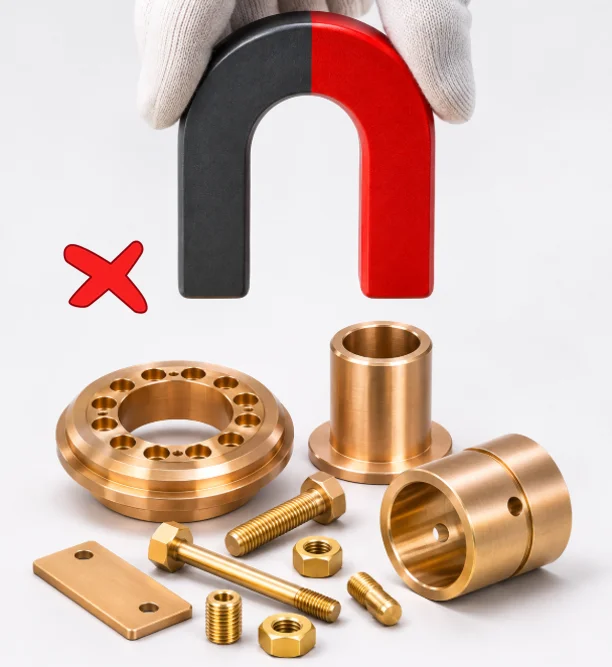
Copper-based Composition
Since copper is the main element in brass, it has completely filled d orbitals with no unpaired electrons in them. This makes copper highly nonmagnetic in nature. Not just this; copper does not support magnetic domain formation and is diamagnetic in nature.
Non-Ferromagnetic Alloying Elements
Alloying elements in bronze like tin, Zn, Si or Pd are non-ferromagnetic in nature. So, when combined to form bronze, it results in a material which is also non-magnetic.
No Strong Magnetic Microstructure
Magnetic material like iron possesses domains where atoms align in direction of magnetic field. But in case of bronze, its crystal lattice structure does not allow for the formation or alignment of these domains, preventing the material from holding a permanent or induced magnetic charge.
Non-Magnetic Bronzes vs Magnetic Bronzes
To enhance mechanical or physical properties of bronze, some external elements are added into it, like phosphorus, Al, and lead. The addition of such material can alter its non-magnetic properties. Here are some magnetic and non-magnetic bronze materials.
Non-Magnetic Bronzes
Phosphor Bronze
Presence of P in bronze is key reason for its increased mechanical properties. As phosphorous eliminates structural weaknesses by deoxidising, forming phosphorus pentoxide (P₂O₅). Engineers use phosphorous Bronze components like electrical switches where no magnetic interference is needed.
Tin Bronze
Tin bronze is where second highest element is bronze in tin.Tin enhances tensile strength of bronze. But how? Actually Tin atoms dissolve into copper crystal lattice, significantly raising its hardness, yield strength, and tensile strength compared to pure copper. Since tin is also non magnetic so it also does not impact its weak diamagnetism of bronze.
Leaded Tin Bronze
Components which need to be nonmagnetic as well as offer low friction and good machinability are made using lead tin bronze. As lead here acts as an internal lubricant. Lead tin bronze consists of:
- 5-10 wt% Sn
- 2-8 wt% Pb
Preferably used in sleeve bushings and bearings where parts experience heavy loads and friction.
Silicon Bronze
UNS C65500 silicon bronze is an alloy of 96% copper, 3% silicon, and 1% manganese and non magnetic. With its high tensile strength of about 70,000 to 90,000 psi, excellent hardness and ductility. It finds its application in manufacturing of boat shafts, fasteners, and fittings, especially near magnetic-sensitive instruments.
Magnetic Bronzes
Some grades of bronze show weak magnetic properties and find their application in industry accordingly some common grades of bronze which are magnetic in nature are:
Aluminum Bronze
Aluminium bronze is where tin is replaced with Aluminum. Aluminium bronze contains iron, which is magnetic in nature, offering it magnetic properties. Addition of aluminium not only makes it a bit magnetic but also resistant to wear and corrosion, as it forms an Al₂O₃ protective layer over it. Some common aluminium grade bronzes are:
- CuAl9Mn2
- CuAl8Fe3
- CuAl10Fe3
- CuAl10Fe5Ni5
Nickel Aluminum Bronze
Nickel aluminium bronze (NBA) also shows magnetic nature, as it contains 3 to 5% iron content in it. most commonly used grades of NBA include:
- C95520
- C95800
- C95820
- C95800
- C95500
Why Do Some Non-Magnetic Bronze Parts Attract a Magnet?
Although bronze itself is nonmagnetic and does not attract magnets, some parts made of bronze may attract magnets. It's because of presence of iron or any element that's magnetic in nature. For example, components may get contaminated due to edge buildup or tool wear during CNC. Let's know three major reasons why a component made with non-magnetic material shows attraction towards a magnet.
Iron Contamination During CNC Machining
During CNC machining, a component can get contaminated with iron due to multiple reasons such as:
- Steel or iron present in CNC machining cutting tools can cause embedded iron particles.
- Loose steel dust or tiny metal shavings from the shop floor can get intrapp in internal cavities or surface pores.
- Abrasive blasting, tumbling media, or wire brushes that were previously used on steel parts can also transfer microscopic iron onto the bronze.
Magnetic Surface Coatings
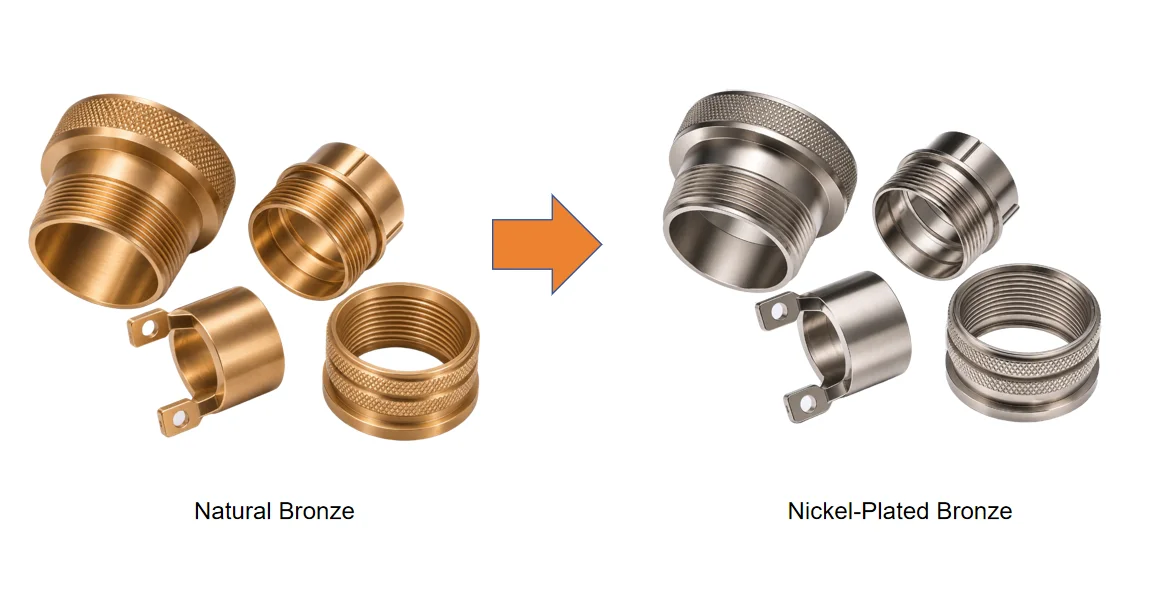
Harsh conditions cause real problems for bronze. When humidity exceeds 40 % and chlorine is present, hydrochloric acid forms. That acid works its way through the protective patina. To stop the damage, shops often put a thin nickel on the part. Nickel is magnetic. Once that coating is there, a magnet can stick to a bronze component that should have been non-magnetic.
Embedded Steel Components
Embedded steel components present in bronze give it a little magnetic nature. Such steel components come from lathes if they have been used to machine steel and not cleaned properly.
How Does Bronze Magnetism Affect Quality Inspection?
Magnetism of bronze impact quality inspection, including surface irregularities, composition errors as well as structural degradation. Non-ferromagneticn of bronze have direct affect over quality assurance through MPI, PT and eddy current testing methods.
Magnetic Particle Inspection (MPI)
MPI works solely on highly magnetic materials where boundary defects are captured from flux leakage. Comparatively, bronze is nonmagnetic, and MPI does not help engineers find internal defects using this method. That's why it's advised to opt for Liquide Penetarant testing.
Liquid Penetrant Testing (PT)
Liquid penetrant testing is considered effective for surface inspection of bronze particles, as it's not affected by bronze magnetism. PT is strictly mechanical and chemical rather than electromagnetic. So, magnetic state, permeability, or iron impurities within the bronze have zero impact on the final inspection results. With this method you can successfully catch surface-breaking cracks.
Impact of bronze magnetism over PT:
- Weak magnetism in iron-containing bronze does not affect penetrant movement or defect detection.
- No demagnetization required
- Gives consistent defect detection
- Independent inspection results:
Eddy Current Testing (ET)
Eddy current testing is used by engineers to evaluate surface defects of a component, such as wall thinning and cracked areas. Engineers use ET for material with high relative magnetic permeability. In case of bronze, magnetic permeability is nearly one, which is very low, so it can't be used for real-time defect analysis.
Eddy current testing gives unreliable results if there are localised iron particles within bronze components. This will lead to false positive indications for defects. But why? Actually even weak magnetism will cause fluctuations in magnetic permeability, resulting in severely distorted ET depth and defect readings.
How Does Bronze Magnetism Affect CNC Machining?
As we know, bronze is non-magnetic in nature, so its workholding and chip removal will not be like standard materials. For example, magnetic chunks won't be able to hold workpiece, so alternative methods are adopted.
CNC Workholding
Mechanical Clamping
As said before, magnetic chunks work with bronze, so engineers use vises, toe clamps, fixture plates, and custom jaws to hold bronze work pieces. But remember that too much force can bend or deform. That's why you must use soft jaws made of aluminium and calibrated torque wrenches. These will distribute load evenly without causing any damage to workpiece.
Vacuum Chuck
Vacuum chucks are considered excellent for large, flat, or thin bronze sheets. Because mechanical clamps might obstruct tool path or cause bowing.
Chip Removal
In CNC usually magnetic conveyors are used to remove chips, but in case bronze, they don't work because of their non-magnetic nature. Engineers use vacuuming, wash-down systems and chip breaking toolpaths for chip removal of bronze components.
What Factors Can Affect Weak Magnetism of Iron-Containing Bronzes?
Weak magnetism of bronze depends upon distribution of iron particles within it. However, its magnetism is also impacted by different methods like heat treatment, heavy cold working and external magnetic fields. Let's know how these methods affect the magnetism of iron-containing bronze.
Heat treatment
Different heat treatments have different impacts on the magnetism of iron containing bronzes. Which heat treatment is applied decides either iron will cause magnetism or not.
For example, if bronze is annealed, where it's heated at a high temperature and then cooled immediately, iron particles remain dissolved within the non-magnetic copper matrix. So magnetic nature is suppressed, and bronze behaves as non-magnetic. In case of ageing, iron atoms get diffused and grouped together. Hence, embedding bronze to show magnetic properties.
Heavy Cold Working
Heavy cold working changes phase behaviour of bronze through mechanical deformation. Weak magnetic response gets stronger, especially when precipitation is involved. Deforming metal at room temperature creates crystal defects these defects will act as easy pathways for iron atoms to move and cluster causing strong magnetic response.
External Magnetic Field
An external magnetic field can also change magnetic response. Iron particles inside bronze often form tiny magnetic regions that point in random directions. Those random orientations cancel each other out. Apply an external field and the domains line up in one direction. The material then shows a clearer magnetic pull.
Application Limitations of Non-Magnetic Bronze
As we discussed before, non-magnetic bronze is suitable for applications where minimum to no magnetic interference is required. But in case where magnetic cores and flux paths are needed, non-magnetic bronze can't be used.
Unsuitable for Magnetic Cores and Flux Paths
Non magnetic bronzes are not capable of concentrating magnetic flux, guiding and focusing magnetic flux lines. That's the reason engineers do not use it in place of ferromagnetic materials like iron or steel. If, in case, during replacement or maintenance, the inductors or transformer core of an electric motor is replaced by non-magnetic material components, system will face functional failure and energy loss.
Ineffective for Static Magnetic Shielding
Non-magnetic bronze is ineffective for static magnetic shielding because it lacks the high magnetic permeability needed to redirect low-frequency fields.
Customize Your Non-Magnetic Bronze Parts with Tuofa
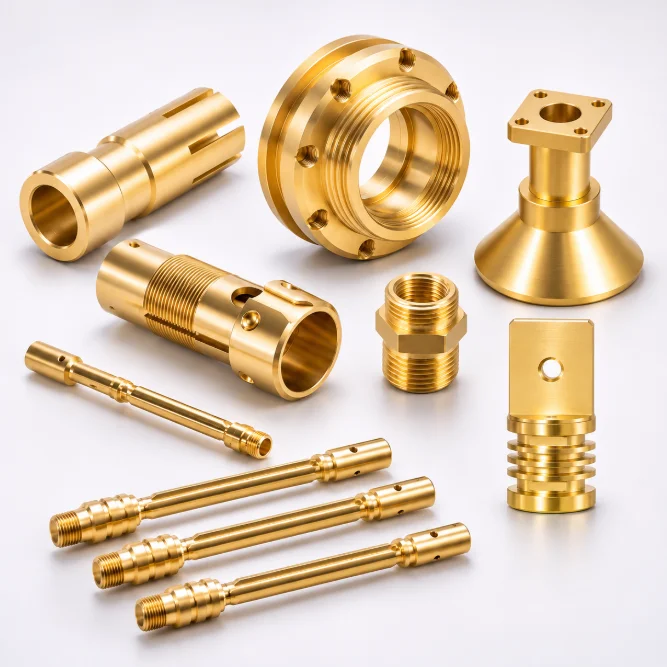
Working on you next on non-magnetic bronze parts and looking for reliable manufacturer? Choose Tuofa. Where we provide customised bronze part manufacturing with high precision with attention to details. Our expert engineers help you in effective material selection, offering DFM support.
Material Selection and DFM Support
We will help you choose material according to application of your component. For example, if you are designing electrical connectors, springs, and switch parts with non-conducting nature, we will recommend using phosphorous bronze. Because it offers fatigue resistance, high elasticity, and a low friction coefficient, it is perfect for electric components.
Not just this: before we begin manufacturing process, we offer rapid DFM. We review your prints to ensure:
- Optimal wall thicknesses
- Accurate dimension
- Relaxed thread depths
- Proper internal corner radii to minimise tool wear and part deformation.
Precision CNC Machining and Quality Control
As we discussed earlier, non magnetic bronze required specialised CNC machining at some points. That's why we utilise advanced multi-axis CNC milling and turning centers for manufacturing bronze components. We also implement premium carbide tooling to achieve high tolerances up to ±0.005 mm. So, you can get your component with flawless surface finishes and complex, high-precision geometry.
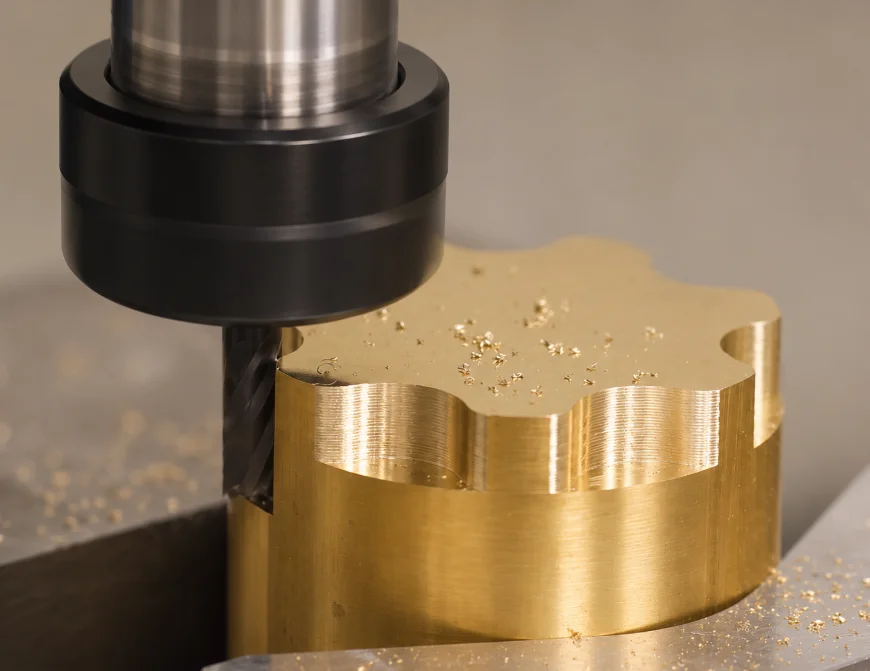
When choosing Tuofa CNC, you can rest assure about quality of your product. Our every order undergoes comprehensive dimensional validation via CMM and optical comparators.
Conclusion
In short, non-magnetic nature of bronze is beneficial in case you need components with zero magnetic field response. But in case magnetic behaviour can vary with iron content, alloy composition, and manufacturing processes. We recommend careful material selection and design evaluation. With TuofaCNC, you can achieve required combination of mechanical strength, corrosion resistance, and magnetic compatibility.
FAQ
Can non-magnetic bronze be magnetized?
No, non-magnetic bronze can't be permanently magnetized, as it has copper and tin as base material, which are non-magnetic in nature. But remember that introducing small impurities make it show a weak diamagnetic nature.
Can heat treatment affect magnetism of bronze?
Yes, heat treatment has a direct impact on magnetism of bronze with iron impurities. But, magnetism of pure bronze with non-iron impurities is not affected by heat treatment.
Copper vs brass vs bronze magnetism: are they different?
Yes. Copper is diamagnetic and weakly repels magnetic fields. Brass (copper-zinc) is also generally diamagnetic and non-magnetic. Bronze (typically copper-tin) is usually non-magnetic, but certain grades containing iron or nickel, such as nickel-aluminum bronze, can show noticeable magnetic attraction.
 How to Prevent Galvanic Corrosion? Material, Surface Finishes, Design & CNC Machining Features