Tel/WeChat:
  Email:


 Home
HomeFlow Restrictor Guide: Functions, Applications & CNC Machining

 Published:Jun 12,2026
In industries where the system relies on the balance of fluid or gas, etc., these flow restrictors are very important. They are responsible for the efficient performance of a system. To make these flow restrictors, tight tolerances are required to be met; that's why CNC machining is used to produce these components. This article will cover different aspects related to flow restrictors, from their functions to their CNC machining.
What Is a Flow Restrictor?
A flow restrictor is an essential component that controls the flow rate of liquid or gas within a system. These components are helpful in maintaining the pressure balance of a system, reducing turbulence, and protecting the equipment from excessive flow conditions.
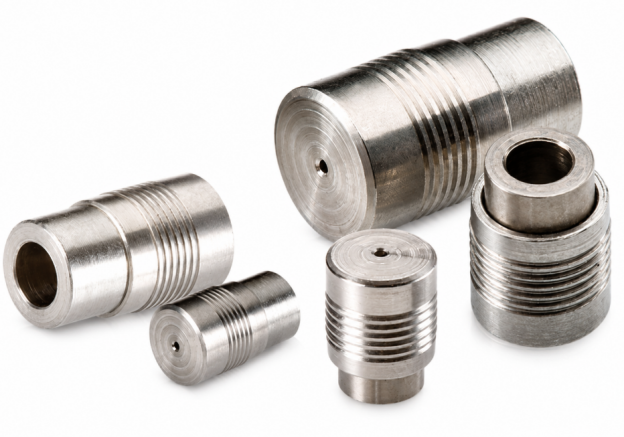
Common Physical Features of Flow Restrictors
They are small components, equipped with machined holes, narrow passages, and orifices. These features limit the pressure. Other common physical features include cylindrical shape, compact size, internal channels, and tight tolerances.
Flow Restrictor vs Flow Control Valve
Compared to a flow restrictor, a flow control valve is more advanced and can control the fluid flow more precisely than a flow restrictor.
What Does a Flow Restrictor Do?
A flow restrictor performs the following functions:
Control Flow Rate
It is the simple method by which a flow restrictor controls the flow rate, i.e., by reducing the cross-sectional area through which a fluid passes. In engineering terms, it creates a pressure drop across the restriction. The pressure difference and opening size determine how much fluid flows.
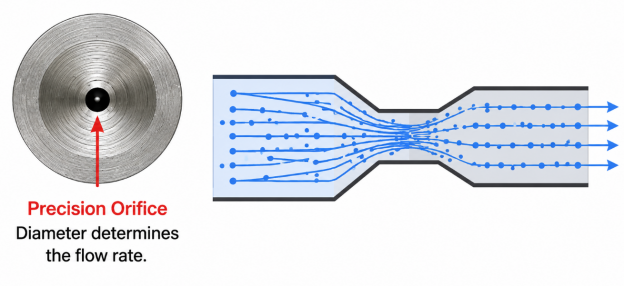
Stabilize System Pressure
By preventing excessive fluid flow through the system, a flow restrictor stabilizes the system pressure. It can stabilize the system pressure by creating a controlled pressure drop, reducing pressure spikes, preventing rapid pressure loss, and damping oscillations.
Protect Downstream Components
By limiting the amount and speed of fluid reaching the components, a flow restrictor protects the downstream components. These components are protected in various ways, including prevention of pressure surges, reduction of fluid velocity, and minimization of hydraulic shock.
Improve Flow Consistency
The flow consistency gets improved because a flow restrictor reduces fluid flow becomes less sensitive to sudden changes in pressure, demand, and system disturbances.
Common Types of Flow Restrictors
There are many types of flow restrictors based on design and geometry. Let's discuss some of them one by one in this section:
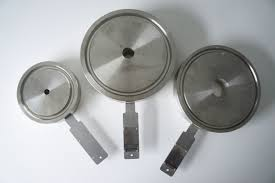
Orifice Plate Flow Restrictors
This type of flow restrictor controls the flow rate of a liquid or a gas using its thin plate with a precisely drilled hole. It is used in water distribution systems, fuel delivery systems, and in process control in industrial plants, etc.
Venturi Flow Restrictors
Through a converging section, a narrow throat, and a diverging section, it controls the flow rate of a liquid or a gas.
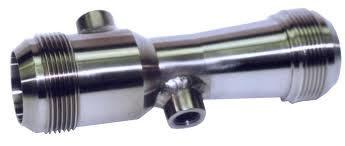
It is employed in:
- Irrigation system
- Fuel and air flow control
- HVAC systems
Porous Metal Flow Restrictors
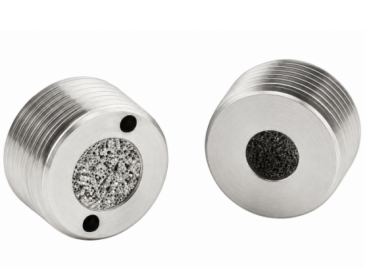
As its name itself gives us a clue regarding its structure, i.e., made from a metal with thousands of interconnected microscopic pores to control the flow rate. It is commonly used in fuel cells, medical gas equipment, and noise reduction in compressed air systems.
Capillary Tube Flow Restrictors
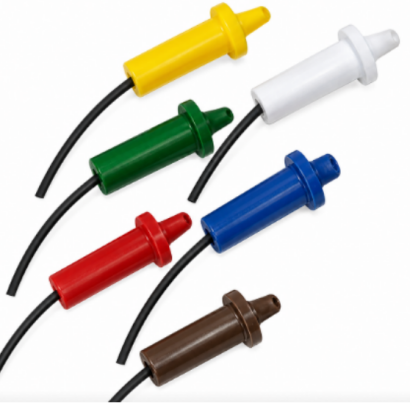
This flow restrictor consists of a long, narrow tube. When the fluid or gas passes through the tube, the pressure is reduced along the length due to the friction. Its applications include refrigeration and air-compressed systems, laboratory instruments, and chemical dosing equipment.
Adjustable Flow Restrictors
In this type of flow restrictor, the flow rate can be controlled manually by varying the size of the flow passage. The size variation is done through an adjustable needle and screw or orifice. Its applications include water supply and dispensing equipment, medical gas and fluid delivery systems, and lubrication systems.
Inline Cartridge Flow Restrictors
It is a removable cartridge containing a fixed orifice and is installed in pipeline directly. The orifice controls the flow rate. It is widely used in OEM equipment, air flow regulation, fuel systems, and lubrication systems.
Where Are Flow Restrictors Commonly Used?
In the above section, many applications of flow restrictors are listed. This section provides insights into how these flow restrictors work in some common applications.
Shower Systems
Flow restrictors are commonly used in shower systems to control the flow rate of water. It is placed in the showerhead. As the water passes through it, due to the internal opening, the water is forced through a smaller passage, which reduces the flow rate. A washer-type restrictor is commonly used in shower systems.
Hydraulic Systems
To control the flow rate, the flow restrictor is placed in the fluid line. As the fluid passes through a restricted passage, the flow area gets reduced, the fluid velocity changes, and pressure drops, so the flow rate is controlled this way. Adjustable needle valve type and a pressure-compensated flow control valve are used in this application.
Pneumatic Systems
In this application, the flow restrictor controls the rate of compressed air flow going to actuators like valves or cylinders. It controls:
- Speed of pneumatic cylinders
- Smooth motion control
- Timing of operations in automated systems
- Energy efficiency by preventing excessive air consumption
For this application, inline cartridge restrictors and orifice-type restrictors are used. Since in this application, flow rate is extremely sensitive to hole diameter, tight tolerances and smooth sealing surfaces are required to be met. That's why CNC machining is used for flow restrictors to be used in pneumatic systems.
Medical Devices
The flow restrictors in medical devices are used to control and stabilize the flow of blood, oxygen, IV fluids, and anesthetic gases. The commonly employed flow restrictors include fixed orifice restrictors, capillary tube restrictors, and porous restrictors. Due to the sensitivity of the application, these flow restrictors require flawless machining, so CNC machining plays a very crucial role in meeting the tight tolerances, smooth surfaces, and safety standards.
Key Factors for Selecting a Flow Restrictor
A flow restrictor cannot be selected randomly. The following are the parameters required to understand before selecting a flow restrictor.
Required Flow Rate
It is a very basic parameter, as the flow restrictor is made to control and stabilize the flow rate. Required flow rate is important to consider because it defines the orifice size, determines pressure drop requirement, and ensures system safety and performance, so it influences restrictor type selection. In simple words, it directly affects the size, type, and pressure drop characteristics of the restrictor.
Operating Pressure
Operating pressure is also important because a flow restrictor does not work in isolation; it works by balancing pressure and resistance to control flow. It is important because:
- It determines whether the restrictor can physically handle the load
- It affects flow rate through the flow restrictor
- It decides restrictor type and design strength
- It affects accuracy and stability of flow control
- It influences sealing and safety design
Material Compatibility
Material compatibility is a fundamental factor and has great importance when it comes to employing the product in any environment. In the case of a fluid restrictor, it becomes even more important because the flow restrictor remains directly in contact with the fluid or gas, etc. In the case of poor compatibility, the material can corrode or swell, leading to ultimate failure. For instance, if the environment contains chemicals, stainless steel and Hastelloy are commonly used in flow restrictors.
Orifice Geometry
Orifice geometry is another important key factor, so it cannot be ignored while selecting the fluid restrictor. Its importance is because its shape and size directly affect how much fluid can pass through and how the flow behaves. Orifice diameter, orifice length, orifice shape, and number of orifices are the key aspects in orifice geometry.
Standard Flow Restrictor vs Custom Flow Restrictor
The following table describes key differences between a standard flow restrictor and a custom flow restrictor:
|
Feature |
Standard Flow Restrictor |
Custom Flow Restrictor |
|---|---|---|
|
Design |
Pre-engineered, fixed design |
Designed to meet specific process requirements |
|
Flexibility |
Limited customization options |
Fully customizable for flow, pressure, and application |
|
Lead Time |
Shorter delivery time |
Longer design and manufacturing time |
|
Cost |
Lower initial cost |
Higher initial cost due to custom engineering |
|
Application Range |
Suitable for common operating conditions |
Suitable for unique or critical operating conditions |
|
Performance Optimization |
General-purpose performance |
Optimized for specific process parameters and efficiency |
When Do You Need Custom Flow Restrictor?
Custom flow restrictors are generally required when standard flow restrictors cannot meet specific requirements, such as size or design, etc. These requirements can be:
- Unique flow rate
- Specific pressure
- Space constraints
- Special fluid properties
- High accuracy requirements, such as in medical devices
- Integrated functionality
- Extreme operating environments, like cryogenic conditions
- Noise or cavitation reduction
Are Flow Restrictors Commonly CNC Machined?
The machining accuracy depends upon the requirements of the applications. Generally, CNC machining is not an ideal machining solution because it is time-taking and expensive. For applications that require very tight tolerances, complex geometries, and smooth surfaces in the flow restrictors, CNC machining is used because traditional machining methods do not meet required accuracies and repeatability. Generally, the flow restrictors to be used in medical devices are machined through CNC machines because of high safety standards.
How Are Flow Restrictors CNC Machined?
CNC machining involves different machining operations to machine different features of a flow restrictor. Let's discuss some of the common CNC operations and how they are used in manufacturing the flow restrictors:
CNC Turning
In this CNC operation, the cutting tools remain stationary, and the workpiece keeps rotating. Cylindrical parts are generally machined using the CNC turning operation. Through this operation, the following parts are manufactured:
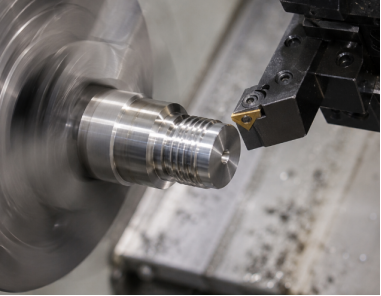
- Concentric internal and external diameters
- Threaded ends
- Smooth internal surface finish
- Stepped diameters and shoulders
- Chamfers and radii
- Grooves for O-rings
- Customizable flow passages
CNC Milling
In this CNC operation, the workpiece remains stationary, and the cutting tools keep working. Complex geometry parts are generally machined using the CNC milling operation. The following features of a flow restrictor are manufactured through the CNC milling operation:
- Non-cylindrical external shapes
- Milled slots and grooves
- Pocketed cavities
- Mounting holes and bolt patterns
- Precision metering channels
- Multi-port configurations
- Engraved markings
Precision Micro Drilling
To create very small and controlled passages, the precision micro drilling process is used. The features of a flow restrictor that are manufactured through this process include:
- Orifice holes
- Capillary flow channels
- Multi-stage restriction holes
- Needle valve seating holes
- Cross-drilled passages in compact manifolds
CNC Machining Challenges for Flow Restrictors
During CNC machining of flow restrictors, the following are the common challenges that appear:
Micro Hole Accuracy
Flow restrictors work through micro- or sub-millimeter holes. A small deviation in diameter or geometry produces a large variation in the flow rate. This challenge arises from incompatible tools and tool deflection, chip evacuation problems, machine vibration, and run out.
- To tackle this challenge, use advanced drilling techniques, high-precision CNC equipment, coated micro-drills, and coolants.
Internal Surface Roughness Control
Internal surface roughness control is a challenge in CNC machining because of limited tool access, chip evacuation problems, tool deflection and chatter, and coolant limitations. This challenge can be mitigated by:
- Using optimized tooling
- Improving cutting parameters
- Enhancing chip evacuation
- Reducing tool vibration
- Using finishing operations
Machining Difficult Materials
Some materials become very difficult to machine because of high hardness and strength, poor thermal conductivity, rapid tool wear, work hardening tendency, and poor chip formation and evacuation. To avoid this challenge, use:
- Appropriate tools
- Optimized machining parameters
- Improved cooling and lubrication
Conclusion
Flow restrictors play a crucial role in balancing the flow rate of fluid and gases from showers to big hydraulic systems. These flow restrictors work through well-positioned orifices. Based on the geometry, there are different flow restrictors used in different applications. To meet tight tolerances, high accuracy, and repeatability, Tuofa CNC precision machining is used to manufacture flow restrictors.
FAQ
Does a flow restrictor reduce pressure?
A flow restrictor reduces the pressure by creating a controlled resistance to fluid flow. It is like a fluid is forced through a narrow or long restriction.
How do flow restrictors work?
It works by creating resistance to fluid flow so that only a controlled amount of fluid can pass through.
What size flow restrictor do you need?
To determine the size of required flow restrictor, it is important to know required flow rate, pressure conditions,fluid properties, and flow regime.
 4 Axis Machining: Customize Your Precision Parts