Tel/WeChat:
  Email:


 Home
HomeWhat Are Threaded Pins? Exploring Types and Custom Machining

 Published:May 22,2026
Mechanical assemblies would be difficult to align and mate without pins. They precisely position the component into the desired arrangement. Some pins require a difficult installation and removal process. Threaded pins eliminate this difficulty. All they need is screwing into the mating hole. It makes maintenance and replacement easier. The fastening function adds stability to the assembly. Let's discuss this topic in detail.
What Are Threaded Pins?
Pins are quite often used in mechanical and structural assemblies for holding components together. A threaded pin has internal or external threads that help in the better retention of components. These are basically cylindrical fasteners used for secure attachments, alignment, or positioning purposes. Threads on threaded pins provide resistance to vibration. So, it prevents loosening of components.
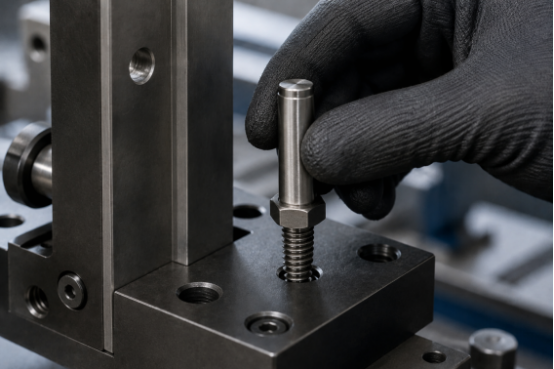
Functions of Threaded Pins
Threaded pins serve several important purposes. The foremost purpose is component alignment. The insertion of a threaded pin for coupling components in assemblies ensures accurate positioning. The absence of a mismatch in component alignment reduces wear, vibration, and operational errors.
Another function is the fastening of components. Secure attachment of components brings stability to the assembly. A firm connection with threaded pins means transferring mechanical forces evenly across connected parts. With this even load distribution, stress doesn't concentrate at some points. So, threaded pins bring structural integrity. Components can be easily assembled or disassembled by removing threaded pins. So, they make maintenance and repairs easy.
Threaded Pins vs Non-Threaded Pins
Threaded pins and non-threaded pins are distinct categories. The main function of both pins is accurate positioning and alignment. They differ in design and installation. As their names suggest, the difference arises due to the presence or absence of threads.
Physical Features
A prominent feature of a threaded pin is its helical thread. These pins can be fully threaded or partially threaded. Non-threaded pins have no threads at all. The mechanical engagement mechanisms of both types differ. The threads of threaded pins help them to retain their position. But non-threaded pins might need other mechanisms like retaining clips. Other design features, like head, spring mechanism, or retractable balls could be present in these pins.
Functions
Both pin types assist in positioning and alignment. Threaded pins have an added functionality. Their threads fasten components. They resist loosening caused by vibration, dynamic loads, and rotational movements. Non threaded pins are mainly used as pivoting or shear support elements. The ease of assembly and disassembly also influences the functionality of these two types.
Assembly Method
Threaded pins are installed in place by either screwing the pin into a threaded hole or by tightening nuts. Wrenches and screwdrivers may be used in installation. On the other hand, non-threaded pins are installed by press fitting, hammering, or sliding into holes. Thermal expansion can be used for interference fits. Retaining clips or spring tension may be used for firm placement.
Typical Applications
Threaded pins provide alignment and attachment. They are best suited for applications involving dynamic loads, revolutions, and vibrations.
- Threaded pins are used in automotive engines, aerospace assemblies, industrial tooling, robotics, and heavy equipment.
- Non-threaded pins are preferred for their simplicity. They can be easily maintained. Non-threaded pins are commonly found in alignment fixtures, hinge systems, gear assemblies, hydraulic linkages, and machinery joints.
Types of Threaded Pins
Threaded pins come in a few design categories. Each design has its own suitability for a specific application with different functions.. The threads can be internal or external. Internal threads need threaded rods for mechanical engagement. Externally threaded pins can be directly installed in threaded holes. Importantly, different designs of threading features can influence the functions of pins. A few common types of threaded pins with different functions are discussed here.
Fully Threaded Pins
Fully threaded pins have a thread that sweeps across the entire length of the pin. It provides maximum engagement for building a strong holding capability. The full thread has a high resistance to loosening. These threaded pins can be tightened to the extent that is required. So, these offer flexible adjustment. Fully threaded pins are mainly used in applications that require endurance to vibration and dynamic loads.
Partially Threaded Pins
Partially threaded pins have a smooth section and a threaded end. Smooth section aids precisely ground according to the other mating component. It aids in alignment and positioning. The threaded end securely fastens the pin to the joining component. In comparison to press fitting, securing with threads gives ease in installation.
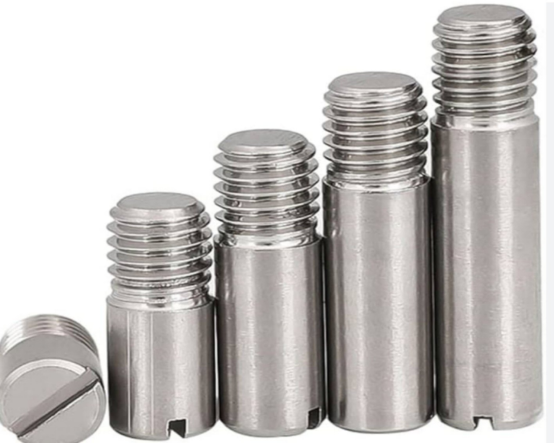
Threaded Dowel Pins
Threaded dowel pins are basically cylindrical headless pins with threads. They can be tightened with tools like screwdrivers. They can be fully threaded and partially threaded. As discussed in the preceding sections, dowel pin with threaded end has a smooth section that is suited for alignment and positioning. Fully threaded dowel pins offer excellent mechanical engagement.
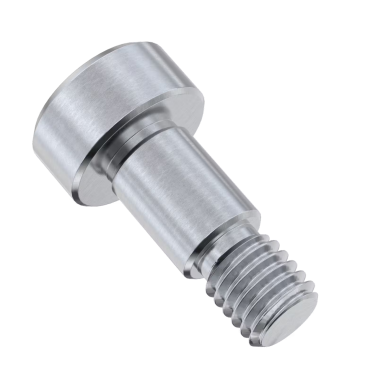
Threaded Shoulder Pins
Threaded shoulder pins have a shoulder section and a threaded end. The shoulder section provides controlled spacing. It supports rotational movement and accurate positioning. The ‘shoulder ' feature supports rotating components like bearings. The threaded end offers retention and stability.
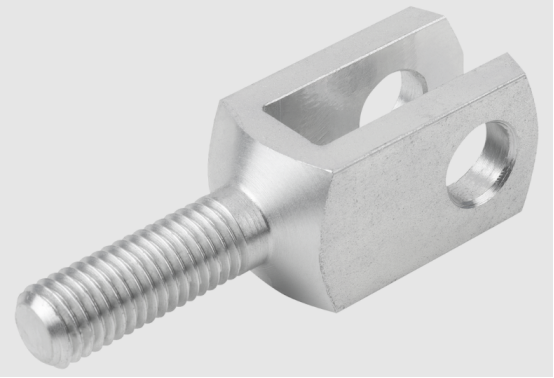
Threaded Clevis Pins
Threaded clevis pins are mainly used for pivoting and linkage. The smooth section facilitates alignment and establishes a controlled spacing. Standard clevis relies mainly on cotter pins. On the other hand, the threaded end in threaded clevis pins provides a stronger connection. These threaded pins are commonly used in agricultural and heavy machinery setups.
Threaded Taper Pins
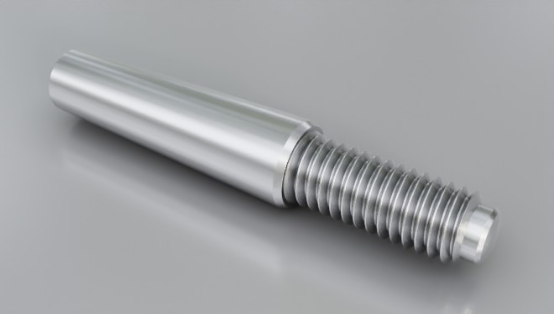
Threaded taper pins have a gradually tapered body. The taper feature makes installation and removal easier. It establishes a tight interference fit. As with many other pin types, threaded taper pins provide good alignment and holding power. These pins are mainly used in gear assemblies, couplings, and machine tools.
Threaded Hitch Pins
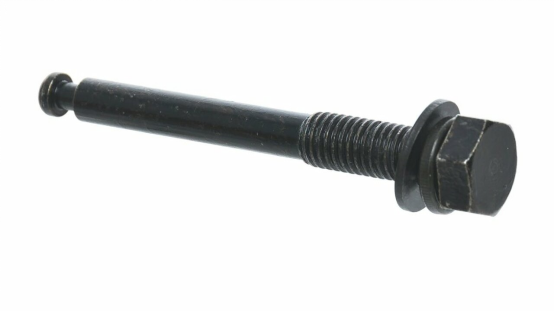
These are heavy-duty locking pins. The hitch gives these pins a good locking mechanism. It prevents accidental disengagement. The threaded end provides better retention and vibration resistance.
Threaded Pins Comparison
Threaded pins are often compared with dowel pins and bolts. While the functions of threaded pins overlap with some functions of dowel pins and bolts, they belong to a different category. Dowel pins are mainly used for alignment. Bolts are used for fastening. Threaded pins are mainly used for alignment, but they provide light fastening. Their installation is much simpler than dowel pins. The tables below draw a comparison between threaded pins, dowel pins, and bolts.
Threaded Pins vs Dowel Pins
|
Feature |
Threaded Pins |
Dowel Pins |
|---|---|---|
|
Function |
Alignment, positioning, and light fastening |
Precise alignment and repeatable positioning |
|
Design |
Cylindrical pin with internal or external threads, often headless |
Smooth cylindrical pin with no threads |
|
Load Type |
Shear loads and may be axial |
shear loads only |
|
Installation |
Screwed into tapped holes |
Press - fitted |
|
Precision |
Good precision |
Very high precision |
|
Removability |
Usually removable |
Difficult to remove |
|
Application |
Fixtures, adjustable assemblies, mechanical locking points |
Jigs, dies, tooling, and precision machine alignment |
|
Role in assembly |
Locator and fastener |
locating element only |
|
Manufacturing |
Threading and machining |
machining and grinding |
Threaded Pins vs Bolt
|
Feature |
Threaded Pins |
Bolts |
|---|---|---|
|
Function |
Alignment, positioning, and fastening |
Strong clamping |
|
Design |
Cylindrical pin with threads. It is often headless |
Headed fastener with external threads used with nut or tapped hole |
|
Load Type |
Shear loads |
Tensile and clamping loads |
|
Installation |
Press - fit or screw- in |
tightened using a tool on the head |
|
Precision |
High precision |
Moderate precision |
|
Removability |
Semi-permanent or removable |
Fully removable |
|
Applications |
Jigs, fixtures, machine alignment, locating parts |
Machinery assembly, structural joints, automotive applications |
|
Strength |
Moderate strength |
High strength |
Materials of Threaded Pins
A lot of material options are available for threaded pin manufacturing. The choice of material depends on design, operating conditions, manufacturing capability, and affordability. Some material options are discussed here:
Carbon Steel
Threaded pins made from plain carbon steel are the most cost-effective. It is used in applications where corrosion is not a major concern. Carbon steel provides a cheap solution. Surface finishing enhances the aesthetic appeal. It protects against corrosion. SAE 1018 and SAE 1045 are commonly used grades. SAE 1018 offers moderate strength and good formability. On the contrary. SAE 1045 gives a considerably high strength after heat treatment. Their suitability depends on the applications.
Alloy Steel
Alloy steels offer a good combination of strength and toughness. SAE 4140 is a common alloy steel grade used in threaded pins. It offers high toughness and wear resistance. The corrosion resistance of alloy steels is way better than that of plain carbon steel.
Stainless Steel
Stainless steel is an excellent corrosion-resistant material. Common grades like 304 are inert to many chemicals and moisture. 316 grade is well-suited for marine environments. In addition to corrosion resistance, stainless steel provides a clean and hygienic surface. It is also visually appealing.
Titanium
Titanium threaded pins are mainly used in aerospace and medical applications. They are lightweight, strong, corrosion-resistant, and biocompatible. Grade 5 titanium alloy is the most common for threaded pins.
Brass
Brass offers a low coefficient of friction, good conductivity, and good machinability. Threaded pins made of brass are often used in electrical applications and instrumentation. C36000 brass, being a free machining grade, is the preferred choice in CNC manufacturing of threaded pins.
Plastic
Plastic threaded pins made from PEEK or Nylon are electrically insulative. They are often used in applications where insulation and low weight are key requirements.
How to Manufacture Threaded Pins
Threaded pins are manufactured with the machining processes. In this regard, CNC machines provide a reliable and repeatable solution. CNC machining offers high dimensional accuracy, high precision and tight tolerances with minimum human intervention.
CNC Techniques for Threaded Pins
Turning for Shapes
CNC turning create thee basic cylindrical shape of a threaded pin. It gives a high level of concentricity to threaded pins. Features like shoulders and steps can be made in this process. Tapered surfaces can also be created.
CNC Milling for Complex Features
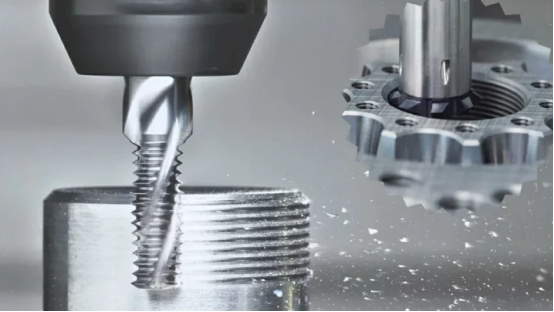
CNC milling is used for carving out non-cylindrical features. Examples include flats, drive interfaces, hex sockets, cross holes and locks.
Grinding for Great Surface
Grinding serves two purposes in threaded pin manufacturing:
- It brings dimensions within a tight tolerance range
- It creates a smooth surface and removes machining marks, topographic inconsistencies, and burr.
CNC Turning + Grinding for High Precision
For achieving high precision or strict tolerance, CNC turning is often followed by cylindrical grinding. Tuofa specialists in machining threaded pins that require tight machining tolerance.
CNC Machining Benefits for Threaded Pins
Control Threaded Features
The threaded features that are designed in CAD come exactly into the final machined threaded pins. CNC machining gives repeatability in quality. External and internal threads, partial threads, tapered threads, and fine-pitch threads can be produced with consistency.
Improve Precision
CNC machining gives unmatched precision. Every threaded pin comes with the same dimensional accuracy. As a result, threaded pins give accurate alignment without the risk of loosening.
Machine Hard Materials Easily
CNC machines can handle even hard materials like 4140 alloy steel, titanium, and cast irons. It's just the setup that needs to be perfect.
Achieve Complex Geometries
Complex geometries can be made with the same precision over and over again. Some examples are written here:
- chamfered ends for easier insertion
- Stepped shoulders for load control
- internal hex drives for removal
- tapered tips for self-alignment
Surface Treatment for Threaded Pins
Some materials, such as brasses and certain stainless steels, might not require any surface treatment. But, many other materials, especially plain carbon steels need surface treatment. It is mainly done to enhance corrosion resistance, wear resistance, and aesthetics.
Black Oxide
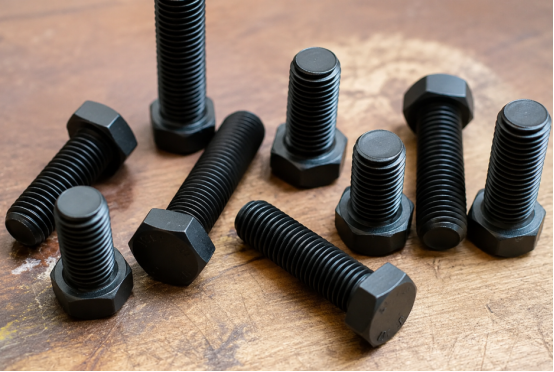
Black oxide surface treatment is applied over plain carbon threaded pins. It gives them a non-reflective look. Black oxide imparts mild corrosion resistance and wear resistance. It also prevents galling between the threaded pin and the adjoining components.
Zinc Plating
Zinc plating provides sacrificial corrosion protection to plain carbon steel threaded pins. The thicker the zinc coating, the longer it provides corrosion resistance. Zinc-plated pins are a cost-effective option. They cost a fraction of stainless-steel threaded pins. They have a silver-gray look.
Passivation
Passivation enhances the corrosion resistance. It is commonly used on stainless steel pins. This process refines the surface by thickening the oxide layer. It removes free iron and other contaminants. As a result, threaded pins become more durable.
Threaded Pin Design: Detailed Consideration
A perfect design considers conditions such as shear loads, tensile loads, surface conditions, operating conditions, and tolerances. Each application has its own set of limits and boundaries.
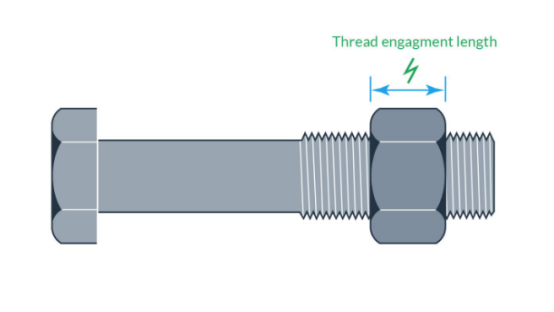
Thread Engagement Depth
Thread engagement depth is a critical area. It influences the load-bearing capability and fastening strength. Sufficient thread length withstands shear and tensile forces. Improper thread length causes thread stripping, loosening, or even mechanical failure.
Thread Class & Fit
Threaded pins come in two main fits:
- Tight fit:Used for accurate positioning, constriction, and vibration resistance. It is thus preferred in critical applications.
- Loose fit: Preferred for quick installation and frequent maintenance. It accommodates manufacturing tolerances, thermal expansion, and minor misalignment.
Chamfer and Lead-in
A chamfer is basically a beveled edge at the start of the threaded pin. It leads the pin into the mating hole during assembly. Chamfer can reduce cross-threading and allow a smooth start.
Customize Threaded Pins for For Special Applications
Standard threaded pins suffice for the performance requirements of many applications. Still, many critical applications require customization. It not only includes design variations but also material selection and surface treatment.
Reasons for Customized Threaded Pins
Customized threaded pins are needed wherever standard pins cannot meet the performance requirements. Limited space, specialized assemblies and unique operating conditions lead to customization. Material selection and surface treatment are other motivations for customization. Features like non-standard thread sizes, fine- pitch threads, extra -long pins, and locating sections are some of the features used in customized designs.
Typical Applications of Customized Threaded Pin
Customized threaded pins are commonly used in critical applications like medical, aerospace, and robotics. These applications have unique performance requirements that standard threaded pins cannot meet. Some notable applications include:
- surgical devices
- diagnostic instruments
- implantable systems
- transmission systems
- engine assemblies
- suspension components
- robotics arms
- CNC fixtures
- hydraulic systems
Tuofa Thread Turning & Milling Service for Your Project
Tuofa brings quick CNC turning and milling services for thread pin manufacturing. We have a well- equipped CNC facility operated by a dedicated team. We have an established track record of exceeding customers' expectations. Please feel free to send us your CAD file with the necessary design details. Our specialists would turn your ideas into reality.
Conclusion
Threaded pins are widely used for alignment and light fastening purposes. In comparison to non-threaded pins, threaded pins are easier to install. They give a stable and secure mechanical engagement. A few types of threaded pins are available that accommodate their target applications. As per design requirements, materials and finishing processes are selected. CNC machines play a pivotal role in the high-quality manufacturing of threaded pins.
FAQ
What are the two types of pins?
The two main types are threaded and non-threaded.
How to remove a threaded dowel pin?
They can be removed by using a puller bolt or threaded extractor.
What is the strongest dowel pin?
It depends on materials. 4140 hardened alloy steel dowel pins are one of the strongest.
 Effective B2B Marketplaces Examples: From General to Industry-Specific