Tel/WeChat:
  Email:


 Home
HomeDoes Titanium Rust? Guide for Using Titanium Parts

 Published:Aug 26,2026
No, titanium doesn't rust. This feature makes titanium usually used in many industries. However, many people still want to know whether titanium can rust in seawater or other harsh environment. Read this article to learn why it doesn't rust so that you can decide when to choose titanium for your project.
Does Titanium Rust?
Titanium doesn’t rust because it is non-ferrous metal. Ferrous metals are prone to rust because its main content is iron. What's more, titanium can form a passive dioxide(TiO2) film when it reacts with oxygen, which can prevent titanium from rust.
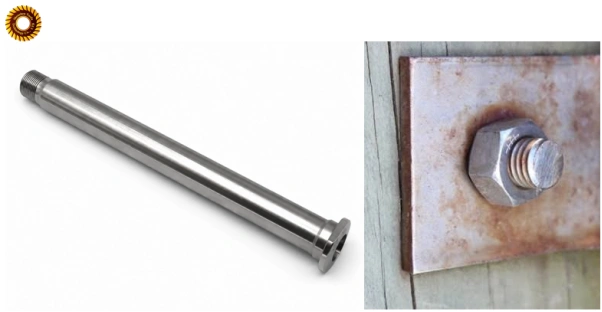
Can Pure Titanium Rust?
No, pure titanium can't rust because of its lower Fe content. The common pure titanium grades used in industries usually contain ≤0.50% Fe element. For example, the chemical elements of the pure Grade 2 titanium is:
|
Chemical Elements |
Content |
|---|---|
|
Ti |
Balance |
|
O |
≤ 0.25% |
|
Fe |
≤ 0.30% |
|
C |
≤ 0.10% |
|
N |
≤ 0.03% |
|
H |
≤ 0.015% |
It is easy to find that the Fe content of Grade 2 titanium is lower than 0.3%, which can't support titanium to undergo rust.
Can Titanium Alloys Rust?
Titanium alloys don't rust because they are not iron-based alloys. The common alloying elements in Titanium alloys are Al, V, Mo, Zr, Nb, Cr, etc, and over 80% element is Ti. Therefore, even adding Fe element in the titanium alloy, it still doesn't rust.
Titanium Rust vs Titanium Corrosion vs Titanium Oxidation
Many people are confused about titanium rust, titanium corrosion and titanium oxidation. Actually, they are relative to each other but not the same thing. Learn what are differences between them.
|
Comparison |
Titanium Rust |
Titanium Corrosion |
Titanium Oxidation |
|---|---|---|---|
|
Exist |
/ |
Yes |
Yes |
|
Main Reactants |
/ |
Acids, halogens, salt solutions, and other corrosive chemicals. |
Titanium + Oxygen |
|
Main Products |
/ |
Depends on the corrosive environment and medium. |
TiO₂(Titanium Dioxide) |
|
Typical Appearance |
Brown or reddish-brown “rust” on titanium is often caused by iron contamination or deposited iron particles. |
Pitting, surface roughness, discoloration, or localized material loss. |
A thin oxide film is usually invisible; thicker oxide layers may appear yellow, blue, purple, or other colors. |
Titanium Rust vs Titanium Corrosion
In many articles, titanium rust and titanium corrosion are discussed together, but they are not clearly distinguished completely. As we all know, rust is a kind of phenomenon of corrosion, usually appears as reddish-brown rust layer.
However, “Titanium rust” is not a formal term because there is no rust on titanium. Different from titanium rust, titanium corrosion is a common phenomenon in titanium applications. For example, if you find color change, pitting, darkening in crevices, embrittlement in titanium, these are typical titanium corrosion. But if you find red layer on titanium, it probably doesn't mean titanium rusts.
Titanium Rust vs Titanium Oxidation
As we have introduced before, titanium rust doesn't exist. While titanium oxidation is a common and beneficial phenomenon that occur when titanium reacts with oxygen. The reaction can generate a passive film. The protective layer formed by titanium oxidation can prevent titanium from corrosion. Unlike red rust layer, the passive film is transparent.
Does Removing the Oxide Layer Make Titanium Rust?
No. Removal or destruction of the oxide layer will not result in the rusting of titanium. Oxide layer is highly related to corrosion, but not rusting. Titanium doesn't rust due to little Fe element content. Therefore, removing the oxide layer can make titanium corroded but not rust.
Why Doesn't Titanium Rust?
Iron content is the core factor that affects the rust prevention performance of titanium.
Iron Content
Iron in titanium is a controlled impurity in terms of composition but not an iron alloy. For example, the highest amount of iron allowed in grades 2 and 5 of titanium according to the ASTM B265 standards are 0.30% and 0.40%, respectively. These amounts will not generate a continuous amount of iron matrix that leads to the rusting process. Externally generated iron as a result of using steel tools, abrasives, and handling equipment will lead to rust formation due to oxidation of the iron on the titanium surface.
Does titanium need rust or corrosion protection?
In general, the use of titanium does not need any special coating for resisting rust since the metal is inherently stable. And titanium itself has strong corrosion-resistance capability. While titanium needs corrosion protection in some extreme environment. The common methods for protecting titanium from corrosion include:
- Changing more corrosion-resistant titanium grade like Grade 7
- Applying surface finish like anodizing
What Is Titanium Used for Because It Does Not Rust?
Titanium is chosen when rust resistance, maintenance, and longevity are more significant than the expensive cost of the material.
Marine Parts
Propeller shafts, seawater pumps impellers, fasteners and heat-exchanger tubing made of Grades 2 or 5 of titanium can be used as they are exposed continuously to chloride containing medium. These parts made of titanium can perform well because titanium can't rust. While if the parts are made of steel, they are prone to failure in short time.
Medical Components
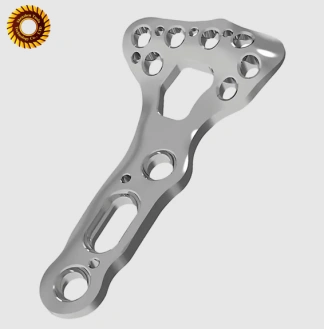
Many surgical components such as femoral stems, bone plates, and cages must be implanted into the human body. Importantly, human body fluid is a highly corrosive saline environment that causes. That is why the use of conventional metals like steel can pose health risks due to the potential for rusting, as steel does not possess excellent rust resistance. The rust-resistant nature of titanium makes it the ideal material for medical implant components.
Oil and Gas Parts
The tubing, manifold, and wellhead that will be exposed to corrosive conditions with a presence of chloride and sulfides are made up of titanium alloys, specifically, titanium alloy grade 12. This material is not susceptible to rusting, which may happen with high-strength steels under the same conditions of service.
What Are the Common Rust-Like Spots on Titanium?
The appearance of reddish-brown spots doesn't necessarily mean that the titanium is corroded. It is typically a result of contamination by something else present on top of the titanium material surface.
Iron Contamination Spots
The impurities in the iron get trapped into the surface of the titanium during manufacture and oxidize separately from each other. This leads to the creation of spots which create the impression that titanium has undergone rust, while in reality, it doesn't rust.
Machining Residue Stains
The heat generated by cutting operations during CNC machining will cause localized thickening of the oxide film. This creates a straw, purple, or blue interference color effect that is simply a heat discoloration of the metal and not rusting.
Rust Transfer from Steel Parts
When dealing with mixed assemblies, rusting particles of carbon steel may migrate onto titanium surface due to moisture contact with the surface of titanium. The rust is easily removed from the surface of titanium by wiping or weak acid treatment.
How to Avoid Rust-Like Stains When CNC Machining Titanium Parts?
The most common rust stains that appear on titanium are caused by contamination with ferrous elements that get to the surface of titanium during the machining, handling, and cleaning stages. At Tuofa, the following procedures can be implemented to avoid such contamination.
Using Clean Machining Tools
It is necessary to use clean machining tools, fixtures, work surfaces, and abrasives when machining titanium parts. Specialized tooling will prevent contamination of titanium surfaces with any traces of iron because of the higher requirement for cleanliness.
Prevent Cross-Contamination from Ferrous Metals
In order to prevent cross contamination, separate titanium machining from carbon steel machining and handling. It will minimize risks of transferring iron particles into titanium parts. Non-ferrous based surfaces, proper cleaning and handling of titanium parts will help to prevent such contamination as well.
Clean Titanium Parts After Machining
Clean machined titanium parts from chips, machining fluids, abrasive particles and other contaminants. Proper cleaning process at Tuofa is developed to remove all the contaminants and keep the surface clean before inspecting and finishing parts.
Inspect Parts for Surface Contamination
At Tuofa, any abnormal discoloration is first analyzed to determine whether it is corrosion or not. A visual inspection will help detect deposits on the surface while the water break test gives an idea about the surface cleanliness. In case there are any deposits of free iron, the ferroxyl test can be performed.
Can Titanium Rust in an Assembly?
Although titanium itself cannot rust even after being assembled, there are additional factors in the assembly that are not present in the loose part. The two risk factors that need to be controlled are contact with dissimilar metals and the presence of moisture in the crevices of the assembly.
No, titanium still can't rust in an assembly. However, in a assembly, titanium can accelerate the speed of rusting of other mating parts.
Why Can Rust Appear in a Titanium Assembly?
When titanium components are assembled with iron-based substrate components, the iron-based substrate components may rust, whereas the titanium components may exhibit a phenomenon known as "pseudo-rusting."
When steel fasteners, washers, or brackets are joined with titanium parts, each will corrode separately and deposit their corrosion on the titanium near them.
How to Prevent Rust in a Titanium Assembly
When Tuofa assembles titanium sub-assemblies, titanium fasteners are used or other non-ferrous materials compatible with titanium, joints of dissimilar metals are insulated using non-conducting gaskets or coatings, and channels for draining moisture from the crevices of the assembly are created. In case of bulk assembly for vehicle and equipment, all of the above is designed in the assembly drawing at the very beginning of the cutting process.
Titanium vs Other Metals: Rust-Resistant and Selection
Compared with the following materials, titanium exhibits excellent rust-resistance capability. Let compare them and figure out why they are easy to rust.
Titanium vs Carbon Steel
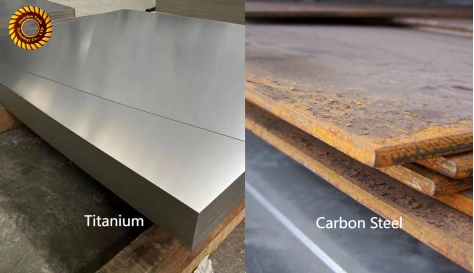
Carbon steel is poor in rust protection. In wet environment, carbon steel can easily react with oxygen and form red rust layer on the surface of parts. Therefore, carbon steel parts usually need surface finish, while titanium can be exposed to air freely in many times.
Titanium vs Stainless Steel
Stainless steel is also a rust-resistance metal because it can form a Cr2O3 protective passive film when it is exposed to air. But its capability of preventing rust is not better than that of titanium in oxygen-deprived environments.
Titanium vs Aluminum
The same as titanium, aluminum is also non-ferrous metal, therefore, it doesn’t rust.
However, titanium is more expensive than stainless steel, carbon steel, and aluminum. If you don't have high requirement for the resistance to rust, titanium isn't the best choice.
Conclusion
Titanium doesn't rust in the traditional sense since it isn't an iron alloy, but rather because of its passive film of titanium oxide which prevents corrosion. It is a very effective system, but there are some things that could affect its performance such as temperature, corrosive environment, surface contamination, and assembly processes. In order to have a good product, all of these parameters need to be controlled during manufacturing process.
FAQ
Does Grade 5 titanium rust?
No. Grade 5 titanium (Ti-6Al-4V) cannot rust because it is not based on iron. It possesses the characteristic corrosion resistance due to the passive oxide film forming on the surface while the aluminum and vanadium contents are responsible for mechanical and metallurgical characteristics of the alloy.
Does titanium tarnish?
The color of titanium can change according to variations in the thickness and composition of the surface oxide layer. Heat treatment, anodizing, machining, and contaminations can make titanium look differently but this does not automatically mean corrosion and loss of metal underneath the surface.
Does titanium rust in water?
Due to the stability of titanium's passive film, titanium shows very good resistance to corrosion in both fresh water and salt water. Nevertheless, the behavior of the metal in the aqueous environments may depend on factors such as temperature, chemistry, presence of chloride ions, and shape of the crevice, thus it cannot be claimed that titanium is immune to corrosion in all aqueous environments.
Why do machined titanium parts change color? Is it rust?
Not normally. The color changes of machined titanium are related to the heat generated during machining process and affecting the thickness of surface oxide film. This causes the formation of interference colors (straw, purple, blue etc.). The surface contamination and further surface treatment may influence the color of the surface.
 5 Types of Conductive Coatings for Machined Parts: Types, Materials, and Processes