Tel/WeChat:
  Email:


 Home
HomeZinc-Plated vs Galvanized Steel: Which One Should You Choose?

 Published:Aug 18,2026
Steel products corrode due to moisture. This moisture can trigger a chemical reaction called oxidation. To protect steel from corrosion, two popular methods are used: Zinc Plating and Galvanisation. These two protective coatings differ in coating thickness, durability, application techniques, and overall cost.
Understanding difference between zinc-plated and galvanised steel is key to making right material choice for your project. Here we'll talk about Zinc plated Vs Galvanized steel in detail. So you can choose right one according to your project requirements.
Explore Differences between Zinc-Plated and Galvanized Steel
Zinc-plated and galvanized steel are both protective coatings. They are typically designed to enhance corrosion resistance of steel structures. Both processes use Zn to protect steel but in different ways, resulting in varying properties. Let's see what both are in detail so you can get to know actual differences between them.
What Is Zinc-Plated Steel?
Zinc-plated steel is one on which we use electric current to apply a layer of zinc onto surface of steel. To obtain such steel, engineers use a cold zinc chemical solution to dip steel. Zinc plating requires a minimum thickness of 5 μm (0.005 mm) and a maximum of 25 μm (0.025 mm). Zinc-coated steel is used in many industries. For example, it's used in;
- Automotive industry
- Construction
- Electronics
- Marine industry
- Medical equipment, etc.
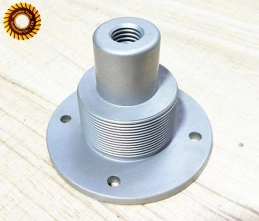
What Is Hot-Dip Galvanized Steel?
Galvanized steel is also Zn coated steel that is obtained by hot-dipping into bath on molten Zinc. In Hot-dip galvanizing, a steel object is immersed entirely in a bath of molten zinc. Molten zinc bath is around 450°C (850°F). Hot-dip galvanising offers a minimum thickness of 45μm (0.045mm). You can attain a maximum thickness of Zn layer of 100μm (0.1mm) with this method.
Components that require protection from corrosion and rust are subjected to hot dip galvanisation. For example, high-tensile bolts, nuts, and threaded rods are used in outdoor assembly.
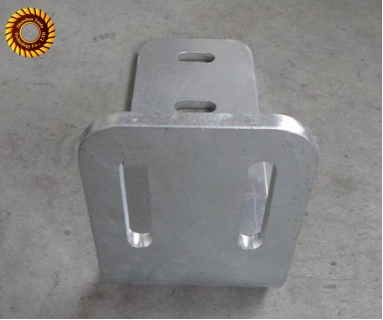
Quick Comparison: Zinc-Plated vs Galvanized Steel
|
Feature |
Zinc-Plated Steel |
Hot-Dip Galvanized Steel |
|
Process |
Zinc is electrically deposited on steel. |
Steel is dipped into molten zinc. |
|
Coating Thickness |
About 5-25 μm |
About 45-100 μm |
|
Corrosion Protection |
Moderate |
High |
|
Durability |
Best for mild environments |
Ideal for harsh outdoor conditions |
|
Finish |
Smooth and uniform |
Thicker and more textured |
|
Dimensional Change |
Minimal |
More noticeable |
|
Common Uses |
Fasteners, electronics, automotive parts |
Structures, fencing, infrastructure |
|
Cost |
Generally lower |
Generally higher |
|
Best For |
Indoor applications and appearance |
Long-term outdoor protection |
Appearance: Zinc-Plated Steel vs Galvanized Steel
Although both Zn-coated steel and galvanised steel both have a layer of Zn over them, they differ in physical properties like appearance. One has a shiny smooth surface and other a matte rough finish. Let's get to know about their appearance.
Color Differences
Zinc-Plated Steel
It has a bright silver metallic sheen. When it is treated with a secondary coating, it can also be a yellowish, blue, or iridescent color.
Galvanized Steel
Galvanized steel shows a rugged dark color. It also displays matte or muted color. As time passes, it may weather into a chalky gray color.
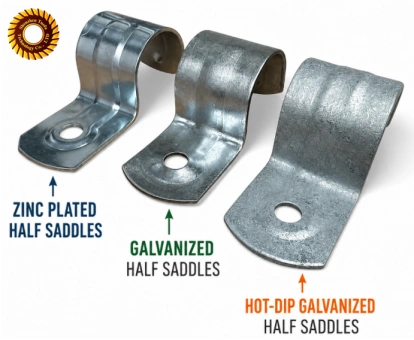
Appearance Uniformity
Zinc-Plated Steel has great uniformity and smoothness with a coating thickness of 5-25 μm. In contrast, Galvanized Steel shows prominent surface variation. It often displays thickness irregularities. It can show Zinc runs and a snowflake-like crystalline grain pattern known as "Zinc Spangle".
Which Is Better for Decorative Parts?
Zinc Plating is specifically better for decorative parts. Zinc plating creates a smooth, reflective silver finish. Plated Zn does not clog stamped patterns, sharp corners, or fine threads. It has flawless uniformity.
On other hand, galvanised steel has a rough and industrial appearance. With a dull, matte finish showing spangle patterns. Rough patches and Zinc runs may ruin decorative appeal. It is best for functional outdoor use.
Surface Quality: Zinc-Plated Steel vs Galvanized Steel
Three main dimensions define surface quality of zinc-plated steel and galvanized steel. ASTM B633 (Zinc Plating) and ASTM A123 (Hot-Dip Galvanizing) use a zinc layer for coating. But both produce distinct surfaces. We prefer smooth and uniform Zinc plating for decorative or precision parts. Galvanizing is best for practical corrosion protection and durability.
Surface Smoothness and Roughness
Hot-dip Galvanization has an industrial surface. It is acceptable when corrosion resistance is main requirement.
Zinc-plated steel is known for a smooth and lustrous finish. In Zinc plating, a zinc coating is applied electrochemically. We do it in a controlled process. It is considered best where appearance matters.
Coating Thickness
Coating Thickness depends on specification and application. Zinc plating uses a thin zinc layer of 5-25 μm. It has less effect on dimensions of precision components.
Hot-dip galvanizing can produce coatings in the tens to over 100 μm range. It depends on steel chemistry. Thicker Zinc Layer provides stronger long-term corrosion protection. But it can affect fit, tolerances, and surface appearance.
Surface Defects and Acceptable Conditions
For zinc-plated steel, minor variations in color or gloss may occur. For galvanized steel, some surface variation is normally inherent to the hot-dip process. Differences in brightness, Zinc crystal patterns, minor runs, and localized texture are acceptable conditions. Zinc layer remains continuous and meets applicable coating-thickness and adhesion requirements.
Corrosion Resistance: Zinc-Plated Steel vs Galvanized Steel
Which Has Better Corrosion Resistance?
Galvanized steel provides better corrosion resistance. Thickness of Zinc matters a lot in corrosion resistance. As we know, Zinc-plated steel typically has a thin coating. Hot-dip galvanized steel can have a much thicker zinc coating.
Zinc plating is beneficial for the following;
- For indoor components
- Fasteners
- Brackets
- Decorative parts
While HDG, having great corrosion resistance, is better choice for;
- Outdoor structures
- Construction components
- Fencing
- Poles
- Infrastructure
Why Is Galvanized Steel Usually More Corrosion-Resistant?
Here we'll tell you why Hot Dip Galvanized Steel is more corrosion-resistant.
Superior Coating Thickness
The zinc layer is an important factor in this regard. We use a solution of molten zinc with 10 times more zinc volume for galvanizing. It forms a protective heavy block. While in zinc plating, we use a thin layer of zinc.
Intermetallic Alloy Layer
For long-term physical wear, bonding mechanism is very important. Galvanizing is a thermal reaction that alters molecular structure at boundary. Zn chemically fuses with steel to form three distinct inner zinc-iron alloy layers. Such alloy layers are physically harder than base steel itself. This makes coating highly resistant.
Zinc Carbonate Patina Formation
The zinc corrodes first to save steel. In wet and dry atmospheric cycles, the outer zinc of galvanized steel reacts with oxygen and moisture to create Zn hydroxide. With passage of time, this compound reacts with atmospheric carbon dioxide to make zinc carbonate. Patina is a tough, insoluble, and tightly bound skin. It acts as a permanent shield.
Tolerance and Assembly: Zinc-Plated Steel vs Hot-Dip Galvanized Steel
Tolerance and assembly are two important requirements for selection of these coatings. Zinc-Plating has strong dimensional control. Holes and threads do not remain same after coating.
Hole Features
Zinc-plated steel usually has less dimensional change around holes. Holes are used without significant alteration.
Hot-dip galvanized steel can produce a greater buildup of zinc around hole edges and internal surfaces. Buildup of zinc reduces effective hole diameter. It also affects bolt insertion. Manufacturers use additional clearance of holes for precision assemblies.
Thread Fit
Internal Thread
Internal threads are sensitive to Hot-Dip Galvanizing. We handle internal threads with tape after galvanizing. Engineers can also use an approved design for a clear finish.
For Zinc-plated components, internal threads create less coating buildup because the zinc layer is thinner. However, plating specification and thread class still need to be considered.
External Thread
External threads receive zinc during coating making coating oversized. This may make assembly difficult. External threads produce a minor dimensional increase for Zinc -Plating. To control the coating thickness, we use standard mating components.
Thicker coating in HDG can significantly affect thread fit. We need oversize allowance, special thread dimensions, or post-galvanising treatment in hot-dip galvanizing. It depends on the application and governing standard.
How to Control Tolerance?
Tolerance should be considered before steel is coated. Engineers maintain tolerance before steel coating. This consideration maintains reliable assembly. You must consider the following factors to control tolerance.
|
Feature |
Zinc-Plated Steel |
Hot-Dip Galvanized Steel |
|---|---|---|
|
Coating thickness |
Relatively thin |
Much thicker |
|
Dimensional variation |
Lower |
Higher |
|
Hole-size change |
Usually small |
Potentially greater |
|
Thread interference risk |
Lower |
Higher |
|
Precision assembly |
Better suited |
Requires more planning |
|
Tight tolerances |
Easier to maintain |
More difficult |
|
Post-coating machining |
Less commonly required |
May be required for critical features |
|
Best application |
Precision and decorative components |
Structural and corrosion-resistant assemblies |
Applications of Zinc-Plated and Galvanized Steel
Both coatings are widely used. We prefer zinc plating for small and precision parts. Zinc plating is used where the parts are completely isolated from rain and moisture. Small and precision parts include:
- Watch gears
- Medical device fasteners
- Optical housing screws
- Drywall furring channels
- Office furniture frames
- Architectural interior trim
- Indoor HVAC ductwork brackets
- Laboratory instrumentation components
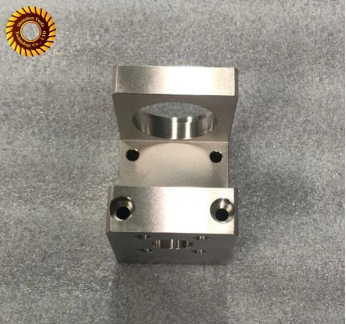
In comparison, for outdoor and corrosive conditions, HDG is used. Large steel parts for hot dip galvanizing include;
- Structural I-beams
- Bridge girders
- Warehouse steel skeletons
- Stadium trusses
- Cell towers
You can easily find that galvanizing is commonly used for large outdoor components, while it is also suitable for the components that require corrosion resistance. Zinc-galvanizing is suitable for the following parts:
- Yoke brackets
- Outdoor hinge blocks
- Clamp bodies
- Clamp bodies
Next let us explore the applications of zinc-plated steel parts and hot-dip galvanizing steel parts.
Automotive and Transportation Parts
Zinc-plated steel is used in brake caliper pins, fuel line clips, seatbelt mechanism springs, dashboard mounting fasteners, and interior door lock linkages. Protecting intricate parts from cabin humidity. However Truck chassis rails, trailer frames, underbody suspension arms, exhaust system hangers, and bus body skeletons use hot-dip galvanising.
Electrical and Electronic Equipment
For components requiring a smooth finish, like Computer chassis, server rack rails, switchgear internal assemblies, and relay housings, manufacturers prefer Zn plating, whereas galvanised steel is perfect for outdoor transformer housings, electrical utility pole cross-arms, and solar panel grounding racks because of its thicker Zn coating.
Outdoor Infrastructure
For low-wear indoor and outdoor components which are less prone to intensive corrosion Zn plated Steel is utilised. Like for padlocks, temporary shelter brackets, indoor signage frames, and covered junction boxes. In case of heavy outdoor infrastructure engineering use, thick Zn coatings of galvanised steel is applied. For example, highway guardrails, street light poles, chain-link fencing.
Agricultural and Industrial Equipment
Agricultural and industrial equipment that uses zinc plating is as follows;
- Hydraulic fittings
- Pneumatic valve pistons
- Pressure gauges
- Calibration pins
- High-precision textile machinery needles
Galvanized steel protects agricultural and industrial equipment from corrosive chemicals, fertilizers, and animal waste. We use it in;
- Grain silos
- Livestock feeding troughs
- Fertilizer spreaders
- Tractor structural plates
- Heavy industrial crane booms
When Should You Choose Zinc-Plated or Galvanized Steel?
Engineers must consider dimensional precision, environmental exposure, and aesthetic requirements for choosing right Zinc Layer. Herein we'll understand these things.
When Zinc-Plated Steel Is the Better Choice
Zinc-plated steel is ideal for high-precision and indoor use. It is also suitable for high electrical conductivity and complex part geometries.
When Galvanized Steel Is Better Choice
Hot-dip galvanized steel is top choice for heavy structural elements. It is also a better choice for harsh outdoor conditions. Followings are some conditions where we need galvanizing.
- Corrosive Outdoor Environments
- High Mechanical Abrasion
- Chemical and Agricultural Exposure
- Maintenance-Free Lifespans.
When Neither Is the Best Choice?
As we know, Zinc coatings are highly versatile. They are not suitable for certain chemical compounds, extreme temperatures, or food-grade processing lines. Here are some situations when neither is suitable.
Submerged Marine or Saltwater Exposure
Engineers avoid these coatings in submerged marine and saltwater environments. Zinc coating is destroyed in it. We use marine-grade 316 stainless steel or FRP instead.
Highly Acidic or Alkaline Environments
Zinc reacts aggressively and breaks down if the pH drops below 6 or rises above 12.
High-Temperature Operations
Zinc coatings begin to degrade and peel off at temperatures exceeding 200°C (392°F). In this condition, our manufacturers use aluminized steel or nickel-based superalloys.
Ultra-Precise Aerospace Components
We also avoid these coatings in ultra-precise aerospace components. We look for Electroless Nickel Plating (ENP) or Vacuum Deposition (PVD) for uniform surface control.
How Does Tuofa Ensure Reliable Zinc-Plated and Galvanized Steel Parts?
Our Tuofa team ensures highly reliable zinc-plated and hot-dip galvanized steel parts. They handle everything from precision CNC machining through final surface finishing. For this purpose, engineers do proper planning. Let's see how they manage their tasks efficiently.
Prepare Clean Steel Surfaces
Tuofa mandates a multi-stage chemical cleaning sequence before parts ever enter a molten zinc bath. It prevents parts from problem of premature rust.
Defect Prevention During Coating
There are different defects when zinc plating and galvanizing. As an experienced supplier, Tuofa can prevent the defects as below:
For zinc plating:
- Poor passivation color
- Pitting
- Burnt deposits
- Uneven coating thickness
For galvanizing:
- Bare spots
- Excessive zinc buildup
- Venting
- Blocked holes or threads
Correct Coating Thickness
Tuofa controls material thickness from initial CAD blueprints to final quality tracking. Our engineers use Pre-Ca lculated CNC Machining Allowances. For zinc plating, parts are machined to standard nominal limits (5-25 microns). For hot-dip galvanizing, internal threads are overtapped.
We note immersion time to govern coating depth. Engineers use eddy-current thickness gauges. It complies with global standards like ASTM B633 (for zinc plating) and ASTM A123 (for galvanizing). Our customers receive official SGS, RoHS, and dimensional inspection reports.
How to Inspect Zinc-Plated and Hot-Dip Galvanized Steel Parts?
Inspection is necessary to meet international quality standards. As you know, both coatings work differently. Their inspection method is also different. The tools used for inspection are also carefully selected.
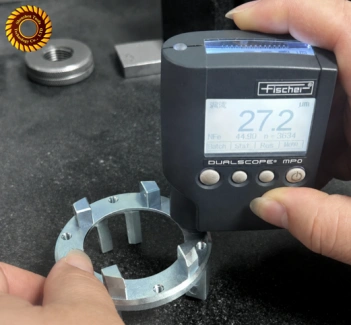
Coating Thickness Inspection
You must verify coating thickness. It ensures metal has sufficient sacrificial zinc mass. We need to meet its intended corrosion lifespan. It should be done without exceeding dimensional limits.
Inspection Tools Used
- Magnetic Film Thickness Gauges (Dry Film Gauges / DFT)
- X-Ray Fluorescence (XRF) Analyzers
- Optical Microscopes (ASTM B487 Cross-Sectioning)
Surface Quality Inspection
This inspection highlights structural defects or aesthetic anomalies. They can affect performance. They can also cause safety hazards during handling. For this purpose, the following inspection tools are used.
Inspection Tools Used
- Visual Inspection (Unmagnified / 1x)
- Stout Inspection Knife (ASTM Adhesion Test)
- Lead Acetate Solution Testing (ASTM B201)
Functional and Assembly Inspection
Zinc-plated external threads must allow a standard "Go" ring gauge. It helps to spin freely without catching. Hot-dip galvanized internal threads (nuts) must be checked using oversized plug gauges. It verifies they have been properly overtapped.
- Moving Part Binding: Assemblies with pre-welded hinges, shackles, or drop handles must rotate freely.
- Hydrogen Embrittlement Checking:High-tensile fasteners (over 31 HRC) are spot-checked. It identifies internal micro-cracks.
Inspection Tools Used
- Go / No-Go Thread Ring & Plug Gauges
- Vernier Calipers & Micrometers
- Bend/Ductility Testing Equipment (ASTM A143)
Conclusion
Zinc-plated and hot-dip galvanized steel both provide corrosion protection. Zinc-plated steel is an ideal choice for precision parts and indoor applications. On other hand, Hot-dip galvanized steel offers thicker protection. It is a better option for outdoor and harsh environments. You can make right choice depending on corrosion exposure, coating thickness, dimensional tolerance, and assembly requirements. We do proper surface preparation, coating control, and inspection. It helps ensure consistent part quality.
Tuofa can support you from CNC machining to surface finishes. Choose right zinc coating for your part's corrosion resistance and application requirements. Contact us today to discuss your project. We'll provide you with a customized manufacturing solution.
FAQ
Are Zinc-Plated and Galvanized Steel Magnetic?
Both zinc-plated steel and galvanized steel are generally magnetic. Because steel is magnetic. Zinc coating itself is non-magnetic, but it is too thin. It can't stop a magnet from attracting steel underneath.
Does galvanized steel rust?
Yes, but zinc coating significantly delays rusting. When it is exposed to moisture and oxygen, zinc corrodes. When coating is consumed, then steel develops red rust.
Can you weld zinc-plated steel?
Yes, zinc-plated steel can be welded. It needs proper precautions.
 Does Titanium Rust? Guide for Using Titanium Parts