Tel/WeChat:
  Email:


 Home
Home5 Types of Conductive Coatings for Machined Parts: Types, Materials, and Processes

 Published:Aug 28,2026
Conductive coatings are used on machine parts for electromagnetic interference (EMI) shielding, grounding, and corrosion protection. These coatings include metal-filled polymer paints, electroplated layers, and chemical conversion treatments. Materials like silver, copper, nickel, and gold are commonly used by manufacturers for conductive coatings. Understanding different conductive coatings will help you improve product safety and build reliable devices. Herein, we are gonna discuss 5 types of conductive coatings including copper coating, silver coating, gold coating, nickel coating, and Tin coating, exploring what they are differ and when they are suitable for your metal or plastic parts.
What Are Conductive Coatings?
Conductive coatings are specialised layers deposited on the surface of components. We primarily use such coatings to allow or limit the flow of heat or electricity. Conductive fillers, such as silver, copper, nickel, or graphite, are used with a base polymer. With the help of conductive coatings, lightweight plastic are being converted into functional electronic components, overcoming the static damage and electromagnetic disruption.
Conductive vs Non-Conductive Coatings
Conductive coating allows the flow of electrical current, while non-conductive doesn't. In general, conductive coatings are made of conductive materials. We use these materials in:
- Electromagnetic Interference (EMI) Shielding
- Antistatic Floors
- Printed Circuits
- Touch Sensors.
When it comes to Non-conductive coatings, they are actually insulators or barriers to block current. Such coatings are made with ceramics or epoxy resins. For example, these types of coatings secure circuit boards from short circuits. They prevent electrical arcing and stop corrosion in industrial equipment.
Are All Metallic Coatings Electrically Conductive?
As mentioned above, copper, Silver, or Gold electroplating conducts electricity very efficiently. But oxidised metallic coatings often do not. Oxidation or tarnishing can lower surface-level conductivity.
For instance, aluminum is metal and have good conductivity. However, aluminum coating is non-conductive because aluminum is easy to form a AI2O3 oxide layer, which is hard and acts as insulator, hindering conductance. Very thin or porous metal layers may have tiny gaps or high electrical resistance. Conductivity depends on many factors, such as:
- Composition
- Coating thickness
- Particle connectivity
- Oxidation
- Presence of insulating binders
Why Are Conductive Coatings Used on Machined Parts?
Basically, we use conductive coatings to protect the machined parts from electronic interference. Other core reasons are to shield sensitive components and ensure mechanical efficiency. To know more, here we'll provide you with the positive traits of Conductive coatings one by one.
Improve Electrical Contact and Grounding
Conductive coatings create low-resistance pathways. Low-resistance pathways ensure efficient current flow and reliable grounding. With this, these coatings also improve corrosion resistance and fill microscopic gaps between surfaces, enhancing their contact area. Resulting in a better, more effective electrical contact and grounding.
Provide EMI and RFI Shielding
You can use electrically conductive coatings to shield machined parts from EMI and RFI. This shielding stops signal disruption. Continuous and low-impedance conductive layers formed shield parts by reflecting, absorbing and grounding waves.
Corrosion and Oxidation Protection
Conductive coatings also make the components corrosion and oxidation resistant. Actually, these layers make a shield between metal and external environment so air and moisture can't reach the base metal. Not just this, the filler has an active metal which corrodes itself like sacrificial corrosion, preventing actual material. Lastly, the controlled electrical potential difference helps prevent galvanic reactions.
Improve Wear Resistance and Surface Durability
You must know that repeated use of components, gears, shafts, sliding contacts, and bearings. can decrease the surface hardness of machined parts. It may also increase friction. So, these layers are used for durability, and wear resistance.
Common Conductive Coatings in Industries
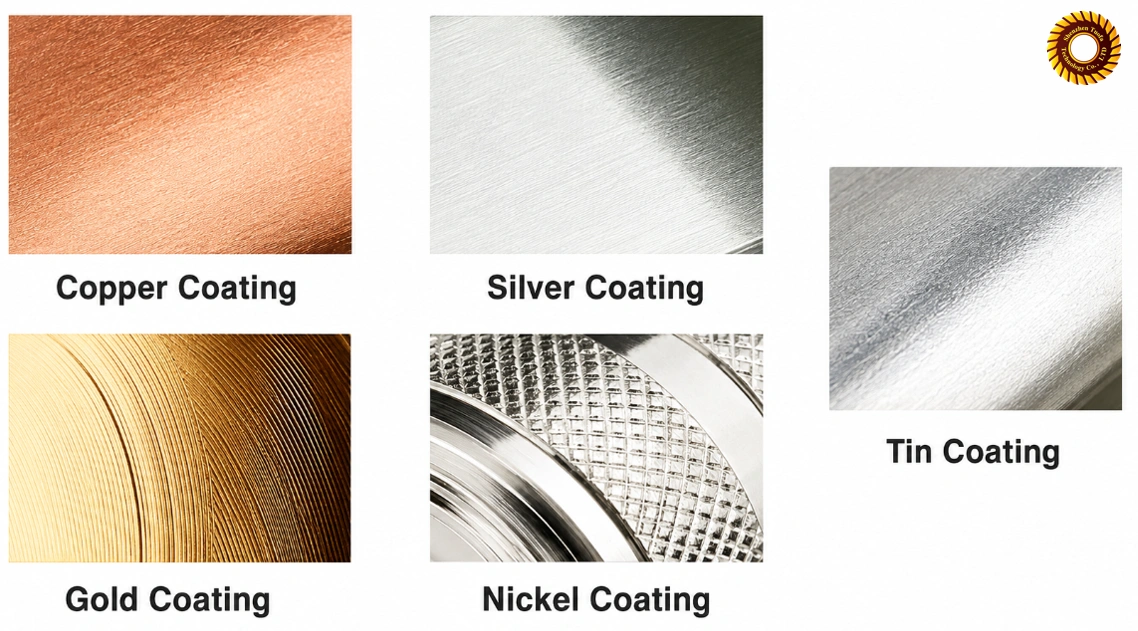
Here are some specific metals used in industrial conductive coatings. Engineers use these specific metals to manage electrical current, dissipate heat, and block EMI/RFI. Depending on the metal type, you can enjoy the benefits of coatings differently. Engineers choose them according to their requirements. Before a deep learning for these conductive coatings, let us distinguish them by appearance first through this table.
|
Coating |
Typical Appearance |
|---|---|
|
Silver |
Bright silvery-white with high reflectivity; may tarnish, yellow, darken, or turn black over time |
|
Copper |
Reddish-brown to orange-red |
|
Gold |
Golden yellow |
|
Nickel |
Cool silver-gray; can be bright or matte, often with a slight bluish-gray tone |
|
Tin |
Silvery-white to gray-white; commonly has a matte finish and usually appears softer and duller than nickel |
Silver Conductive Coatings
As we know, Silver is the most thermally and electrically conductive metal. We can say it is a high-speed champion. If you want efficient current flow and strong electromagnetic shielding, silver conductive coatings are the best choice.

They have the highest electrical conductivity (6.30 × 10⁷ S/m) with excellent thermal conductivity (429 W/m·K). Finding its use in high-end printed circuit boards (PCBs) due to its unbeatable electrical conductivity. Flexible electronic circuits and high-frequency communication hardware also love to use it. But wait, you may face some drawbacks by using silver coating like:
- High cost
- May tarnish with the passage of time
- Not reliable for abrasive environments
Copper Conductive Coatings
Copper has an electrical conductivity of 5.96 × 10⁷ S/m and a thermal conductivity of 401 W/m·K. So we use copper conductive coatings because they provide excellent conductivity at a lower cost. Cu coatings are highly versatile. Because Cu layer offers high conductance, strong adhesion with antimicrobial properties and smooth finish, easily applied it via spraying or plating across massive surface areas.

Manufacturers consider it suitable for large-area applications like Electric vehicle (EV) components, plastic electronic enclosures, PCB fabrication, and electronic housings. Unfortunately, Cu oxidises easily and reduces conductivity. So, you need a protective topcoat for copper coating.
Gold Conductive Coatings
Gold conductive coatings are considered only when you need long-term corrosion resistance. With an electrical conductivity of 4.52 × 10⁷ S/m, gold does not oxidize. Gold has a long service life and unmatched chemical stability. Manufacturers prefer to use gold conductive coating in:
- High-end connectors
- Military-grade electronics
- Medical implants
- Semiconductor devices
- Deep-space satellite hardwares

But you must know that it is a very expensive and less economical coating. Gold is less conductive than silver and copper. Engineers avoid gold layers for large surfaces. Out of its high cost, low machinability as it flakes easily.
Nickel Conductive Coatings
Nickel has an electrical conductivity of 1.43 × 10⁷ S/m and high wear resistance. It is not only trustworthy due to its conductivity but also for its mechanical longevity. Nickel is less suitable for high-speed electronic circuits. Sometimes, we avoid using it due to its lower conductivity and higher electrical resistance. Nickel is commonly used in industrial machines, battery components, and electrical connectors. As it handle high heat and conductance efficiently. They are very economical for use.
Tin Conductive Coatings
Let's discuss the most affordable metal. Tin is more economical and provides excellent solderability thats Sn. Moreover, it has 9.17 × 10⁶ S/m electrical conductivity. We use it commonly in electronic connectors, PCB finishes, battery terminals, and automotive wiring. But engineers mostly don't prefer tin-conductive coatings. The reason is that they can develop tin whiskers in certain conditions. Moreover, it is less wear-resistant.

Are There Transparent Conductive Coatings?
We have discussed silver, copper, nickel, tin, gold conductive coatings, and they all have unique colors. While in daily life, we can also easily find some transparent conductive coats, such as ITO coating, FTO coating, AZO coating, etc.
Common Conductive Coating Methods
There are a few conductive coating methods. You can choose them according to your requirements. They depend on some factors like;
- Substrate material
- Electrical conductivity
- Coating thickness
- Production volume
- Cost and durability
You can enjoy the benefits of each method that is suitable for your industrial use. The following table will guide you about their merits, demerits, and cost in detail.
|
Method |
Advantages |
Limitations |
Cost |
|---|---|---|---|
|
Conductive Painting |
Low cost and easy to apply |
Lower durability and conductivity |
Low |
|
Electroplating |
Durable offer high-performance finish. |
You need a Conductive substrate |
Medium |
|
Electroless Plating |
Uniform coating |
higher chemical cost. |
Medium-High |
|
Vacuum Deposition (PVD/CVD) |
Ultra-thin, pure coatings |
Expensive equipment |
High |
|
Thermal/Cold Spray |
Thick, wear-resistant coatings for large parts. |
High equipment cost, surface finishing needed. |
High |
Conductive Painting
In this method, we apply conductive paint using a spray or brush. It forms a conductive surface. Solvents evaporate during air-drying. We can say that conductive painting is an ideal conductive coating for plastics and EMI protection. But why? Because it is capable of transforming naturally non-conductive plastic housings into high-performance Faraday cages.
Electroplating
In the electroplating process, we apply a metal layer onto a conductive surface with help of electrical current. It provides a durable coating and high conductivity. Electroplating is done on CNC-machined connectors, switch contacts, and housings. Resulting in enhanced electrical conductivity, preventing rust, and resisting daily wear.
Electroless Plating
The non-conductive substrates are dipped in a catalyst (e.g., palladium) in this method. Engineers give a chemical bath to both substrates and dissolved metal ions. In this way, you can deposit metal without electricity. It is a slow process and needs high chemical consumption. Electroless plating is considered best for intricate shapes and uniform coating.
Vacuum Deposition
Vacuum deposition is known for its excellent adhesion and purity. In this method, metal vapor forms a conductive film in a vacuum chamber. Vacuum Deposition demands a higher cost than the above methods.
Thermal Spray and Cold Spray
Engineers use thermal and cold spray for excellent wear resistance. This method requires high equipment costs. Because engineers use High-velocity metal particles to make a conductive coating on the surface.
How Do You Select the Right Conductive Coating?
You must know your requirements for choosing the Right Conductive Coating. It includes electrical, mechanical, and environmental demands. The following factors will help you select the most cost-effective coating. Evaluate your coating depending on your budget and needs.
Identify the Main Application of Your Parts
The primary purpose of coating is identified by its main application. Some parts require EMI/RFI shielding. However, others need wear protection or have electrical conductivity. Like if you need EMI or RFI coating you should go with Ni or Cu coating.
Consider the Operating Environment
We know that temperature and exposure to moisture can affect coatings. So while selecting a coating, remember environment in which your components are going to function. You may require nickel or gold for superior corrosion and oxidation resistance in harsh chemical surroundings.
Consider Part Geometry
Electroless plating is the best choice for complex geometries. Manufacturers use conductive paint or thermal spray for irregular surfaces. We recommend Dip coating for small parts.
Consider the Cost
Copper, nickel, or conductive paints are more economical. We know that Gold and Vaccuum deposition provide more durability. But they sometimes don't meet your budget.
Conductive Coating Selection Table
|
Purpose of Coating |
Which coatin to Select Coating Type |
CNC Components |
|---|---|---|
|
Wanna block Interference? |
Use EMI/RFI Shielding Paint |
For Electronic housings and enclosures |
|
Prevent Static |
Use antistatic or ESD coating. |
Components of assembly lines |
|
Maintain Visibility and good surface finish |
Opt fot transparent Conductive Film (ITO) |
touch panels, heater windows, and optical sensor covers |
|
Flex and Bend |
Printed Conductive Ink |
RFID tags and flexible circuits |
|
Endure High Heat |
Colloidal Graphite Coating |
Furnaces and other heating elements |
Choose Conductive Coatings for Different Parts
For this purpose, substrates play a key role. Different substrates demand different Conductive coatings. The coating must adhere to the base alloy.
Conductive Coatings on Metal Parts
Galvanic corrosion is a challenge for coating metals. High electric potential may cause corrosion of the part in a humid environment. Metal parts get coatings to boost conductivity, wear resistance, corrosion resistance, and other features. It can extend the service life of your machined part.
For Aluminum Parts
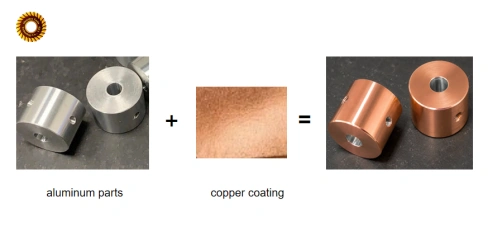
Copper, silver, gold, tin, and nickel coatings are suitable conductive coatings for aluminum. As mentioned earlier, aluminum has good electrical conductivity, but when exposed to air, it quickly forms a dense aluminum oxide (Al2O3) layer on its surface. This oxide layer is electrically insulating. Because of its lightweight properties, aluminum is widely used in aerospace electronic equipment. To prevent the oxide layer from interfering with electrical current transmission, conductive coatings such as nickel and copper coatings are often applied.
For Steel Parts
Steel is also electrically conductive, but it is highly susceptible to corrosion and rust. In practical applications, steel usually does not need a conductive coating because itself is already electrically conductive. In many applications, an insulating coating is used for steel because it can help prevent short circuits and leakage currents while also reducing the risk of galvanic corrosion between dissimilar metals. Non conductive coatings for steel include powder coating, epoxy coating, PTFE coating, PVC coating, etc.
For Stainless Steel Parts
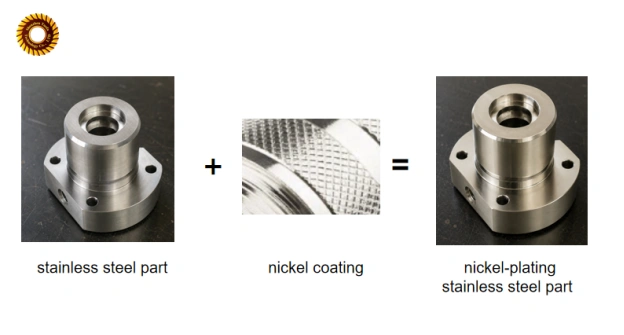
Stainless steel is somewhat similar to aluminum in that it forms a chromium-rich passive oxide layer on its surface. This passive layer can increase surface resistance and affect electrical contact performance. Conductive coatings such as nickel or copper can therefore be applied to help maintain reliable surface conductivity. However, stainless steel is often used in applications where certain components must be electrically isolated, such as parts within battery assemblies. In these cases, a non-conductive coating may be applied to the stainless steel to prevent unintended current flow or electrical contact with nearby conductive components. Powder coating, epoxy coating, polyurethane coating, FEP coating are typical non conductive coatings for stainless steel parts.
For Copper Parts
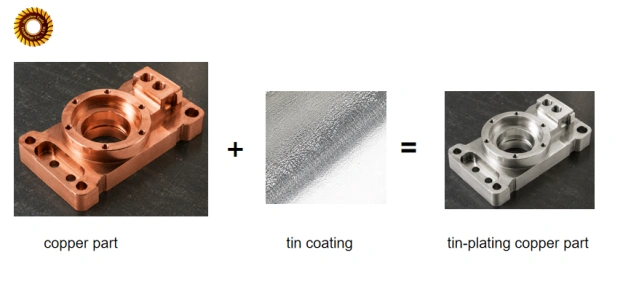
Copper already has excellent electrical conductivity, but conductive coatings are sometimes applied to copper parts to maintain stable electrical performance, prevent oxidation, and extend service life. Common coating options for copper parts include tin, silver, and gold coatings.
Conductive Coatings on Plastic Parts
Plastic (such as ABS, Polycarbonate, and Nylon) is non-conductive. We apply conductive coatings on plastic for various purposes. It is the best alternative to metal enclosures. PVD (Physical Vapor Deposition) and CVD (Chemical Vapor Deposition) boost the electrical performance of plastic. We also use Conductive painting and electroless plating methods.
Conductive Coating Compatibility Issues
According to our team, not all coatings are suitable for all base alloys. The following are some factors that may reduce coating performance:
- Differences in chemical properties
- Thermal expansion
- Corrosion behavior
Copper or Nickel Plating on Aluminum Alloys
Copper coatings can be applied to aluminum parts, but if the copper layer is damaged, direct contact between copper and aluminum can lead to galvanic corrosion, which may accelerate the deterioration of the aluminum substrate. To reduce this risk, a suitable nickel barrier layer is typically applied before the copper plating.
440C Stainless Steel with Bright Nickel Plating
Bright nickel plating is compatible with 440C stainless steel, but it should not be applied directly to an untreated 440C surface. The chromium-rich passive film on 440C stainless steel can interfere with coating adhesion. Therefore, the surface is usually activated first, followed by a nickel strike before the bright nickel layer is deposited.
Titanium Alloys with Copper or Nickel Electroplating
Titanium can be electroplated with copper or nickel, but its surface naturally forms a stable titanium oxide layer that can significantly reduce coating adhesion. If copper or nickel is deposited directly onto untreated titanium, defects such as blistering and peeling may occur. For this reason, proper surface activation is essential before electroplating titanium.
How to Design Parts for Conductive Coating?
Designing parts is the most important factor that directly affects conductive coatings. For this purpose, the following elements play a key role:
- Part geometry management
- Dimensions
- Masking constraints
Define Conductive Areas on the Drawing
First, mark the areas on your technical blueprint where you need coating. We use cross-hatched lines for marking the boundary fields. It makes your coating easy and reduces material waste. Proper masking is essential to avoid dimensional changes. It also saves surfaces that should remain insulated. Here are some areas that must be masked.
- Threaded holes
- Sealing surfaces
- Bearing seats, etc.
Allow for Coating Thickness
For designing components where you need conductive coatings, add a thickness value of coating in blueprints. Like for Conductive wet paints, add 0.015 mm to 0.050 mm per side. In case of Electroplating or chemical conversion films, add 0.001 mm to 0.015 mm. Remember the excessive coating can increase friction. Thick coatings also alter fit dimensions.
Avoid Difficult-to-Coat Features
Certain parts are difficult to coat uniformly. These parts include deep blind holes, narrow slots, sharp recesses, and enclosed cavities. Liquid coatings pull away from sharp outer edges.
Conductive Coating Workflow in Tuofa One-Stop Solution
Toufa's engineers follow a streamlined workflow. Our team makes proper plans to manage the process effectively. From design to final coating, whole process is optimized with careful attention. We ensure quality and consistency.
Material and Coating Compatibility Review
Suitable environment, base alloy, and required application are evaluated first. Because we know that compatibility between the base alloy and the coating is very important. It prevents material decay. Tuofa One-stop solution usually helps our customer evaluate the compatibility between materials and surface treatment, avoiding the predictable risk.
CNC Machining Allowance for Coating Thickness
At Toufa, we carefully manage dimensions before coating and plating. In this way we ensure perfect final fits. We adjust our machining tolerances and mask critical features. After that we apply precise dimensional allowances to account for added layer thicknesses.
When Masking Is Better Than Machining Allowance
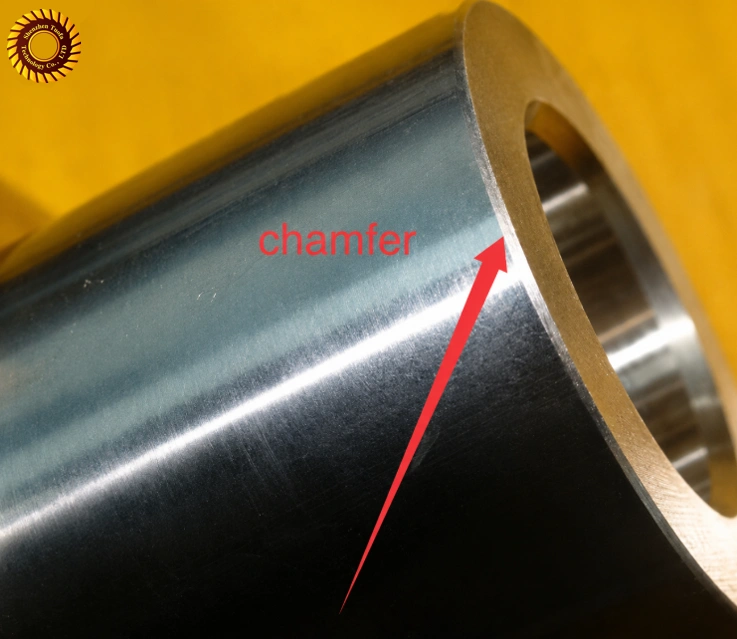
In practice, dimension-critical mating areas are sometimes masked to prevent coating buildup. If appearance is also important, these features should be positioned inside the assembly whenever possible so that the uncoated area is hidden after assembly. A small recess, relief, or undercut can also be added near the coating boundary to provide a controlled termination point and make the transition between coated and uncoated surfaces less visually noticeable.
Conductive Coating Quality Inspection
At the final step, Toufa's team does a quality examination of each coated part. They verify adhesion, coating strength, surface enclosures, and electrical conductivity. Meanwhile, the dimension of parts after surface finish will be inspected strictly to ensure the normal assembly. Moreover, ASTM D3359 cross-hatch tape tests confirm structural integrity. They ensure adhesion strength under stress. In this way, Toufa meets the customer and industry standards.
Conclusion
Conductive coatings play an essential role in improving the performance of machined parts. Right coating depends on the substrate material. Your selection is defined by application requirements, operating environment, part geometry, and budget. Remember thar proper part design, compatibility evaluation, and quality inspection enhance coating effectiveness.
FAQ
How do I choose the best conductive paint for electroplating?
You can choose according to your base alloy and required conductivity. Silver and copper conductive paints are widely used. Common conductive paints for electroplating include, silver, nickel paint, and even graphite conductive paint.
What Is the Most Conductive Coating Material?
Silver is the most conductive coating material. As it has just once valence electron and unique crystal structure. Both these factors allow correct to move effectively with minimum resistance.
What Is the Best Conductive Coating for EMI Shielding?
Silver has great electrical conductivity. Its volume resistivity is just 0.000075 Ω·cm. It is the best option for EMI/RFI Shielding. The conductivity of copper is little worse than that of silver. But compared with silver, copper is cheaper and more common for CNC machining.
What are the best conductive coatings?
Deciding best coating vary by its requirements. For exampl silver-coated copper is the top choice for standard consumer electronics shielding OR Nickel-filled epoxies excel in high-friction applications.
Is powder coating conductive?
No, powder coating is non conductive because it forms an insulating polymer layer.
 Is 16Mo3 Good for CNC Machining? Properties & Applications