Tel/WeChat:
  Email:


 Home
HomeWhat Is A Machined Housing: Types, Comparison & Manufacturer

 Published:Sep 19,2026
Are you looking for a custom CNC-machined housing for your project? Finding a reliable manufacturer can be difficult. You need to consider machining capabilities, costs, and complex features that may be difficult to produce. This guide explains what a CNC-machined housing is, how it is manufactured, what affects machining costs, and where these housings are commonly used.
What Is a Machined Housing?
A CNC machined housing is a enclosure manufactured through CNC machining processes like milling and turning. CNC machined housings are commonly used to protect internal components, position parts, support bearings or shafts, and seal fluids. There are two types of CNC machined housings: Fully machined housing and semi-machined housing.
Fully Machined Housing
It means the housing is machined directly from solid material using CNC machining, without casting, forging, or extrusion. A machined-from-solid housing can achieve high accuracy, typically around ±0.01 mm to ±0.05 mm, with a good surface finish. After machining, it may only need deburring, surface treatment, or inspection before use. If you want to reduce additional machining and move directly to surface finishing or assembly, this fully-machined housing will be a suitable choice.
Partially CNC-Machined Housing
Unlike fully machined housings, partially CNC-machined housings are first formed by processes such as casting, forging, or extrusion. CNC machining is then used to finish the critical features. Features such as holes, mounting faces, sealing surfaces, and threads are usually CNC machined. Non-critical areas can remain as-cast, as-forged, or as-extruded. This approach reduces machining time, material removal, and overall manufacturing cost.
Machined Housing vs Other Housing
You may feel puzzled: there are many types of housing that are manufactured by different processes such as sheet metal fabrication, die casting, stamping, or extrusion, then how can I differ CNC machined housings among these housings? In fact, they have different features provided by different manufacturing processes. Let us compare them.
Machined Housings vs Cast Housings
Machined housings are usually cut directly from solid metal using CNC machining, while cast housings are manufactured through casting, in which molten material is poured into a pre-manufactured mould to get the housing.
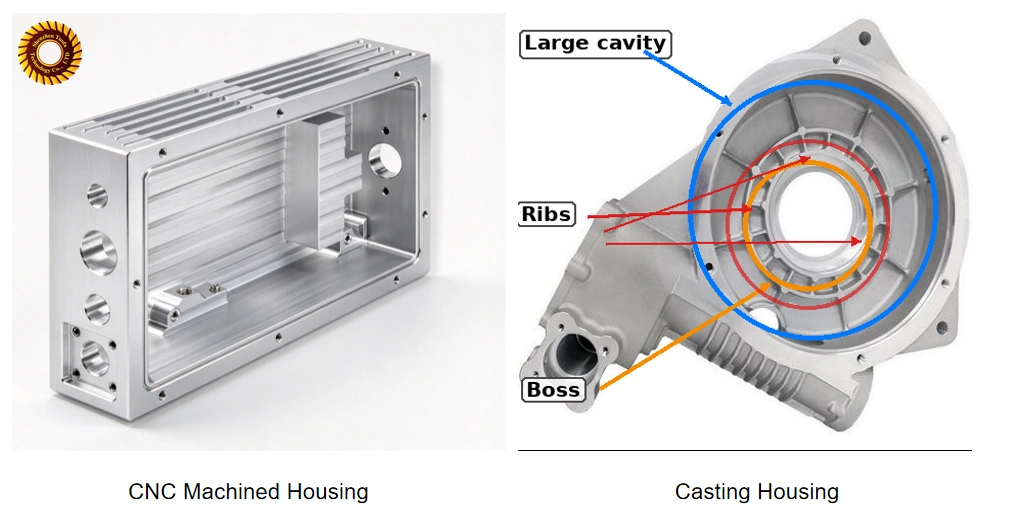
Machined housings usually have uniform machining marks and sharper features, while cast housings often have textured surfaces, rounded transitions, ribs, bosses, a rough finish and thicker porous walls.
|
Comparison |
Machined Housing |
Cast Housing |
|---|---|---|
|
Cost |
Better for low volumes |
Better for high volumes |
|
Production Volume |
Prototype and low volume |
Medium and high volume |
|
Tolerance |
High precision |
Critical areas often need CNC finishing |
|
Secondary Machining |
Usually not required |
Often required |
|
Complex Geometry |
More machining may be needed |
Better for complex shapes |
Machined Housings vs Sheet Metal Housings
Housings manufactured through CNC machining and sheet metal fabrication have huge differences.
|
Comparison |
Machined Housing |
Sheet Metal Housing |
|---|---|---|
|
Cost |
Higher |
Lower |
|
Features |
Bores, pockets, threads, grooves, bosses |
Bends, flanges, tabs, cutouts, punched holes |
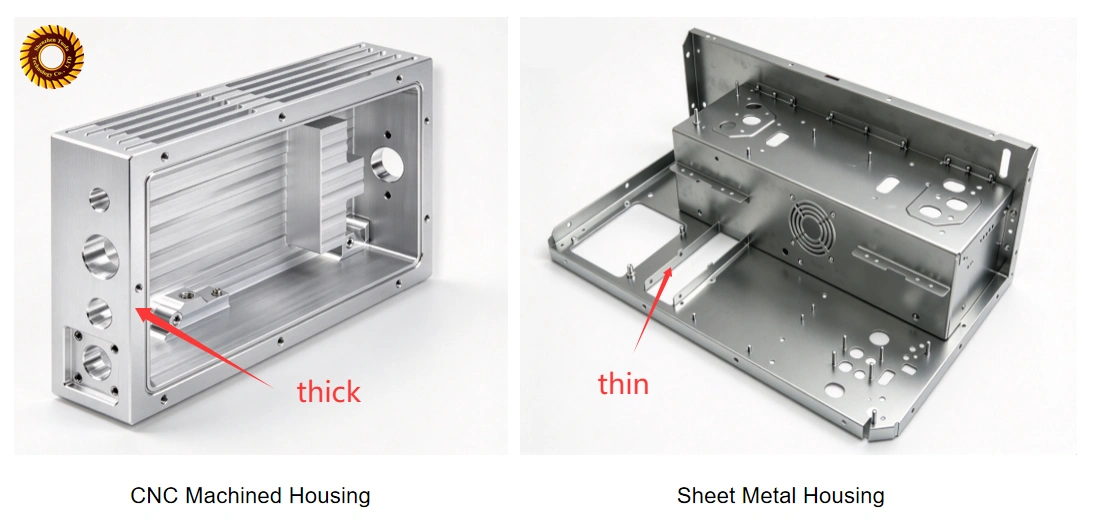
In general, CNC machined housings have thicker walls, precision features, and visible machining marks, instead, sheet metal housings are thin because they are usually manufactured by bending the metal sheet into 3D-shape structure. Sheet metal housing offers uniform wall thickness in range of 0.5 mm and 6.0 mm.
Machined Housings vs Stamped Housings
CNC-machined housings are typically made from billet, plate, or bar stock. Stamped housings usually start with sheet metal and are formed by processes such as blanking, drawing, bending, and embossing.
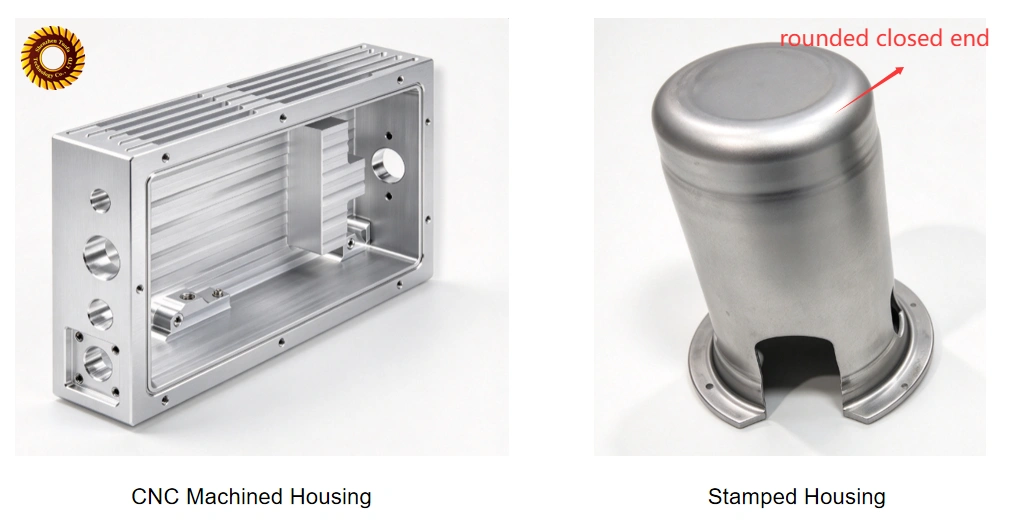
Machined housings offer greater 3D design freedom, including complex cavities, pockets, and features on multiple faces. Stamped housings are formed from sheet metal and are better suited to thin-wall, bent, and formed geometries.
|
Comparison |
CNC Machined Housing |
Stamped Housing |
|---|---|---|
|
Cost |
low volumes |
high volumes |
|
Wall Thickness |
Usually thicker |
Usually thin and uniform |
|
Features |
Bores, pockets, threads, grooves |
Bends, ribs, flanges, embosses |
|
Secondary Machining |
Usually not required |
May be needed for precision features |
Machined Housings vs Extruded Housings
With machined housings you can achieve variable cross-sections, internal cavities, and features on different faces. However, extruded housings require a continuous profile along their length.
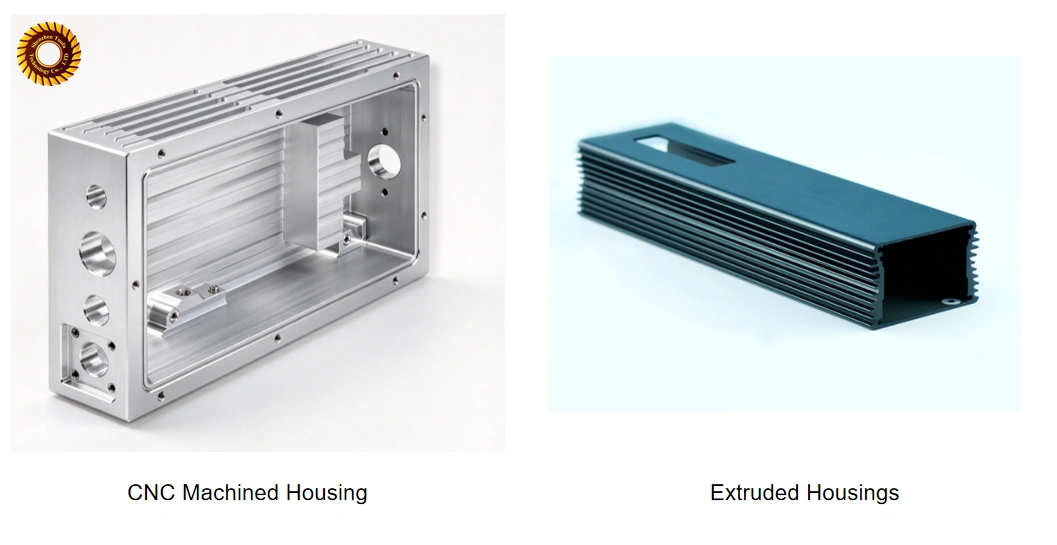
Machining also allows localized wall-thickness changes, whereas extrusion generally requires more uniform walls to limit cooling distortion. Extruded surfaces typically show longitudinal die lines, while machining produces tool marks that can be post-processed.
|
Comparison |
CNC Machined Housing |
Extruded Housing |
|---|---|---|
|
Cost |
Better for low volumes |
Better for larger volumes |
|
Production Volume |
Prototype and low volume |
Medium and high volume |
|
Geometry |
Complex 3D shapes |
Constant cross-section |
|
Precision |
High precision |
Critical areas often need CNC finishing |
|
Features |
Pockets, bores, threads, steps, sealing faces |
Fins, channels, rails, grooves, thin walls |
|
Secondary Machining |
Usually limited |
Often needed for holes, threads, and end features |
Main Types of Machined Housings by Application
Machined housings are also subdivided based on their applications. For example housings for sensors are far more different in their properties from housings used for filters and fluids. Let's get to know about their core functions.
Sensor Housing
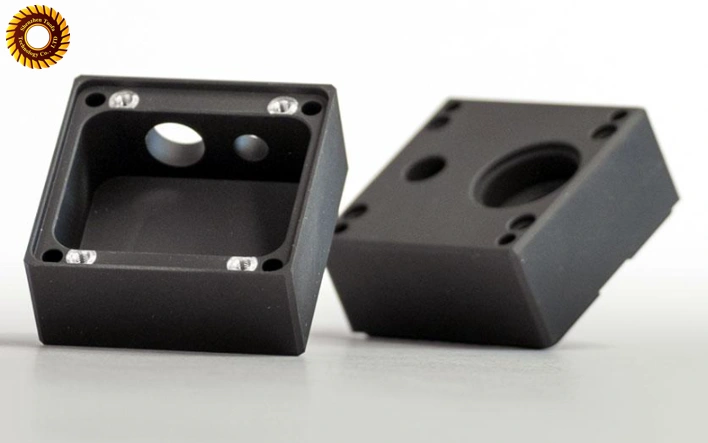
Sensor housings are built to protect internal electronic components from harsh surroundings. High-precision O-ring grooves and threads made using CNC of these housings play a key role in effective sealing to prevent leaks. Machined sensor housing also acts as an integrated heat sink as metal walls absorb heat from internal electronics. Metal conducts thermal energy away from the sensitive sensor chip.
Motor Housing
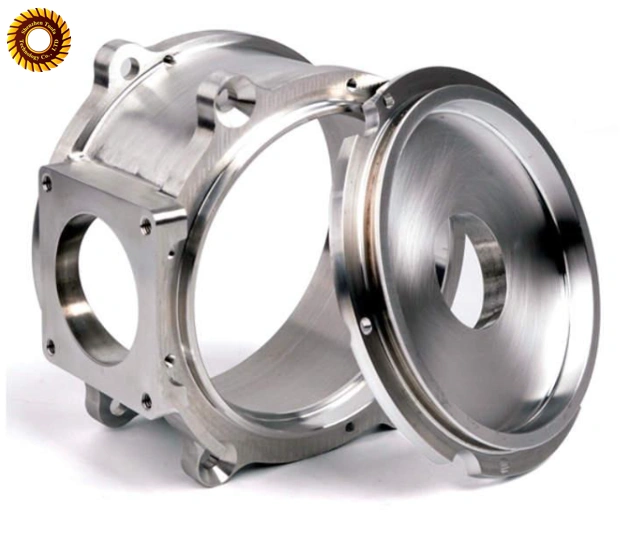
Motor housings are responsible for protecting internal components like rotors and stators from moisture, dirt, debris and harsh environments. They also play a crucial role for structural alignment and thermal stability.
Machined housing possesses tight tolerance. Such high precision is responsible for optimising the critical interfaces of bearing fits, seal faces, and stator bores. Resulting in a significantly suppressed operational friction and parasitic power loss.
Bearing Housing
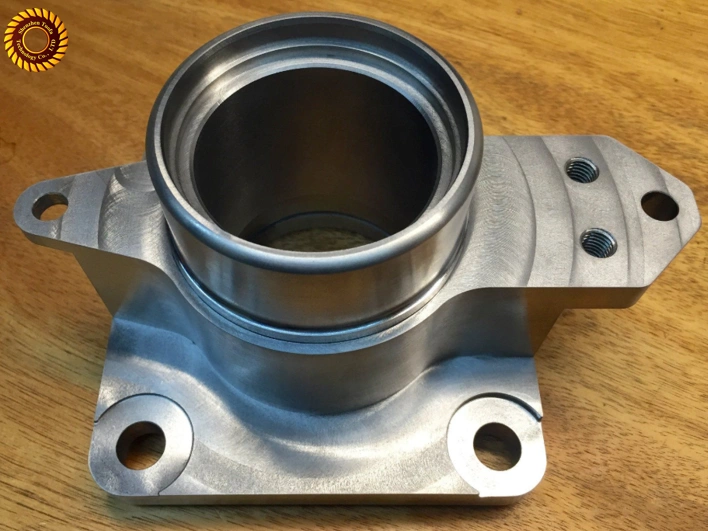
Bearing housings are responsible for keeping bearings aligned, handling loads and protection fron the surroundings. Precision-machined internal surfaces hold the outer ring of a bearing with exact, microscopic clearances. Preventing it from spinning while allowing safe thermal expansion. For example, a water pump housing bore uses a sliding fit so the bearing can move slightly when heated.
Fluid-Handling Housing
The main purpose of filter and fluid housing is support as well as hold internal elements of filter. Components including bags and cartridges and membranes.
How to Choose Suitable CNC Housings?
The application of a housing can affect the choice between a fully machined housing and a partially machined housing, such as cast + CNC, forged + CNC, or extruded + CNC. So, which option is right for your project?
Choose Fully CNC Machined Housing
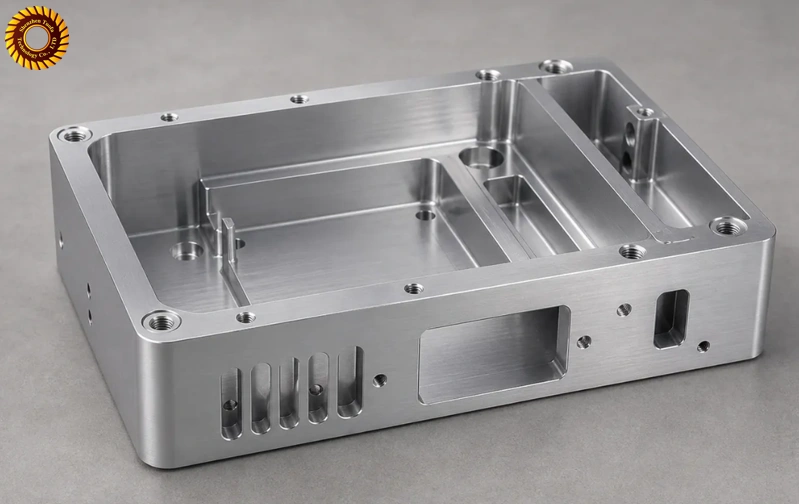
- Prototype or low-volume production: You can choose full CNC machining if you need to develop products, custom several housings for special applications, custom housings for testing functions.
- Frequent design changes: The drawing can be modified frequently because the CNC programs can be changed.
- Complex Geometry: 5-axis CNC machining allows creating complex features like holes, curved surface, multi-face features, steps.
- Small or medium-dimensional housings: CNC machining directly from a solid block may be expensive, but if the desired housing is small or medium, the cost maybe acceptable.
H3 Choose Partially Machined CNC Housings
If the cost for fully-machined housing is more expensive for you, partially machined CNC housings will be the good choice. Machined cast housings, machined forged housings, and machined extruded housings are selected for different reasons.
If a fully machined housing is too expensive for your project, a partially CNC machined housing may be a better choice. Cast, forged, and extruded housings are combined with CNC machining for different reasons.
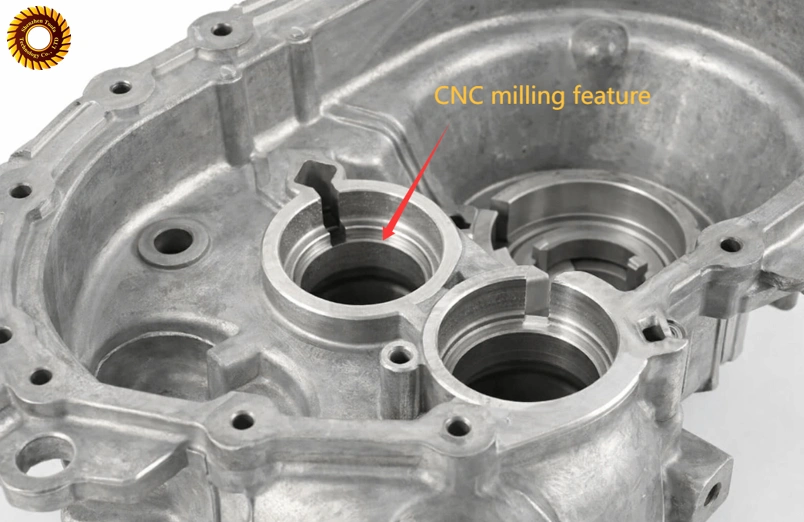
Cast Housing with CNC Finish Machining
This type of housing is often selected to reduce manufacturing costs. If the housing is large or has deep cavities, casting followed by CNC machining can be a better choice. In this case, CNC machining is only used for a few critical features.
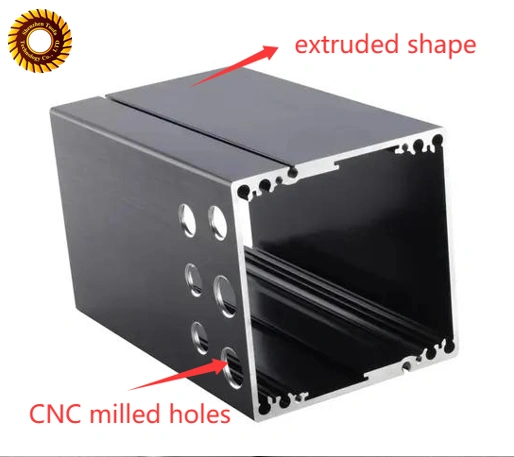
Extruded Housing with CNC Machining
Machined extruded housings are also often chosen to reduce manufacturing costs. They are a good option for long housings with a constant cross-section and continuous features. This process is especially suitable for medium- to high-volume production when only moderate precision is required.
Forged Housing with CNC Finish Machining
Forged housings are often chosen for better load-bearing performance. Forging can also improve material utilization and reduce CNC machining time. Compared with cast or extruded housings, forged housings are often more suitable for high-load applications. Forging with CNC finish machining is also suitable for medium- to high-volume production.
What Materials Should You Choose for Machined Housings?
Metal Housings
- Brass Housing: Brass is used to manufacture housings that have superior corrosion resistance and good electrical conductivity. Brass housings is commonly used in plumbing, pneumatic & hydraulic systems, gas equipment, fluid control system.
- Aluminum Housing: Aluminum is used to make lightweight housings with a high strength-to-weight ratio. Examples are unit (ECU) boxes, gearbox cases, and sensor housings.
- Copper Housing: Copper's good thermal conductivity makes it a good option for manufacturing machined housings. Copper housings are commonly used for thermal-management components, UHV equipment, vacuum devices, and RF or accelerator components.
- Steel Housing: Steel is suitable for housings that are shock resistant, strong, and can handle heavy loads. AISI 1020 or 1045 steel grades are commonly used.
- Stainless Steel Housing: SS housings are durable and long-lasting with their tensile strength up to 515 MPs. Industrial pumps got stainless steel housing to prevent any sort of leakage and rusting.
- Titanium Housing: Titanium housings are commonly used in applications that require low weight, high strength, corrosion resistance, or biocompatibility. They are typically used for high-value, high-performance components.
Plastic Housings
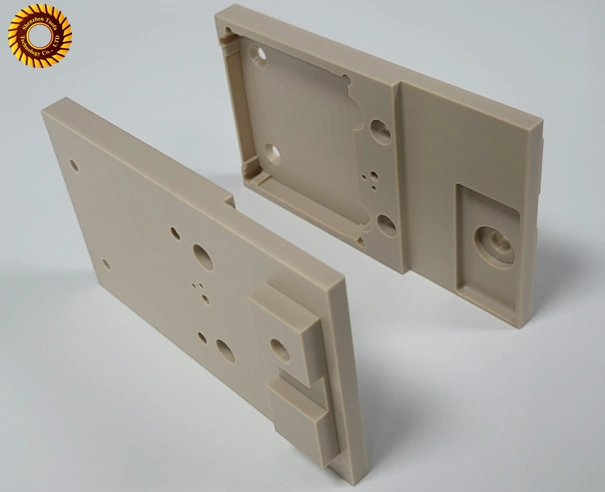
ABS, PVC, POM, PEEK, PTFE and Nylon are common plastic material for plastic housings. Plastic housings are very common, especially in consumer electronics, instruments, medical devices, and electrical products.
Metal housings are generally better for applications that require high-temperature resistance, pressure resistance, high rigidity, or electrical conductivity. Plastic housings are more suitable when low weight, electrical insulation, or corrosion resistance is required.
Do Machined Housings Need Surface Finish?
When choosing a suitable CNC machined housing, the surface finish requirement should be considered based on the applications. It can affect the performance and service life of your housing. Choosing compatible surface finish in custom machined housing project is very important. Tuofa, as a CNC machining service supplier, provides a one-stop solution, which allows you finish your project in a short time.
For Better Appearance
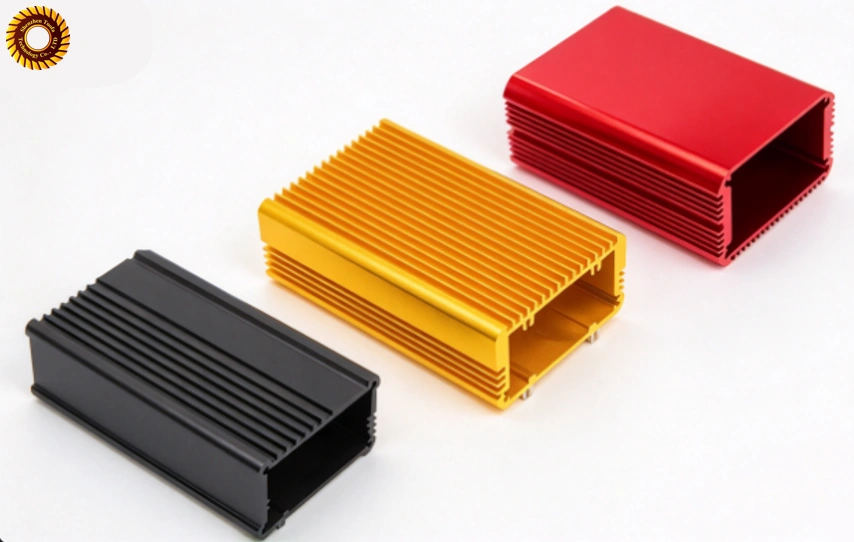
When CNC-machined housings are used as visible components in medical devices, robotics, or aerospace equipment, they often require high surface quality. Color variation, visible tool marks, and machining scratches are usually not acceptable. Common cosmetic machined housings are vision camera housing, robot operator panel housing, handheld medical device housing, etc.
Common surface finishes for cosmetic machined housings include:
- Anodizing
- Bead blasting
- Powder coating
- Liquid painting
- Polishing
- Brushing
For Preventing Corrosion
If your machined housing is used in humid or chemical environments, it may be exposed to corrosion. To extend its service life, a corrosion-resistant material is often combined with a protective surface finish. Common corrosion-resistant finishes for housings include:
- Anodizing
- Chromate conversion coating
- Powder coating
- Liquid painting
Besides appearance and corrosion protection, surface treatments can also improve wear resistance, sealing performance, and reduce friction for CNC-machined housings. Most of the finishes mentioned above can help meet these requirements. You can choose a suitable finish based on the working environment of your machined housing. Tuofa can also evaluate whether your material is suitable for the required surface treatment and help ensure that the final part meets your performance requirements.
Why Choose Tuofa for Custom Machined Housings?
Tuofa's one-stop CNC machining solution helps you complete your machined housing project with shorter lead times, lower machining costs, and direct communication with our engineers.
Rich Experience in Machining Housings
With reliable CNC machining capabilities, Tuofa has helped many customers produce both fully machined and partially machined housings. We can achieve tolerances as tight as ±0.0005 in critical areas. We specialize in high-mix, low-volume custom housing projects. By selecting suitable cutting tools and optimizing machining parameters, we can machine a wide range of materials.
Provide DFM Review Quickly
Before providing a quotation, Tuofa reviews your drawings and checks for difficult-to-machine features. Our engineers can suggest design improvements for CNC machining to help reduce machining costs.
Prevent Predictable Risks
Before machining, Tuofa confirms the tolerance requirements with customers to help prevent predictable risks. Tolerances that are too tight can increase machining difficulty and cost, while tolerances that are too loose may cause assembly problems. Our risk evaluation helps ensure that the housing can be manufactured correctly and assembled smoothly.
We also check the following potential risks:
- Wall thickness: Walls that are too thin may deform during machining.
- Threaded holes:Incorrect or unclear thread specifications may cause assembly problems.
- Housing corners:Sharp internal corners are difficult to machine and may require design changes.
- Hole alignment:Misaligned holes may cause fitting or assembly failure.
Provide Surface Finish If Needed
Our team also evaluates whether the selected material is compatible with the required surface treatment. If the specified finish is unsuitable for the chosen material, our engineers recommend an equivalent material or an alternative surface treatment that meets the application requirements.
Conclusion
In short, we can say that machined housings provide precise protection and support for critical components in many industrial applications. With help of CNC machining, you can produce complex housing geometries with consistent dimensions and tight tolerances. Remember that selecting right material and surface finish further improves wear resistance, corrosion protection, and service life. Tuofa plastic and metal housing manufacturer is experienced for low-volume production.
FAQ
Can a machined housing be waterproof?
Yes, machined housing can be waterproof by using proper sealing material and tight tolerance.
Is machined housing the same as enclosure?
No, technically both are not exactly same although sometimes taken as same. 'Enclosures' is a broad category for any outer shell used to protect components. However, a machined housing is a specific type of enclosure manufactured through CNC.
How to design a good housing?
To design housing that not only offers protection to a component but also adds to its strength with perfect fit. Choose a suitable material, right wall thickness, tolerances, tool access, sealing features, and surface finish.
 What Is Black Chrome and Is It Suitable for Your Parts?