Tel/WeChat:
  Email:


 Home
Home1050 Steel for CNC Machining: What You Need to Know

 Published:Apr 22,2026
Are you thinking about taking steel 1050 as key material for your next axles, gears or shaft manufacturing project? And curious to know about the machinability of steel 1050. Let me tell you, 1050 steel for CNC machining is a medium-to-hard material. With 0.5% carbon content, it shows a machinability of 61%. Here we will help you understand the machining of steel 1050 so you can make right decision about your next project material selection.
What Is 1050 Steel?
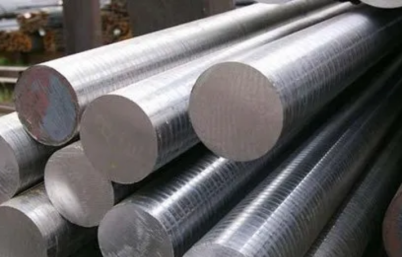
1050 steel is a member of steel 10xx family, known for its strength, hardness and corrosion resistance. Steel 1050 has a a high amount of carbon in it compared to 1010 and 1012. SAE 1050 steel has about 0.48% to 0.55% carbon content. Such concentrations of carbon is the reason engineers and manufacturers choose this material for its strength and machineability.
Standard Designations of 1050 Carbon Steel
As far as the standard designation of 1050 carbon, both the AISI (American Iron and Steel Institute) and SAE (Society of Automotive Engineers) term this steel as 'AISI 1050' and 'SAE 1050 steel'. It's because of the numeric percentage of carbon content. The first two digits, "10", represent the plain carbon alloy family, and the last “50” indicates the average percentage of carbon content in the steel.
What Is Equivalent to 1050 Steel?
So, does steel 1050 actually have any equivalent alternative? There are some internationally standard materials which are considered equivalent to 1050 carbon steel.Here we are gonna discuss some of them, so you can pick any of them if you need:
JIS S50C:
JIS (Japanese Industrial Standards) S50C is nearest possible carbon steel alloy to carbon steel 1050. With 0.47-0.53% carbon content. So if you need material equivalent to 1050 but more strict for impurities, you can opt for JIS S50C. With high strength, toughness, and corrosion resistance, it's perfect for shafts, gears, and machine manufacturing projects.
DIN C50 / EN 1.0540
With exactly 50% C content there comes DIN C50, defined under German standardisation rules. Out of its strict impurity control standard, you can use this material where you need exact perception of the heat treatment results and specified design codes and where compliance matters.
GB/T 50#
GB/T50 is considered equivalent to 1050 steel because of its ~0.47-0.55% carbon content. GB/T 50# is used in multiple industries for manufacturing different parts, such as for automotive components and forged parts.
SAE 1050 Steel Chemical Composition & Properties
Unique chemical composition of Steel 1050 is what makes it so special in manufacturing industry. Specific percentages of each element are responsible for its toughness, hardness and machinability. Knowing the AISI C1050 chemical composition helps you understand its machinability better. Following table represents the chemical composition of 1050 Steel:
|
Element |
Composition Range |
Role in Material Behavior |
|---|---|---|
|
Carbon (C) |
0.42 - 0.50 % |
Increases hardness and tensile strength |
|
Silicon (Si) |
≤ 0.40 % |
Slightly increases strength and hardness |
|
Manganese (Mn) |
0.60 - 0.90 % |
Inhances wear resistance and helps counteract brittleness caused by sulphur. |
|
Phosphorus (P) |
≤ 0.045 % |
significantly reduces ductility and impact toughness (cold brittleness). |
|
Sulfur (S) |
≤ 0.045 % |
Reduces toughness and can weaken transverse mechanical properties. |
Heat-Treatable
The good thing here about the medium concentration of C (0.50%) is making it capable of undergoing heat treatment. When heat-treated at the austenitic region and rapidly quenched (in water or oil). C is the main element that prevents the iron lattice from returning to its original structure. Trapping it in a hard, strained state.
Heat-treated steel 1050 is more durable and corrosion-resistant. Making it suitable for manufacturing of components working under load. You will use heat-treated 1050 steel for gears and spring manufacturing.
Balanced Strength & Toughness
Steel 1050 is well known among manufacturers for its balanced strength and hardness. Not too high, which is difficult to machine, and not too low that causes lack of required strength. Typical hardness of 59 HRC is gifted by the presence of two main elements in it. Carbon and Manganese (Mn).
Carbon offers a Magnesite structure, enabling it to hard and less brittle. Toughness is from manganese. Mn is responsible for enhancing ductility. Helps counteract brittleness caused by sulphur, promoting a more uniform microstructure.
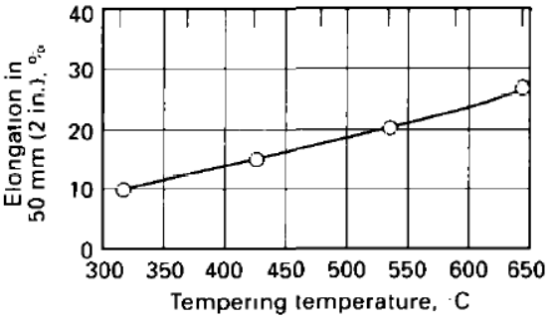
1050 carbon steel is heat treatable, and hence you can control the toughness of material by specifying the method. For instance, if you perform oil quenching first and then go for high-temperature tempering. Such treatment will reduce hardness with improved impact toughness. Just like this material becomes ductile if undergoes water quenching and then low-temperature tempering.
Low Corrosion Resistance
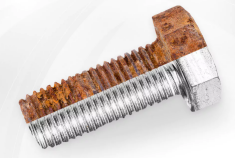
Although Steel 1050 is durable and hard and can bear stress, it's not that good in corrosion resistance. But why? Let me tell you. Basically, the low concentration of Cr (0.10%) is what makes it less resistant towards corrosion.
A high concentration of iron, which is prone to rust easily when it gets in contact with moisture, is key to its low corrosion resistance nature. Absence of chromium and nickel makes it less effective in corrosive environments. So in industrial applications where the material is at risk of corrosion, it is first coated with some corrosion-resistant material. For instance, in automotive industry, the Suspension pins and linkage rods are subjected to e-coating.
AISI 1050 Steel Physical Properties
When talking about the SAE 1050 steel properties, physical properties are what effects its machinability. So understanding the physical properties and their effect on machining is essential. With this knowledge, you will be able to:
- Select optimal cutting parameters
- Choose appropriate tooling
- Control heat generation
- Achieve consistent surface finish with minimal tool wear.
Density
Steel 1050 shows a high density of 7.85 g/cm³ because of the presence of iron and Mn. Out of the high-density steel 1050, find its application in heavy-duty machinery. It's chosen for components where eight is not a concern but hardness and durability are.
Modulus of Elasticity
1050 steel shows a high modulus of elasticity in range of 190-210 GPa. High modulus of elasticity makes the material more stiff. High stiffness offers tight tolerance while machining the material without any workpiece defection. Such high modulus of elasticity enhances machining stability and dimensional control. So if you want to minimise deflection and elastic recovery errors, you should choose 1050 steel.
Hardness
As said before, steel 1050 offers moderate hardness. With its moderate hardness and strength, it's easy to machine compared to other steel 10xx alloys with higher C content. The hardness of this steel steel is directly influenced by annealing process.
Anealed 1050 steel has lower hardness and great machinability. But why? Basically its due to the formation of coarse ferrite-pearlite microstructure. Structure results from slow cooling during the annealing process. Showing a hardness of 170-220 HB.
1050 Steel is also subjected to quenching in some industrial applications. It is done to improve its hardness (200-300 HB) and strength. Rapid cooling transforms the microstructure into martensite, a hard and brittle phase. Increasing strength and wear resistance sharply reduces ductility and toughness.
Thermal Conductivity
With moderate conductivity of 49.8 W/m-K, 1050 shows heat buildup at the cutting point during machining, which leads to tool wear. That's why when machining 1050 steel, you should use a coolant system.
1050 Steel Mechanical Properties
Mechanical properties of AISI 1050 also affect the machinability. But you know what mechanical properties of this steel heavily depend upon its heat treatments. Majorly it undergoes quenching, annealing and normalising. Each offers its unique mechanical property. Here we have compiled SAE 1050 mechanical properties in different conditions:
|
1050 Steel Heat Treatment Condition |
Tensile Strength (MPa) |
Yield Strength (MPa) |
Elongation (%) |
Reduction of Area (%) |
Hardness |
|---|---|---|---|---|---|
|
Annealed (790°C) |
636.0 |
365.4 |
23.7 |
39.9 |
187 HB |
|
Normalized (900°C) |
748.1 |
427.5 |
20.0 |
39.4 |
217 HB |
|
Oil quenched + tempered (650°C) |
738 |
469 |
29 |
60 |
223 HB |
|
Water-quenched and tempered (650°C) |
717 |
538 |
28 |
65 |
235 HB |
AISI 1050 Mechanical Properties for CNC Machining
Mechanical properties of 1050 steel vary based on the conditions of treatment. Different heat-treated alloys affect its machining in different ways. Lets discuss how their properties affect the machinability and what strategies are adopted while their machining.
Moderate Tensile Strength
1050 carbon steel has moderate tensile strength, which means it doesn't deform while cutting. At the same time it requires cutting forces higher than those of low-carbon steel. So to avoid tool wear, controlled speed and feed rate are necessary. Also tools with TiAlN or AlTiN coatings used to avoid tool wear.
Yield Strength
With its high yield strength (365 MPa), 1050 carbon steel is considered effective for applications where load-bearing is key. But at the same time it shows localised work hardening. Leading to the part's deformation. So it requires special high-rake tooling for CNC machining to avoid part deformation.
Elongation
Carbon 1050 steel shows high elongation, especially when annealed, at about 23%. Making it more ductile and resistant to cracking during forming and CNC machining. Although its elongation helps in avoiding cracks and getting better structural integrity, it also reduces its strength and hardness. Finding its application in components where resistance to cracks during machining is essential. For instance in forged components, formed machine parts and machined shafts.
Hardness
As far as far hardness of 1050 steel, it shows moderate hardness, making it moderately machinable. But do you know? Annealing increases its hardness, which makes it difficult to machine.
Even it shows work hardening that leads to tool wear while CNC machining. At ToufaCNC we utilise specified cutting parameters, including feed rate, cutting speed and specialised cutting tools, to achieve this. This all is done to achieve that required tight tolerance and machinability.
What Is 1050 Steel Used for?
As we discussed, exceptional properties of steel 1050 are because of balanced concentration of C. That's why it is used by engineers and manufacturers in multiple industries. It is used mostly in annealed or quenched form to achieve desired properties. Such as automotive, electronic and tooling industries. If you are aiming to choose this material, here is in which projects you can use it.
Load-Bearing Components
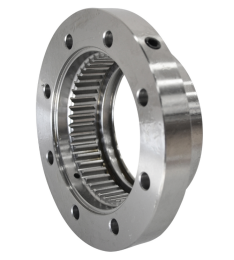
Effective hardness and strength is key reasons behind the utilisation of this material in load-bearing components. For instance, manufacturers use carbon steel for producing gears, bolts, nuts, drive shafts, and ploughshares as well.
Power Transmission Parts
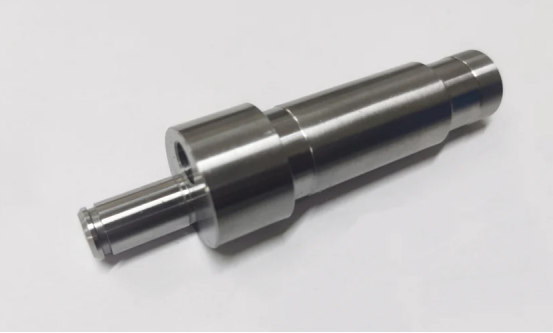
Manufacturers also use 1050 carbon steel for producing strong and precise power transmission tools. Including transmission shafts, drive shafts, couplings and Sheaves. These components face continuous stress and load; that's why they are made with 1050 steel to have wear resistance and be stronger.
Tooling Components
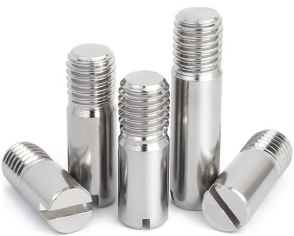
SAE 1050 cold-drawn steel is capable of maintaining its structural integrity under repeated stress. That's why it's used in the manufacturing of multiple tools. Mounting plates, fixture base plates, clamping jaws, and dowel pin seats are made using this material. What's more, 10505 carbon steel is good for swords due to its high impact resistance and toughness.
Prototyping Parts
SAE 1050 steel is used to prototype parts to test the performance of products. For instance, mechanical strength, load-bearing capacity, heat treatment response, and fatigue behavior can be tested through prototyping.
Advantages of CNC Machining 1050 Steel
With mentioned physical and mechanical properties, machining Steel 1050 offers a number of advantages. With the help of CNC, you will get components made with carbon steel with high accuracy, excellent surface finish with minimal material waste. Lets know more in detail:
High Accuracy
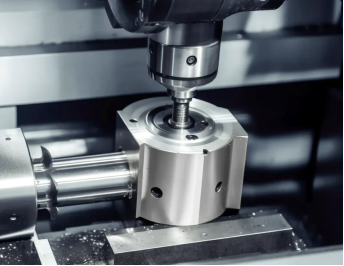
AISI 1050 steel has moderate machinability, and it can be improved after annealing, which can help minimize deformation during CNC machining. CNC machining allows high-precision 1050 steel parts because annealed 1050 steel has these features:
- lower hardness
- Internal stress is reduced
- Uniform microstructure
CNC machining can easily achieve repeated toolpath control and tight tolerance through automatic control.
Good Surface Finish
If your project includes manufacturing components with a good surface finish, you can choose CNC maching of 1050 C steel. CNC machining can control feed rate, spindle speed, and tool path to create surface finish of 1050 steel.
AISI 1050 steel has effective hardness and strength. Balanced microstructure (ferrite-pearlite) enables it to chip in a uniform way, making it surface more smoother and shiny.
Reduce Material Waste
With its predictable cutting behaviour and dimensional stability, carbon 1050 steel has low scrap rates. Such moderate carbon material does not exhibit excessive distortion during machining. Also, CNC allows precise material removal. Both material and process ensure efficient use of raw stock.
For industrial-parts manufacturers such as Tuofa CNC Machining, this translates into improved material utilisation and cost efficiency. It also helps to attain repeatable production quality.
Is Surface Treatment Necessary for 1050 Steel Parts?
1050 Carbon steel itself has moderate wear resistance with good enough hardness and tensile strength. In number of application engineers utilise it as it is. In cases where components are always under high stress and moist environments. Surface treatment becomes essential to avoid oxidation or wear and tear.
Common Surface Treatments for 1050 Parts
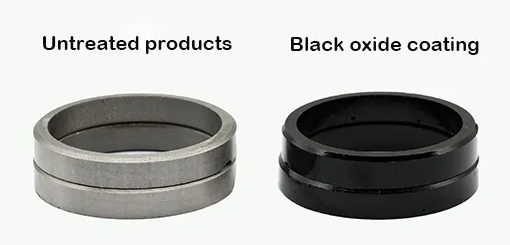
So what are the common surface treatments here? I have compiled a table for you so you can decide on your component's surface treatment.
|
Process |
Surface Hardness (Typical) |
Purpose |
|---|---|---|
|
Black Oxide Coating |
+1-2 HRC (slight increase) |
Light corrosion protection, reduced friction |
|
Electroless Nickel (Ni-P) |
450-600 HV |
Corrosion resistance |
|
Hard Chrome Plating |
800-1000 HV |
High wear resistance |
|
Bead / Sand Blasting |
Not specified (minor hardening) |
Surface preparation, coating adhesion |
|
Thermal Oxide Film |
Minimal change |
Appearance, glare reduction |
1050 Steel vs Other Steels
1050 Carbon steel is considered more effective than 1045 and 1060, but what the reason behind this? Lets know about this:
1050 vs 1045 Steel
As name suggests, 1045 has lower C content compared to 1050 carbon steel. Resulting into a lower hardness. Which means a softer core with reduced overall strength. It possesses lower wear resistance and non-uniform mechanical properties.For instance, 1050 steel is more suitable for guide pins due to its good wear resistance.
1050 vs 1060 Steel
1060 steel possesses 0.55-0.66% carbon content. Making it more hard and more brittle as well. In applications where ductility is needed to bear stress, 1050 excels.
1050 vs 4140 Alloy Steel
4140 alloy steel has lower carbon content (0.44%) compared to 1050. But it posses more concentration of molybdenum and chromium. Both these elements add to its hardness and strength as well as wear resistance. With such hardness it becomes difficult to machine compared to carbon steel 1050.
When Not to Use 1050 Steel?
With all advantages there are some limitations due to which you should not use 1050 steel at specific applications:
High-Stress Applications
1050 shows moderate hardness and fatigue resistance, so when subjected to repeated stress, it undergoes cracking.
High-Temperature Environments
If your project involves manufacturing components that will be used in high-temperature conditions, then 1050 is not a good choice. Its harness decreases with an increase in temperature. It's because of microstructural softening (tempering of pearlite/martensite). SO components' load-bearing capacity reduces.
Highly Corrosive Environments
With ion content, steel 1050 is not effective to be used in corrosive environnat. In that case it will get contaminated and rusted due to oxidation of Fe.
Conclusion
1050 carbon steel is a medium-carbon material. Having balanced strength, toughness and ductility. This makes it easy to machine compared to other high carbon-containing materials. 1050 steel is used by many manufacturers in multiple industries, like automotive, tooling, etc. Understanding this material helps you make better and more informed decisions about material selection. Tuofa manufactures various steel parts with remarkable precision and function-oriented geometries.
FAQ
Is 1050 carbon steel good for swords?
Yes, its good for making words because of its high ductility, which helps it maintain its geometry under repeated stress.
Does 1050 carbon steel rust?
Yes, 1050 carbon can rust under moist, airy conditions. Thst why not used for components working under harsh conditions.
Is 1050 steel carbon steel or alloy steel?
Its a medium carbon steel, not alloy steel. It possesses a medium carbon concentration responsible for its balanced physical and mechanical properties.
Is 1050 carbon steel good?
It's good for components requiring moderate strength, hardness and effective brittleness, like shafts and axles.
 What Is Bar Stock in CNC Machining?