Tel/WeChat:
  Email:


 Home
HomeInconel 625: Properties, Machinability, and Design Guide

 Published:Apr 03,2026
You must have heard about Inconel, which your machinery components are made with. But do you know an enhanced version of Inconel that's expected to hit 12.01% CAGR growth by 2033? Let me tell you its Inconel 625. Nickel-based chromium alloy enhanced with molybdenum and other metals. Offering that strong corrosion resistance and thermal stability even at 1800°F. Properties, machinability and design guidelines for Inconel 625 material are discussed in this article. So, you can choose your machinery parts for your next project manufactured using the right material.
What Is Inconel 625?
As said before, 625 inconel is an alloy based on nickel and chromium but enriched by molybdenum and niobium. Editing of the two exceptional materials makes a remarkable shift in the properties of inconel 625 material. The heat resistance, thermal stability, pitting resistance and lower crevice cracking are key characteristics offered by 625 Inconel metal, which makes it ideal machining material for aerospace, marine, and chemical components.
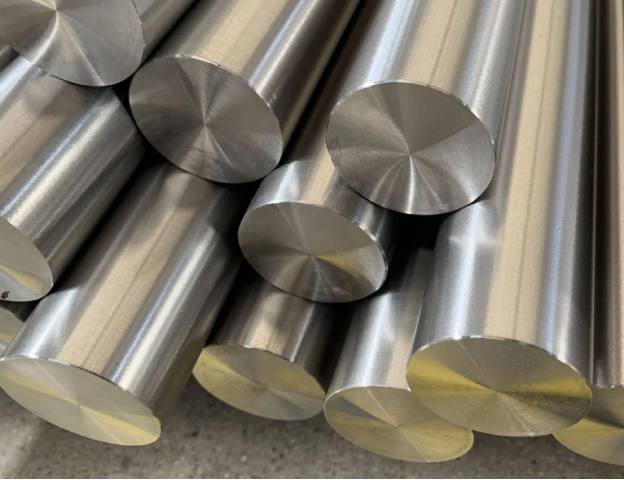
What Is Another Name for Inconel 625?
Alloy 625 is another name with which inconel metal is well known among engineers and manufacturers. Calling it so is based on its unique mixture of different metals forming an alloy of nickel, chromium, molebedium and nibeium. Number 625 refers to its UNS (Unified Numbering System) trade number N06625.
Why Inconel 625 Is Called Superalloy?
The exceptional properties of inconel 625 including:
- corrosion resistance in harsh chemical environments
- resistant to heat and thermal cracking at extreme condition
These features make this alloy as superalloy. But do you know which metal gives it that level of strength? It's molybdenum. Molybdenum atoms increase the tensile strength and creep strength of the nickel-chromium matrix through solid solution strengthening.
What Is the Chemical Composition of Inconel 625?
What makes this alloy so special is basically inconel 625 chemical composition. Typical INCONEL 625 alloys contain 58-71% of nickel, about 23% chromium, 8-10% molybdenum, up to 5% iron, 3.2-3.8% niobium and tantalum, up to 1% Cobalt and up to 0.4% aluminum. Each element present within this alloy si responsible for offering unique properties to the inconel.
|
Element |
Composition (wt%) |
|---|---|
|
Nickel (Ni) |
58-71% |
|
Chromium (Cr) |
20-23% |
|
Molybdenum (Mo) |
8-10% |
|
Niobium + Tantalum (Nb + Ta) |
3.2-3.8% |
|
Iron (Fe) |
≤ 5% |
|
Cobalt (Co) |
≤ 1% |
|
Aluminum (Al) |
≤ 0.4% |
|
Other Elements |
Trace amounts |
Roles of Chemical Elements of 625 Inconel
As said before, 625 alloy consists of a number of elements, but here are four major contributors that have a direct effect on its properties.
Nickel (Ni)
Minimum of 58% of the alloy 625 is nickel, serving as base matrix of the material. Offering major resistance towards oxidation and reduction, which is crucial for strength and resistant to corrosion, is a marine-like environment. Alloy is capable of retaining its ductility as nickel promotes structural stability through its austenitic structure.
Chromium (Cr)
Chromium is also a major component of inconel 625 helps the material to be resistant towards corrosion in harsh conditions. Protecting the material in both oxidative and chloridic environments from scaling or cracking. Cr forms a passive oxide (Cr₂O₃) layer over the surface of material to prevent it from further degradation, making it often used for marine components, chemical parts.
Molybdenum (Mo)
Molybdenum causes a remarkable increase in the fatigue and positional corrosion resistance of the material. Actually Mo acts as a solid solution-strengthening material. So it helps prevent the material from cervical corrosion, creep resistance and pitting resistance in chlorinated environments.
Niobium (Nb)
Tensile strength of the alloy 625 is caused by the introduction of Nb, helping in grain growth effectively. Nb atoms interact with the main lattice. It impedes dissociation motion of matrix particles, resulting in high-strength material.The Nb content makes inconel 625 optimal choice for load-bearing parts such as turbine shafts, pump shafts, and valve cores.
Physical Properties of Inconel 625
The high-strength and corrosion-resistant inconel 625 physical properties directly influence its machining. The high density, low thermal conductivity and high hardness of the 625 alloy make it difficult to machine and challenging. So, machining this superalloy requires specialised tools. We are going to talk about each physical property and how it affects its machining.
Density
Containing molybdenum and niobium, Inconel 625 shows a density of 8.44 g/cm³, which is higher than steel. Making it a tough and stronger material. Inconel 625 finds its application in manufacturing of components with high strength out of its high density.
Melting Range
Can you believe that inconel 625 can withstand high temperatures more effectively than steel? This is evident from melting point of inconel 625 falling in range of 2350-2460°F. Such high melting range indicates stable structural integrity of inconel 625. Hence, finding its applications in manufacturing components that face extreme conditions like aerospace Turbine disks.
Thermal Conductivity
Inconel has low thermal conductivity. Its thermal conductivity is 1.5 W/m·K, which is lower than aluminium (205 W/m·K) and copper (400 W/m·K). Its poor thermal conductivity means that the material can't facilitate rapid heat transfer. That is to say, the dimension of inconel 625 parts can maintain stable structure, making it suitable for applications where thermal stability is required, such as in marine industry and aircraft exhaust systems.
Electrical Resistivity
As said before, the electrical conductivity of inconel 625 is very low., which means that alloy 625 can maintain electrical insulation stability even under high-temperature conditions.
Is Inconel 625 Magnetic?
Yes, inconel 625 is non-magnetic. 625 alloy possesses just 5% of iron, which is too low to overcome the non-magnetic nature of nickel. So its typically non-magnetic in nature, benefiting in applications where magnetic field can cause hindrance, such as in submarine manufacturing.
Mechanical Properties of Inconel 625
Inconel 625 mechanical properties also play crucial role in its machining and performance. Since material has high strength and hardness, machining it is more challenging than usual metals like steel. Let's talk about how each of its mechanical properties is beneficial and impacts its CNC machining at the same time.
Tensile Strength
When it comes to inconel 625 tensile strength its quite higher for annealed Inconel; its about 120 to 150Ksi. Making it a tough and strong material withstanding harsh environments. But at the same time this high tensile strength makes it difficult to machine. Especially while cutting the localised tensile strength increase, causing tool wear. Tools coated with TiAlN, AlTiN, or ceramic are preferably used. Still, the tool's life is short, and our experts eye to change the tool before it dulls.
Yield Strength
As said for tensile strength, the inconel 625 yield strength is also high. Its in range of 240 to 310 MPa. You can use components manufactured with inconel 625 where high stress tolerance is needed. For instance, in pressure valves, shafts and fasteners. But this high yield requires high-rake tooling for CNC machining of 625 alloy. During machining it even gets harder, known as work hardening.
Elongation
The face-centred cubic structure of nickel-based chromium alloy causes it to have a ductile nature. The alloy, like Inconel 625, when annealed, shows 30 to 60% elongation. It means it does not chip out easily but gets deformed when force is applied while cutting it.
Such behaviour leads to uneven surface finish, dimensional inaccuracies, and sudden tool failure when the BUE (build-up edge) breaks away. CNC machining of such alloys requires high-speed coolant, sharp cutting tools and optimised feed rates to overcome the elongation drawbacks.
Hardness
Can you imagine Inconel 625 hardness is about 29 HRC? Making it the toughest alloy in machining industry. Making its machining even more difficult, where its machining rate is just 17%. High cutting-edge tools are used to cut such hard alloys while machining.
Common Alternatives to Inconel 625 Alloy
When thinking about choosing the right material for your next project, you might think inconel 625 the best choice. Since it offers exceptional hardness and corrosion resistance. But you can also go for other material offerings with similar properties, like inconel 718 or even better. Here we are gonna discuss some of the alternatives to Inconel 625 you can opt for your next upcoming project.
Stainless Steel
Stainless steel can be a better choice for your project if you are looking for effective strength with lower cost. But properties of stainless steel can vary based on its composition and types. So we have compared inconel 625 with stainless steel 316 and 317. You can make a better choice for your upcoming project.
SS 316L
When comparing the weight and density of 316SS and 625 Inconel, both offer nearly the same properties, with 8 g/cm³ and 8.44 g/cm³, respectively. Whereas in terms of strength and corrosion resistance at high temperatures, Inconel wins the race. If you need a material for strength at low temperature and cost-effective, opt for stainless steel.
317L
Austenitic-based alloy SS317 offers good strength with its ease of machinability compared to inconel 625. It's cheaper as well as easily available. You can choose ss 317 in case you need corrosion resistance at low temperature; at elevated temperature, it can undergo services corrosion.
Inconel 625 Vs vs 316 SS vs 317 SS
|
Property |
Inconel 625 |
SS 316 |
SS 317 |
|---|---|---|---|
|
Density |
8.44 g/cm³ |
8.0 g/cm³ |
8.0 g/cm³ |
|
Melting Range |
1290-1350°C |
1375-1400°C |
~1370-1454°C |
|
Tensile Strength |
827 to 930 MPa |
About 700 MPa |
Upto 620 MPa |
|
Yield Strength |
414-517 MPa |
Nearly 310 MPa |
205-275 MPa |
|
Elongation (%) |
30-60% |
35-40% |
Same as SS316 |
|
Thermal Conductivity (at ~100°C) |
~10.8-12.4 W/m·K |
~16.2 W/m·K |
~16 W/m·K) |
Inconel 625 vs Inconel 718
Since both of the alloys are nickel-based, offering high strength, our customers often ask what makes them different from each other. Inconel 25 has chromium, offering its superior corrosion resistance. In case of Inconel 718, there is cobalt, giving it higher strength and hardness compared to inconel 625.
Monel 400
The majoy difference between Monel 400 and Inconel 625 is their major alloying elements. Monel 400 is a nickel-copper alloy, while Inconel 625 is a nickel-chromium-molybdenum-niobium alloy.Compared with Monel 400, these chemical elements make inconel 625 better for manufacturing load-bearing components.
Hastelloy C-22 & C-276
Also, Hastelloy is a member of nickel-based alloys but contains molybdenum as second major component. Unlike Inconel 625, it is effective in reducing environments against corrosion. If you are thinking about a project that involves working with harsh chemicals like recalcining acids, choose hastelloy over inconel.
Difference between Inconel 625 and 718
Inconel 625 and 718 are nickel-based corrosion-resistant alloys. In general, they can be used for the same applications like chemical,marine scenarios, heat exchangers, and corrosive environments with similar functions and properties. However, 825 is more cost-sensitive. Therefor, if you have not enough budget or want to save money, 825 is the first choice. But if you focus on performance, Inconel 625 is the best choice with high strength.
Titanium Alloy
Titanium alloys, including Gr.2 and Gr.5, offer excellent strength, like Inconel, up to 400°C. Both alloys are 40 to 50% lightweight compared to inconel. So if your project focuses on lightweight components with good corrosion resistance where high temperature is not a concern, go for titanium alloy.
What Is Inconel 625 Used for?
Out of the remarkable properties, including resistance to corrosion, high strength and hardness, Alloy 625 is used in manufacturing of inconel 625 machined parts. Here we are going to discuss some of them.
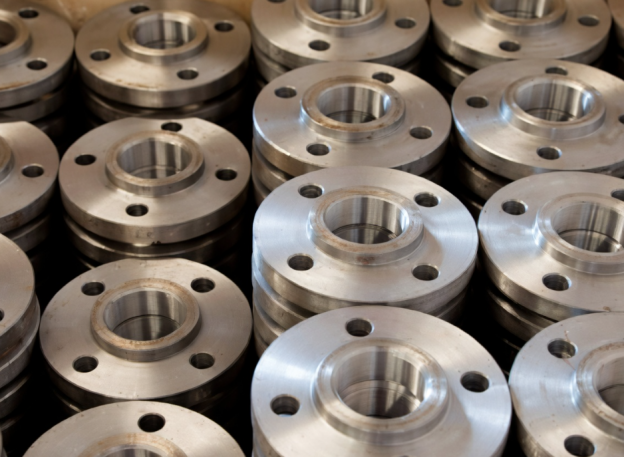
Inconel 625 Flanges
Inconel 625 flanges found their application in piping equipment due to their strong corrosion-resistant nature. These flanges undergo age hardening. That is a plus for industries like nuclear reactors and petrochemicals.
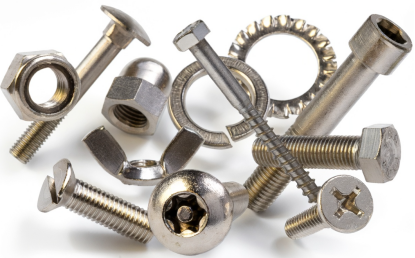
Inconel 625 Fasteners
Inconel 625 fasteners offer great resistance to crevice corrosion as they contain high amount of chromium. Fasteners are utilised in marine exhaust systems and propeller blades. The presence of niobium makes these fasteners' welding effective, as it stabilises them against sensitisation while welding.
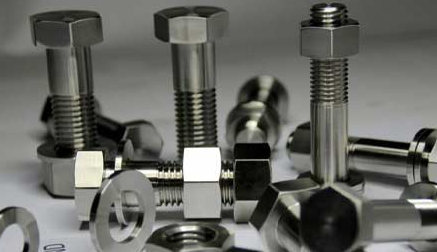
Inconel 625 Bolts
Inconel 625 bolts are typically used to secure valves and flanges in plants. Especially where stability in harsh environments is required, like in chemical processing.
Inconel 625 Washers
Responsible for distributing the load of nuts over a large area in piping system of submarine. inconel washers offer excellent stability and resistance to corrosion.
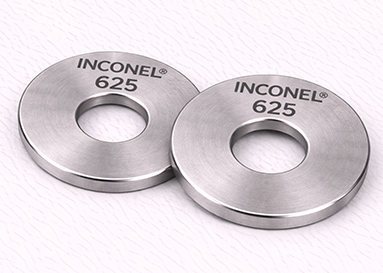
Inconel 625 Nuts
Since these nuts are non-magnetic in nature, they are utilised to hold joints together in electronic and medical devices.
Other Inconel 625 Machined Parts
Besides these parts we mentioned earlier, the inconel 625 material is also used in other equipment. With its outstanding stability and strength, it is used for manufacturing of medical implants, shafts, nozzle rings and bushings.
Is Inconel 625 Hard to Machine?
Yes, machining inconel 625 is hard, and the causes are multiple. Alloy 625 falls in category of materials which are difficult to machine. But do you know what's behind its difficult machining? Lets talk about it:
Why Is Inconel 625 Difficult to Machine?
The difficulty in machining of inconel 625 material is primarily due to its mechanical properties. Here let us talk about them.
Harder Surface Layer
Inconel carries a big amount of Mo and Nb which strengthens the nickel matrix. Making this material tough and having high hardness. When we subject the inconel to machining out of ts high tensile strength, it gets difficult to cut it; it get elongated instead of chipping. It shows deformation and buildup on tool. This buildup increases the load on tool leading to sudden tool failure.
Poor Heat Dissipation Capability
Since inconel has low thermal conductivity and is stable at high temperatures, while making heat, it is not dissipated. This poor heat dissipation causes tool wear, making it difficult to machine.
High Chemical Affinity
Machining 625 is also difficult, as it shows high chemical affinity with cutting-tool materials like ceramics. Such affinity at high temperature can lead to build-up due. On breaking away, this buildup edge-cutting tool fails to operate properly.
Inconel 625 Raw Materials for Machining
Inconel 625 Round Bar
Inconel 625 round bars offer excellent fatigue reistt under stress and high temperature. Manufactured according to the ASTM B 446 standards. You can use these bars if you are planning to get valves and fasteners for your project.
Inconel 625 Sheet
Inconel 625 sheets are manufactured to the ASTM B443 standard. Such sheets offer remarkable resistance to heat and crevice corrosion. That's why it's used in ducting system of aerospace industry.
Inconel 625 Plate
Inconel 625 plates are supplied to ASTM B443 (plate, sheet, and strip), typically in hot-rolled thicker gauges. The thickness is from 3 mm to 100 mm+, widths up to 2500 mm, lengths up to 6000 mm+ of these plates.
Inconel 625 Tube
Inconel 625 tubes offer uniform wall thickness and excellent roundness, allowing accurate ID/OD machining. It is manufactured under ASTM B444 standards.
How to machine Inconel 625?
As said before, alloy 625 is a hard-to-machine material requiring typical machining techniques such as CNC machining. Here are some most effective tips which are adopted to machine 625 alloy.
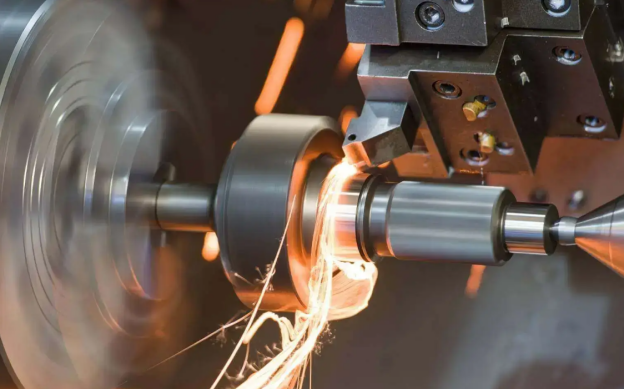
Use Hard Cutting Tools
In order to machine inconel 625 effectively, we recommend using hard cutting tools. These tools are made of ceramics, carbide inserts or coated with TiAlN (titanium aluminum nitride). Using such tools will result in lower tool wear.
Use Climb Milling
Now you know that 25 alloy undergoes work hardening, which can cause hindrance in its machining. To overcome this, we suggest using climb milling instead of regular milling. In climb milling the tool starts cutting the thickest edge first and thin at last.
Slow Cutting Speed
Inconel 625 has high resistivity to thermal conduction, and when subjected to machining, heat can build up at one point. This heat buildup leads to tool wear, which worsens if you choose peck drilling. Here each peck will cause damage to tool leading to tool failure. That's why we suggest continuous slow cutting to avoid unnecessary heat buildup.
Use Coolant
To avoid the heat buildup during machining, high-pressurised cooling is recommended. It will prolong the life spam of tool and will decrease heat buildup.
Design Guidelines for Inconel 625 Parts
When dealing with tough material like Inconel 625, we recommend following proper design guidelines for Inconel 625 machined parts. It will help:
- Reduce tool wear
- Minimize production costs
- Improve surface finish
- Prevent burr formation
Optimize Edge Geometry
While designing the component being manufactured, using optimised edge geometry is crucial. It will help to avoid burrs and tears in final product. We recommend using positive racking and providing key details in CAM design while CNC machining.
Using Larger Fillets
If you opt for sharp edges and corners while machining Inconel, it will lead to high stress and tool vibration, and machining will be difficult. So we recommend using large fillets to reduce tool wear.
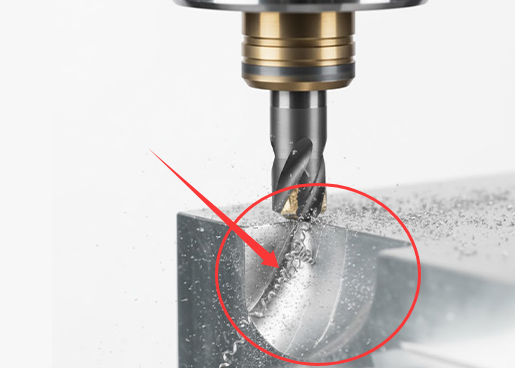
Avoid Tight Tolerances in Deep Holes
Deep holes are very challenging to machine in Inconel 625. Due to heat and work hardening. So try to avoid very tight tolerances (like ±0.01 mm) on deep holes. You can use looser tolerances to make machining easier and more cost-effective.
Surface Treatment for Inconel 625 Parts
Inconel 625 machined parts may get uneven surface finish or oxide buildup during manufacturing. So they will require an effective surface treatment for proper finishing. Here we will discuss som eof the most used anf effective surface treatments.
Polishing Inconel 625 Parts
Inconel 625 parts get a buildup of oxide layers while manufacturing. To remove them, the parts undergo polishing. To polish such parts, ceramic media or steel shots are used. Multiple shapes of ceramic media are used based on the required polishing.
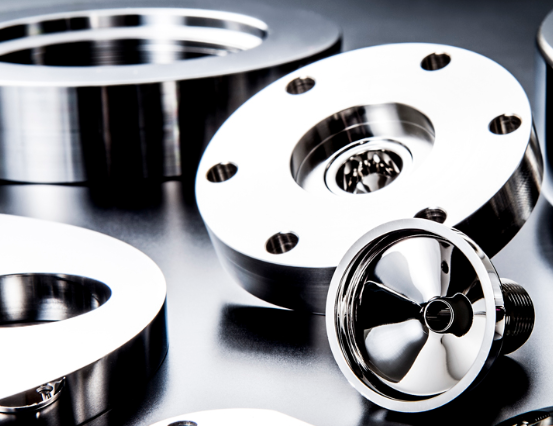
Inconel 625 Parts Passivation
Inconel itself is highly resistant to corrosion, but some components need excessive resistance. These components are subjected to passivation. In this process we introduce a thin layer of nickel-chromium oxide film.
Electropolishing Inconel 625 Parts
In order to remove small burrs and uneven surfaces, the components are subjected to electropolishing. It also enhances the corrosion resistance of the material. Electrolytes like phosphoric acids are used, which dissolve peaks faster to give even surface.
Sand Blasting Alloy 625 Parts
Sand blasting is considered a critical pre-treatment step for Alloy 625 parts. Performed to remove oxides and contaminants for further coating, welding, or thermal spraying of inconel parts.
Inconel 625 Coating
Alloy 625 parts are already known for offering high strength and corrosion resistance but are still subjected to coating. It's done to make their corrosion resistance even better. Multiple coating techniques are used, such as thermal spray coating or laser cladding.
Conclusion
Selecting the right material for your project is key to success. Inconel 625, with its exceptional corrosion resistance, fatigue resistance and high tensile strength, makes it a strong candidate for manufacturing corrosion-resistance parts, load-bearing parts, and high-temperature oxidation-resistant parts. At Toufa, we offer manufacturing of multiple components using inconel with high-end techniques and specialised experts. You can read Tuofa guide of metal materials or reach out to us today for further expert guidance.
FAQ
How hard is inconel 625?
With its 29 HRC hardness, Inconel 625 is way too difficult to machine. Its even harder than steel with just 17% machinability.
What are the disadvantages of Inconel 625?
Inconel has some remarkable disadvantages that cannot be neglected, such as:
It's difficult to machine, requiring specialised tools and techniques.
It's expensive compared to other alloys.
How much does Inconel 625 cost?
According to a global market report of August 2025, Inconel is $54.70-$80.20 per kilogram.
 1050 Steel for CNC Machining: What You Need to Know