Tel/WeChat:
  Email:


 Home
HomeMill vs Lathe: How to Get a Custom Machined Parts

 Published:Mar 13,2026
What is the difference between a lathe and a mill? Actually, lathe rotates the workpiece, while a mill rotates the cutting tools.CNC machining has been serving as a foundation of modern manufacturing machines. The two most common machines are CNC lathe and Mill machines. These are subtractive manufacturing pillars and have variety of different configurations. If you are sourcing custom machine parts, this article will give you deep insight into these machines. And this will help you choose the right manufacturing partner in precision machining. Now let us explore what is the difference between a mill and a lathe.
Mill vs Lathe: Definition Differences
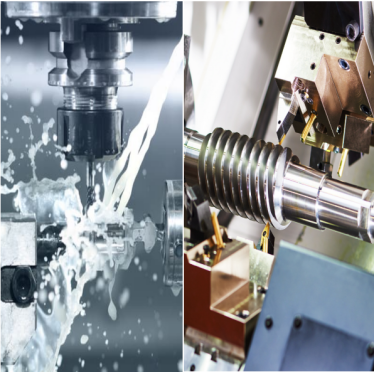
Mill and lathe m/c both cut and shape materials, but the way they make a finished part depends on their way of movement. In other words, the difference between these CNC Machines lies is the movement of cutting tools relative to the material.
What is a Lathe M/C?
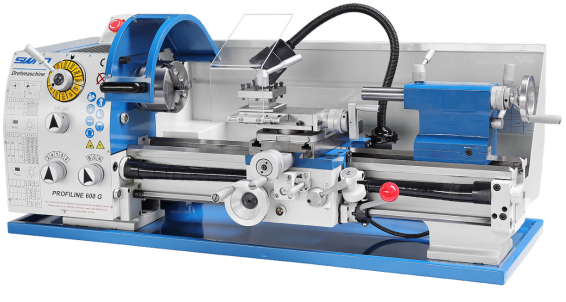
Lathe m/c are the most important machine tool in CNC manufacturing. It rotates a workpiece around its axis and performs different operations. These are like turning, facing, drilling, and threading. The primary motion is rotation at C-axis and linear at X and Z axis. These are best for round or cylindrical objects.
What is a Mill?
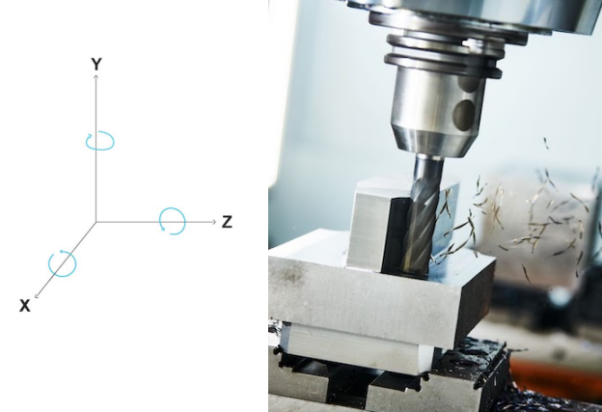
Mill machine is one of the most versatile CNC machines. It has a high-speed rotary cutter with multi points that removes material from workpiece. It moves in multi-direction in X, Y, and Z axes. Mill machines are best suited for flat and complex geometries.
CNC Lathe vs Mill: Different Components
Lathe and milling machines are both subtractive machining tools. They have common components like machine base, control panel, and coolant systems. However, they perform different fundamental operations, as mentioned above.
Components of a Lathe
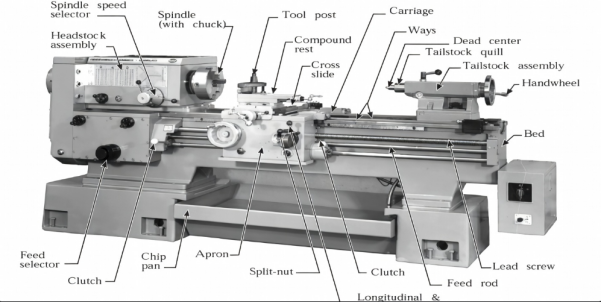
Lathe machine is performed on cylindrical and symmetrical parts. Some essential components of lathe are:
Headstock
It is located on the left side. Headstock acts as the powerhouse. It contains the motor, gears, and spindles that rotate the workpiece of the machine.
Chuck
Chuck is attached to the headstock spindle. This device clamps the workpiece securely. The clamping allows workpiece to spin easily.
Tool Post
Tool post is mounted on the carriage. This part holds the cutting tool securely and let it cut the workpiece at different depths.
Tailstock
Tailstock is located on the right side of the bed opposite the headstock. This part slides along the bed to support the other end of long workpieces.
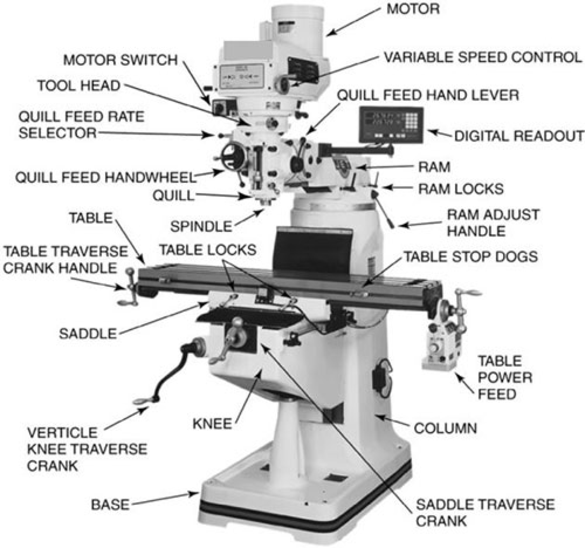
Main Components of a Milling Machine
Mill machines are best for cutting flat, slots, and complex shapes. It has some components different from those of latch machine. Special milling machine components include:
Column
Column is a rigid and vertical structure. It is the backbone of the machine and supports the head and other parts.
Worktable
It is a T-slotted horizontal surface. The workpiece is clamped with it directly or via a vise. It moves on X-axis and Y-axis.
Tool Magazine
Tool magazine is found on automatic CNC mills. This is a storage unit that holds different cutting tools like end mills and drills.
Automatic Tool Changer (ATC)
It is a mechanical arm. ATC automatically swaps cutting tools between the spindle and the tool magazine. This minimizes the downtime.
CNC Lathe vs CNC Mill: Different Functions
Mill and Lathe m/c are fundamentally different in their way of material removal. The following section will help you understand better the differences between lathe machine and milling machine.
Rotating Object
Lathe m/c is primarily used to create cylindrical or conical shapes. Workpiece is rotated at high speed against a fixed single-point cutting tool. Workpiece is secured in a rotating spindle.
Mill has a rotating multi-bladed cutter for material removal. Workpiece is stationary and create flat surfaces and other complex shapes. The tool is attached to a rotating spindle.
Cutting Principle
Lathe machine has single-point and non-movable cutting tool. And the workpiece is clamped in a chuck and rotated on a central axis the tool is fed into it to remove material moves along the longitudinal (Z) or transverse (X) axes of the rotating workpiece. In milling, material is held securely on the table. And the multi-blade cutting tool rotates at high speed to sheer the material away.
Main Axes
CNC lathe has 2-4 axes. It has Z-axes(longitudinal) which are parallel to spindle. It controls the tool movement along the length of the workpiece. The X-axis are perpendicular to Z-axis. It controls the diameter of the part. And C-axis is optional which is rotation of the main spindle. It creates milling features on a turned part
CNC mill has 3-6 axes. The main three axes, X-axis moves left to right; Y-axis moves front and back and Z-axis vertical movement of spindle. The rotary axes are A,B and C. A-axis rotates around the x-axis. B-axis rotates around the y-axis. And C-axis rotates around the Z-axis.
Lathe vs Milling Machine: Applications for CNC Machining
As the cutting principle of lathe and mill differs from each other. Likewise, they have different applications. And these are:
Rotational Parts
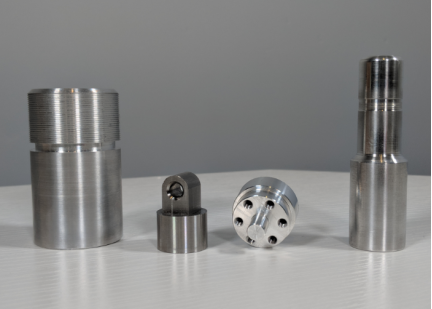
Lathe is used to create rotational parts like shafts, axles, bushings, screws, fasteners and pulleys. This is because lathe spins the workpiece at high speed. This makes it most efficient machine to create perfect symmetrical, cylindrical and cone shapes.
Flat & Slot Parts
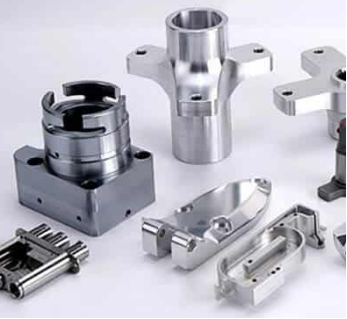
Milling machine makes flat and slot parts like engine blocks, manifolds, housings, brackets and plates. CNC milling machine have a rotating cutting tool on a stationary block. These are ideal for creating flat surfaces, slots, pockets, and holes. These shapes are non-symmetrically distributed around an axis.
Complex Surfaces
Milling machines can efficiently create complex surfaces like turbine blades, impeller vanes, mold cavities and medical implants. Advanced 3-5 axis mills can move along complex trajectories to form intricate 3D surfaces. These shapes normally cannot be produced by simple rotation.
Hybrid Parts
Hybrid parts are made from mill-turn center. These parts are like crankshaft, aerospace connectors and medical devices. These parts need rotational symmetry and features like off-center holes or keyways. Mill-turn machines have spinning spindle with rotating tools. This can create parts in a single setup with higher accuracy, because it eliminates the need to move the part between two different machines.
Common Machinable Materials: Mill and Lathe
In fact, many engineer materials can be machined by mill and lathe because they have suitable shapes and ideal mechanical properties. Followings are common metals that can be machined through milling and turning. In general, desired geometries of parts and shape of engineer materials are two key considerations when CNC machining. As we have mentioned before, mill machine can creates complex and non-cylindrical parts, while lathe is optimized for cylindrical parts.
Materials Type Suitable for Milling Machines
Milling machine is used to manufacture metals into functional parts for wide range of applications. Followings are some common metals usually machined by mill and lathe m/c.
- Aluminum Alloys
- Stainless Steel
- Steel
- Titanium
- Brass
- Carbon Steel (1018, 1045)
- Copper
Common Plastics Machined on Mill or Lathe
Suitable plastics for milling are POM, PA, PC, PTFE/Teflon and PEEK. Because they offer a superior combination of mechanical strength, thermal stability, chemical resistance, and ow-friction properties. They are suitable for turning components like bearings, seals, gears, and insulators. PTFE is preferred for its low-friction properties.
Materials that Unsuitable for Mill or Lathe
Just now we have introduce some common metals suitable for milling and turning, then what materials can't be machined by on mill or lathe m/c? Generally, the materials properties and shapes can determine whether the materials can be machined on mill or lathe.
- Extremely Brittle Materials
Materials like glass and geramics are usually machined by EDM or laser cutting techniques, bot not turning or milling because they will fracture or crack instead of forming chips when turning or milling.
- Extremely Hard Materials
Tungsten carbide and hardened ceramics has extreme hardness, which makes them difficult to cut by CNC milling or turning. They are also machined by EDM or other machining techniques.
- Very Soft or Highly Elastic Materials
Some materials such as rubber and silicone easily undergo deformation if machined by CNC milling or turning because they are so soft, the precision of the parts can't be guaranteed.
Mill vs Lathe: Different Types
Milling machine and lathe machines both are subtractive processes but differ fundamentally. They are the foundations of modern precision manufacturing. Advanced CNC milling are 3, 4 and 5-axis with high precision. advanced lathe machines can make high-precision metal and plastic components.
Tuofa is capable of 5-axis machining with advanced lathe and milling machines. This enables production of complex shapes in a wide range of material selection from prototypes to mass production.
Types of Mill
Milling machines are designed for flexible solutions. They create flat surfaces, slots, pockets, and irregular 3D contours.
|
Type of Mill |
Components |
Shapes |
Machining Techniques |
|---|---|---|---|
|
Vertical mill |
spindle vertical, column, knee, table, head. |
flat surfaces, pockets, slots. |
face milling, end milling, drilling. |
|
horizontal mill |
spindle horizontal, arbor, column, table. |
deep slots, keyways, heavy materials. |
slab milling, gang milling. |
|
Universal mill |
Swivel table (±45°), spindle (vert/horizontal) |
Helical grooves, bevel gears, angled surfaces |
Helical milling, angular cutting. |
|
CNC mill (3-5 axis) |
Controller, automatic tool changer (atc), servo motors. |
Complex geometries, 3d contours, turbine blades. |
3d profiling, high-speed machining, contour milling. |
|
Bed-type mill |
Fixed bed, moving column/spindle, heavy base. |
Very large or heavy components. |
Heavy-duty surface milling, boring. |
Types of Lathe
Lathes can create perfectly round components with high surface finishes and tight tolerances.
|
Type of Lathe |
Components |
Part Shapes |
Machining Techniques |
|---|---|---|---|
|
Engine lathe |
Headstock, tailstock, bed, carriage, tool post. |
Cylinders, shafts, cones. |
Turning, facing, threading, boring. |
|
Cnc turning center |
Cnc controller, automatic turret, live tooling. |
Complex, high-precision rotational parts. |
Turning, drilling, tapping, 3d profiling. |
|
Turret lathe |
Hexagonal turret head, high-speed spindle. |
Repetitive batch production of small parts. |
Fast multi-tool operation, automatic cycling. |
|
Swiss-type lathe |
Sliding headstock, guide bushing. |
Long, slender, tiny, ultra-high precision parts. |
Turning, threading, drilling. |
Can A CNC Mill Replace a Lathe?
To answer this question, it is important to understand the features of both machines and the desired applications. There are some scenarios where a CNC Mill can be a supplement of Lathe rather than a total replacement of lathe. These are:
A Mill Can Replace a Lathe When:
Mill can replace lathe in these scenarios:
Small Rotational Features
Your part is primarily prismatic but needs a single circular boss or bore. Then mill can create these with circular interpolation or thread milling.
Low-Volume Production
Mill can replace lathe with prototypes or very small batches production. Mill setup with a rotary table can be more efficient than moving the part to a separate lathe.
A Mill Can't Replace a Lathe When:
Mill cannot replace a lathe in these scenarios:
High-Volume Shafts
Lathes are significantly faster at material removal for cylindrical parts. it makes it the only cost-effective choice for mass production.
Long Cylindrical Parts
Lathes use specialized supports like tailstocks and steady rests. It prevents long and thin parts from bending or vibrating and it is difficult to replicate on a mill.
High Concentricity Requirements
Lathe rotates the part itself and it naturally produces perfect concentric diameters. However, mill relies on the precision of its X and Y axes moving together. This can struggle with ultra-tight tolerances
Milling Machine vs Lathe: How Tuofa Customize Your Parts?
Tuofa CNC machining offers a one-stop custom solution for all your milling and lathe projects. We specialize in CNC lathe for rotational parts and milling for complex geometries.
Consider the Workpiece Shape
Before machining parts, Tuofa will consider the desired geometries of parts and the shape of materials, and then choose the ideal machining machines and techniques.
Tuofa offers a comprehensive solution with our advanced machinery of Lathe for rotational parts and Milling for non-rotational and complex parts.
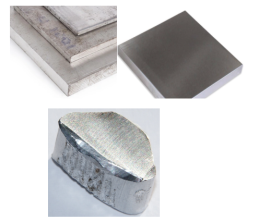
- Common shapes of materials suitable for mill include:
- Plate
- Block
- Irregular Billets
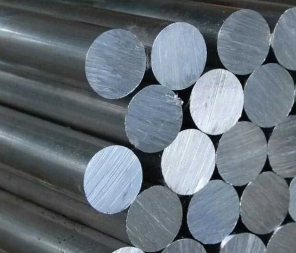
- Common shapes of materials suitable for lathe include:
- Round Bar
- Tube
Checking Materials and Hardness
Tuofa works with various machining metals like aluminum, stainless steel, Titanium, Inconel and plastics like ABS, PEEK, Polycarbonate to meet diverse requirements.
Considering Precision Requirements
Tuofa specializes in capable of achieving tolerances as tight as 0.005 mm (or 0.001"-0.0002") for your high-precision components.
CNC Custom Machining Complex Precision Designs
For your custom complex design, Tuofa utilizes advanced multi-axis turn-mill centers to combine both operations in a single setup. This offers high precision with less production time.
Conclusion
Lathe rotates the part against a stationary tool and mill has a rotating tool with a non-moving workpiece. Lathe is chosen for cylindrical, round, or threaded parts. and Mill is preferred for complex or flat, parts.
FAQ
Can you use a mill as a lathe?
Yes, mill m/c can be used as a lathe by mounting the workpiece in the spindle and attaching cutting tool to the machine table.
What are the disadvantages of milling?
The disadvantages of milling are high maintenance, energy costs, slower production speed and high material waste.
What does a lathe machine do?
Lathe m/c is a versatile machine tool that can perform cutting, knurling, drilling to create cylindrical or conical shapes.
 Sharp Corners in CNC Machining: Guide for Understanding & Machining