Tel/WeChat:
  Email:


 Home
HomeEurope’s Heatwave: High-Temperature CNC Part Design Guide

 Published:Jul 17,2026
On 9 July 2026, the World Meteorological Organization reported that western Europe had experienced its hottest June on record. Temperatures reached 41.7°C in Germany and 43.8°C in France.
For CNC parts, ambient temperature is only one input. Sunlight, enclosed equipment, motors, pumps, power electronics, and poor airflow can push the part temperature above the weather report. The practical question is whether the part can hold dimensions, fits, alignment, and sealing through the temperature cycle.
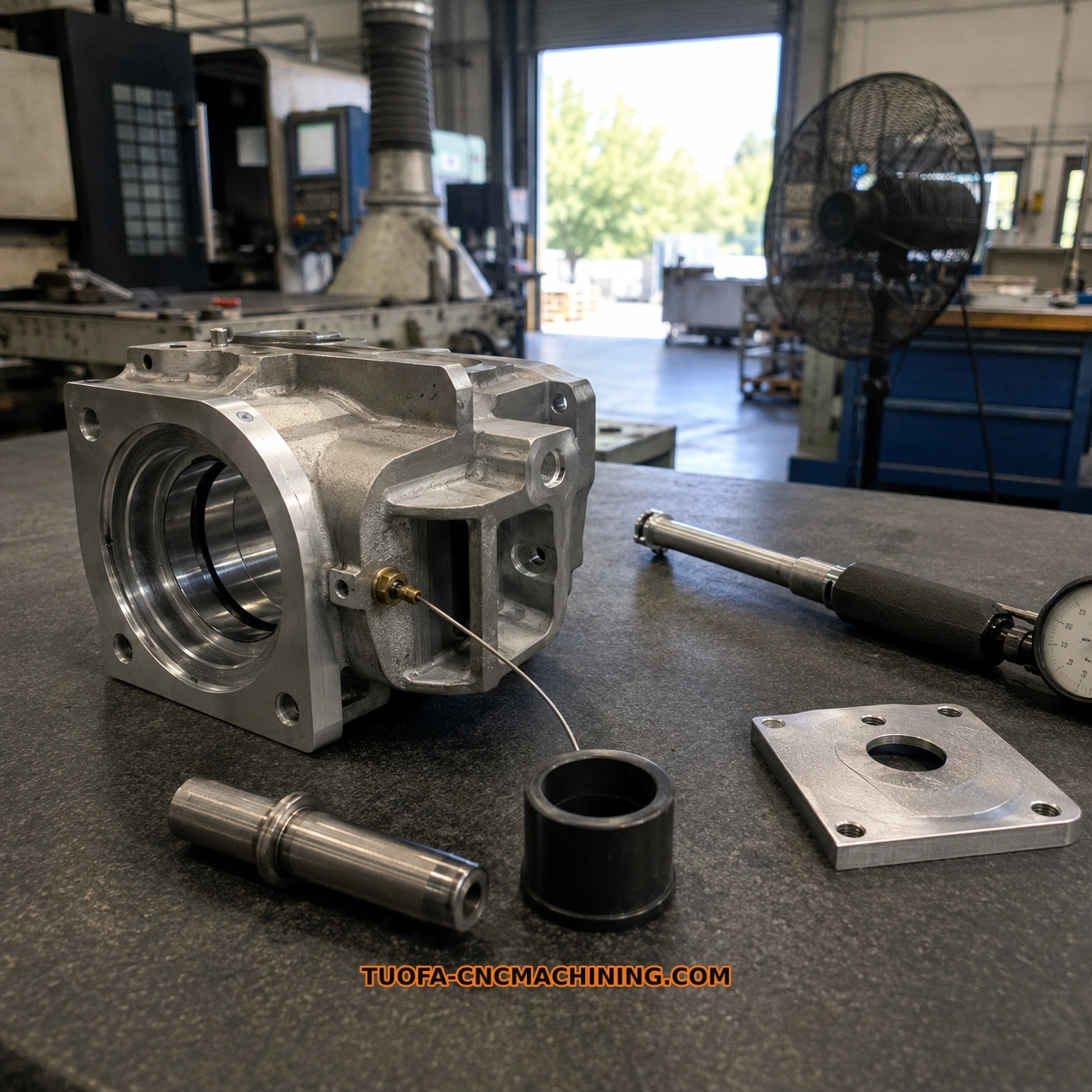
How Hot Can CNC Parts Get in a Heatwave?
In a European heatwave, a shaded, ventilated CNC part may stay close to ambient, which has reached a verified continental record of 48.8°C. Sun-exposed housings and sealed cabinets can be much hotter. nVent estimates that solar load alone can raise a gray enclosure about 40°F (22°C) above ambient; at 45°C outside, that is roughly 67°C before internal heat is added. For preliminary design, use 40–50°C for freely ventilated outdoor parts and 60–70°C or more for dark, enclosed, or internally heated parts, then verify the actual duty temperature.
How Heat Affects CNC Machined Parts
Heat does not affect every CNC part equally. Under the temperatures associated with outdoor heatwaves and enclosed equipment, dimensional change and tolerance drift usually appear before serious damage to common metals. Plastics, coatings, seals, and mixed-material assemblies may respond more strongly.
1.Dimensional Change
Parts expand as their temperature rises. The change depends on the material, part length, and temperature increase. Long plates, housings, and shafts show greater absolute movement than small components.
2.Tolerance Failure
A part may meet its drawing tolerance at the standard reference temperature of 20°C but lose the required clearance, interference, or alignment in operation. A bearing bore may loosen, while a plastic bushing may expand enough to restrict shaft movement.
3.Reduced Strength and Stiffness
Increasing temperature generally reduces material stiffness and load-carrying capacity. The change is usually limited for common metals at heatwave temperatures, but it may still matter in thin walls, long brackets, preloaded joints, and precision supports. Plastics normally show a more noticeable response.
4.Creep
A continuously loaded part may deform gradually while exposed to heat. This is a greater concern for plastic bushings, clamps, spacers, seals, and threaded features than for ordinary metal parts at 40–70°C. Material grade, load, and exposure time must be considered together.
5.Oxidation and Surface Degradation
Heatwave temperatures alone do not normally create severe high-temperature oxidation in aluminum or stainless steel. However, heat can accelerate the effects of moisture, salt, UV exposure, lubricants, adhesives, coatings, and sealing materials. High-temperature oxidation and metal creep become primary alloy-selection issues at much higher service temperatures.
6.Thermal-Cycle Fatigue
Repeated heating and cooling causes parts to expand and contract. When movement is restricted, stress can accumulate around threads, press fits, sharp transitions, fasteners, and bonded interfaces, gradually causing loosening, fretting, cracking, or seal failure.
| Material | Typical CLTE | Growth over 100 mm |
|---|---|---|
| 6061 aluminum | 23.6 × 10⁻⁶/K | 0.071 mm |
| 304 stainless steel | 16.0 × 10⁻⁶/K | 0.048 mm |
| Ti-6Al-4V | 9.0 × 10⁻⁶/K | 0.027 mm |
| Unfilled PEEK | about 50 × 10⁻⁶/K | 0.150 mm |
| POM-C | about 130 × 10⁻⁶/K | 0.390 mm |
Note: These are nominal values; grade, temper, reinforcement, and direction can change the result.
Difference between Metals and Plastics
Metals generally retain greater stiffness and have lower thermal expansion than unreinforced engineering plastics. During a heatwave, their main risks are usually dimensional drift, changing fits, bolt preload, and distortion caused by uneven heating.
Plastics can expand more, lose stiffness faster, and creep under sustained load. For example, unfilled PEEK has a listed thermal expansion coefficient of about 5 × 10⁻⁵/K between 23°C and 100°C, more than twice the typical value for 6061 aluminum. Reinforced grades can improve stiffness, creep resistance, and dimensional stability, but their movement may become direction-dependent.
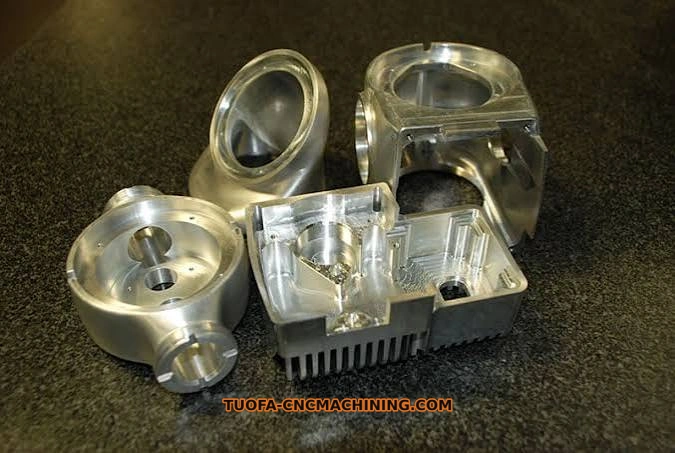
Which CNC Parts Are Commonly Affected?
Heat does not affect every geometry equally. Problems concentrate around interference fits, small running clearances, flat sealing surfaces, and fixed relationships between different materials.
Bearing Housings and Press Fits
An aluminum bore expands more than a steel bearing ring. A secure press fit can lose interference at operating temperature. A shoulder, plate, or retaining ring may be safer than friction alone.
Shafts, Bushings, and Sliding Fits
A steel shaft inside a POM bushing is a common risk. The bushing changes far more than the shaft. Insufficient hot clearance can cause drag or seizure; excessive cold clearance can create noise and poor positioning.
Flatness, Alignment, and Temperature Gradients
Large plates, thin-wall housings, sealing faces, and sensor mounts are sensitive to uneven heating. Temporary bowing can misalign a camera, open a gasket, or shift bearing centers.
Mixed-Material Assemblies
Bolts, inserts, seals, and substrates expand differently. Fully constraining an aluminum panel to a steel frame at several points can create internal stress. One fixed datum with controlled sliding points is often safer.
Material Selection for High-Temperature CNC Parts
No material is thermally stable in every sense. Selection must balance expansion, stiffness, corrosion, weight, wear, cost, and mating-part behavior instead of relying on temperature rating alone.
Aluminum Alloys
Aluminum is light, conductive, and economical for housings, cold plates, manifolds, and brackets. Its higher expansion must be considered in bearing fits, long spans, inserts, and steel-fastened assemblies.
Stainless Steels
304 and 316 provide strength and corrosion resistance with lower expansion than aluminum. Also consider condensation, salt, coolant, and surface finish. Ferritic and duplex grades expand less than austenitic stainless steels, but other properties may control the final choice.
Titanium and Low-Expansion Alloys
Titanium offers corrosion resistance, low weight, and low expansion, but costs more. Invar-type alloys are justified for metrology, optics, and precision positioning where thermal drift has a direct functional cost.
Engineering Plastics
PEEK, POM, and filled grades should be selected from the exact datasheet. Reinforcement can reduce expansion and creep but introduce directional behavior. Load duration, moisture, wear, and mating materials still need review.
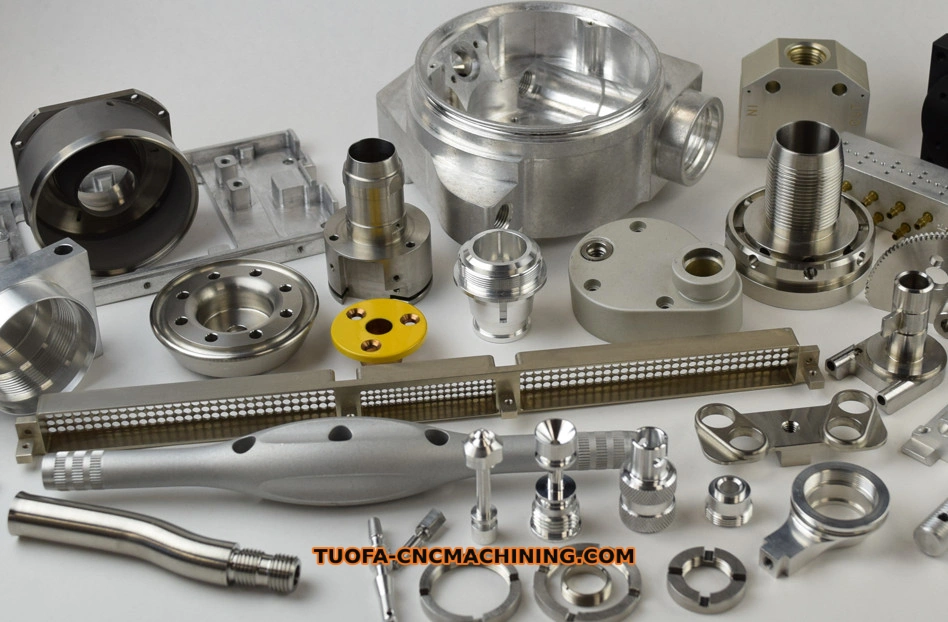
Design Tips for Thermal Stability
This heatwave in Europe caught many people off guard. However, it is essential to consider the impact of higher temperatures when designing components.
Match materials in the same assembly. Avoid large differences in thermal expansion around bearings, pins, seals, and precision datums.
Use aluminum where heat transfer and weight matter, but allow more room for expansion. 6061 expands noticeably as temperature rises.
Use low-expansion or stiffer materials for critical features that must hold alignment or tight fits.
Treat plastics separately. Plastics generally expand more than metals and may creep under sustained heat and load; reinforced grades can improve stability.
Convert operating requirements into 20°C drawing dimensions. Industrial dimensions are referenced to 20°C, so hot-state fits and clearances should be calculated before tolerances are finalized.
At Tuofa, drawing review starts with the part’s function, mating materials, critical fits, and expected environment. It does not replace thermal analysis; it identifies machining and assembly risks before material is cut.
Machining, Inspection, and Testing
Residual stress matters in large plates and thin-wall parts. Separate roughing and finishing when balanced removal or stress relief is needed. Inspection should occur after the part and equipment have stabilized. NIST notes that measurement away from 20°C requires thermal-expansion correction and adds uncertainty.
Critical applications may need hot-fit checks, thermal cycling, leak testing, or hot alignment measurement. The test should reproduce the relevant heat, restraint, pressure, and exposure time.
How Heatwaves Disrupt Manufacturing Supply Chains
Thermal risk continues after drawing approval. Heat can narrow material options, change machining and inspection conditions, and expose finished parts to distortion or corrosion in storage and transport.
Part Material Selection
Drawings should state the alloy, temper, acceptable standards, and whether an equivalent material may be reviewed. Any substitution must be checked for expansion, strength, corrosion, and finishing.
Part Machining Process
Workshop heat can affect machine stability, inspection, working hours, and scheduling. Controls include machine warm-up, temperature-controlled inspection, shorter verification intervals, staged machining, and realistic weather buffers.
Part Packaging and Transport
Packaging must protect geometry and surfaces through hot warehouses, vehicles, and outdoor handling. Critical faces should not bear directly against supports; large thin parts need support without forced distortion. Moisture barriers, desiccants, or corrosion protection may be needed when hot cargo later enters a cooler, humid environment.
The European Environment Agency notes that heatwaves increasingly disrupt roads and railways. Time-sensitive orders need suitable packaging, route visibility, limited outdoor storage, and contingency. Dispatch is not the end of risk management.
Conclusion
Europe’s heatwave is the background, but the lesson is permanent: CNC parts must be designed for operating temperature, not only inspection temperature. Early review of the application, material, fit, machining, inspection, packaging, and route can prevent assembly or delivery problems.
FAQ
Can a European heatwave affect CNC part accuracy?
Yes, especially in long parts, tight fits, mixed-material assemblies, and equipment with solar or internal heat. The change may be temporary but still affect function.
Which CNC materials have the best dimensional stability?
Low-expansion alloys move least but are not automatically best. Titanium, stainless steel, aluminum, and reinforced plastics can all work when expansion, load, corrosion, weight, and cost match the application.
Should tolerances be calculated at operating temperature?
Critical fits and clearances should be checked across the full operating range. The drawing can still use 20°C inspection dimensions if the hot-state requirement is clearly defined.
What are the best materials for high-temperature CNC parts?
There is no universal answer. Select by part temperature, exposure time, load, mating materials, corrosion, dimensional needs, and manufacturing route.
 If You Paint Copper, Will It Lose Its Conductiveness?