Tel/WeChat:
  Email:


 Home
HomeDesign for Manufacturing and Assembly: A Guide for Optimizing Parts

 Published:Mar 07,2026
production times and costs for your projecDesign for manufacturing and assembly (DFMA) optimizes the product design to save production costs and improve the efficiency of production process. It considers production capabilities and limitations from the start of design process. It simplifies assembly and typically cuts costs by 70-80% and produces high product quality. This article will explore all the aspects of DFMA including definition, use and process.
What Is DFMA?
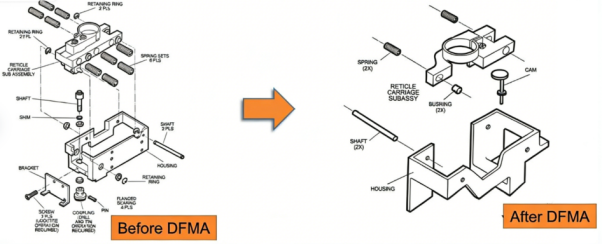
DFMA involves the manufacturing process with low complexity, selecting cost-effective materials, and the design must fit production capabilities. The goal is to minimize assembly time by reducing total number of parts and error-free and automated assembly. DFMA methodology is implemented on earlier design phase to minimize costly design changes later.
Is DFMA the Same as DFAM?
No. DFMA is not same as DFAM. DFMA (Design for Manufacturing and Assembly) is a subtractive (traditional) manufacturing. The goal is to simplify the product design. It is done by reducing the total number of parts and minimizing assembly time and costs. While DFAM (Design for Additive Manufacturing) specifically addresses additive manufacturing. It creates complex geometries, optimize performance, and consolidate parts. In conclusion, DFMA is about simplifying by breaking down and DFAM is about simplifying by consolidating.
|
Methodology |
Focus |
How to Simplify |
When to use |
|---|---|---|---|
|
DFMA |
How to make parts assembled cost-effectively |
reduce amount of parts to reduce assembly parts |
cnc machining, stamping |
|
DFAM |
How to combine functions into a part |
make a complex parts with multi functions |
3D printing |
Who Needs to Understand DFMA?
Product designers, manufacturing engineers, supply chain managers and project managers need to understand DFMA. It helps them to create inexpensive products with optimized production process by sourcing lower cost material and stays within budget to meet market demand.
Why Use DFMA in Engineering?
DFMA in engineering is used to optimize product design for ease of manufacturing. It improves efficiency of assembly and ultimately leads to reducing product cost with improving quality. DFMA helps companies to cut on average 15-40% of production costs and 20-50% of part counts by reducing cost of manufacture and assembly of parts.
Reduce Cost
DFMA is a primary tool to reduce costs. It reduces the total cost by part reduction, lowering material usage, inventory, and purchasing costs. DFMA simplified designs and replaces fasteners with snap-fits and reduces assembly time and labor cost.
Improve Quality of Parts
DFMA increases product reliability and quality by simplifying the assembly. The potential failure points are reduced with fewer parts. Less components means less opportunities for errors or defects. Standardized and simpler parts are more robust and consistent in performance.
Enable Stable Production
DFMA enables stable production by aligning design specifications with actual process capabilities. It allows part to be consistently produced and assembled with minimal variation. The process is stabilized through tolerance management by using realistic tolerances, simplifying complex geometry parts and optimizing design to minimize tool change.
.
DFAM: DFM & DFA
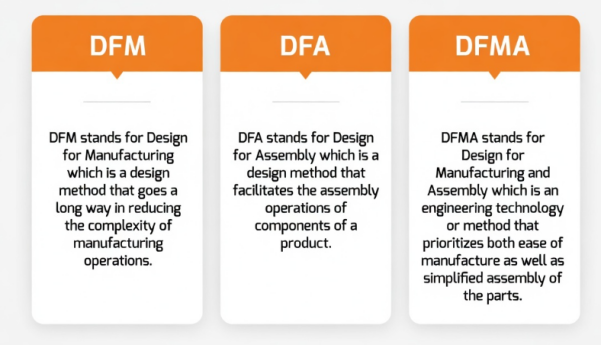
DFM and DFA both have different goals in manufacturing. Combining both eases the manufacture and assembly of parts and enhances production speed.
What Is Design for Manufacturing?
Design for manufacturing (DFM) focuses on efficient fabrication and high-quality parts. The key principles are to minimize, simply and eliminate unnecessary features. It uses standardized materials products to minimize manufacturing costs and complexity.
What Is Design for Assembly?
Design for assembly (DFA) is the process of designing a product in way that requires minimal labor and time to assemble. It reduces errors by focusing on simplifying how components join together. The goal of DFA is to reduce assembly time and lower labor costs.
Key Differences: DFM vs DFA
The key differences between DFM and DFA are as:
|
Features |
DFM |
DFA |
|---|---|---|
|
Main focus |
fabrication of individual components |
assembly of those components into a final product |
|
goal |
reduce manufacturing defects, material waste, and costs |
reduce assembly time, labor costs, and complexity. |
|
Impact |
Poor DFM leads to high manufacturing scrap rates |
poor DFA leads to long assembly times and high labor costs |
What Are Key Principles of DFMA?
The key DFMA principles focus on simplifying product architecture to reduce costs and improve quality. These principles are all core components of this methodology:
Minimize Part Count
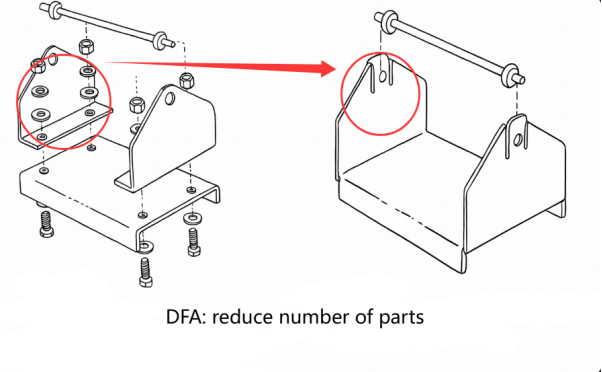
Minimizing the part count is the most impactful DFMA principle. Reduction in number of parts directly lowers material costs, inventory, and assembly time.
Simplify Geometry
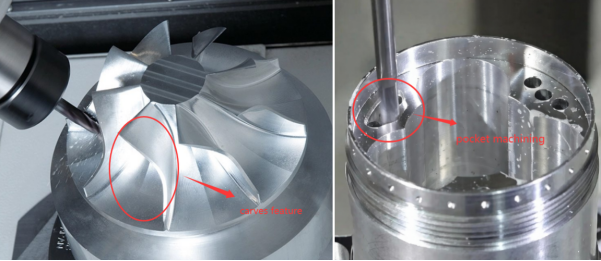
Use simpler shapes and avoid unnecessary features. For example, avoid complex curves or deep pockets. It reduces machining time, tool changes, and manufacturing complexity.
Design for Easy Manufacturing
Design for Manufacturability in CNC machining is a strategic approach. It aligns part design with the inherent capabilities of cutting tools and machines. By applying these rules early in the design phase, extreme machining can be avoided.
For example, excessive setups, specialized tooling, or slow cutting speeds. These factors can optimize production efficiency and reduce costs.
Optimize Design for Assembly
Design optimization for assembly focuses on making parts easy to handle and insert. This adds self-aligning features, snap-fits instead of fasteners, and a "top-down" assembly sequence.
Avoid Over-Tight Tolerances
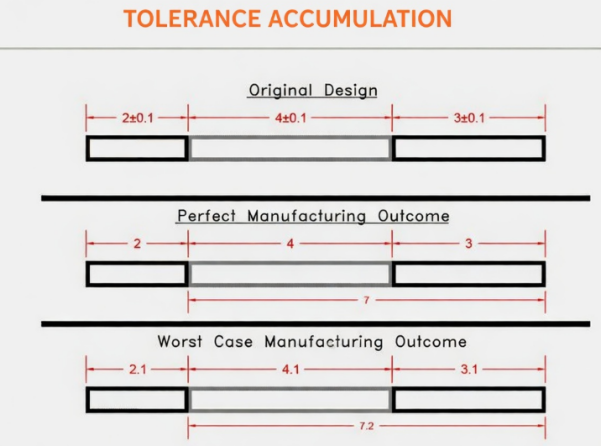
Tight tolerance plays important role in precision parts manufacturing. However, over tight tolerance can make some problems. DFMA principle specifies the loosest possible tolerances that still meet functional requirements. Tighter tolerances than necessary exponentially increase costs in tolerance analysis. This is due to specialized tooling and high scrap rates. For example, if there are 10 parts assembled with a strict tolerance of ±0.01 for each, the combined tolerance may exceed ±0.01.
How Is DFMA Implemented?
DFMA is implemented by integrating DFA and DFM early in the design phase. The focus is to reduce costs by at least 50%, improve quality, and shorten time-to-market. It has a structured approach by defining requirements, analyzing assembly designs, providing feedback, and improvements.
Define Product & Assembly Requirements
This stage identifies functional requirements, user needs, and target costs. Design and manufacturing engineers are involved early to align on goals. They create constraints such as identifying critical dimensions, material constraints, and regulatory needs.
Analyse Part Design (DFM)
In this stage, each part is evaluated to check if it can be eliminated or combined. Assembly is simplified by minimizing handling and fastening operations. Fasteners and self-aligning components are used to ease assembly.
Analyse Assembly Design (DFA)
The most cost-effective manufacturing process is selected based on material and volume. Geometry is optimized to reduce tool changes and machining time.
Provided DFMA Feedback
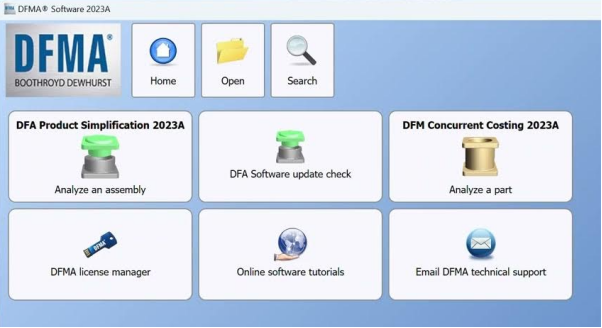
Software like DFMA® Software is used to quantify assembly efficiency and cost. Specific areas of waste are identified such as difficult-to-orient parts or unnecessary manufacturing steps, and cross-functional teams review findings to discuss feasibility.
Optimize Design Based on DFMA Feedback
Recommendations are incorporated to improve ease of manufacture and assembly. Updated designs are re-analyze the updated design to ensure improvements. and the production finalizes with lowered costs, reduced assembly time, and enhanced reliability.
What Are Common DFMA Tools?
Common DFMA tools are software applications and methodologies. These tools help to analyze, cost, and simulate manufacturing processes before production begins.
Boothroyd Dewhurst DFMA® Software
Boothroyd Dewhurst is considered the industry standard for DFMA. It has two main modules used together. One is DFA to analyze the product structure. It helps to consolidate parts and reduce the total part count, which then reduces labor, inventory, and assembly time. The other one is DFM concurrent costing. This module estimates the cost of manufacturing by evaluating different materials and processes and provides "should-cost" analysis.
CAD Software
Modern 3D CAD software integrates with DFMA functionality. This helps to evaluate design features in real-time. Software like SolidWorks for manufacturing constraints and assembly issues, Autodesk Fusion 360 combines CAD with simulation and manufacturing tools, Siemens NX / Solid Edge offers comprehensive modeling with integrated DFM/DFA tools, and CATIA for complex, integrated, and manufacturable designs.
CAM Software
CAM software serves to bridge the gap between design and production. They simulate how parts will be manufactured by CNC machining or other equipment. Examples are Autodesk Fusion 360, Mastercam, and Siemens Teamcenter Manufacturing.
DFMA vs DFX Methodology
DFMA is focused on minimizing production costs by simplifying part fabrication. It is often considered a subset of the broader Design for X (DFX). DFX is a more flexible and holistic approach. In this, team optimizes various "X" factors like cost, reliability, or environment.
DFMA vs DFC
As we understand what a DFMA is, while DFC specifically focused on the monetary aspects of the supply chain. DFMA optimizes product structure and lowers assembly time and material usage. DFC focuses on cost reduction by analyzing vendor pricing, material choices, and target costing. However, DFC is heavily reliant on DFMA. Because DFMA provides engineering data needed to calculate costs from geometry and process parameters.
DFMA vs DFR
DFR ensures a product will work without failure over its intended lifespan. DFR focuses on thermal stress, material fatigue, and durability. The conflict can occur between DFMA and DFR. For example, a simple assembly (DFMA) uses plastic snap while a durable screw (DFR) is required. Integrated approach finds a balance between cost-effectiveness and durability.
DFMA vs DFE
DFE focuses on minimizing environmental impact across the entire lifecycle. A major part of DFE is complying with regulations like RoHS (Restriction of Hazardous Substances). This restricts hazardous materials in electronics. Specifically, RoHS requires that materials have strictly limited lead content, less than 1000 ppm (0.1%) by weight. DFE encourages the use of more expensive and sustainable materials, while DFMA focuses on the inexpensive and most efficient manufacturing materials.
DFMA vs DFM
DFM (design for maintenance) focuses on disassembly and repair. This makes it easy for a technician to take the product apart, repair it, and reassemble it. While DFMA focuses on initial assembly efficiency, easy to put the product together. High DFMA efficiency results in poor maintenance design. DFM (Maintenance) requires designing for accessibility and component replacement.
How Can DFMA Optimize CNC Machining?
DFMA optimizes CNC machining by integrating manufacturing constraints early in the design phase. It simplifies manufacturing process, reduces costs, and enhances quality. By aligning part design with machine capabilities, DFMA minimizes the need for complex setups.
Simplifies Machining Operations
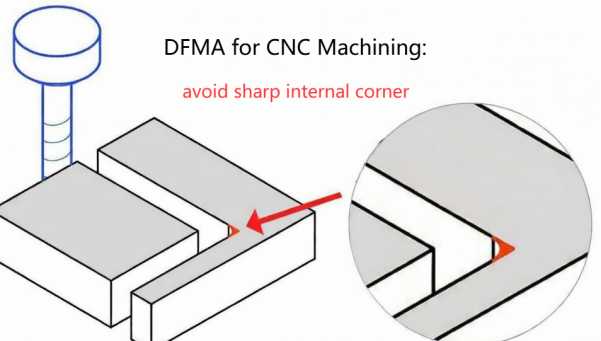
DFMA reduces repositioning errors and time. The parts can be machined in one or two setups rather than multiple. Simple geometry with no sharp internal corners prevents costly and slow secondary operations like EDM.
Guides Tool Selection
Features that can be cut with largest possible tool increases rigidity. They have less vibration, which prevents chatter and tool wear. Select dimensions that match common tool diameters. Confirm the tool availability and minimize tool change frequency.
Guides Cutting Strategy
DFMA enables designs to feature geometries that allow for continuous and smooth tool paths. This prevents frequent stops, abrupt direction changes or complex 3D profiling. Designs must be fully machined in one operation to reduce the need for complex re-fixturing.
Reduces Cutting Time
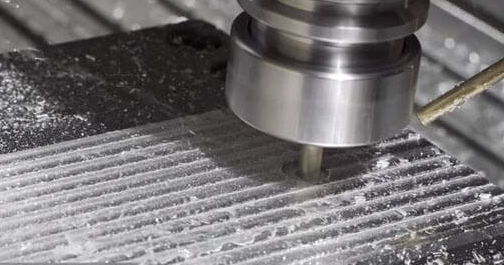
Lower the feature complexity to reduce total machining time. Optimizes tolerance only where needed. It allows faster cutting speed with less passes.
Improve Machining Consistency
Make a stable geometry with consistent wall thickness. This prevents part form bending during machining. By using tolerances and geometry that is easy to manufacture, decrease the rate of error.
DFMA in Practice: Tuofa DFM Feedback for Design Optimization
Effective DFMA is important for transforming a digital design into a high-quality, cost-effective part. Tuofa CNC machining provides you with expert DFM feedback that covers the gap between CAD models and manufacturability. We guarantee low production times and costs for your project.
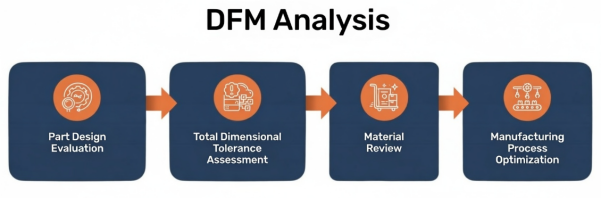
Suggest Suitable Materials
Material selection significantly impacts machinability, cost, and functionality. Tuofa provides guidance on selecting materials ;that align with your requirements. For parts needed high strength-to-weight ratios, Tuofa suggests Aluminum 6061 or 7075. If high corrosion resistance is needed, stainless steel 303 or 316 is recommended.
Identify Difficult-to-Machine Features
We help you identify features that increase costs or lead times. Like undercuts cannot be machined with standard end-mills and often require 5-axis machines. Tuofa recommends adding fillets to corners or redesigning parts to eliminate the need for these machineries.
Recommend Reasonable Tolerances
Tight tolerances significantly drive-up costs and production time. Tuofa will review your technical drawings to suggest reasonable tolerances. Tuofa adheres to standard ISO 2768, which is sufficient for most precision applications.
Conclusion
DFMA (design for manufacture and assembly) optimizes part design to reduce production costs and time-to-market. This is achieved by simplifying manufacturing processes early in the design cycle. Core principles include Minimize part count, simplify geometry, design for easy manufacturing, optimize design for assembly, and avoid over-tight tolerances.
FAQ
What is difference between DFMA and DFM?
DFM (design for manufacturing) is designing individual parts for easy, cost-effective production materials and tolerances. While DFMA methods combine both DFM and DFA (Design for Assembly). It focusses on optimizing part design for easier, cheaper production by 50% of total costs.
What are the disadvantages of DFMA?
The disadvantages of DFMA are high initial investment costs for specialized design. It has high transportation costs for pre-fabricated components which are sometimes not effective for low-volume production.
What are alternatives to DFMA?
Alternatives to DFMA methods focus on optimizing product development through specialized methodologies. Common alternatives are Design for Additive Manufacturing (DFAM), Design for Six Sigma (DFSS),Design for Service (DFS), and Generative Design.
 STEP File Guide for Engineering Beginners