Tel/WeChat:
 Email:



 Home
Density of Plastics: Complete Density Chart and Engineering Guide

 Published:Oct 15,2026

Density of plastic and its chart play a crucial role in manufacturing industry, as both play a key role in selecting right plastic material and its cost and efficacy. It is the core parameter used to convert part volume into actual part mass. Copying the values from the plastic density chart directly without considering the manufacturing methods and fillers will lead to inaccurate calculated part weight.
This guide is written to help you predict plastic part weight and calculate material cost through the definition of plastic design, its uses, the measuring methods, and the provided chart of plastic density.
What Is the Density of Plastic?
Density of plastic is actually its mass per unit volume. The density values of plastic on the chart are theoretical data and they will differ from the actual density of finished plastic parts. Plastic density helps engineers know strength, weight, and flexibility of material.
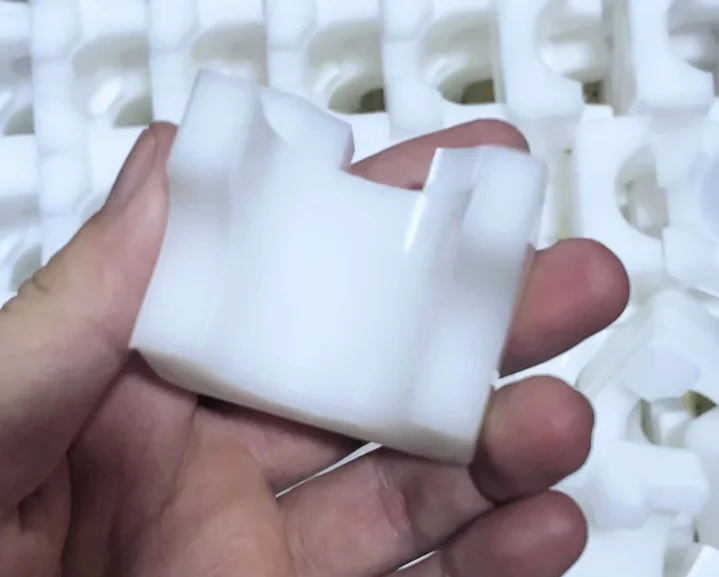
Plastic Density Formula
Density of plastic is usually determined by its formula using mass and volume. Here is the formula:
ρ = m/V
- ρ (rho) is the density.
- m is the mass of the plastic.
- V is the volume occupied by the plastic
The value of plastic density excludes the internal voids of the plastic parts. Therefore, if your parts contain micropores or air bubbles, the density of your parts will be lighter than that of materials.
Common Units for Plastic Density
Plastic density is measured in different units, each with its specific use scenario. Engineers measure density in a specific unit according to manufacturing stage, material form, and geographic region.
- g/cm³ or g/mL,is universally and most commonly used unit by engineers during material selection and quality control because this unit clearly states whether polymer will float over water or sink.
- The kilogram per cubic metre (kg/m³) is used to calculate the density of large parts.
- Pounds per cubic foot (lb/ft³)is a US-standard CAD/CAM software environment when setting custom material properties using US customary units.
Density vs Specific Gravity
As said before, density is ration of mass and volume of any components with specific units like g/cm³, kg/cm³ or lb/ft³. However, gravity is ratio of material density to density of water with no units. Density is used to calculate mass of component where as specific gravity gives engineers a quick answer on whether a material is heavier or lighter than water.
What Factors Affect Plastic Density?
The design of final plastic part is different from the value of density chart because the part density can be affected. The number of factors that affect density of plastic, like its chemical composition, molecular structure and temperature. Here is a bit more detail of these factors.
Chemical Composition
Chemical composition directly impacts density of plastic with which type of atom its made of either lighter atoms or heavier. If a polymer has heavy atoms like Cl or F in PVC and Teflon, respectively, such polymer shows higher densities. Whereas polymers with light atoms, polypropylene (PP) and low-density polyethylene (LDPE), have lower densities, which sit around 0.90 to 0.93 g/cm³..
Molecular Packing
Polymers with a crystalline structure where atoms and chains are regularly attached in a unique pattern. Such a compact arrangement of atoms causes an increase in mass per unit volume hence increasing density.
Fillers and Additives
Adding inorganic filler in polymers increases their mass, consequently increasing its density. These are added to enhance their physical and mechanical properties. However, if your parts need lightweight design, adding filler won't be a good choice.
Temperature
Temperature alters plastic density remarkably. The density is lower with increasing volume when the temperature rises. On the contrary, the density is higher with decreasing volume when temperature drops.
How to Measure Plastic Density?
In CNC engineering, engineers use multiple methods to measure density of plastic, like by using its mass-volumetric formula, by immersion method or density gradient method, each with its own pros and cons. Here are some common methods; you can pick one that suits your requirement.
Mass and Volume Calculation
The mass volume method is adopted by engineers for bulk material in form of rods, blocks or sheets. Here they measure mass of material using an electrical weight analysis machine and volume by precisely measuring their length, width, diameter and thickness. It is suitable for regular-shape parts, but it fails to measure density for complicated shapes where components have variable thickness, length or diameter. Therefore, it is seldom used to do precision density measurement.
Immersion Method
Immersion method works on Arshmidus principle and follows ASTM D792 standard for solid plastic. Here CNC-machined part is weighed twice: once in air and secondly by submerging it into liquid, usually water or ethanol. By knowing both, mass engineers use this formula to know its density:
ρ object = (m air / (m air − m liquid)) × ρ liquid
- m air= mass of the object measured in air
- mliquid = apparent mass of the object when fully immersed in the liquid
- ρ liquid= density of the liquid used (for water at 4 °C, ρ liquid = 1 g/cm³ or 1000 kg/m³)
Immersion method is far more effective than mass volume method, as it can measure density of components with complex geometries with high precision. Not just this immersion method also helps engineers catch unwanted voids or flaws in components.
Liquid Pycnometer Method
Liquid pycometer methods work under ISO 1183-1 standard. Engineers use it to find the density of raw plastic pellet powder and chips obtained after CNC machining. This method is more precise but more trouble than immersion method. Here in you measure mass of plastic and mass of liquid pushed by sample put into pycnometer. Here is how it works.
ρ S = [ (m1 - m0) / ((m3 - m0) - (m2 - m1)) ] × ρ L
Where:
- ρ S= Density of the solid plastic sample
- m0= Mass of the clean, empty, dry pycnometer
- m1= Mass of the pycnometer containing the plastic sample
- m2= Mass of the pycnometer containing the plastic sample and filled with liquid
- m3= Mass of the pycnometer filled completely with liquid alone
- ρ L= Density of the immersion liquid at the test temperature
Density-Gradient Method
Density gradient method, which is governed by ASTM D1505, provides absolute highest accuracy for comparing slight variances in polymer crystalline structures. It is commonly used for laboratory R&D, but rarely for incoming inspection in CNC machining.
How to Calculate Plastic Weight from Density
Measuring weight of plastic or components made with it's essential, as it not only helps suppliers estimate shipping costs but also helps engineers know strength-to-weight ratio of material. Engineers and manufacturers use different methods at different stages of manufacturing to calculate mass of plastic. We will be shedding some light on these methods in this section.
Plastic Weight Formula
To calculate the weight of rods, sheets or bars, engineers use typical mass volum density formula.
Standard Formula:
Weight=Volume x Density
For a Flat Sheet / Rectangular Block:
- Weight=Length x Width x Thickness x Density
- For a Round Rod / Cylinder
- π × (Diameter ÷ 2)² × Length × Density
Compare CNC Part Weight by Material
CNC parts with same geometry and structure made with different materials will have different weights but same volume. So by this method engineers do not need to measure volume each time they simply change material, and by using the known volume and density of material, they calculate weight of material.
For example, suppose you have a CNC part with a volume of 50 cm³.
- Polypropylene (PP) density = 0.91 g/cm³
- So its weight would be:
- Weight = 50 × 0.91 = 45.5 grams
- When using ABS whose density is 1.05 g/cm³
- Now keeping volum same but ABS density weight will be:
- Weight = 50 × 1.05 = 52.5 grams
Changing plastics into lower-density plastics is an effective way to reduce part weight, and it doesn't change any structure of parts.
Does Higher Plastic Density Mean Higher Strength?
Plastic has higher density doesn't mean it has higher strength. Strength of any polymer does not depend only on its density, but it depends on its atomic arrangement and mechanical properties. For example, high-density polyethylene is stronger than low-density polyethylene due to its tight structural arrangement.
Density vs Tensile Strength
As said before, along density can't always predict tensile strength. Higher density does not always mean higher strength. Sometimes low-density polymers also show high strength compared to high-density polymers.
For example, PTFE has high density while its tensile strength is low. On the contrary, PEEK has medium density while has high tensile strength.
Strength-to-Weight Ratio
To evaluate plastics when you need both low weight and high strength, engineers rely on a metric called specific strength (also known as the strength-to-weight ratio). Specific strength shows a material's mechanical strength divided by its density (σ / ρ). Engineers aim to maximize this ratio in order to achieve the strongest possible part with the lowest mass.
Here we have compiled a table illustration selection of plastic based on its tensile strength.
|
Plastic Material |
Denity (g/cm³) |
Tensile Strength (MPa) |
Specific Strength (kN·m/kg) |
Best Used For |
|---|---|---|---|---|
|
PP (Polypropylene) |
0.90 |
35 |
38.8 |
Living hinges, lightweight containers |
|
Nylon 6 (Unreinforced) |
1.14 |
80 |
70.1 |
Gears or low-friction moving parts |
|
Polycarbonate (PC) |
1.20 |
70 |
58.3 |
Bulletproof glass |
|
PEEK (Unreinforced) |
1.32 |
100 |
75.7 |
Aerospace components |
|
Nylon 6 (30% Glass Filled) |
1.35 |
175 |
129.6 |
Automotive engine shrouds, heavy brackets |
|
PEEK (30% Carbon Filled) |
1.44 |
220 |
152.7 |
High-load structural metal replacements |
Note: All tensile values are dry, room temperature, molded/extruded base material. Tensile strength will drop with moisture absorption (Nylon), temperature, fiber orientation, and CNC machining-induced stress.
CNC Plastic Part Applications by Density
Use of high-performance polymers is now extensively adopted by engineers in CNC manufacturing of spare parts for aerospace, marine, robotics and more. Let's break down how using these polymers in each industry is beneficial.
Aerospace Plastic Parts
In aerospace, where weight is a key concern of engineers, as it correlated with fuel efficiency and payload capacity.
- Using PP helps engineers minimise empty cabin weight while resisting repetitive structural fatigue.
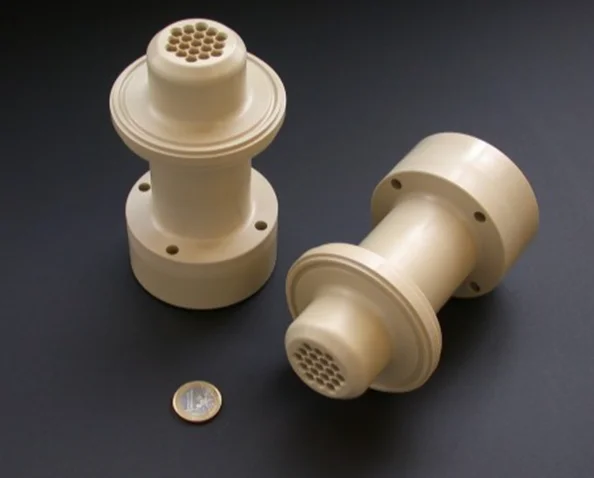
- Polyether Ether Keton (PEEK) is another key polymer finding its application in aircraft industry. Specified for Aircraft Jet Engine Hydraulic Seals and Fuselage Wiring Harness Brackets.
- PEEK replaces aluminium brackets, slashing component weight by up to 60% while enduring high thermal and mechanical environments.
Robotics and Automation
In robotics and automation, engineers design components by keeping in mind to reduce actuator size, maximize speed, and decrease energy draw during high-cycle manoeuvres.
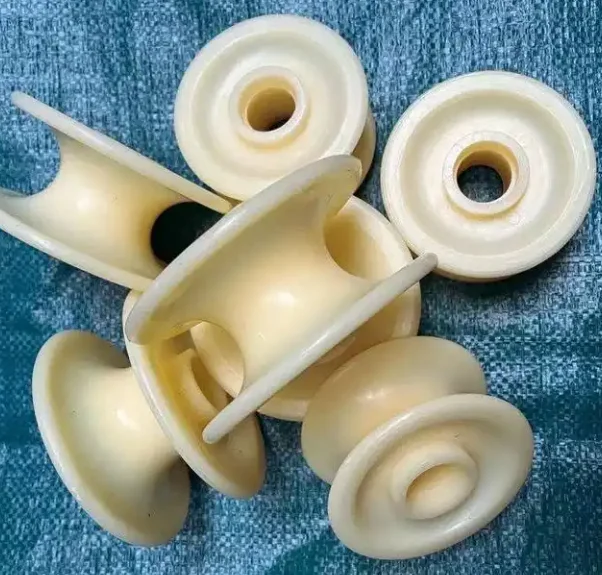
Polyethylene offers low inertia and self-lubricating ability. That's why high-weight PE is used for manufacturing of articulated robotic arm guide rails and conveyor slider beds.
Not just this: robotic end-effector gripper jaws and automation spur gears, which were made with steel or brass are now manufactured using Nylon 6/6. Its due to lower weight of nylon 6/6 offering required toughness and optimizing swift directional changes.
Medical and Portable Equipment
Reduce weight for handheld devices to improve ergonomic handling. Number of polymers used for manufacturing medical equipment, for instance:
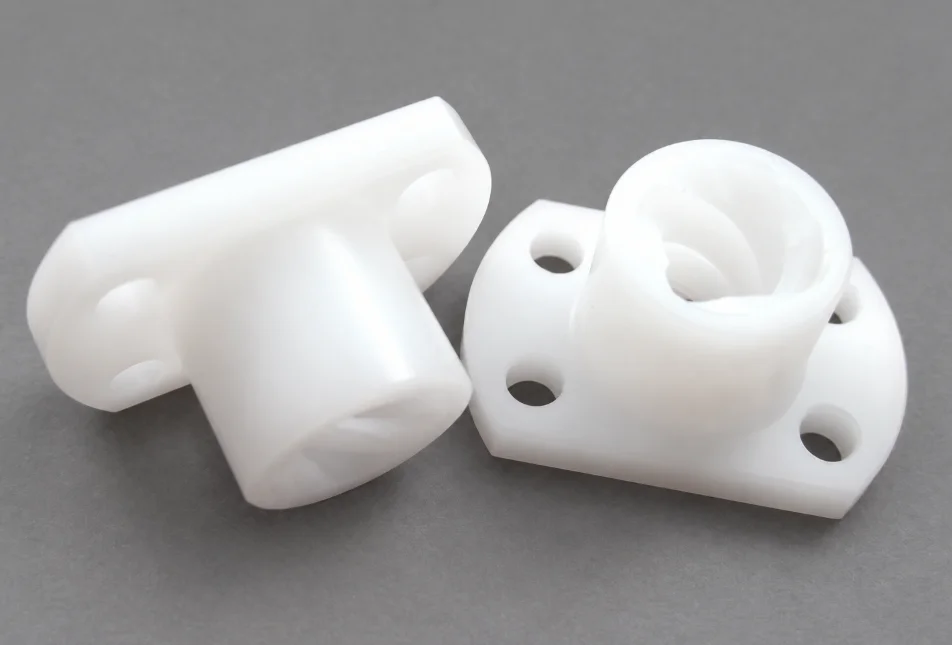
- ABS can be alternative to PC when lightweight is the core requirement. ABS is used to make handheld diagnostic instrument housing, low-load fixture enclosure, etc..
- PC is heavier but stronger than ABS. It isfound in their use in manufacturing handheld surgical stapler handles and oxygenator centrifugal pump housings.
Marine and Underwater Parts
Marine engineering heavily relies on polymer density, as they need to achieve neutral buoyancy. Marine components made with metal are highly susceptible to corrosion, so replacing them with polymer reduces this risk. To maintain buoyancy, commercial boat hull pontoon blocks and marine dock fender panels are manufactured using HDPE.
How Does Plastic Density Affect Material Selection?
Evaluating whether the material is suitable is the one of the important part of DFM analysis. Density can determines the structural integrity, weight-to-volume ratio and molecular packing of plastic parts. Here is how plastic density will effect material selection for CNC parts.
Design Requirements
If your plastic parts require smaller cross-section or thinner wall thickness to save inner space without increasing weight, plastics with high specific stiffness like PEEK CF30, PA66 CF30, PPS CF30 can be selected to meet the stiffness requirement. However, if you want to select low-density plastics like PP, your design needs larger cross-sections, tall ribs or thicker walls, and this will reduce available internal space of your parts.
Performance Requirements
Higher-density plastics normally bring higher tensile strength, hardness, and better corrosion-resistance, while lower-density plastic is better for resisting vibration and flexible deformation. You should select the suitable plastics based on the application of your parts.
Cost Considerations
It doesn't mean that plastic with lower density is cheaper. For instance, PEEK has low density while it is very expensive. However, the weight of parts can influence the shipping cost, the heavier the part, the higher the shipping cost. It means that lighter parts can reduce the shipping costs, and also reduce assembly load and reduce hardware cost of the complete machine.
Plastic Density Chart: Common and Engineering Plastics
Here is plastic density chart with density of common plastics and engineering plastic:
|
Plastic Material / Grade |
Density (g/cm³) |
Density (kg/m³) |
ASTM Standard |
|---|---|---|---|
|
PP Homopolymer |
0.90-0.91 |
900-910 |
ASTM D4101 |
|
PP Copolymer |
0.89-0.91 |
890-910 |
ASTM D4101 |
|
Low-Density Polyethylene (LDPE) |
0.91-0.94 |
910-940 |
ASTM D1248 |
|
Ultra-High-Molecular-Weight Polyethylene (UHMW-PE) |
0.93-0.94 |
930-940 |
ASTM D4020 |
|
Natural High-Density Polyethylene (HDPE / PE300) |
0.94-0.96 |
940-960 |
ASTM D3350 |
|
HDPE Pipe Grade (PE4710) |
0.955-0.960 |
955-960 |
ASTM D3350 |
|
Standard or Natural ABS |
1.04-1.06 |
1040-1060 |
ASTM D1248 |
|
Flame-Retardant ABS |
1.18-1.22 |
1180-1220 |
ASTM D1248 |
|
ABS with 20% Glass Fiber |
1.19-1.22 |
1190-1220 |
ASTM D1248 |
|
Cast Acrylic (PMMA) |
1.17-1.20 |
1170-1200 |
ASTM D4802 |
|
Extruded Acrylic (PMMA) |
1.18-1.19 |
1180-1190 |
ASTM D4802 |
|
Rigid PVC, Type 1 |
1.38-1.40 |
1380- 1400 |
ASTM D1784 |
|
Impact-Modified PVC, Type 2 |
1.35-1.38 |
1350-1380 |
ASTM D1784 |
|
Standard Polycarbonate (PC) |
1.19-1.22 |
1190-1220 |
ASTM D3935 |
|
Polycarbonate with 30% Glass Fiber |
1.40-1.43 |
1400-1430 |
ASTM D3935 |
|
Nylon 6 (PA6) |
1.12-1.14 |
1120-1140 |
ASTM D4066 |
|
Nylon 6/6 (PA66) |
1.13-1.15 |
1130-1150 |
ASTM D4066 |
|
Nylon 6/6 with 30% Glass Fiber |
1.37-1.40 |
1370-1400 |
ASTM D4066 |
|
POM-H (Delrin / Acetal Homopolymer) |
1.41-1.43 |
1410-1430 |
ASTM D6100 |
|
POM-C (Acetal Copolymer) |
1.39-1.42 |
1390-1420 |
ASTM D6100 |
|
Cast Polyurethane (PU), Shore 60A |
1.10-1.14 |
1100-1140 |
ASTM D792 |
|
Cast Polyurethane (PU), Shore 90A-75D |
1.14-1.25 |
1140-1250 |
ASTM D792 |
|
Unfilled PEEK |
1.30-1.32 |
1300-1320 |
ASTM D792 |
|
PEEK with 30% Glass Fiber |
1.49-1.51 |
1490-1510 |
ASTM D792 |
|
Virgin PTFE |
2.14-2.20 |
2140-2200 |
ASTM D1457 |
|
PTFE with 25% Glass Fiber |
2.28-2.32 |
2280-2320 |
ASTM D1457 |
|
PTFE with 15% Carbon Filler |
2.08-2.12 |
2080-2120 |
ASTM D1457 |
Which Plastics Have the Lowest and Highest Density?
PP has lowest density at 0.89 g/cm³ whereas PTFE with 25% glass fiber has highest listed density 2.28-2.32 g/cm³.
Can You Use Chart Density for Exact Calculations?
No, you can't, because chart density is for material selection, mass estimation, and engineering comparisons. However, these ranges are not sufficient for every exact calculation because density can vary with the material grade, filler content, manufacturing process, and test conditions.
How Does Plastic Density Compare with Metal Density?
Plastic densities are lower than metal; even dense plastic like PTFE has a density of 2.17 g/cm³ compared to light metal like aluminium, which has a density of 2.70 g/cm³. Refer to the density chart of metals to choose a suitable metal for your parts.
Tuofa Case: Replace Metal with Plastic for Cost-effective Solution
At Tuofa our engineers critically provide DFM analysis for the project and proceed with manufacturing process Here is a case where our engineers successfully managed to fulfil customer demand for lowering component weight without changing its dimensions.
Reducing a Robotic Sensor Mount's Weight
A robotics company needed a customised metal sensor mount for its robotic equipment. Their original design used Aluminum 6061, with a component volume of 150 cm³. However, our customer was asking for reduction in weight by at least 45% without changing its dimensions.
Tuofa's DFM Review and Material Selection
During the design for manufacturability (DFM) review, Tuofa's engineers evaluated whether material substitution could achieve the weight-reduction target without redesigning the sensor mount. So, Instead of modifying its geometry, they recommended evaluating lower-density engineering plastics.
After discussing the component's operating requirements with the customer, the team selected PEEK for its lower density and ability to retain mechanical performance under demanding operating conditions.
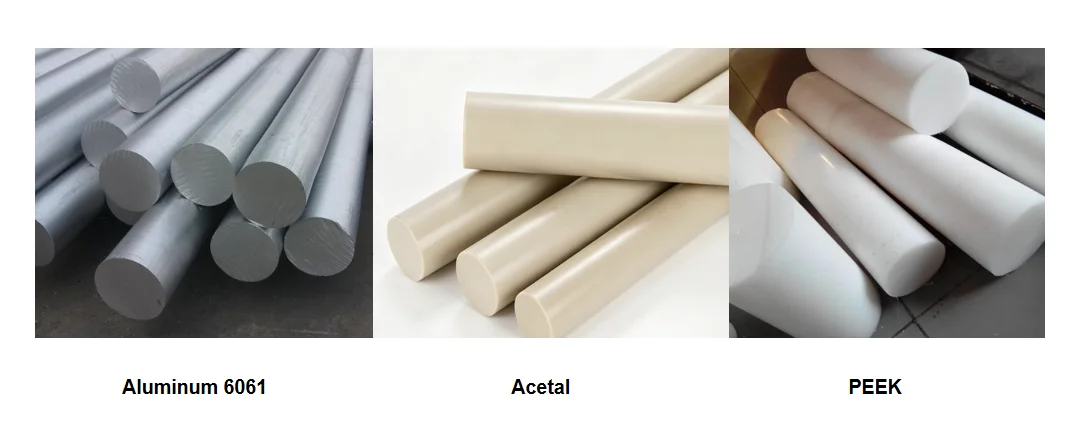
Weight Comparison: Aluminum 6061 vs. Acetal vs. PEEK
Using the same component volume of 150 cm³, the engineers compared the estimated mass of the three materials.
Aluminum has a mass of 405g, acetal with 211g showed 47.8% lowering in mass whereas PEEK showed mass of 198g which was 51.1% less than aluminium sensor. While both Acetal and PEEK showed required weight reduction, the robot assembly faces mechanical stress and high temperature so we needed a material that can withstand such conditions. So our engineers selected PEEK.
Note: This material substitution was only approved after FEA simulation and mechanical testing to verify PEEK meets the stiffness and strength requirements under operating loads.
Conclusion
In the manufacturing industry, the density of plastic plays key role in selection of right material for accurate efficacy of components. It not only helps engineers get the desired weight but maintaining structural integrity and strength of parts. Density dictates material procurement costs and chip recycling mass by converting CAD volumes into physical weight. If you require CNC machined plastic components or DFM assessment for your project, Tuofa CNC can support you with material comparison, part weight calculation, and precision component manufacturing.
FAQ
Can the density of plastic change?
Yes, plastic material density can change by changing its temperature or how components is cooled. For instance, density decreases temporarily when heated due to thermal expansion and changes permanently during manufacturing based on how fast it cools.
What is high density polyethylene plastic?
High-Density Polyethylene (HDPE) is a strong, versatile, and highly rigid thermoplastic. Its made from petroleum. With its minimal branching, polymer chains pack tightly together to create a dense, chemically resistant material. HDPE is used to manufacture durable items like milk jugs, detergent bottles, water pipes, and heavy-duty recycling bins.
 Corrosion-Resistant Alloys: Factors, Typical Metals & CNC Machining