Tel/WeChat:
  Email:


 Home
HomeCW617N Brass Guide: Properties, CNC Machining, Parts & Surface Treatment

 Published:Jul 01,2026
CW617N brass is a common metal widely used for valves, pipe fittings, and plumbing components that require hot forging, secondary-precision machining. This is because material CW617N is easy to machine and forge. Read this guide to learn the properties of CW617N brass to understand why CW617N brass has good machinability and forgeability and whether this brass grade is the best choice for your CNC part projects.
What Is CW617N Brass?
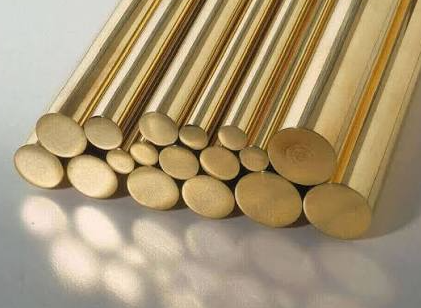
CW617N is an European standard brass alloy primarily composed of copper, zinc and lead. It is also called CZ122 or CuZn40Pb2. Combination of copper, zinc and lead elements provides this brass with excellent hot forgeability and high machinability. These properties combined make it suitable for manufacturing components that require complex geometries and high precision.
Is CW617N Brass DZR?
No, CW617N Brass is not typically DZR (dezincification resistant). Presence of zinc and copper makes it susceptible to dezincification in moist environments. CW617N brass doesn't contain As that can help prevent zinc from washing out of the brass in water, however, this material's resistance to dezincification capability can be improved by adding some content of Sb or As that can generate a copper-rich passivation layer.
What Is Cw617n Brass Equivalent to?
Cw617n is equivalent to a number of grades, including C38000 (USA/UNS) and CZ122 (British/BS). Here we have compiled a table to all equivalent material of cw617n, you can select them according to your requirements or budget:
|
Standard / Region |
Equivalent Designation |
Material Description |
|---|---|---|
|
EN (Europe) |
CW617N / CuZn40Pb2 |
Hot-forging brass |
|
UNS (USA) |
C38000 |
Forging brass |
|
DIN (Germany) |
2.0402 / Ms58 |
Forging and machining brass |
|
BS (United Kingdom) |
CZ122 |
Leaded forging brass |
|
GOST (Russia) |
LS59-2 |
Leaded brass |
Note: CW617N Equivalent materials don't mean that you can use any of these materials in place of CW617N. It's because minute changes in concentration and manufacturing method can affect required properties.
Cw617n Chemical Composition
Chemical composition of any material is what makes it base for its exceptional properties. So, understanding the composition of CW617N is essential for engineers and manufacturers. Because they need to evaluate properties of a material to know its suitability for specific applications. Here we are providing you with chemical composition of cw617n:
|
Element (Symbol) |
Content Range (%) |
|---|---|
|
Copper (Cu) |
57.00 - 59.00 |
|
Lead (Pb) |
1.60 - 2.50 |
|
Iron (Fe) |
≤ 0.30 |
|
Nickel (Ni) |
≤ 0.30 |
|
Tin (Sn) |
≤ 0.30 |
|
Aluminum (Al) |
≤ 0.05 |
|
Other impurities |
≤ 0.20 |
|
Zinc (Zn) |
Balance |
Zn and Cu are responsible for dual phase nature of brass alloy. Balancing strength and ductility. Alpha phse is responsible for corrosion resistance, whereas beta phase enhances strength.
Lead has a strong impact on machinability and application of cw617n brass. But presence of lead restricts components made with cw617n use in potable water systems.
Why Lead Improves Machinability
During alloy formation, Pb does not dissolve in Cu-Pb matrix. It precipitates to grain boundaries, remaining as soft particles. Such behaviour enhances machinability of CW617N by preventing long, continuous, stringy chips from forming. Not only this, but also during cutting when heat is generated, lead melts down and acts as a lubricant,which reduces friction at cutting point, preventing tool wear.
Does Lead Limit The Applications of Cw617n Brass?
Yes, many countries, like USA, have limited use of CW617N in potable water systems. Because lead may leach to water. As we all know, lead is a toxic metal, which is harmful to human body and surrounding environment. Therefore, CW617N isn't a good choice for manufacturing parts that are used in water environment.
CW617N Properties
Unique physical and chemical properties of brass alloy CW617N influence its machinability and applications. Understanding these will help engineers to decide effective processing methods for reliable performance. Let's get to know about physical and chemical properties of CW617N.
CW617N Physical Properties
The values shown are typical reference values at or near room temperature. Actual values may vary slightly with temperature, alloy composition, and supplier specification.
|
Property |
Value |
|---|---|
|
Density |
8.4 g/cm³ |
|
Melting Temperature Range |
880 - 895 °C |
|
Thermal Conductivity |
113 W/m·K |
|
Specific Heat Capacity |
380 J/kg·K |
|
Coefficient of Thermal Expansion (20°C) |
21.1 × 10⁻⁶ K⁻¹ |
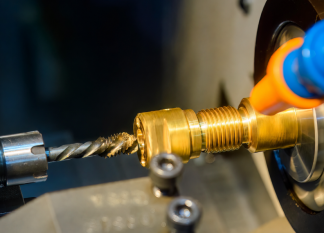
As mentioned, the high density of brass cw617n helps helps reduce excessive vibration and supports smoother cutting performance. CW617N brass has good thermal conductivity compared with stainless steel, which helps transfer heat away from the cutting zone and reduces tool wear during machining.
CW617N Mechanical Properties
The mechanical properties of CW617N brass directly influence its performance in specific industrial applications. Tensile strength of cw617n and yield strength of alloy components such as valve bodies, pipe fittings, and threaded connectors to withstand internal fluid pressure.
Elongation range of 10-25% provides sufficient ductility. It effective for parts exposed to installation stresses, vibration, and slight pipeline misalignment. Reducing possibility of cracking during assembly.
These combined characteristics make CW617N suitable for:
- Plumbing systems
- Water control valves
- Compression fittings
- Medium-pressure industrial components.
Typical mechanical properties of CW617N brass at room temperature are summarized below:
|
Condition |
Tensile Strength Rm (MPa) |
Yield Strength Rp0.2 (MPa) |
Elongation A (%) |
Brinell Hardness (HBW) |
|---|---|---|---|---|
|
R360(Soft) |
≥ 360 |
— |
≥ 20 |
90–125 |
|
R430(Half-hard) |
≥ 430 |
≥ 220 |
≥ 10 |
110–160 |
|
R500(Hard) |
≥ 500 |
≥ 350 |
≥ 5 |
— |
CW617N material shows excellent machinability. The cutting behaviour of CW617N remains stable under industrial machining conditions. Lead particles improve chip control for intricate geometries. For example, producing smooth seating surfaces. Such surface is vital for precision part assembly and tight O-ring seals.
Tuofa evaluates the required strength, hardness, ductility, and machining performance of each part, then helps customers select the appropriate CW617N material form and condition for reliable CNC machining.
Is CW617N Brass Good for CNC Machining?
Yes, CW617N is excellent for CNC machining, with its about 90-95% machinability. The factors of its good machinability include:
Good chip control because of lead content
- Moderate hardness and strength
- Better thermal conductivity compared with stainless steel
CNC Machining Challenges of CW617N Brass
Although CNC machining of cw617n is easy, but it comes with its own challenges. Its lead concentration and dual-phase matrix raise some challenges during complex machining processes like turning, milling and drilling. Here are some major challenges engineers can face when dealing with this material:
Burrs on Threads and Holes
As mentioned in table above, it shows good plasticity and ductility. Ductility, which helps in easy cutting, when combined with plasticity, becomes a challenge for a smooth finish. At the exit point, wire or thread material does not shear away easily but gets stretched, and a burr is formed.
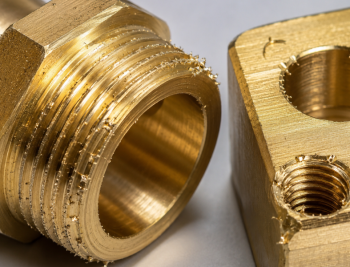
Such burrs at entrance of hole cause friction during assembly. Resulting in cross-threading, high torque readings or thread galling before components are fully seated.
To prevent this, you need optimised tools like a sharp and positive rake. You can also opt for a 45-degree chamfering cycle after drilling.
Keep High Thread Quality
CW617N is comparatively soft to 304 or 316 stainless steel. Leading to material tearing, crest roll-over, and elastic deflection during thread turning. That's why engineers must maintain high thread quality by using sharp, polished carbide inserts combined with a modified flank infeed method.This will help in minimising radial cutting pressure.
Prone to Surface Scratches
Since CW617n alloy is not that hard, it can get scratches over its surface easily. During cutting, trailing chips hang over the workpiece during milling. To resolve this use, you must use high-pressure coolants to remove chips instantly.
Common CW617N CNC Machined Parts
Now we are moving toward precision parts that are manufactured using this brass alloy, including valve bodies, brass fittings and connectors.
CW617N Valve Bodies
Engineering experts prefer cw617n brass for valve bodies. Because it is capable of being hot forged into intricate shapes without cracking or creating internal voids. This enables installing a water system without fear of any leakage. Not just this, its high tensile strength enables it to withstand high hydraulic pressure of fluid systems ranging from PN25 to PN40, making it a suitable choice for valves.
CW617N Brass Fittings and Connectors
For manufacturing of fittings and connectors such as threaded adapters and nipples, experts prefer cw617n alloy. Its high tensile strength prevents cross-threading and stripping. Also, metal structure of these fittings is so dense it avoids any pinhole leaks even under high hydraulic pressures.
CW617N Custom Brass Components
Many manufacturers, like Tuofa who provide brass CNC machining services, also manufacture custom brass component with cw617n. As it is easy to machine and cost-effective as well, leading to milling and turning of complex prototypes without additional tooling cost like in case of stainless steel.
Why Choose CW617N for CNC Machined Brass Parts?
Choosing CW617n for machined brass parts is because of its machinability and remarkable strength. Giving you revision even for complex parts. Here is more detail why to select brass cw617n for your machined parts:
Good Balance between Machinability and Strength
As said before cw617n shows excellent machinability because of presence of lead. Combined with machinability, it has remarkable strength to handle high hydraulic pressure in water systems. This makes it a benchmark alloy for automated precision part production.
Suitable for Hot Forging and Precision Machining
Due to the α + β brass structure of CW617N brass, it has good hot-forging capability. When subjected to hot forging, its plasticity allows formation of complex components. With variable wall thickness without any cracking. CNC blanks are dense and non-porous without any internal voids, making them ready for CNC milling or drilling for O-ring grooves and fine sealing seats.
Cost-Effective
CW617N is economical for large-scale manufacturing. Its due to its efficiency inside the CNC machine. Excellent machinability adds to reduced cycle times per part, resulting in minimized tool wear, extending the lifespan of carbide inserts. Overall reducing production cost.
CW617N vs CW614N: Which Brass Is Better?
Selecting between CW617N and CW614N alloys depends on parts you need to manufacture. Either your parts need hot forging or they are directly machined from raw material. Here is for which parts you can use each material for:
CW617N for Forged Valve Bodies
Experts prefer cw617n when they need to manufacture high-precision valves from forging. This material offers remarkable hot plasticity. That's why variant wall thickness is obtained as it flows smoothly into complex forging dies without breaking or cracking.
CW614N for Turned Brass Components
CW614N has higher lead content (2.5 to 3.5%) compared to CW617N, and it can lead to cracks and voids when subjected to forging. That's why it is used when you can manufacture components directly by CNC turning.
During high-speed turning CW614N creates short, brittle, needle-like chips that easily fly away from the cutting zone. Minimizing tool friction prevents built-up edges (BUE), leading to reduced tool wear, so it's effective for pins and straight connectors.
When Not to Use CW617N Brass
Despite its exceptional machinability and remarkable properties in some specific condition we recommend not using this material. Here is where we suggest not to use it:
Limitations in Lead-Restricted Applications
Lead is purely added in this alloy to enhance its machinability, but when alloy CW617n remains continuously in contact with water, it can leach lead in water, which is carcinogenic and is harmful. That is why the U.S. Safe Drinking Water Act and related standards, including NSF/ANSI 61 and NSF/ANSI/CAN 372, regulate lead in valves and fittings used in potable-water systems, with a 0.25% weighted-average limit on wetted surfaces.
You can use alternate material like CW511L (CuZn38As). CuZn38As is lead-free with almost same physical and chemical properties of cw617n alloy.
Limitations in Marine Environments
In a marine environment where components are subjected to a chlorine environment like this containing high amount of zinc, it can be susceptible to brass corrosion and dezincification. Zinc moves out of the material, and porous low-strength component is left behind. So we suggest using material with high copper and low Zn concentration, like C46400. It has 60% copper and just 39% Zn.
Surface Treatment for CW617N Brass Parts
Components manufactured with alloy cw617n are subjected to surface treatment to enhance surface finish and prolong components' life. Common suitable surface finishes for CW617N brass parts include:
Nickel Plating for Brass Valve Parts
Brass valve parts used in industries where they get interact with abrasive fluids can get tarnished. They may get subjected to dezincification. To resolve this issue, nickel plating is done. A thin layer of nickel is applied to prevent the interaction of fluids with base material, preventing premature structural failure.
Chrome Plating and Polishing
Chrome plating and polishing is advance surface treatments done both for structural integrity and cosmetic appeal. Engineers use such finishes for high-end plumbing fixtures, sanitary valves, and exposed consumer fittings. As chrome prevents underlying brass from oxidising. Also helps in resisting staining from hard water deposits.
Case Study: Tuofa Customizes CW617N Brass Parts
One of our German clients hoped we can manufacture a rotating support component used in equipment and he wants to use 1.4301 stainless steel to replace CW617N brass because of the increasing costs.
However, after our evaluation, we advised our client to apply CW617N brass, because the desired component needs to combine forging and secondary precision machining. And CW617N's excellent hot forgeability and good machinability can reduce the costs of CNC machining.
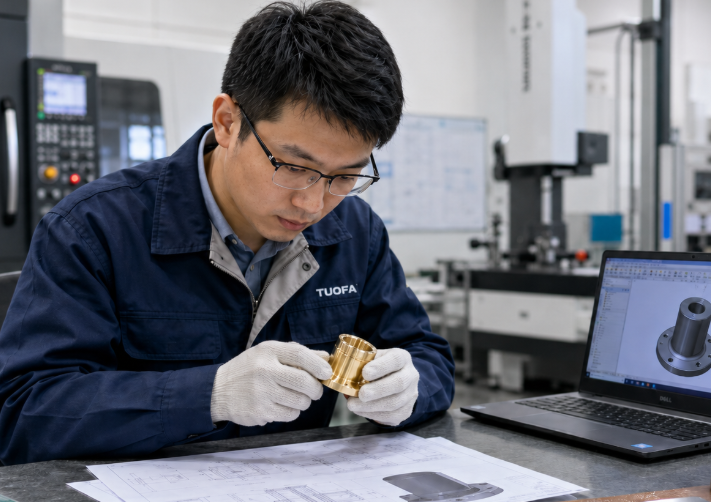
What's more, compared with 1.4391 stainless steel, CW617N can reduce the machining difficulty, tool ware, and the risk of machining thread. Meanwhile, the component isn't used in highly-corrosive environments like sea or high-pressure industrial applications. CW617N can meet the requirements for appearance, assembly performance, and general corrosion resistance through surface treatment:
- Nickel plating
- Chromium plating
- Polishing
As a result, our client chose the CW617 solution to control cost by optimize forging blank, machining allowance, and fixture design. Client was satisfied with the machining solution provided by Tuofa, because we not only consider his budget, but also the performance of the parts.
Conclusion
CW617N brass alloy is perfect choice for economical and precision valve and plumbing components. Its ease of machining with remarkable stress-bearing capacity makes it preferred choice of engineers. Manufacturers and distributors use this material to get desired operational results.
FAQ
Why Forged CW617N Parts Still Need CNC Machining
Forged components need CNC machining to achieve that desired precision of ±0.01 mm. Fogged parts show precision in ±0.3 mm to ±0.5 mm because of thermal expansion.
Can CW617N be used for drinking water parts?
No, it's not used for drinking water parts in European regions due to high 2.5% lead content. Although it historically was actively used in drinking water systems.
What machining features are common on CW617N valve parts?
Common machining features on CW617N valve parts include:
- High-precision NPT or BSP pipe threads
- Mirror-smooth O-ring sealing grooves
- Highly concentric internal spherical cavities for valve seats.
 Hardness vs Toughness: What Is the Difference?