Tel/WeChat:
  Email:


 Home
HomeNitriding Steel: Importance, Comparison, Applications & CNC Machining

 Published:Dec 16,2025
Nitriding steel means the steel can be used for nitriding process. Nitriding process can significantly improve the surface hardness, wear resistance and fatigue life of steel by adding hard nitride layers. However, it depends on the used steel grades and selected nitriding methods. Read this guide quickly to learn common nitriding steel grades and their importance in CNC machining.
What Is Nitriding Steel?
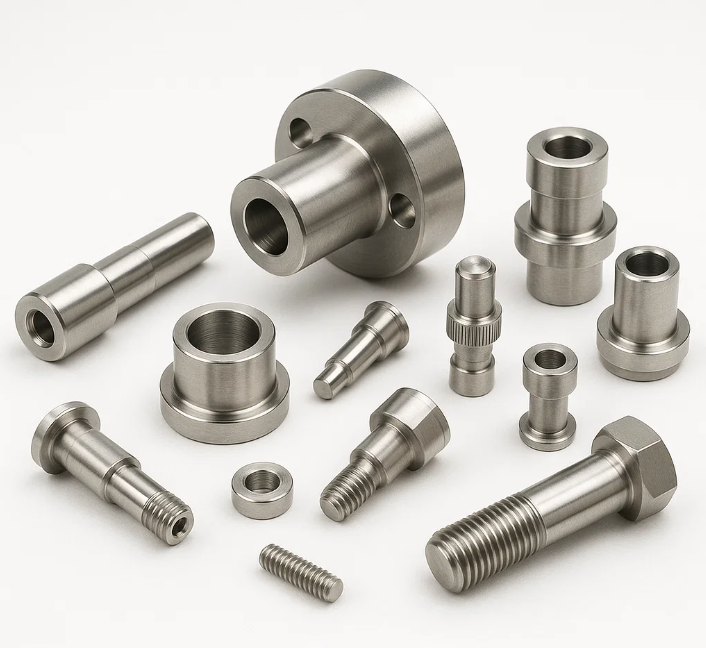
Nitriding steel are specialized alloy steel that are prepared for nitriding process which adds hard, wear-resistant layer on the surface of steel by diffusing nitrogen into the steel.
Nitriding Steels and Nitridable Alloy Steels
Nritriding steels belongs to nitridable alloy steels. Both of them can be nitrided, while nitridable steels means a broader range of steels, not just for nitriding process. The key different is that nitriding steel is made specially for nitriding process by adding Al, Cr, Mo, V, Ti alloy elements. Instead, nitridable alloy steels means the steels suitable for nitriding because of containing certain amount of nitride-forming elements. Generally, after nitriding process, the surface hardness of nitriding steel is better than that of nitridable steel.
Why Nitriding Steel Matters in Machined Parts?
As we have discussed before, nitriding steel contain selected alloy elements like Al、Cr、Mo、V. This added elements can definitely influence the CNC machining of nitriding steel. These alloying elements improve the steel’s response to nitriding, strength, and final wear resistance. However, they may reduce machining efficiency while increasing tool wear and machining difficulty.
Pros and Cons of Nitriding Steels
When choosing suitable nitriding steels, you should consider their advantages and disadvantages for your procurement program.
Advantage: Strong Nitriding Response
AI, Cr, Mo, V alloy elements allow nitriding steel to form stable nitrides easier than ordinary nitridable steels.
Disadvantages of Nitriding Steels
Higher Materials Cost
Adding alloy elements to the steel can result in more complicated material manufacturing process. More time and manufacturing processes can increase the material cost.
More Difficult to Machine
The added Aluminum, Chromium, Molybdenum and vanadium alloy elements may increase material strength and promote hard carbide formation, which can easily cause the cutting tools wear. Compare with other steel like low-carbon steel, nitriding steel needs higher cutting force.
Nitriding Steel Grades Comparison
As mentioned above, nitriding alloys contain elements like Al, Cr, Mo, V, Ti. These elements are present different in content which alter the properties of steel like surface hardness, wear resistance, and fatigue strength. These features are crucial for precision parts in CNC machining. Details about nitridable steels are mentioned below
Common Nitriding Steel Grades
Common nitriding steels grades are 34CrAlNi7, 31CrMoV9, and Nitralloy 135M/N. They all have different properties via nitrogen hardening and depending on specific grades.
- 34CrAlNi7
This is a common European nitriding steel with Chromium, Aluminum, and Nickel. It has high hardness, wear resistance, and good core strength through nitriding. Common applications for 34CrAlNi7 are gears, crankshafts, and automotive parts.

- 31CrMoV9
It contains Chromium, Molybdenum, and Vanadium. Nitriding increases its strength, toughness, and wear resistance. 31CrMoV9 is ideal for heavily stressed parts like gears, shafts, and crankshafts.
- Nitralloy N,1,2
These are aluminum-containing steels and Nitralloy has small amounts of Vanadium. These are designed for maximum surface hardness and fatigue life. Nitralloys are perfect for tools, dies, aerospace parts, and high-wear automotive parts.
|
Grades |
Key Alloying Elements |
Primary features |
Hardness (HRC) after nitriding |
Common Applications |
|---|---|---|---|---|
|
31CrMoV9 |
Cr, Mo, V |
High Strength & Toughness, Wear Resistance. |
50-60 |
Gears, Shafts, Crankshafts, Heavily Stressed Parts. |
|
34CrAlNi7 |
Cr, Al, Ni |
Excellent Wear, High Surface Hardness. |
55-65 |
Automotive Parts, Dies, Tools, Gears. |
|
Nitralloy N |
Cr, Al, V, Mo |
Extreme Surface Hardness, High Fatigue Strength. |
55-65 |
Aerospace, Dies, Tools, High-Wear Parts. |
|
Nitralloy 135M |
Cr, Al, Mo |
Good Toughness with High Hardness. |
50-60 |
Gears, Crankshafts, Camshafts. |
Nitridable Alloy Steels Grades
Nitridable steel is a broader term that is used for alloy or non-alloyed steels that can react with nitrogen during the process. Tool steels, stainless steels are common materials that can be nitrided. Common nitridable alloy steels are 31CrMo12, 41Cr4, 42CrMo4 and others explained below:
- 31CrMo12 Steel
It is a general-purpose nitriding steel containing Cr and Mo. It has good wear resistance and core toughness which is useful for various machine parts.
- 41Cr4 Steel
It is chromium-based steel, suitable for nitriding. It has high wear resistance and is commonly used in shafts and gears.
- 42CrMo4 Steel
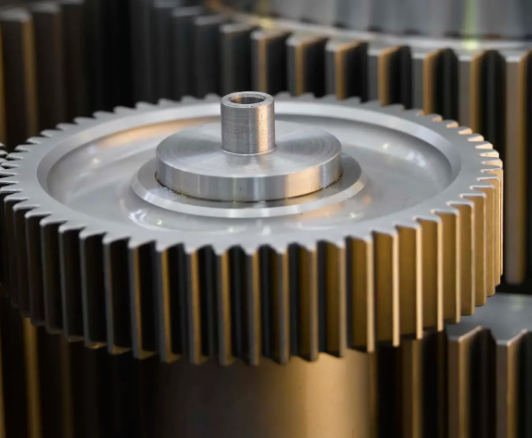
It is very common steel with good core strength and toughness. 42CrMo4 is widely used for gears, shafts, and spindles.
- 20CrMoS4 Steel
It is a sulfurized version of 20CrMo. 20CrMoS4 has improved machinability for complex parts that still need nitriding.
- 20NiCrMo2-2 Steel
It is a Nickel-Chromium-Molybdenum steel which has high hardenability and toughness. 20NiCrMo2-2 is mostly used for gears and critical components.
|
Grades |
Key Alloying Elements |
Primary Properties |
Hardness HRC After Nitriding (Approx.) |
Common Applications |
|---|---|---|---|---|
|
31CrMo12 |
Cr, Mo |
High strength, good machinability, toughness, wear resistance |
58-63 HRC |
Plastic injection moulds, die casting dies. |
|
41Cr4 |
Cr, Low Mo |
Good strength, hardenability, wear resistance |
54-59 HRC |
Gears, shafts, automotive parts, tools. |
|
42CrMo4 |
Cr, Mo |
High tensile strength, fatigue strength, impact resistance |
57-61 HRC |
Crankshafts, gears, axles, bolts, heavy machinery parts. |
|
20CrMoS4 |
Cr, Mo, S |
Enhanced machinability, good wear, strength |
50-55 HRC |
Gears, splining shafts, high-wear components. |
|
20NiCrMo2-2 |
Ni, Cr, Mo |
Excellent core toughness, good wear resistance, ductility |
57-61 HRC |
Gears, bearings, shafts |
Key Factors for Choosing Nitriding Steels
From the above content, we can know that nitriding steels have many different grades. Then which material is your best choice? Actually, the right selection of Nitriding steel based on applications needs, mechanical performance, environmental resistance and machinability of steel.
Required Surface Hardness Based on Application
Different content of alloy elements can lead to different surface hardness. Especially, the nitriding steel containing Aluminum alloy element can form a harder surface. When choosing suitable nitriding steel for manufacturing parts used in high-contact-load or high-wear applications, you can select the steel with higher aluminum content for your steel parts.
Machining Requirements
When choosing nitiriding steels, difficult to machine or not is an important factor. Dimensional accuracy and component complexity should be considered as well. Nitriding steel 4140 is known for good machinability before nitriding. Low temperature in nitriding reduces warping as compared to what happens in case hardening. But precise parameters are important for consistent results in large geometries.
Environmental Factors
Corrosion and temperature are the most important environmental factors. Common Nitriding steels need extra protection in moist environments. Stainless nitriding steel can perform in humid places. And temperature decides nitriding process and operating limits. For example, standard gas nitriding is performed at 500-580°C, while soft nitriding is at even lower temperatures to minimize part distortion.
Budges and Costs
It includes total cost of nitriding process, which is material cost, processing time (long for gas nitriding), and life-cycle benefits (low maintenance due to wear resistance).
Applications for Nitriding Steels
Nitriding steels are commonly used in different industries for parts needing extreme hardness, wear resistance, and fatigue strength.
Mechanical Parts
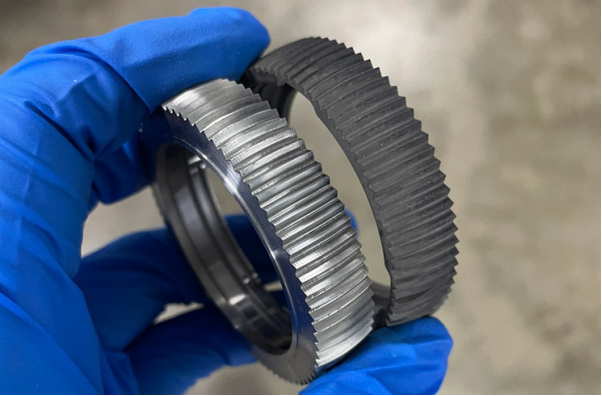
Nitriding alloys are widely used in shafts, gears, cams, heavy-duty machine elements due to overall better strength, hardness, and service life.
Automotive Parts
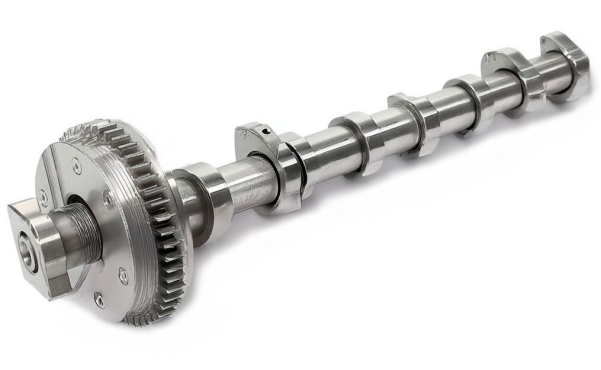
Nitriding steels are used in gears, crankshafts, camshafts, valve parts, injectors, clutch components. They increase wear resistance and reduce engine maintenance of automotive parts.
Aerospace Components
Nitriding steels are used in landing gear parts, fasteners, and critical shafts. They improve fatigue life and safety under extreme loads in aerospace parts.
Industrial Equipment
Nitriding alloys are used in extrusion screws, plastic molding tools, forging dies, machine slides, spindles, shafts. They maintain dimensional stability and precision at high temperatures and stresses.
How to Machine Nitriding Steels?
Nitriding steels are widely used in many industries as mentioned. Therefore, cnc machining is indispensable technology for create nitriding steels parts.
Nitriding provides exceptional surface hardness. But, nitriding of steel at high temperature operation around 500-540°C and gaseous environment causes slight distortions and material changes. This means it is difficult to achieve final dimensions after hardening through simple cutting. Therefore, CNC machining of nitriding steel is divided into two stages:
- pre-nitriding machining for roughing out features,
- post-nitriding precision machining, for grinding and honing.
This is done to achieve final tolerances and surface finish on the hardened case.
Select Suitable Nitriding Steels
Choosing steel for nitriding like 4140 (Cr-Mo) or specialized steels like Ovako's Hybrid Steel that contain nitride formers like Al, Cr, Mo and V is the key step for desired case depth and hardness.
Define Machining Requirements
Define the requirements, for example, for roughing, machine to near-final dimensions. This will leave a slight stock allowance of 0.1-0.3 mm for post-nitriding grinding on critical surfaces. Before nitriding, create threads, keyways, holes, and sharp corners to avoid brittleness and can affect case growth.
Choose Suitable CNC Machining Methods
Common CNC machining methods used for nitriding steels are CNC milling and turning. Standard carbide and coated tools are used to remove material. drilling and boring are used to make holes. After nitriding, post treatment like grinding with CBN or diamond grinding wheels and honing are done to achieve final dimensional accuracy.
Surface Treatment
Normally, surface is cleaned and protective coatings of oil or passivation are applied to prevent the now-hardened surface from rusting before final assembly.
Why Do You Need Nitrided Steel Parts?
Nitriding is commonly used for many purposes. Let us introduce the advantages of nitrided steel parts for you.
High Surface Hardness
After nitriding, the nitrided steel parts have higher surface hardness, which allows them bear high contact loads and reduce the risk of local plastic deformation under high pressure.
Excellent Wear Resistance
The hard nitrided layer can reduce the abrasive wear, adhesive wear, and scuffing between the transition parts such as gears, shafts, bushings, and pins.
Improved Fatigue Strength
In practice applications, the service life and performance are very important considered factors for selecting parts. The hard nitride surface can reduce the effect of tensile stress to reduce the probability of cracking.
Choose Tuofa One-Stop Solution
A key step of customizing nitriding steel parts is to find a reliable supplier. Tuofa offers one-stop solutions from expert guidance to material selection, design optimization, rapid prototyping, precision CNC Machining to final surface treatment for your Nitriding steels project.
Tuofa CNC supports your nitrided steel parts from:
Precision Machining Steel Parts
- Machining Precision: With over 20 years of manufacturing experience and high-precision machining equipment, Tuofa can achieve even ±0.01 tolerance.
- Built Strict Inspection System: Tuofa requires two full inspection before and after surface treatment.
Smooth Nitriding Surface Finish
Tuofa CNC provides not only CNC machining service, but also surface finishing additional services, in this way, you don’t need to spending additional time looking for another nitriding finishing supplier.

Conclusion
Nitriding is a critical surface treatment for CNC machined parts. It diffuses nitrogen into steel to create a super hard layer that further increases the wear and fatigue resistances. It also improves corrosion resistance without significant dimensional change which is important for aerospace, automotive, and tooling applications. Nitriding occurs at lower temps (500-580°C) as compared to case hardening. This preserves the core properties and excels in dimensional stability which is ideal for complex and precision parts. Post-nitriding precision machining is applied to steels to increase dimensional accuracy and extend part's life significantly.
FAQ
What is nitriding stainless steel?
Nitriding stainless steel are those that can diffuse nitrogen into their surface at high temperatures to increase hardness, wear-resistance and corrosion resistance.
Is 4140 considered a nitriding steel?
Yes, 4140 steel is a very common nitriding steel. its chromium and molybdenum content promote the formation of hard nitride layers and improve surface hardness, wear resistance, and fatigue life.
Can 1018 steel be nitrided?
Yes, 1018 steel can be nitrided. But it is a low-carbon steel and cannot achieve the extreme hardness of high-alloy steels.
How to nitride steels?
To nitride steel, heat the alloy steel parts in a nitrogen-rich environment (like ammonia gas or plasma) between 500-600°C for hours. It allows nitrogen diffusion into the surface and form extremely hard metallic nitrides. These nitrides increase wear-resistant but causes minimal distortion.
Is nitrided carbon steel safe?
Yes, it is safe in many scenarios. However, it is not the best choice for food devices, food-grade stainless steel will be better.
 MIC 6 Aluminum: Properties, Machinability, and Best Uses