Tel/WeChat:
  Email:


 Home
HomeMedical Prototyping: Parts, Manufacturing Methods, Material Selection & Supplier

 Published:Oct 10,2026
If you have faced this problem: The design is finished, and the drawing is frozen, while the final medical part can't be used in practice due to unreasonable tolerance, part deformation and incompatibility of surface finish and materials. To deal with problem, you can choose medical prototyping to test the design feasibility and final performance of the medical components. It is said that up to 75% of manufacturing defects are traced back to poor designs. Read this complete guide to learn the importance, applications, manufacturing methods and advantages of prototyping for custom medical components.
Prototyping Matters in Medical Devices
Medical prototyping can help reduce manufacturing costs and save product development time by avoiding certain manufacturing issues in advance. As for demanding medical components, it can helps you check the clinical and engineering requirements by finding design flaws. In short, prototyping reduces development risks in medical devices such as surgical instruments, ultrasound systems, and patient monitors.
Verify Critical Dimensions and Fits
You may feel strange: why my final medical components can't be assembly properly even though the tolerance specified on the drawing is right. This issue can be solved with prototyping. It allows you to make several prototypes to test whether they can be assembled successfully. In this way, you can avoid wasting too much money and time on subsequent manufacturing.
Evaluate Materials for Medical Use
When choosing suitable materials to manufacture medical components, biocompatibility, sterilization compatibility, or long-term chemical stability should be considered. The properties of materials can be evaluated and tested at prototyping stage. The selected materials should be determined at this stage. Frequently changing materials will increase the costs and waste time.
Validate Functional Design
Different from cosmetic parts, medical parts are always functional parts. Validation testing is used to verify whether final medical equipment prototype meets user needs under practical conditions. Medical prototyping helps engineers to check airflow paths, connections, and internal clearances of medical parts like ventilators.
When Do Medical Devices Need Customized Manufacturing?
You may need custom medical prototypes when you require develop new medical parts, update the part design, or change materials.
During New Medical Parts Development
Experts say in early development phases, up to 45% of medical device projects experience delays. The reason is design-driven engineering revisions. Customized manufacturing quickly produces and tests revised components while the client's design is still under revision.
Standard Components Need Functional Customization
Standard components do not fit directly into a medical device. These components are sensors, valves, connectors, or power modules, etc. Custom manufacturing changes these existing parts. You can save up to 60% in development with functional Customization of local features on standard components. For example, a standard valve may need a modified port to fit an infusion system.
Low Volumes Are Required
Low volume is needed for medical testing, pilot programs, and clinical trials. It may be 10 to 500 units. Purchasing a permanent injection mould at this stage can be expensive. During testing, it helps your business save money.
Common Types of Medical Parts
Here introduce common types medical parts to help engineers to identify the types of their custom parts, guiding them to choose suitable materials or manufacturing ways.
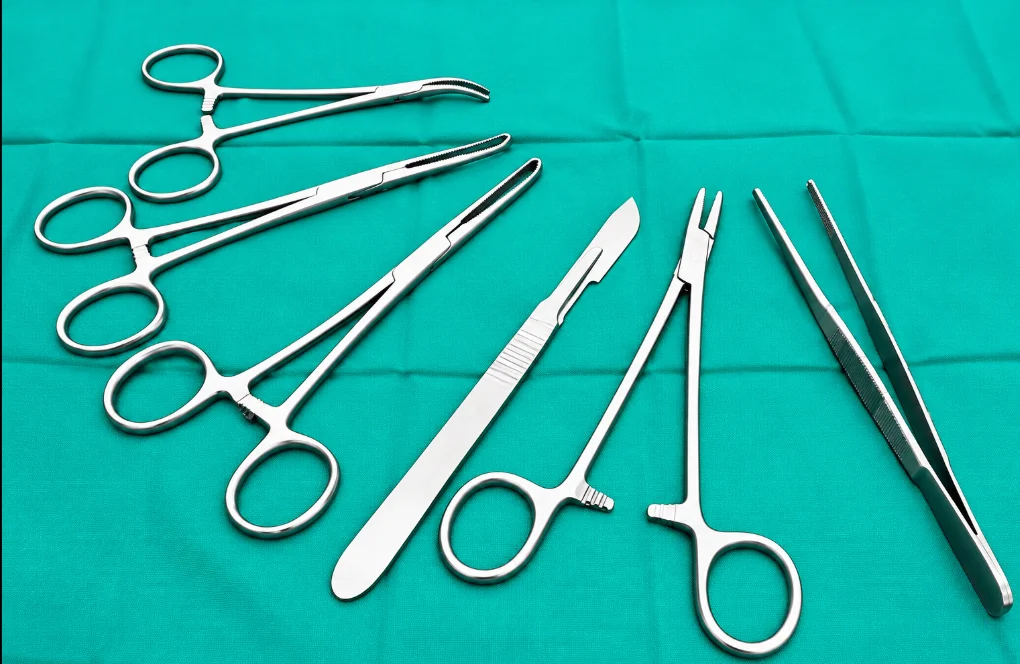
Surgical Instrument Components
Surgical instrument parts include scissor blades, forceps tips, surgical handles, joint pins, and quick-release clasps. They often have high requirements for wear resistance, repeated sterilization resistance, high hardness, and smooth surface finish. Most of them are made of stainless steel.
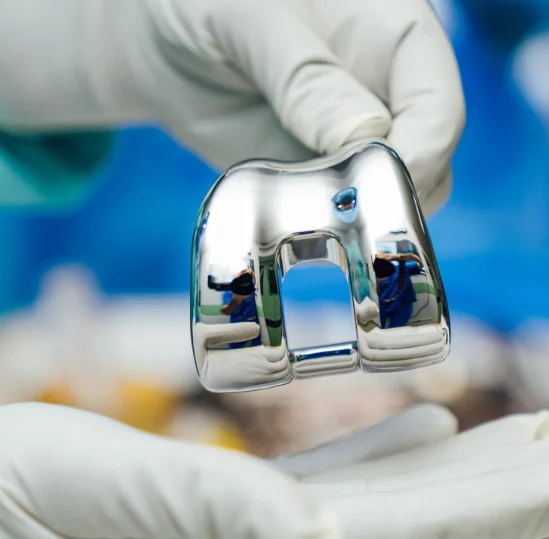
Implant Components
As you know, Damaged Human Body Parts are supported or replaced by implant components. Common implant components include bone plates, cortical bone screws, acetabular cups, dental implant abutments, and interbody fusion cages. This type of medical parts require much higher requirement for machining capabilities and regulatory compliance than other medical ones. Because of their applications, the materials are also restricted. Usually, only medical-grade materials like Ti-6Al-4V ELI, 316L. The requirement for surface finishes is also very high.
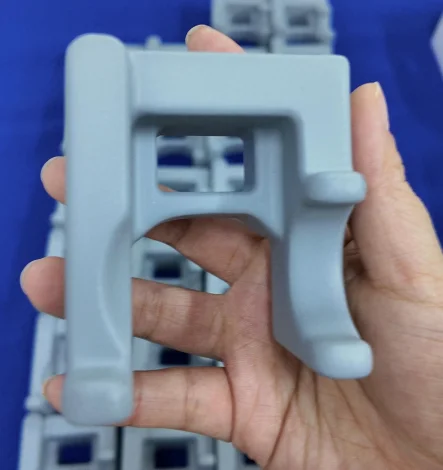
Medical Device Housings
Patient monitor housings, syringe pump housings, handheld medical device enclosures, and desktop medical equipment covers are common medical devices housing. They often need structural strength, uniform wall thickness, EMC shielding, surface appearance, and assembly fit.
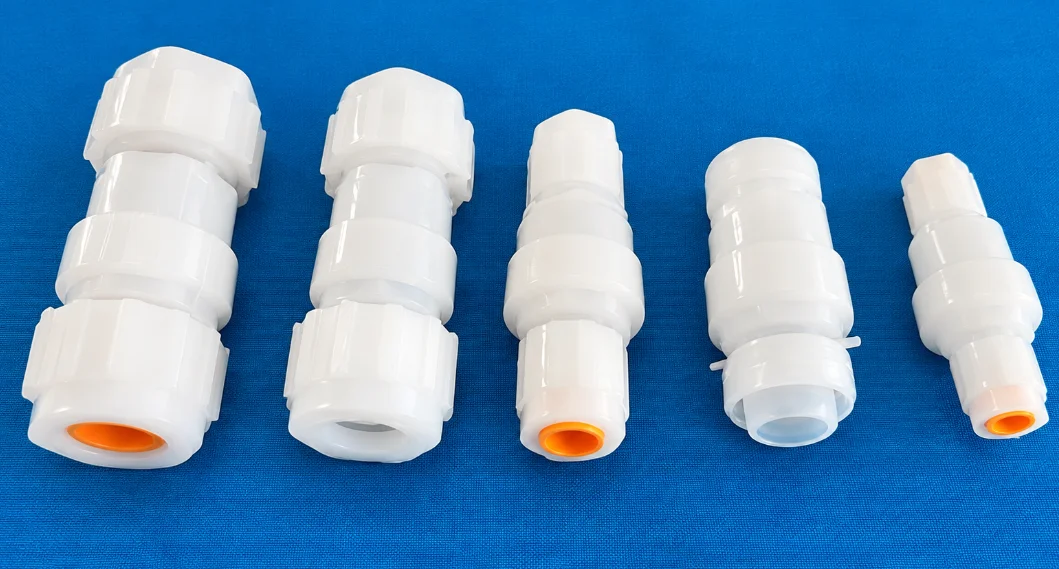
Fluid-Handling Components
Medical engineering team uses Fluid-Handling components to control movement and storage of fluids. Manufacturers use them to create internal passages and select suitable materials. Manifolds, connectors, valve bodies, and pump parts are common parts.
This kind of parts always require good sealing performance, precise flow channel dimensions, and low surface roughness.
Manufacturing Methods for Prototyping Medical Components
There are different manufacturing methods for medical prototyping, such as additive manufacturing, CNC machining, injection molding, and sheet metal fabrication. Which one should you choose depends on the purpose of medical prototyping. For example, you want to get medical prototypes to test functions, appearance or material performance.
CNC Machining for Functional Fidelity
Choosing CNC machining for your medical prototyping project when you need to verify the materials performance, part functions and assembly. It can achieve high precision and stable quality of parts with automated programming. CNC machining can produce functional prototypes that closely resemble the final product.
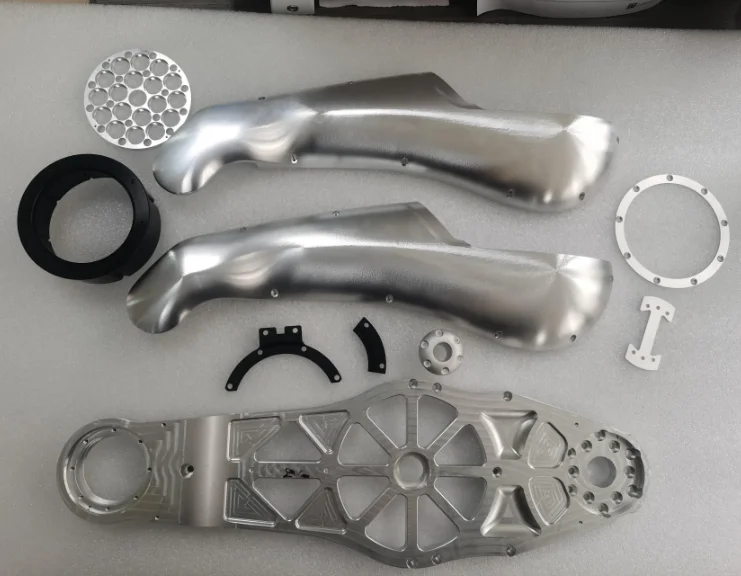
While enjoying its benefits, you must know that CNC Machining is not only an expensive method but also requires longer setup time. However, its quality justifies the price.
3D Printing for Appearance
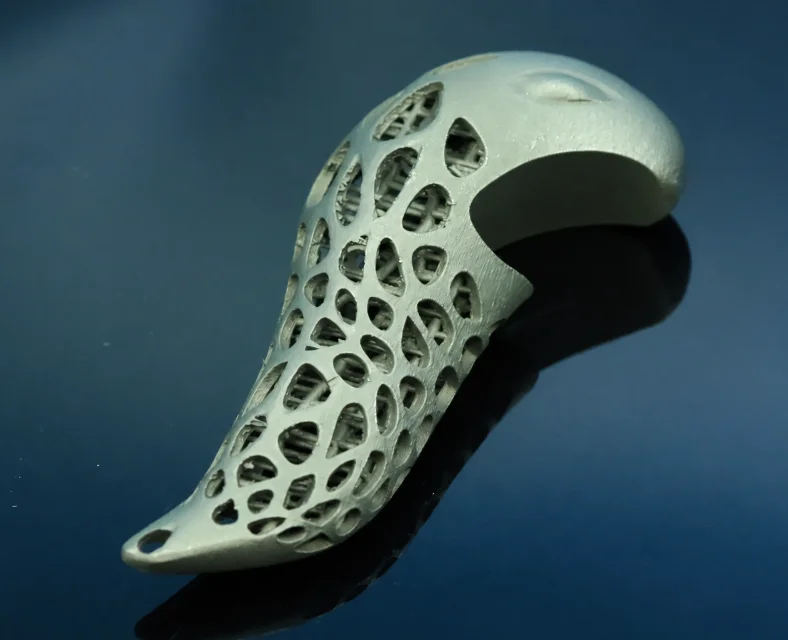
Choosing 3D printing when your medical parts have extremely complex geometry and have requirement for appearance and rapid iterations. Its manufacturing precision and surface quality are not good as CNC machining. It reduces material waste.
Injection Molding
Injection molding can also support medical prototyping, but it is more suitable for medium-to-large volume production. It is not suitable for repeatedly designing changing projects. Injection molding is generally less flexible for iterative design modifications. If you want to save time and cost, use rapid injection molding techniques or soft tooling.
Sheet Metal Fabrication
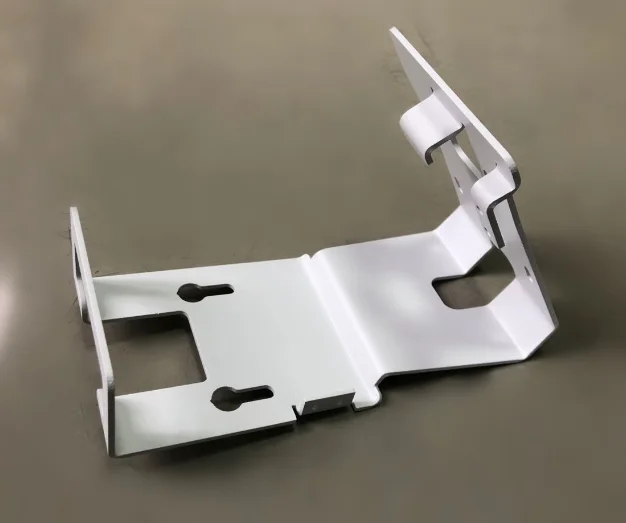
Sheet metal fabrication is beneficial for medical equipment housings, brackets, and covers. Medical manufacturing experts make strong parts with bending and forming methods. They need these parts for EMI shielding in some medical equipment.
Below is a quick guide to medical prototypes and their purposes. Let's dive into it.
|
Medical Part type |
Component Names |
Manufacturing methods |
Purpose of prototype |
|---|---|---|---|
|
Surgical instrument components |
handles, shafts, jaws, clamps, pivots |
CNC machining, metal 3D printing |
fit, movement, and function |
|
Implant components |
bone plates, fixation parts, dental components |
CNC machining, 3D printing |
geometry and interfaces |
|
Fluid-handling components |
manifolds, connectors, valves, fittings |
CNC machining, 3D printing, |
Flow and sealing |
|
Medical device housings |
enclosures, covers, cases, mounting frames |
CNC machining, 3D printing, injection molding |
Fit and assembly |
Material Selection for Prototyping Medical Components
When choosing suitable materials, you should consider the material properties, function requirement, operating environment, and surface finish requirement.
Material Properties
Not all medical parts require medical-grade materials, some of them are commonly made of aluminum 6061, aluminum 7075, SS304, and high-performance engineering plastic, etc. Here we compare their properties through the table below. (Typical values at 23°C. Metals: annealed (Al 6061/7075: T6). Plastics: dry, molded/machined. For screening only.)
|
Material |
Tensile Strength (MPa) |
Heat / Sterilization |
Biocompatibility |
Machinability |
Relative Cost |
Typical Medical Prototype Use |
|---|---|---|---|---|---|---|
|
Aluminum 6061-T6 |
~310 |
Autoclave limited (repeated cycles degrade anodize) |
No |
Excellent |
Low |
Device housings, fixtures, trays |
|
Aluminum 7075-T6 |
~570 |
Not for repeated autoclave (Cu content, corrosion risk) |
No |
Very good |
Low-Medium |
High-strength structural mockups |
|
SS 304 |
~505 |
Autoclave, ETO, Gamma |
Limited |
Fair (work-hardening) |
Low-Medium |
Test fixtures, general hardware |
|
SS 316L / 316LVM |
~485-515 |
Autoclave, ETO, Gamma |
Yes |
Fair (tough, lower than 304) |
Medium |
Surgical instruments, temp fixation |
|
Titanium Grade 2 (CP) |
~345 |
Autoclave, ETO, Gamma |
Yes |
Fair (low thermal conductivity) |
High |
Low-load implants, dental parts |
|
Titanium Grade 5 (Ti-6Al-4V) |
~950 |
Autoclave, ETO, Gamma |
Yes |
Fair (abrasive, hard) |
High |
Orthopedic screws, plates prototype |
|
Titanium Grade 23 (ELI) |
~860 |
Autoclave, ETO, Gamma |
Yes |
Fair (tougher than Gr5) |
Very High |
Spinal, trauma, cranial implants |
|
PEEK |
~100 |
Autoclave (121°C), Gamma, ETO |
Yes |
Good |
Very High |
Spinal cages, implant prototypes |
|
PEI (Ultem) |
~105 |
Repeated autoclave, Gamma, ETO |
Yes |
Good |
Medium-High |
Reusable instrument housings |
|
PPSU |
~70 |
Repeated autoclave (excellent) |
Yes |
Good |
High |
Reusable enclosures, handles |
|
Medical PC |
~65 |
ETO / Gamma preferred (autoclave warps) |
Yes |
Good (soft, can gum) |
Low-Medium |
Transparent guards, housings |
|
UHMWPE |
~40 |
ETO / Gamma (autoclave limited) |
Yes |
Fair (very soft, poor dimensional stability) |
Low-Medium |
Bearing surfaces, spacers |
|
PTFE |
~25 |
Autoclave, ETO, Gamma |
Yes |
Fair (soft, gummy) |
Medium |
Seals, gaskets, fluid line parts |
|
Medical PP |
~35 |
Repeated autoclave |
Yes |
Fair (soft, gummy) |
Low |
Disposable device housings, fixtures |
Medical Part Function
Function of a medical part decides which material properties are important. Production experts don't depend only on appearance or price.
Service Environment
Service environment is what affects your prototype medical device performance. Medical components must maintain their exact physical profiles when exposed to harsh conditions. Conditions include aggressive medications, high pressures, or repeated sterilization loops.
In case, if your housing faces repeated cleaning, you must check its resistance. Similarly, internal pathways of fluid-handling parts are exposed to cleaning agents like 2.4% C₅H₈O₂ solutions or 70% isopropyl alcohol. They must resist environmental stress cracking. Medical device housings may require protection against moisture and chemical exposure.
Surface Treatment Compatibility
Have you selected a suitable material? The next step is to determine which surface treatment can improve your prototype's performance. You must confirm selected material and surface treatment meet your engineering requirements. Here provides a table for you to check the compatibility between material and surface finishes.
|
Material |
Compatible Surface Finishes |
|---|---|
|
Aluminum 6061-T6 |
As-machined |
|
Aluminum 7075-T6 |
As-machined |
|
SS 304 |
As-machined |
|
SS 316L / 316LVM |
Citric acid passivation |
|
Titanium Grade 2 (CP Ti) |
As-machined, Fine glass bead blast, Electropolishing (EP), Ti anodization, Chemical passivation |
|
Titanium Grade 5 (Ti 6Al 4V) |
As-machined |
|
Titanium Grade 23 (Ti 6Al 4V ELI) |
Controlled fine glass bead blast |
Surface Treatment Consideration for Medical Prototypes
Most medical prototypes apply surface finishes for corrosion resistance, clear and smooth surface.
Corrosion Resistance
Exposure to water or cleaning chemicals of medical parts may lead to corrosion. Here are some common surface finishes for testing the corrosion resistance of medical prototypes:
- Passivation
- Electropolishing
- Anodizing
Wear and Friction Resistance
Some medical prototypes need to test wear resistance when the final parts have contact surfaces that may need to undergo repeated micro-movement. The standard surface finishes used to test wear resistance include:
- S-phase nitriding
- Medical-grade CrN PVD
- Medical-grade DLC
- TiCN PVD
Biological and Chemical Safety
Do you think every surface treatment is applicable for medical parts? No, some treatment residues release substances that can be harmful to human body. Engineers must be careful in case a part contacts tissue or blood. Prototypes are mainly used for engineering tests. So, don't assume that a general industrial coating is safe for medical use.
DFM Review for Medical Prototypes
Design for Manufacturing (DFM) identifies production problems. There is a need to understand cost of custom manufacturing. It helps manage your development budget. Simply optimize your medical devices prototyping and testing expenses with minor adjustments. Minor adjustments include:
- part design
- material selection
- tolerance
- machining access
- surface finish
DFM for Surgical Instrument Components
For surgical instrument prototypes, Tuofa can provide DFM review from the following aspects:
- Blade and Clamping Faces: Reserve grinding allowance to avoid edge chipping or annealing.
- Joint Fit Tolerance:Confirm the fit type, interference, clearance, or press.
- Fixturing Design: Thin-wall jaws and slender handles are rigid-poor, prone to clamping deformation and chatter.
DFM for Implant Components
When prototyping for implant components, Tuofa will provide DFM review based on the following features:
- Threads: whether sharp crests are needed, root fillet radius to avoid fatigue initiation.
- Load-Bearing Areas: whether the minimum fillet radius at every load-bearing internal corner against fatigue requirements.
- Deep Holes: When depth-to-diameter exceeds limits (typically >5:1), evaluate gun drilling, peck drilling, or stepped machining.
DFM for Fluid-Handling Components
Your CAD design should have proper machining or printing access. As for medical fluid-handling parts, internal channels, wall thickness, sealing surfaces, and leak prevention are important factors that DFM especially centers on. For example, sharp 90° T-intersections cause turbulent flow.
DFM for Medical Device Housings
DFM focuses on wall thicknesses, material flow, and proper mold release features. A thickness range of 2.00- 3.50 mm is needed for enclosure walls. According to SPI, designers add a draft angle of 1.5° to 2.0° on all deep vertical ribs and external walls.
What Affects the Cost of Medical Prototypes?
Prototype Stage
You must know that 3D printing requires low cost and less time. In functional medical device prototyping, testing and pilot production runs, cost per project increases. Moving from visual validation to clinical trial verification batches increases setup costs by 300% to 500%.
Selected Manufacturing Methods
You know cnc machining costs are high because it requires machine time, tooling, and skilled labor. This cost may decrease as your production volumes grow. As discussed above, 3D printing has a lower cost for one or a few parts, while Injection Molding has a low cost for larger quantities. However, you must know that a mold has a high initial cost.
Cost of Material
Material cost depends on the type, grade, size, and availability. Standard aluminium or engineering plastics are low cost. PEEK or Ti grade 5 increases costs. They have higher raw material prices and need special cutting tools for shaping.
Part and Specification Complexity
Complex parts cost more due to extra machining time, special tools, and more inspection. Tight tolerances also increase cost as well as a very smooth surface finish may require polishing. Final prototype costs are high due to these requirements. For example, a part with 0.01 mm accuracy needs more careful machining
Here is a table giving you quick information about cost-affecting factors.(For reference only)
|
Cost factors |
Low-Cost profile |
High-cost Profile |
Cost |
|---|---|---|---|
|
Material |
Standard ABS plastic |
Medical-grade PEEK |
up to 4.5x increase |
|
Tolerance |
±0.15 mm |
±0.005 mm |
up to 3 times increase |
|
Geometry |
simple holes and open surfaces |
deep cavities and undercuts |
up to 2.5 times |
|
Surface finish |
as-machined |
PVD Coating and passivation |
up to 1.8x |
Find A Qualified CNC Manufacturer for a Medical Prototypes Project
A wise decision is essential at this stage for your medical device project. If you want to convert your medical device iteration design accurately into physical parts, you must search for an experienced manufacturing team. Right production partner protects your property. He also keeps your production schedule on track. Herein, we are gonna give you three tips to find a potential supplier for your surgical instruments, implants, fluidic manifolds, or device housings.
Check Relevant Medical Component Experience
Does your manufacturing partner have a documented history of producing parts? Must verify whether they routinely work within medical tolerances down to ±0.005 mm. It is critical to understand standard cleaning protocols to get rid of cross-contamination.
Ask for anonymized case studies related to complex medical geometries. So you'll know whether they have the technical experts or not. They must have experts to handle ultra materials like Ti Grade 5 or PEEK.
Check Whether Critical Processes Are In-House or Outsourced
You should make a documented commitment that they must provide superior quality control and shorter lead times. Outsourcing critical steps leads you to unnecessary supply chain risks. They extend transit times by 5 to 10 business days.
To avoid this problem, keep your project under one roof. This is how you can get unified and verifiable material certifications.
Check Their DFM Ability for Medical Parts
Expert manufacturers will review your designs and give engineering feedback. They will tell you if a specific feature is too costly or difficult to machine.
At Tuofa, we have an expert team for precision cnc machining services. You can custom sheet metal fabrication and low-volume manufacturing for medical industry. Our engineering team provides you with automated DFM reviews. By optimizing design geometries and helping your business, we can reduce production hours by up to 35%. So you can launch new products with confidence.
Conclusion
Before production, Medical Devices require accurate design, suitable materials, and efficient manufacturing methods. To minimize engineering risks, early medical prototyping provides components meeting engineering team standards. They also help control development costs.
For this purpose, you need a partner with experienced production specialists like Tuofa. You can get advanced CNC machining. With rapid prototyping and professional DFM support, our expert team helps you streamline your design iterations. Contact us today and move your new medical device projects into production.
FAQ
Do you need ISO 13485 to manufacture medical devices?
No, I don't need it. It is not always required for early prototypes. ISO 13485 may be required for commercial medical device manufacturing.
Where can I find medical device prototyping companies?
You must look for engineering directories and manufacturer websites. Check their experience and inspection process. Partner directly with manufacturing companies like Tuofa.
How to make a medical device prototype?
First of all, make a CAD design. Then select suitable materials. Choose a manufacturing method to produce, inspect, and test your prototypes.
 Why Fretting Wear Occurs and How Precision Machining Mitigates It?