Tel/WeChat:
  Email:


 Home
HomeInconel 600: Properties, Composition, Applications & CNC Machining

 Published:May 06,2026
Inconel 600 is a widely used alloy because it is resistant to high temperatures and oxidation. These properties make it the best choice for scenarios where working temperature is very high. Inconel 600 can withstand harsh conditions because it is highly creep-resistant, has high strength and corrosion resistance, while it is not easy to machine. Read this guide to learn its properties and machining tips.
What Is Inconel 600?
Inconel 600 is a type of nickel superalloy containing primarily Nickel, Chromium, and Iron elements for creating components used in high-temperature and corrosive environments due to its excellent mechanical properties.
Is Inconel 600 A Nickel-Based Superalloy?
Yes. Alloy 600 is one such nickel-based alloy. The material has a high concentration of nickel, over 70 percent. The high nickel content endows Inconel 600 with good resistance to corrosion and oxidation. In terms of performance, Inconel 600 maintains its strength at elevated temperatures.
What Are Other Names of Inconel 600?
Depending on the brand or location, the material may have different names. The various other names for Inconel 600 are as follows:
- Alloy 600
- Nickel Alloy 600
- UNS N06600
- DIN 2.4816
- ASTM B166 / ASTM B167
- NiCr15Fe
This information on names will prove useful while communicating about the material, as it is the same material, no matter what name it has been given.
Inconel 600 Chemical Composition
The following table shows the chemical composition of Inconel 600:
|
Element |
Content |
|---|---|
|
Nickel (Ni) |
≥ 72% |
|
Chromium (Cr) |
14 - 17% |
|
Iron (Fe) |
6 - 10% |
|
Carbon (C) |
≤ 0.15% |
|
Manganese (Mn) |
≤ 1.0% |
|
Silicon (Si) |
≤ 0.5% |
|
Copper (Cu) |
≤ 0.5% |
|
Sulfur (S) |
≤ 0.015% |
The presence of high nickel content stabilizes the matrix, whereas chromium forms an oxide film that protects against chemical reactions.
Is Inconel 600 Corrosion-Resistant?
Yes, Inconel 600 is corrosion-resistant because of its high Ni and Cr content. Nickel confers good corrosion resistance in reducing environments, such as exposure to acids, while Cr helps form a protective chromium-rich oxide layer on Inconel 600 under high-temperature oxidizing conditions, which is also one of the reasons the alloy offers strong corrosion resistance.
Does Inconel 600 Rust?
No, Inconel 600 doesn’t rust like carbon steel because it is a nickel-based alloy rather than an iron-based alloy. However, it doesn’t mean that Inconel 600 can’t corrode at all. Inconel 600 can experience noticeable corrosion in highly alkaline environments at elevated temperatures, as well as in certain hot acidic conditions.
Is Inconel 600 Magnetic?
No, Inconel 600 is non-magnetic. But it can become ferromagnetic when cooled below its Curie temperature of approximately −124°C. It is often used for electronic components, instrument parts because of its low magnetic permeability.
What Is the Melting Point of Inconel 600?
The melting temperature of Inconel 600 ranges from 1354°C to 1413°C. As a result, the material maintains its physical properties even at extremely high temperatures due to its high melting point. This quality makes it ideal for your needs, as it applies to both furnaces and aerospace machinery.
What Is the Density of Inconel 600?
The density of Inconel 600 is about 8.47 g/cm3, which is higher than that of most steel and stainless steel. It means that aluminum or titanium rather than Inconel 600 is the great choice when the lightweight is the core requirement.
Mechanical Properties of Inconel 600
Inconel 600 has superior mechanical properties, making it an ideal material for high-temperature applications. Below is a table showing the mechanical properties of Inconel 600 (Annealed condition) .
|
Property |
Magnitude |
Significance |
|---|---|---|
|
Ultimate Tensile Strength |
550- 750 MPa |
Good structural integrity under extreme conditions. |
|
Yield Strength |
240 -350 MPa |
Ability to withstand loads without permanent deformation. |
|
Elongation |
30-45% |
Elongation without fracturing. |
|
Hardness (HRB) |
80-90 |
High abrasion resistance. |
Ultimate Tensile Strength
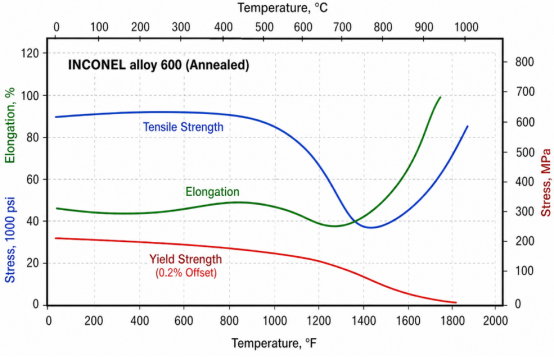
The ultimate tensile strength of annealed Inconel 600 ranges from 550 to 750 MPa. The material is highly resistant, taking into consideration the places where it is used. It is used in places where it is under tensile stress and exposed to extremely high temperatures because of this quality.
Yield Strength
With a yield strength of 240-350 MPa, the annealed Inconel 600 can withstand stress. Due to its properties, Inconel 600 does not undergo deformation even when its temperature changes or other mechanical stresses are applied.
Tensile Strength
Inconel 600 exhibits high tensile strength and can tolerate large tensile loads without undergoing failure. Tensile strength is one of the crucial properties that make components suitable for use in equipment such as heat exchangers, steam turbines, and reactors.
Elongation
Elongation of Inconel 600 is 30-45% approx. This means how much a material can stretch without breaking under tension. It is a useful factor when materials undergo thermal contraction and expansion. The flexibility of Inconel 600 enables it to withstand such stress.
Importantly, the yield strength, tensile strength and elongation of the Inconel 600 will change with variations in temperature.
Hardness
Alloy 600 has a hardness rating between 80 and 90 Rockwell B. This attribute makes the alloy resistant to abrasion. Abrasion resistance is essential for parts that will be exposed to abrasive stress.
What is Inconel 600 Used for?
Inconel 600 is widely used in the manufacture of fasteners, flanges, and fittings that used in a high-temperature, acidic, or alkaline environment. There are many uses of Inconel 600 across industries such as aerospace, medical, and chemical. Some of its uses are given below.
Inconel 600 Fasteners
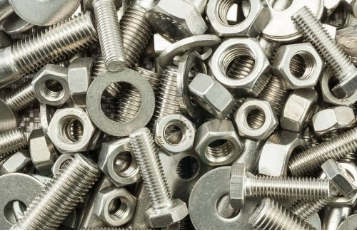
Inconel 600 is widely used to manufacture fasteners that withstand harsh working environments. This is why many important sectors, such as aviation, energy production, and chemical engineering, typically require fasteners made of Inconel 600. Corrosion resistance and high-temperature resistance form the basis of the high toughness of Inconel 600.
For instance, jet engines and nuclear power plants use materials capable of withstanding temperatures exceeding 1000°C. Such temperatures defeat most other materials except for Inconel 600.
Inconel 600 Fittings
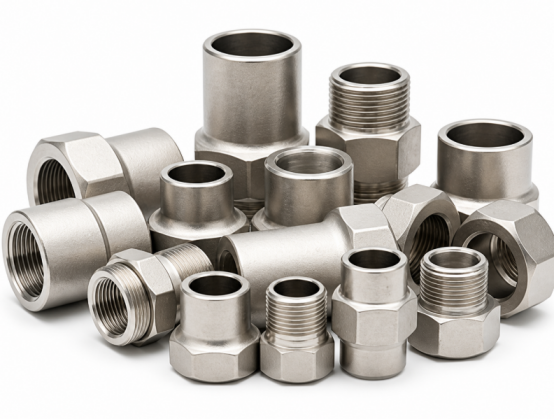
Inconel 600 is suitable for making superior-quality precision components such as couplings, elbows, and valves. Fittings fabricated from Inconel 600 are in very high demand for applications that handle high pressures and corrosive materials.
Inconel 600 Flanges
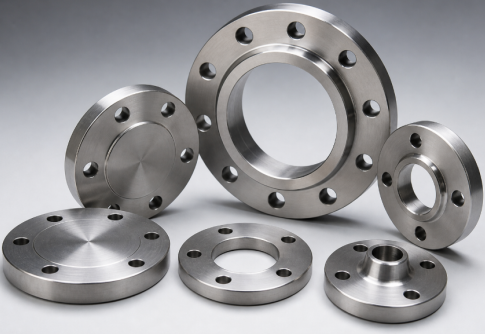
The Inconel 600 flanges are used in industries such as petroleum and natural gas, chemical engineering, and aerospace engineering. The Inconel 600 flanges have high mechanical strength, which is useful for creating a strong seal under high temperatures and pressures. The non-scaling design prevents leaks at this seal.
Other Inconel 600 Machined Components
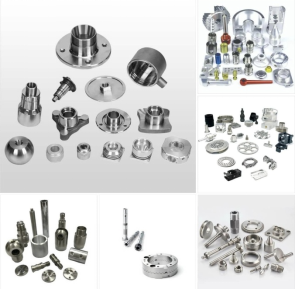
Apart from fasteners, fittings, and flanges, Inconel 600 is also employed in several other machined parts. Examples of such parts include tubings, seal rings, valve seats, and nozzles. These highly precise machined parts are mostly fabricated using CNC machines. Such parts have wide applications in aircraft engine components, gas turbines, and heat exchangers.
Is Inconel 600 Machinable?
Although Inconel 600 is very wear-resistant and offers excellent corrosion resistance. It has presented some challenges when machining. Because Inconel 600 is more difficult to machine than materials such as stainless steel and aluminum, its machining costs are typically higher. For this reason, manufacturers often help customers reduce costs by optimizing part design and refining the machining strategy before production.
Difficulties in Machining Inconel 600
Certain critical considerations must be made during the process of machining Inconel 600. Some of these considerations make the machining process of Inconel 600 quite difficult for manufacturing companies:
High Tensile Strength
Inconel 600 is highly tensile. This indicates that the metal offers strong resistance to deformation under external forces. In machining, this implies that the cutting tool requires significant energy to perform its operations.
Work Hardening
During machining, work hardening occurs due to the cutting edges acting on the Inconel 600 workpiece. Work hardening occurs in increments of increasing hardness. As a result, machining cannot continue without adjusting the cutting tool parameters.
High Cutting Heat
High tensile strength leads to high heat generation during machining. This process, combined with insufficient cooling, may cause thermal expansion of materials, distortion of cutting tools, and reduced material hardness. Thus, machining is challenging due to the high heat generation rate in the cutting process. What’s worse, the thermal conductivity of inconel 600 is poor, difficult to transfer heat. Therefore, the heat accumulated can cause tool wear.
High Elastic Modulus
A high elastic modulus indicates that a material's ability to resist external forces is high. While this characteristic works well in many cases, it creates challenges in machining. For example, machining requires applying more force on the workpiece.
How to Machine Inconel 600
For achieving efficient machining and maximizing the lifespan of the tools during machining of Inconel 600, the following should be taken into account:
Step Cutting
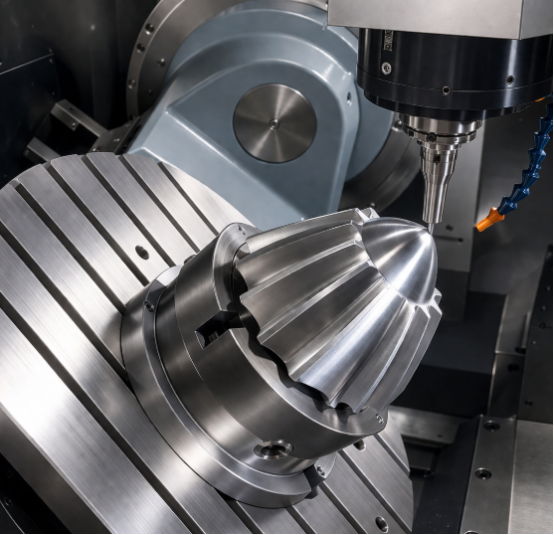
When using step cutting to machine Inconel 600, the cut is divided into several steps and is not removed all at once. This approach minimizes stress and temperature changes that adversely affect tool longevity. Also, it leads to better-quality finish work and increased precision. This is particularly useful for machining deep slots, pockets, or thick sections on inconel 600 bar stock.
Trochoidal Milling
In trochoidal milling, the tool path is designed to follow a circular motion as optimally as possible. This method proves particularly useful for machining Inconel 600, as it minimizes contact between the workpiece and the tool. Therefore, minimal heat production occurs, thus reducing wear and tear of the tools. Additionally, there will be no hardening of the material.
High Feed Milling
This refers to milling at very high feed rates and small depth of cut compared to conventional milling. In other words, there will be much smaller forces involved, leading to minimized heat production.
Inconel 600 vs Other Alloys
When should you choose Inconel 600 rather than other alloys? We discuss the pros and cons of inconel 600 and other alloy, helping you choose the suitable one for your project.
Inconel 601 vs 600
Inconel 601 and Inconel 600 are nickel-chromium alloys, which differ from each other only in chemical composition and properties.
Chemical Composition:
- Inconel 600: About 72% nickel, 14-17% chromium, 6-10% iron
- Inconel 601: About 58% nickel, 22% chromium, 1.0% aluminum
Inconel 601 contains more chromium and aluminum than Inconel 600. This makes it more resistant to oxidation, especially at high temperatures like 1150°C. Inconel 601 can be used in furnaces and incinerators. The use of Inconel 600 is appropriate when there is a need to reduce environmental corrosion without compromising strength in either oxidizing or reducing environments.
Incoloy 800 vs Inconel 600
Even though both are nickel alloys, the differences in their chemical compositions determine their behavior in different environments.
Chemical composition:
- Incoloy 800: Nickel 32%, Chromium 20%, Iron 42%
- Inconel 600: Nickel 72%, Chromium 14-17%, Iron 6-10%
The alloy Incoloy 800 has a lower nickel content but a higher iron content. This improves its resistance to carburization and sulfur-based compounds; hence, it can be used in petrochemical field.
Due to its high nickel content, Inconel 600 has better oxidation resistance. Choose Inconel 600 whenever an item needs to operate in high temperatures, and oxidation is crucial to that component.
Inconel 600 vs 316 Stainless Steel
Unlike Inconel 600, 316 Stainless Steel cannot withstand high temperatures because it is relatively weak above its recommended operating range.
Chemical Composition:
- 316 Stainless Steel: About 16-18% chromium, about 10-14% nickel, about 2-3% molybdenum
- Inconel 600: About 72% nickel, about 14-17% chromium, about 6-10% iron
316 Stainless Steel has very good resistance to corrosion in seawater and to various chemical reactions due to its molybdenum content. But 316 Stainless Steel is prone to instability when exposed to high temperatures and reducing environments. Inconel 600 has a higher proportion of nickel content, making it more stable when reacting with oxidizing agents at high temperatures.
In short, Inconel 600 is preferred over 316 Stainless Steel for tasks that require stability at high temperatures and resistance to oxidizing environments. But 316 Stainless Steel is far cheaper. That's what it is used for more.
Does Inconel 600 Part Require Surface Treatment?
Even though Inconel 600 components already exhibits excellent resistance to corrosion and oxidation, surface treatments can further enhance its performance.
Purpose of Surface Treatment on Inconel 600 Components
Some purposes for applying surface treatments onto Inconel 600 include:
- Corrosion resistance:Even though this metal possesses certain properties, by using some surface treatments, it can be made resistant to corrosion in acidic or high-chlorine environments.
- Surface smoothness:Some surface treatments enable the surface to become smoother. This minimizes wear and friction between moving surfaces.
- Wear resistance: Surface hardening minimizes surface wear.
- Service life:Due to the protection from wear and corrosion, the service life is extended.
Common Surface Finish for Inconel 600
Polishing
Polishing is performed to achieve a brilliant finish on Inconel 600 parts. It plays a vital role in minimizing friction and ensuring sterilization. It is done when parts are used in the medical, pharmaceutical, or food industries.
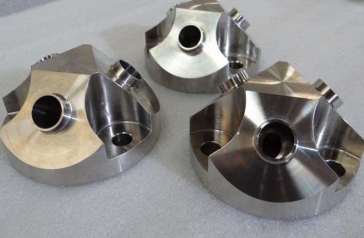
In addition to giving the material a good surface appearance, polishing makes the metal more resistant to corrosion.
Coating
The coating technique is ideal for situations that subject the material to severe chemical reactions and high temperatures. Examples include furnaces and heat exchangers. The extra layer protects the materials from oxidizers and corrosion.
Passivation
Passivation is a chemical treatment that may enhance oxide film formation on the Inconel 600 alloy. It is generally applied in cases where the alloy would be exposed to highly corrosive environments, such as chemical or acid exposure. Passivation enhances the alloy's corrosion resistance, allowing it to withstand harsh media (gases or fluids). Additionally, passivation removes contaminants from the surface.
When to Custom Inconel 600 Parts?
If the available parts cannot meet your requirements, you should consider using custom parts made from Inconel 600.
Requirement for Prototyping
When the customers want to test the functions and machinability of an conceptual product made of Inconel 600, prototyping is required. At this stage, CNC machining is the common manufacturing method.
Requirement for Strict Dimensions
When the standard mechanical parts made of Inconel 600 can't meet the customers' requirements for strict dimension, customizing is the best choice. Because customizing allows complex geometries and high-demanding tolerance by CNC machining. For instance, ±0.01 mm ~ ±0.02 mm or ±0.005 mm are the typical tolerance ranges in precision CNC machining.
Requirement for Specific Surface Treatment
Sometimes, customers want to further improve the performance of the Inconel 600 parts by using some specific surface treatment methods that we have introduce before.
Requirement for Small Batch Production
Inconel 600 is not the most common material used to manufacture CNC parts, they are usually used in some specific applications. And they are not cheap. Therefore, customers don't require large quantities of Inconel 600 parts. Customizing can perfectly meet customer's requirement for small volume of production.
Conclusion
The Inconel 600 alloy is crucial in all those industrial sectors where a combination of high strength at elevated temperatures and superior corrosion resistance is required. Inconel 600 is a material of choice for the aerospace industry, power plant construction, and chemical processing, and it can provide dependable service where no other material can.
If you want to learn more about Inconel 600 and its potential applications, or if you need fasteners produced from Inconel 600, please contact Tuofa professional inconel 600 parts manufacturer.
FAQ
Is Nickel 600 the same as Inconel 600?
Nickel 600 and Inconel 600 refer to the same type of alloy. The word “Inconel” is the name of an entire series of alloys that can be referred to in this manner for marketing purposes. This means that Nickel 600 is nothing more than another name for an alloy consisting mainly of nickel and chromium.
How to weld Inconel 600?
There are certain considerations when welding Inconel 600 because the metal is extremely strong and tends to work-harden easily. There are different methods employed when welding Inconel 600; one can use either TIG or MIG and should always ensure proper preheating to prevent cracking.
Is 316 stronger than Inconel 600?
Although 316 stainless steel has excellent corrosion resistance, Inconel 600 is recommended for its high-temperature performance. This material has high tensile strength at temperatures above 1000 °C and does not oxidize easily.
 Maraging Steel Guide: Grades, Properties, Applications & CNC Machining