Tel/WeChat:
  Email:


 Home
HomeBottoming Tap: A Complete Guide for Blind Hole Threading in CNC Machining

 Published:Jul 28,2026
Blind holes are an integral part of many designs. Quite often, limitations like space constraints are encountered. In some high-performance applications like medical implants or aerospace brackets, a high clamping force is needed. A bottoming tap solves this problem by creating threads very close to the base. So, maximum thread engagement can be expected. Here is a complete guide for blind hole threading in CNC machining.
What Is a Bottoming Tap?
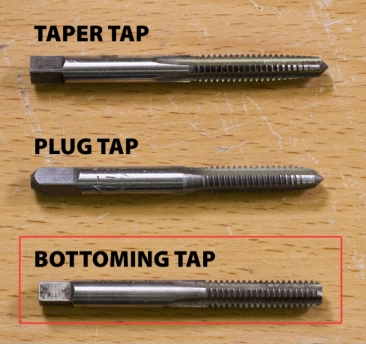
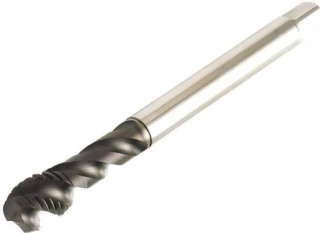
Bottoming tap is a tool used in machining to improve the thread profile in blind holes. Comparatively, these blind hole taps have very few chamfer threads. This short taper of only 1-2 threads lets the threaded portion be extended very close to the base. Hence, it gives maximum thread engagement.
Choose Suitable Bottoming Taps
- Aluminum: polished HSS or carbide taps, uncoated or low-friction coatings help prevent aluminum from sticking to the cutting edge.
- Carbon steel: HSS is usually sufficient. TiN reduces friction and improves wear resistance.
- Stainless steel: HSS-Co provides better hot hardness. TiCN offers higher wear resistance under heavy cutting loads.
- Titanium / nickel alloys: HSS-Co or carbide taps with TiAlN/AlTiN coatings are better suited to high cutting temperatures.
Why the Short Chamfer Matters?
In contrast to a taper tap or a plug tap, the bottoming tap chamfer is short. So, it allows the cutting edge to sweep down to the base. It is especially important in space-constrained areas where adding thickness for bottom clearance is not desired. Examples include automotive components, molds, aerospace parts, and hydraulic manifolds. Threading to the full length gives maximum engagement and an enhanced holding strength.
Types of Bottoming Taps
While preserving its main function of tapping blind holes near the base, there are certain variations in design types. These different types of bottoming taps accommodate different manufacturing conditions. In this context, variables include hole depth, material type, thread profile, and ease of use.
Straight Flute Bottoming Tap
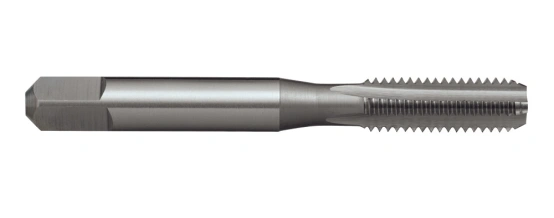
Straight flute bottoming tap is the most commonly used type. It features a straight flute along the length. Generally, it is used for short blind holes. Chip evacuation can become a problem in deeper holes. A straight flute bottoming tap is suitable for both manual and machine tapping.
Spiral Flute Bottoming Tap
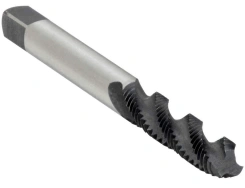
Spiral flute bottoming tap with its helical flutes offers better chip evacuation. So, chips continuously move upwards and out of the hole during tapping. It is well suited for ductile materials where long chips can be problematic otherwise. Spiral flute bottoming tap can also tap deeper with less chance of chip packing or tap breakage. Thread quality is also better with a spiral flute bottoming tap.
Forming Bottoming Tap
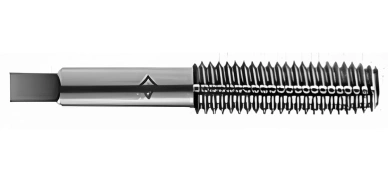
Forming bottoming tap relies on plastic deformation rather than cutting for thread formation. Since cutting is not involved, chip-related problems do not occur. Threads formed are stronger, since they are cold-worked. But careful process control is required for efficient tapping. A generous lubrication might be needed. Forming bottoming taps are often limited to soft materials like aluminum, brass or mild steel.
Semi-Bottoming Tap
The design of a semi-bottoming tap features a balance between a plug tap and a bottoming tap. It has a slightly longer chamfer. Unlike the other types, semi-bottoming tap may not require prior tapping with a plug tap. But, this type is suitable for light machining or repair work.
What Is a Bottoming Tap Used For?
Bottoming taps are quite often deployed in areas of critical importance. Holes in components requiring high durability are thus tapped using bottoming taps. That's is why high end industries like aerospace, automotive or medical prefer using bottoming taps.
Cutting Threads Near the Bottom of Blind Holes
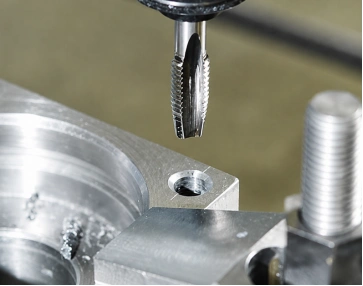
The primary function of a bottoming tap is to cut threads near the bottom of blind holes. This is advantageous, especially in restricted spaces. Full length of the blind hole can be threaded without increasing the thickness of the material.
Completing Threads After a Plug Tap
After tapping with a plug tap, a small portion of the hole can remain unthreaded. A bottoming tap extends the threaded portion after a plug tap. This two-step approach reduces cutting forces while minimizing the risk of workpiece or tap damage.
Extending Partial Threads in Existing Holes
Bottoming taps often improve the thread quality. Breaks in threads can be covered while using bottoming taps. This maximizes thread engagement for fasteners and improves their holding strength.
How to Use a Bottoming Tap to Machine Holes?
The use of a bottoming tap requires a few considerations. Following the correct steps for tapping is necessary for achieving accurate results. Non-compliance with some key precautions can render the tapped hole useless.
Step 1: Drill the Correct Tap Hole Size
Use drill bits of the correct OD that corresponds to the bottoming tap. Make the hole slightly deeper than the fastener length to accommodate the bottoming tap chamfer. Deburr the hole opening before tapping.
Step 2: Leave Enough Bottom Clearance
There should be an extra space to accommodate the chips packing and the bottoming tap chamfer. It prevents excessive stress on the tool.
Step 3: Start the Thread Before Using a Bottoming Tap
The initial thread should be made with a taper or plug tap. Thereafter, a bottoming tap should be used for finishing. The preexisting threads guide the bottoming tape through the hole. So, lead-in and alignment are facilitated.
Step 4: Keep the Tap Aligned and Straight
The bottoming tap should be perpendicular to the workpiece right from the beginning. Misaligned taps can create unwanted side loads. Pressure on the bottoming tap should be applied evenly. This creates a uniform thread profile. Periodically reversing the bottoming tap to evacuate chips.
Step 5: Stop Before the Tap Hits the Hole Bottom
Keep a note of the bottoming tap drill depth and stop tapping before the tap contacts the bottom. Otherwise, it will put excessive pressure on the bottoming tap. It can cause chipping of the cutting edge or damage to the thread.
Applications of Bottoming Taps
Experienced designers and machinists prefer bottoming taps to create high-quality threads. These not only enhance the holding capacity of fasteners but also provide weight optimization. It is especially important in areas where space is limited.
Aluminum Housings and Enclosures
Aluminum housings and enclosures often need to be compact due to space constraints. Such assemblies also need to be lightweight. In these situations, blind holes have only a limited space. So, the bottoming tap utilizes that space to its maximum. Common applications include covers, heat sinks, PCB mounts, and sensor brackets.
Precision Mounting Blocks
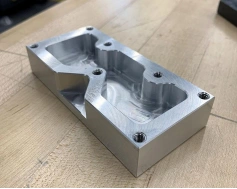
Mounting blocks are often subjected to frequent assembly and disassembly. It means that they need durability in terms of the holding power of fasteners. While bottoming taps provide maximum engagement with fasteners, they also help achieve this durability.
Hydraulic and Pneumatic Manifolds
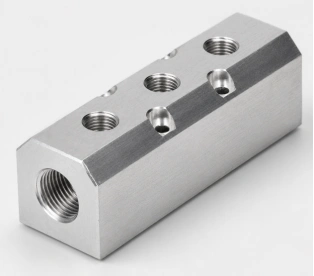
Hydraulic and pneumatic manifolds have many blind holes for threaded ports. Components like valves, fittings, plugs, and sensors often need such holes as connection points. These components have a limited hole depth. So, the bottoming tap utilizes this limited space efficiently while achieving a reliable seal.
Custom CNC Parts With Blind Threaded Holes
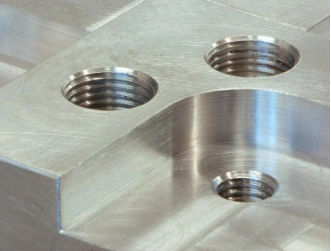
Many customized parts, such as aerospace brackets, medical device components, robotic end-effectors, etc., have blind holes. They often accompany space and weight restrictions. Bottoming taps help in efficient manufacturing. They create space for structural fasteners, adjustment screws, and hidden assembly features.
Challenges of Using Bottoming Taps in CNC Machining
As bottoming taps are quite different from other tapping tools, they pose unique challenges. But there are always solutions to these. If proper handling is undertaken, then it'll give benefits in terms of thread quality, space utilization and high performance.
High Cutting Torque
High cutting torque is a frequently reported problem. Deep blind holes are the most vulnerable. As bottoming taps have a short chamfer, it results in immediate engagement of all threads. If tapping speed is too high, lubrication is inadequate, or drilled depth is low, high cutting force can be expected. In this scenario, using a coated bottoming tap tool with an optimized feed rate can be helpful.
Difficult Thread Starting
Some machinists attempt to start threads with a bottoming tap tool. However, a bottoming tap tool is not designed to start threads. Instead, a taper tap or a plug tap can be used for this purpose. If a bottoming tap tool is used anyway, it can result in misalignment or tap breakage.
Chip Packing in Blind Holes
Chip packing can be expected in a deep blind hole if adequate steps are not taken. There is only a limited space for chips to escape. So they are likely to cling beneath or around the tap. It then causes an increase in torque or damage to the thread profile. This problem is mainly observed in ductile materials that produce long and stringy chips. To resolve it, use a spiral flute, leave sufficient bottom clearance, and pour cutting fluid during tapping.
Machinability of Materials
Tapping low machinability materials is always a challenge. While the chips of ductile materials tend to create problems, hard materials increase torque. So an optimized tapping strategy is needed. A clear understanding of issues like high cutting torque, design optimization, and process control is thus necessary.
Best Practices for Using Bottoming Taps in CNC Machining
As discussed previously, there are certain challenges in tapping. If the tapping process is optimized, these challenges can be easily overcome. It'll result in better thread quality, minimum wastage and high efficiency.
Use the Correct Tap Drill Size
The drilled hole diameter should be optimum. If the hole is too narrow, then it'll create excessive stresses between the bottoming tap tool and the workpiece. If it is too loose, then thread formation would be improper. The best option is to use a standard hole chart as a guide.
Control Hole Depth
Ideally, the hole depth should be a bit deeper than the threaded length. It is to create room for bottom clearance. Keeping this bottom clearance is often advantageous. It helps in dealing with challenges like chip packing, the tool touching the base, and excessive cutting torque.
Use Peck Tapping
Peck tapping is an effective tapping strategy. Instead of a continuous tap, it relies on tapping + retraction of the tap. In this way, long chips are broken and evacuated. It also gives way for the cutting fluid to reach the edges.
Bottoming Tap vs Other Thread Taps
Bottoming taps are often confused with other thread types. A distinction between the various tapping tools should be made for correct adoption. In this regard, some tables are presented below. They key features of each tool are highlighted and compared with bottoming tap here.
Bottoming Tap vs Plug Tap
|
Feature |
Bottoming Tap |
Plug Tap |
|---|---|---|
|
Chamfer |
1 -2 chamfered threads |
3 -5 chamfered threads. |
|
Thread Depth |
Almost to the hole bottom |
incomplete threads at the bottom |
|
Thread Starting |
Requires pre- cut threads |
Can start threads |
|
Applications |
Finishing blind - hole threads |
General - purpose threading and intermediate tapping |
Bottoming Tap vs Taper Tap
|
Feature |
Bottoming Tap |
Taper Tap |
|---|---|---|
|
Chamfer |
1 - 2 chamfered threads |
8 - 10 chamfered threads |
|
Thread starting ability |
Poor |
Excellent |
|
Cutting Force |
Higher |
Lower |
|
Applications |
Final threading in blind holes |
Initial threading in new holes |
Bottoming Tap vs Spiral Flute Tap
|
Feature |
Bottoming Tap |
Spiral Flute Tap |
|---|---|---|
|
Design |
Short chamfer |
Helical flutes |
|
Chip removal |
Limited chip evacuation |
Efficient chips removal |
|
Blind Holes |
Maximizes thread depth |
Reduces chip packing |
|
Applications |
Finishing blind - hole threads |
tapping of ductile materials |
Bottoming Tap vs Spiral Point Tap
|
Feature |
Bottoming Tap |
Spiral Point Tap |
|---|---|---|
|
Chip Flow |
Chips remain in the hole |
Pushes chips forward ahead of the tap |
|
Hole type |
blind holes |
through holes |
|
Thread Depth |
bottom of the hole |
Standard thread depth |
|
Applications |
Deep blind- hole threading |
High - speed tapping |
Bottoming Tap vs Thread Mill
|
Feature |
Bottoming Tap |
Thread Mill |
|---|---|---|
|
Threading Method |
Cuts the thread in one tapping operation |
Generates threads using CNC interpolation |
|
Flexibility |
One tap per thread size |
one tool for multiple diameters |
|
Tool failure |
prone to breakage if overloaded |
Lower breakage risk |
|
Application |
High -volume standard threading |
Precision machining |
Bottoming Tap vs Form Tap
|
Feature |
Bottoming Tap |
Form Tap |
|---|---|---|
|
Thread Formation |
By cutting |
By material deformation |
|
Chip production |
Chips produced |
Chip- free operation |
|
Material Compatibility |
For most metals |
Limited to ductile materials |
|
Applications |
General- purpose threading. |
High -volume production requiring strong threads |
Design Tips for Bottoming Tap Holes
Optimally designed tap holes seldom create any noticeable hurdles. They are manufacturing-friendly. It supports the goal of enhancing productivity and efficiency. In this regard, some design tips are discussed here.
Leave Enough Bottom Clearance
An efficient part design keeps the bottom clearance sufficient. It gives ample room for chips and bottoming tap tool movement. If the bottoming tap tool is denied free movement, then it could result in tool failure.
Avoid Excessively Deep Holes
Very deep holes create a hindrance in chip removal. Long tapping tools are subjected to uneven loads that cause deflection or breakage. If the hole depth is optimum, then it gives machining efficiency, reduces tool wear, and shortens CNC cycle times.
Proper Thread Engagement Length
Thread length should be sufficient enough to support the loads. Excessively long threads do not give any meaningful advantage. Conversely, they are financially and productively expensive. An optimum engagement length for steel is suggested as 1 x the fastener diameter. For softer metals, it is 1.5 - 2 x the diameter.
Tuofa Case Study: Hydraulic Manifold Blind Hole Threading
Our customer needed a custom hydraulic manifold block for a compact hydraulic control system. The part was machined from 6061-T6 aluminum and required multiple threaded ports for valves, fittings, and pressure connections.
The design of hydraulic manifold included:
- Overall size: approximately 120 × 80 × 50 mm
- Material: 6061-T6 aluminum
- Multiple G1/4 and M8 threaded holes
- Several blind threaded holes with limited depth
- Internal cross-drilled channels for hydraulic flow
- Flat sealing surfaces requiring leak-free assembly
Machining Challenge
The customer required 8 mm of usable thread depth in several blind holes for secure valve and fitting installation. However, the available hole depth was limited because the internal oil channels were located directly behind the threaded sections.
Final Result
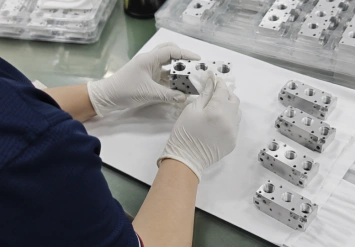
By applying the bottoming tap process, Tuofa achieved the required thread engagement without changing the original manifold dimensions. Followings are achieved results:
- Increased usable thread depth from 5 mm to 8 mm, meeting the customer's fastening requirement.
- Maintained the original compact manifold design without increasing block thickness.
- Achieved consistent thread quality across multiple blind holes with thread gauge inspection.
- Reduced the risk of tap breakage by optimizing hole depth
Conclusion
Bottoming tap is a tool for tapping blind holes. It creates a thread very close to the base of the holes. So, the depth of blind holes can be optimally utilized. It is helpful in situations where weight or space is a limitation. The quality of threads that it produces is better than other tapping methods. Though there are some challenges in using bottoming tap tools. If the process is optimized, good results can be achieved without any major hurdles.
FAQ
Is a bottoming tap only used for blind holes?
Practically, they are used only for blind holes. But theoretically, they can be used for through holes as well.
Can you start with a bottoming tap?
Bottoming tap is not designed for starting a tap. In fact, it is used for finishing.
What materials are difficult for bottoming tapping?
Hard materials create excessive cutting torques. Soft metals give long and stringy chips. Both situations are difficult.
 Types of Gauges for CNC Inspection: How to Check Machined Parts Accurately