Tel/WeChat:
  Email:


 Home
HomeThermowell Uncovered: Sensor Protection Tube Explained

 Published:Apr 17,2026
The thermowell is an incredible invention. In a lot of processes like oil and gas delivery, steam generation in boilers, and the manufacturing of aggressive chemicals, temperature measurement is necessary. In these cases, direct immersion of the sensor in process media is quite difficult. It not only poses a risk of damage to the sensor but also disrupts process continuity. Thermowells provide a shield to temperature sensors against these aggressive environments. Let's discuss what is thermowells and the manufacturing methods.
What Is A Thermowell?
A thermowell is a protective housing for temperature sensors used in process control. The main function of thermowells is to shield temperature sensors from process media. This helps to nullify the chances of contamination of process media while protecting the sensing element from corrosion, erosion, high pressure, and/or high flow rate. Depending on the installation requirements, thermowell design can be threaded, flanged, or welded.
What Is the Difference between a Thermowell and a Thermometer?
The biggest difference is in functionality. While a thermowell is basically a protective enclosure for a sensing element, a thermometer is itself the sensing element. On one hand, thermowells transfer heat for temperature sensing to the thermometer. On the other hand, the thermometer gives a readable output or signal for temperature sensing. Together, they both ensure a reliable and safe instrumentation control for temperature measurement.
Thermowell vs Thermocouple: Key Functions
A thermocouple is also a temperature measurement device. It indicates a voltage difference arising from a potential difference between dissimilar wires at the hot junction. This voltage reading is translated into a temperature measurement, which is read on a dial or digital display. A thermowell is just the protective enclosure that houses the thermocouple. The key functions are highlighted below:
|
Aspect |
Thermowell |
Thermocouple |
|---|---|---|
|
Function |
Protects sensor |
Measures temperature |
|
Role |
Mechanical Barrier |
Sensing device |
|
Exposure |
Direct to process media |
No direct exposure with process medium |
|
Durability |
High |
Moderate |
|
response time |
Slightly slower |
Faster if immersed directly |
|
Benefit |
Safety and longevity |
Accuracy |
Components of Thermowell
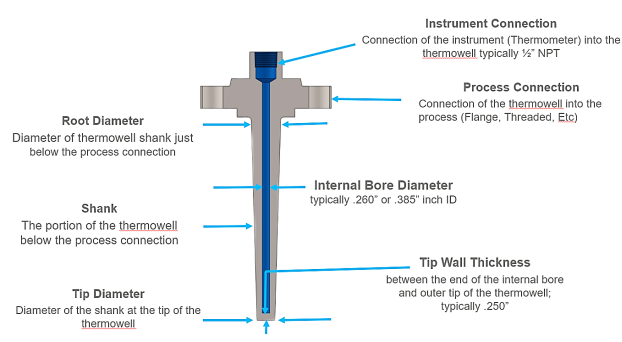
A thermowell has mainly four components, namely, tip, shank, bore, and mounting connection. Each component has its own unique function. A good design ensures that maximum heat transfer is achieved with no loss of structural integrity. The diagram below illustrates the various components of a thermowell.
Tip
The tip is basically the closed end of the thermowell. It is the first point of contact with the process media. So, careful consideration must be given to tip design. As an example, thinner tips provide good heat transfer efficiency, but they could lack sufficient mechanical strength. On the other hand, thicker tips provide good mechanical strength at the expense of heat transfer. So, a good tradeoff must be made. As the tips of thermowells are directly exposed to the process media, suitable materials should be selected that can endure corrosion and erosion.
Shank
Shank is the main structural portion of a thermowell. It is the elongated body whose length determines the insertion length of the temperature sensor. Commonly, it can be straight, tapered, or stepped depending on process parameters. Design of the shank depends on pressure, velocity, flow rate, and chemical reactivity of the process media.
Internal Hole
Internal hole is usually defined by the bore size. It must be precisely machined to ensure a proper fit for the temperature sensor. Usually, it is slightly larger than the sensor to accommodate it. But excessive air gaps can severely affect the accuracy of temperature measurement. The depth of the internal hole in thermowells defines the closeness of the tip to the process media.
Mounting Connection
Mounting connection is an important classification parameter for thermowells. It tells how the thermowell is attached to the pipeline, vessel, or reactor. Depending on the process conditions and installation method, it can be classified into four main categories:
- Threaded
- Flanged
- Welded
- Socket
The main consideration should be that no leakage occurs due to the thermowell.
What Is A Thermowell Used for?
The foremost function of a thermowell is to shield the temperature sensor from the process environment while enabling efficient heat transfer. This protective barrier ensures safe, reliable, and maintainable temperature measurements. Another advantage is the easy removal and replacement of temperature sensors. It allows process continuity in continuous production systems like oil and gas, power generation, chemical processing, and food manufacturing.
Sensor Protection
Sensors like thermometers, RTDs, or thermocouples are often subjected to abrasive particles, chemically aggressive substances, high pressure or high velocity. These conditions make sensors vulnerable to damage or failure. Thermowells provide a robust shield to contain temperature sensors.
Enable Sensor Replacement
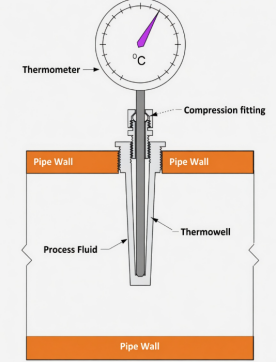
A thermowell is a sealed and hollow metal tube, which is installed on the industrial equipment. The Thermowell protects the sensor from the process environment, this allows the sensor to be replaced easily and safely because the sensor are precision components that are prone to damage.
Measure Temperature in Harsh Environments
A thermowell is made of special materials so it can bear high pressure and extreme temperature. Although thermowell prevents sensor from the processing environment, it doesn't isolate heat absolutely. In general, thermowells are made of materials that has good thermal conductivity, which allows it transfers the heat to the sensor to achieve temperature measurement.
How Does A Thermowell Work?
After knowing the functions of thermowell, it is necessary to understand how it works. Actually, the operating mechanism of thermowell is quite simple. The steps includes:
Protect the Sensor
While a thermowell isolates the temperature sensor from the process environment, it shields it well from any aggression. Be it erosion, corrosion, or high velocity, it doesn't bother the temperature sensors. The thermowell encloses the temperature sensor within a sealed boundary.
Transfer Heat to Sensor
Thermowells are made of thermally conductive metals. The outer wall of a thermowell conducts heat. It then gets transferred to the inner walls from where the sensor takes up the measurement. It then either gives a readable output or signals the actuator for action.
Withstands Process Conditions
Withstand Pressure
High pressure or vacuum often forbids direct immersion of temperature sensors into the process media. Extreme pressures are quite common in pipelines, boilers, and reactors. Thermowells provide a pressure-resistant barrier. Thermowells with proper material selection and wall thickness design guarantee a seamless temperature measurement.
Corrosion Resistance
Chemically reactive environments tend to corrode critical parts of temperature sensors. While thermowells diminish the need for direct contact with the process media, the problem of corrosion is solved automatically.
Reduce Flow-Induced Vibration
High-velocity fluid systems create oscillating forces. If these oscillations match the natural frequency of the sensor, resonance can greatly aggravate damage. Repeated loading also brings fatigue failure. So, proper thermowell design, like a tapered or stepped shape, reduces drag. This tackles the flow-induced vibrations.
What Are the Types of thermowells?
Thermowells can be classified based on their mounting method. Each type is suitable for a specific set of conditions. The table below compares the common types of thermowells.
|
Type |
Connection |
Pressure |
Installation |
Removal |
Advantages |
Limitations |
|---|---|---|---|---|---|---|
|
Threaded |
Screw |
Low- Medium |
Very easy |
Very Easy |
Low cost and quick install |
Leak risk |
|
Flanged |
Bolted flange |
High |
Moderate |
Moderate |
Strong sealing |
Higher cost |
|
Socket Weld |
Socket and fillet weld |
Medium-High |
Permanent |
Difficult |
Better strength than threaded |
Requires Welding |
|
Weld-in |
Direct butt weld |
Very high |
Permanent |
Very difficult |
Maximum strength |
Coastly to repair |
Threaded Thermowells
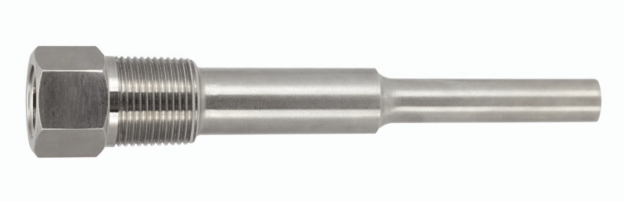
The threaded thermowell is the most widely used type. It is commonly used for low to medium pressure conditions where frequent removal or replacement is not necessary. Its installation is quite easy. The thermowell just needs to be screwed in a threaded port on a pipe or reactor. It thus offers quick maintenance. On the downside, it has a higher risk of leakage than welded or flange thermowell types. So it is deemed as less suitable for critical applications.
Flanged Thermowells
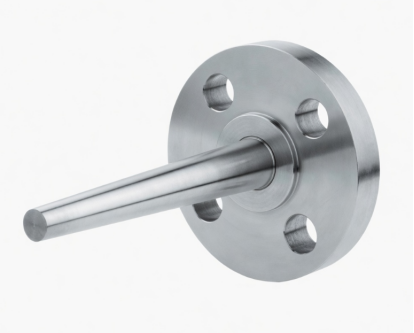
Flanged thermowells belong to a very robust type. They are commonly used in high-pressure applications like OCTG or power plants. They are incredibly leak-proof while allowing frequent replacement. But flanged thermowells are expensive.
Socket-Weld Thermowells
Socket-weld thermowells have a socket fitting around which welding is done. It allows for proper positioning while getting the robustness of a permanent weld. So, chances of leakage are quite low. On the downside, removal or replacement is more difficult.
Weld-In Thermowell
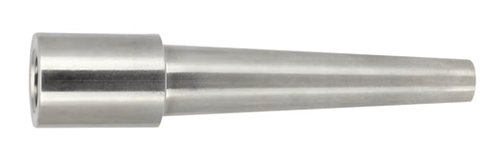
In this type, the thermowell is welded directly into the process pipeline or vessel. It offers the highest-pressure endurance and strength. So, this extreme endurance makes it ideal for critical applications. On the downside, it has a lack of flexibility.
Thermowell Materials
Thermowells come in a few material types. Some materials offer high corrosion resistance, while others provide cost benefits. A tradeoff is considered while selecting materials for thermowells. After all, the main concerns remain durability, safety, and measurement accuracy. Among all materials, 304 and 316 stainless steel thermowells are the most commonly used.
Stainless Steel Thermowell
Stainless steel, being a versatile material, is the most widely used for thermowells. Stainless steel is corrosion-resistant, low-cost, and easy to fabricate. These characteristics make it suitable for quite a lot of process conditions. So stainless steel thermowells are used in general-purpose applications such as water systems and food processing.
Hastelloy Thermowell
Hastealloy, being a superalloy, supports high temperatures and extreme chemical environments. It offers an exceptional resistance to strong acids, chlorides, and oxidizing agents. The most common type is the Hastelloy C276 thermowell. Therefore, Hastelloy C276 thermowell is employed in chemical processing, pharmaceuticals, and pollution control systems.
Titanium Thermowell
Titanium has unique characteristics. It is lightweight and corrosion-resistant in saline environments. Titanium is easy to machine, and it offers a high level of customization. Custom titanium thermowell is commonly used in marine, desalination, and chemical processing.
Carbon Steel Thermowell
Carbon steel is used in thermowell manufacturing where corrosion is not a major concern. In less critical applications, the low cost of carbon steel makes it highly advantageous. Further, a moderate corrosion resistance can still be developed with protective coatings and surface treatment.
Thermowell Standards & Certification
Compliance with industrial standards ensures safety, reliability, and interchangeability. It brings customers' confidence and product predictability. Strict tolerances according to standards enable precise machining, which results in proper fitting.
Dimension Standard
ASME B40.9
ASME B40.9 standard is developed by the ‘American Society of Mechanical Engineers'. It defines insertion length, bore diameter, tip thickness, and overall geometry. Some sections work on strength calculations and the prevention of vibrations.
DIN 43772
DIN 43772 is a German standard popular in European markets. It defines insertion lengths, connection sizes, and well profiles. It focuses on the interchangeability of components used in thermowell systems.
Thread Standard
ASME B1.1
ASME B1.1 specifies screw threads, thread form, pitch, diameter tolerances, and class of fit. The overall objective remains to ensure leak-resistant installation.
B1.20.1
B1.20.1 defines taper angle, thread dimensions, and sealing characteristics. It defines threads by the NPT (National Pipe Taper) system, which is also used in industrial pipes.
How to Make Thermowell
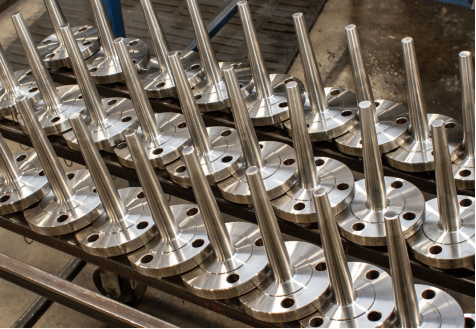
Most industrial thermowells are manufactured by CNC machining. In some demanding industries or harsh environments, custom thermowells are required. Customization allows non-standard lengths and specialized materials to be used. The quality of CNC-machined thermowells surpasses the quality of fabricated or welded thermowells. Thermowells are CNC-machined using turning, drilling, tapping, milling, and finishing operations.
How to Manufacture Thermowell by CNC Machining?
Thermowells are often made by following CNC machining techniques for different features.
CNC Turning for Shape
CNC turning is the first step in the manufacturing of the thermowell. Thermowells are manufactured from bar stock. CNC turning creates the external profile with a high concentricity. Thermowell parts, such as the shank and tip, are formed in this process. CNC turning accommodates different designs like straight, tapered, or stepped.
CNC Drilling for Holes
CNC drilling forms the internal bore and other holes in the thermowell. A high level of dimensional accuracy is maintained to ensure a proper fit. Straightness and minimum dimensional deviation are thus crucial, which a CNC machine delivers.
CNC Tapping for Thread
CNC tapping creates internal and external threads with high accuracy. It can follow the NPT or BSP threading standards. Tight tolerances ensure leak-proofing and pressure integrity.
CNC Milling
CNC milling gives an excellent level of flatness for sealing and mating surfaces. It is commonly used in flange facing and hexagonal sections, making for wrench tightening. Turn-mill thermowells are widely used because of perfect concentricity, superior structural integrity, and excellent heat transfer.
How to Install Thermowell
Install thermowell properly is very essential. Here is the simple steps for installing thermowell easily and quickly.
Select Suitable Types of Thermowell
Thermowells are made from different materials. Each material offers its distinct advantages. The suitability of materials depends on the applications. For example, C276 Hastelloy thermowells are employed in highly corrosive environments. But its high cost limits its use in ordinary applications.
Insert Thermowell into the Pipe
There are different methods of mounting for thermowells. Threaded thermowells are to be secured in threaded ports. Socket thermowells are to be inserted into sockets. Welded thermowells are to be welded in place and so on.
Tighten Securely
Once thermowells are put in place, they need to be tightened securely by the appropriate securing methods. This step is crucial to prevent leakages and contamination,
Install Temperature Sensor
Temperature sensors such as resistance temperature detectors (RTD), thermocouples are then installed inside the thermowell.
Conclusion
Thermowells are employed to isolate the temperature sensor from the harsh process environments. It prevents sensor damage due to corrosion, erosion, high pressure, high flow rate, and/or vibrations. It not only does that, but it also saves the process medium from contamination. Thermowells also aid in process continuity. The process is not disrupted while temperature measurement is taken. To meet demanding requirements, Tuofa provides custom services for manufacturing thermowell from stainless steel, titanium or other materials.
FAQ
When to Use a Coated Thermowell?
Coating is often desired on a thermowell when the process media is severely aggressive. Ceramic coated thermowells are popular in this sense.
What are the disadvantages of thermowell?
There is a slight lag between the reading via thermowell and direct immersion. Another disadvantage may be the increased cost of installation, which subsequently pays of in terms of sensor protection.
What is the standard length of thermowell?
It depends on the application. There is no fixed length. Common thermowell lengths range from 100mm to 1000mm.
 CNC Drilling Guidelines for Improving Hole Quality