Tel/WeChat:
  Email:


 Home
HomeCNC Machining Support for Mechanical Capstone Project Prototypes

 Published:May 21,2026
Before graduation season arrives at universities, it is especially important to find suitable resources or teams to provide support. Mechanical capstone projects often need more than a good idea. A student team may need design feedback, materials, prototype parts, testing support, project sponsorship, or access to a machine shop. A faculty advisor may need reliable outside resources. A company sponsor may want to turn an internal problem into a student design challenge. In some cases, a startup or product team may also search for capstone-style support because they need early engineering help before a product is ready for production.
For students and researchers, it is often difficult to turn textbook knowledge into real manufacturing decisions. A capstone or research part is not only about the drawing. Material selection, machining process, tolerance range, surface finish, inspection, cost, and lead time can all affect whether the part can be made and tested successfully.
What Support Do Mechanical Capstone Projects Usually Need?
Mechanical capstone projects usually move from problem definition to design, prototype, testing, and final presentation. During this process, teams may need different types of support.
- At the early stage, students often need resources for project ideas, technical research, market background, and design direction. These resources may come from faculty advisors, university labs, engineering libraries, previous capstone examples, or industry mentors.
|
Resource |
What It Helps With |
|
McMaster Engineering Capstone Showcase |
Find real capstone examples, such as testing devices, robots, snowblowers, and water treatment systems. |
|
Purdue ME Capstone Design |
Understand how a project moves from problem statement to prototype testing. |
|
Reddit r/MechanicalEngineering |
Get informal project ideas and feedback from students and engineers. |
|
Engineering Stack Exchange |
Ask focused engineering questions about mechanisms, CAD, design logic, and calculations. |
|
SAE Student Programs |
Find mobility, aerospace, vehicle, and mechanical system project inspiration. |
- At the design stage, the team may need CAD modeling help, engineering analysis, material selection advice, tolerance review, and manufacturability feedback. This stage is important because a project can look strong in a report but still fail when the parts are made.
|
Resource |
What It Helps With |
|
GrabCAD Community |
Find CAD models, mechanical assemblies, tutorials, and peer design examples. |
|
Autodesk Forums |
Solve CAD modeling, drawing, CAM setup, Inventor, AutoCAD, and Fusion 360 workflow issues. |
|
Eng-Tips Mechanical Engineering Forums |
Ask professional-level questions about materials, tolerances, design calculations, and manufacturing issues. |
|
Engineering Stack Exchange CAD Tag |
Check CAD, mechanism, fitment, and design problem discussions. |
|
MatWeb |
Compare material properties such as strength, density, hardness, and thermal behavior. |
- At the prototype stage, the team may need manufacturing support. This can include 3D printing for quick plastic models, laser cutting for flat plates, sheet metal fabrication for brackets and enclosures, or CNC machining for stronger and more accurate metal parts.
|
Resource |
What It Helps With |
|
Campus makerspaces |
Quick 3D prints, laser-cut parts, simple fixtures, and early assembly checks. |
|
University machine shops |
Manual machining, CNC machining, drilling, turning, milling, welding, and shop advice. |
|
Xometry or Protolabs |
Online manufacturing for CNC machining, 3D printing, sheet metal, and quick prototype parts. |
|
Local machine shops |
Faster communication for simple metal parts, rework, drilling, threading, and urgent prototypes. |
|
Functional metal parts, tighter fits, threaded holes, material advice, and small batch prototype components. |
- At the testing stage, the team may need measurement tools, load testing, functional testing, assembly checks, or failure analysis. This is where the project proves whether the design meets its requirements.
|
Resource |
What It Helps With |
|
University testing labs |
Load testing, vibration testing, thermal testing, fluid testing, or motion testing. |
|
Metrology labs |
Dimensional checks with calipers, micrometers, gauges, CMM, or optical inspection. |
|
Faculty research labs |
Use specialized equipment under academic supervision. |
|
Manufacturer quality teams |
Review fit issues, tolerance problems, material defects, or failed machined parts. |
Sponsor Models for Mechanical Capstone Projects
In practice, sponsorship models are not rigid; rather, they manifest in a wide variety of forms. The options listed below represent common sponsorship choices that may serve as a useful reference:
Industry-Sponsored Project
Capstone sponsors can support projects in several ways. The most common model is an industry-sponsored project. In this model, a company provides a real engineering problem, and a student team works on it with faculty guidance. The company may provide a project description, technical contact, design requirements, materials, prototype budget, and feedback during the project.
Material or Prototype Sponsor
Another model is a material or prototype sponsor. In this case, the sponsor does not control the whole project but provides parts, materials, fabrication support, or access to equipment. This can be useful when the project has a limited budget but needs physical testing.
Mentorship Sponsor
A third model is a mentorship sponsor. A professional engineer or company representative may meet with the team from time to time to review design direction, manufacturability, safety, or testing plans. This model is useful when the team needs industry judgment but does not need full project funding.
Supplier Support Model
There is also a supplier support model. This is not always a formal sponsorship. A CNC machining company, 3D printing service, or fabrication shop may support the project by producing parts based on CAD files and drawings. This model is practical when the project already has clear manufacturing requirements.
Formal Sponsor Programs
Some universities also run formal sponsorship programs. These programs may include project fees, IP rules, confidentiality agreements, reports, presentations, and prototype deliverables. For companies, this can be a way to explore early-stage ideas, connect with students, and support engineering education. For students, it can provide a more realistic engineering problem.
Some manufacturing suppliers may also provide project-based support when a capstone design moves into the prototype stage. Tuofa CNC Machining, for example, focuses on custom CNC machining for small and medium-batch parts and has experience assisting university-related projects in China with prototype trials and machined components. This support is usually more practical when the team already has clear files, material requirements, quantities, and testing needs.
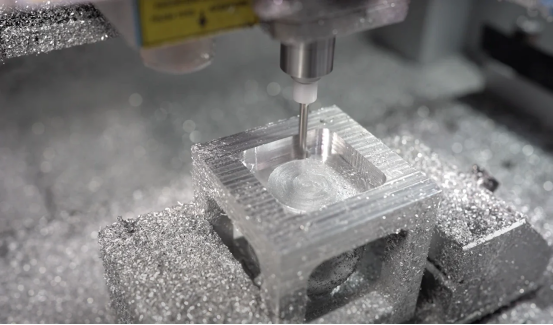
Tuofa CNC Machining has experience supporting university-related projects in China, including projects connected with Tsinghua University and research institutes under the Chinese Academy of Sciences. In these projects, research teams may send drawings and part requirements for one-line review, and Tuofa’s machining team may discuss materials, process choices, tolerances, and prototype feasibility with them. For example, a part may first be designed with 0.01 mm tolerance, but after checking the real function and testing purpose, 0.05 mm may be enough. This kind of manufacturability discussion can help reduce unnecessary machining difficulty and cost while keeping the prototype useful for testing.
How Long Does a Capstone Project Usually Take?
Many mechanical capstone projects follow a two-semester cycle. Some programs run for about eight months, while others may follow an academic-year schedule. The exact timeline depends on the university, department, and project type.
#1 A typical project may start with problem definition and requirement setting. The team studies the problem, defines the customer need, lists engineering requirements, and compares possible design directions.
#2 The next stage is concept development. The team creates sketches, CAD models, basic calculations, and possible mechanisms. At this stage, the design may still change often.
#3 After that comes detailed design. The team selects materials, confirms dimensions, creates CAD files, prepares drawings, and checks assembly space. This is the point where manufacturability becomes important.
#4 The prototype stage usually comes later. The team may use 3D printing, machining, fabrication, or purchased components to build the first working version. If the project needs metal parts with better strength, fit, or accuracy, CNC machining may be considered.
#5 The final stage is testing, documentation, and presentation. The team compares test results with the original requirements and explains what worked, what failed, and what could be improved.
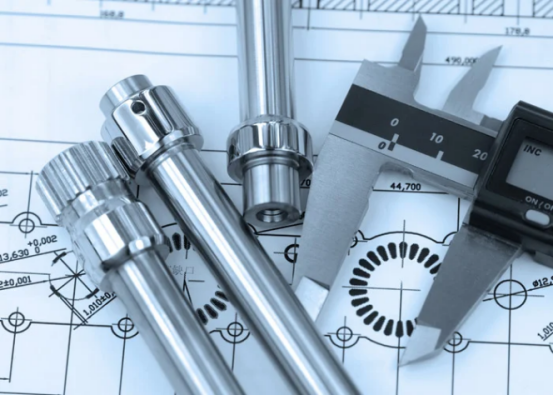
Because the schedule is limited, teams should avoid waiting until the final weeks to contact manufacturers. Manufacturing lead time, shipping, design revision, and assembly testing all need to be considered early.
What Companies Can Support Mechanical Capstone Projects?
Several types of companies can support mechanical capstone projects. The right choice depends on the project goal.
- 3D printing services are useful for quick concept models, plastic housings, ergonomic models, and low-load prototypes. They are often fast and flexible, but printed parts may not match the strength, finish, or tolerance of machined metal parts.
- Local machine shops can help when the project needs simple metal parts, fast communication, and nearby support. They may be suitable for urgent school projects, especially when the team needs to visit the shop or discuss details in person.
- CNC machining companies are useful when the project needs functional metal parts, accurate dimensions, tight fits, threaded holes, bearing seats, shafts, brackets, or small batch prototype components. CNC machining is often more suitable than classroom tools when the part must survive real testing.
- Sheet metal fabricators can support enclosures, frames, panels, covers, and bent structures. They are often useful for mechanical systems that need lightweight support parts.
- Testing labs and inspection services may help with load testing, dimensional inspection, material verification, or performance These resources are more common in advanced or sponsor-backed projects.
China-based CNC machining teams can also be considered when a project needs custom metal parts, small batch production, or cost-sensitive prototype machining. This option may be more suitable when the team has clear files, defined materials, and enough time for international communication and shipping. For projects that require fast local iteration, a domestic or local shop may be easier. For projects that need a wider range of machining capacity or small batch metal components, an overseas manufacturing team may be worth comparing.
When Is a Capstone Prototype Ready for CNC Machining?
A capstone prototype is ready for CNC machining when the team has moved from concept testing to functional testing. The part should already have a clear role in the assembly, such as holding load, guiding motion, locating a bearing, fixing a motor, or connecting purchased components.
CNC machining is not always needed for early shape checks. If the team only needs a visual model, 3D printing or campus tools may be enough. CNC machining becomes more useful when the prototype needs metal strength, tighter fit, threaded holes, flat mounting faces, or repeated assembly testing.
When Is Ready to Send a Quote?
A project is usually ready for CNC review when the main geometry is stable and the testing purpose is clear.
|
What to Prepare |
Why It Matters |
|
Technical files, 2D & 3D in STEP/STL/IGS format |
Allows geometry and machining access review |
|
Assembly position is known |
Helps check fit and clearance |
|
Critical features are marked |
Keeps machining effort focused |
|
Material selection or preference (functions, properties) |
Helps estimate cost and lead time |
|
Testing date is planned |
Helps arrange machining and shipping |
If the mechanism is still changing every few days, the team should wait before ordering machined parts. A supplier can review manufacturability, but it cannot make an unclear design stable.
What to Send Tuofa for a Capstone Prototype Machining Review?
For a capstone prototype, Tuofa does not need a perfect production package at first contact. However, the request should show what the part does, how it will be tested, and which features are important.
CAD files show the shape, but short engineering notes explain the intent. This helps Tuofa review machining risk, tolerance needs, material choice, and possible cost adjustments.
How Tuofa Review
|
Item to Send |
What It Helps Tuofa Check |
|
3D CAD file |
Geometry, wall thickness, holes, pockets, and machining access |
|
2D drawing |
Tolerances, threads, material, finish, and critical dimensions |
|
Assembly screenshot |
Fit with motors, bearings, sensors, shafts, or fasteners |
|
Material choice |
Strength, weight, machinability, cost, and surface treatment |
|
Quantity |
One prototype, test units, or small-batch needs |
|
Testing purpose |
Load, motion, wear, sealing, or alignment requirements |
|
Deadline and country |
Machining, inspection, packing, and shipping planning |
Capstone teams often mark too many dimensions as tight tolerance. A better method is to mark only the functional areas, such as bearing seats, shaft fits, sealing faces, and alignment holes. Non-contact surfaces, clearance pockets, and outer profiles can often use general tolerance.
From Prototype Quote to Delivery: What Happens After You Send the Files?
After Tuofa receives the files, the process is not only about price calculation. The review should help the team understand whether the design is machinable, what may increase cost, and what should be confirmed before production.
This step can reduce delays caused by unclear threads, unrealistic tolerances, missing material notes, or late design changes.
Customers do not choose Tuofa only because of the price. They often value our consistent responsibility, clear communication, and professional engineering support. In some cases, a supplier may provide a low initial machining price but later add a much higher shipping cost after production. Tuofa aims to avoid this kind of uncertainty. Our quotation reflects the machining work, while freight is handled based on the actual shipping cost. This practical and responsible approach is one reason customers continue to trust Tuofa and recommend us to others.
From Design to Shipment Flow
|
Step |
What Happens |
|
File review |
Tuofa checks geometry, material, tolerance, and machining risk |
|
Engineering support (DFM feedback) |
Engineers may suggest easier machining, lower cost, or safer fit |
|
Quote confirmation |
Quantity, material, finish, lead time, and shipping are confirmed |
|
CNC machining |
Parts are milled, turned, drilled, tapped, deburred, or finished |
|
Inspection |
Key dimensions, threads, fit surfaces, and critical features are checked |
|
Packing and delivery |
Parts are packed, labeled, and shipped for assembly or testing |
A first prototype may not be the final version. After testing, the team may need to move a hole, add stiffness, change a fit, or adjust material. Clear revision notes help Tuofa review the next version faster and avoid repeating the same manufacturing questions.
Final Thoughts
Mechanical capstone projects can be supported by many resources, including universities, sponsors, local shops, makerspaces, 3D printing services, fabrication shops, testing labs, and CNC machining companies. The key is to match the resource with the project stage.
Early-stage projects need ideas, research, mentoring, and design direction. Mid-stage projects need manufacturability review and prototype planning. Manufacturing-ready projects need clear CAD files, drawings, materials, quantities, and timelines.
For teams that need functional metal parts or small-batch prototype components, a CNC machining supplier can be a practical resource. But it should be contacted at the right time, with the right information. This helps the project team get useful feedback and helps the supplier understand whether the part can be made within the project’s schedule and budget.
 Understanding EMI Shielding through Theory, Materials, Applications & Machining