Tel/WeChat:
  Email:


 Home
HomeFlat Washer Size Chart: Dimensions, Standards, and Selection Guide

 Published:Jul 09,2026
Choosing right flat washer important for right fitting bolt or nut. Washer that is too large, too small, or too thin can reduce load distribution. Wrong washer and you can damage joint surface and even lead to fastener failure over time. That's why engineers rely on a flat washer size chart for accurate measurements. Such charts are used to match washers with the correct fastener dimensions according to application requirements. Here in this guide we will explain how to read a washer size chart, understand key dimensions and much more.
Tools for Measuring Flat Washer Dimensions
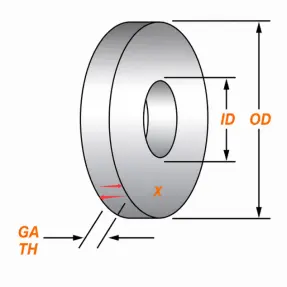
When measuring flat washer dimensions, you need to measure three main parameters, including its internal diameter (ID), outside diameter (OD) and thickness. For high precision here are tools that we recommend you use:
Use a Caliper for Washer ID and OD
A Vernier calliper is used to measure ID and OD of a washer, as it needs to be highly accurate for accurate fitting. Vernier callipers offer high precision from ± 0.02 mm to ± 0.05 mm. Such high precision rules out any errors, unlike simple rulers.
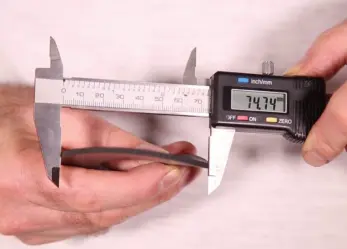
Not only this, but it's two-in-one equipment with two different types of jaws. Big ones are used to measure external diameter and small ones for internal diameter.
What you need to do is to open the jaws of caliper and place them around washer. Now check reading from scale to know its OD. For ID, place small jaws inside the washer and open them until they touch its wall and check the reading on the scale.
Use a Micrometer for Washer Thickness
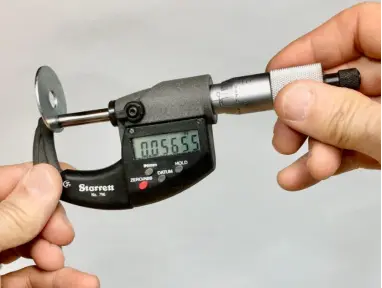
To measure washer thickness, prefer to use a micrometre instead of a calliper. It's because micrometres offer more accuracy compared to callipers. You can measure thickness with 0.01 mm accuracy. A smaller error in accuracy measurement can lead to the loosening of nuts over time, causing leakage and, hence, the operational failure in an industrial setup. Place washer inside micrometer and turn its handle until it touches the edges of washer. Now measure its thickness.
Gauges for Repeated Inspection
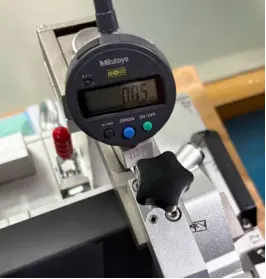
Engineers use gauges for instant and repeated inspections of its dimension, thickness and flatness. It's done to know parameters are same and have not changed over time.
How to Read a Flat Washer Size Chart
To read a washer size chart effectively, here are some key terms that gonna help you. For example, nominal washer size in reality is the diameter of bolt in which you are going to fix the washer. Knowing this will help you make right decision while selecting washer for your next project.
- Nominal Washer Size: Its diameter of bolt on which a washer needs to fit. Its same as internal diameter of washer itself.
- Standard or Specification: A standard is industry-recognised guideline such as ASME, ISO, or DIN. For example, ISO 7089 specifies dimensions and tolerances for standard flat washers.
- Washer Series or Form: Form refers to shape or design variation of washer. Like, Form A means a flat washer without chamfer, Form B indicates a flanged washer with a chamfer, and Form C represent large outside diameter washer
- Inside Diameter: It's size of inner hole of washer. Necessary to fit perfectly on a bolt.
- Outside Diameter: The external or outside diameter of washer. It shows the surface area that will interact with joint material.
- Thickness: Dictates the height of the washer profile
- Units: Determine whether chart is in Imperial (inches) or Metric (millimetres).
What Does Washer Inside Diameter Mean?
As said before, ID of a washer represents size of inside hole of washer.The inside diameter is sized in such a way that it matches to bolt nominal diameter, deciding which bolt or screw can pass through it. For proper functioning of fastener assembly, exact measurement of internal diameter is necessary. A larger diameter will result in a looser fit.
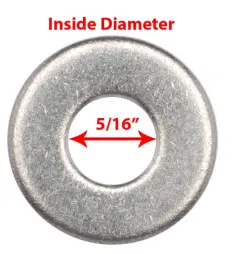
In such case washer will not centre itself on the bolt. When tightened, an off-centre washer will cause a gap,. So, it reduce load-bearing surface area, and slide over time, failing to distribute weight properly
What Does Washer Outside Diameter Mean?
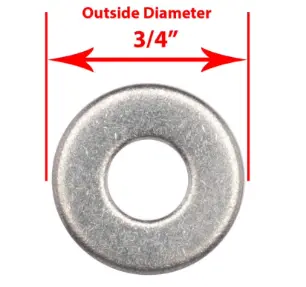
Outside diameter of a washer is its full width, which you can measure from its opposite edges. OD determines how much area washer will cover in fitting assembly and how it distributes load-bearing. Like a larger OD distributes the load over a wider surface area. So, a larger area prevents the fastener from crushing or denting the material.
What Does Washer Thickness Mean?
Axial cross-section area of washer. The thickness of a washer indicates its strength and load-bearing capacity. If your project involves high stress, use a thick washer. For lighter loads, use thin washers, which are more flexible.
Flat Washer Size Standards
Engineers use different standards of flat washer sizes for varying purposes. Lets know about these standard sizes and their main purpose.
ISO 7093-1 Large-Series Flat Washers
These are large, series grade-A washers with a larger outside diameter 3 times greater than the nominal bolt thread diameter used to distribute clamping loads over a wider area. Engineers prefer using such washers where they want to prevent embedding the bolt head into soft base aterial. For example, in structural timber joints.
ISO 7089 Normal-Series Flat Washers
ISO 7089 is international standard for normal series grade-A plain washers. Outside diameter of these washers is small compared to other standards. Generally these are unchamfered. You will find 7089 grade washers in stainless steel, carbon steel and hardened steel.
7089 standard washer is used for hex bolt assemblies. Because its outside diameter (d₂) is perfectly proportioned to spread the clamping force of a hex head over a wider surface area. Which prevents the fastener from sinking into softer materials like aluminium or wood.
DIN 125 Standard
DIN 125, a metric standard for flat washers. Outer diameter of these washers is roughly twice the bolt size. Usually comes in flat-edged (Form A) or bevelled (Form B) styles.
Metric Flat Washer Size Chart
Metric flat washers are classified by size of bolt with which they are intended to fit. Their ID is kept in such a way that it matches with m-series metric fasteners. The internal diameter is kept slightly larger than the bolt diameter so it can slide easily in washer. Like, an M5 washer is for an M6 bolt. Here are standard metric flat washer dimensions.
Standard Metric Flat Washer Dimensions
Here we have put together metric washer ISO 7416 dimensions. Main parameter are:
- Washer size = Fastener size the washer matches
- Hole Diameter (ID) = Inner opening through which the bolt passes
- Outside Diameter (OD) = Total washer width
- Thickness = Washer thickness
|
Washer Size |
Hole Diameter / ID (mm) |
Outside Diameter / OD (mm) |
Thickness (mm) |
|---|---|---|---|
|
M1.6 |
1.7 |
4 |
0.3 |
|
M2 |
2.2 |
5 |
0.3 |
|
M2.5 |
2.7 |
6 |
0.5 |
|
M2.6 |
2.8 |
7 |
0.5 |
|
M3 |
3.2 |
7 |
0.5 |
|
M3.5 |
3.7 |
8 |
0.5 |
|
M4 |
4.3 |
9 |
0.8 |
|
M5 |
5.3 |
10 |
1 |
|
M6 |
6.4 |
12 |
1.6 |
|
M7 |
7.4 |
14 |
1.6 |
|
M8 |
8.4 |
16 |
1.6 |
|
M10 |
10.5 |
20 |
2 |
|
M12 |
13 |
24 |
2.5 |
|
M14 |
15 |
28 |
2.5 |
|
M16 |
17 |
30 |
3 |
|
M18 |
19 |
34 |
3 |
|
M20 |
21 |
37 |
3 |
|
M22 |
23 |
39 |
3 |
|
M24 |
25 |
44 |
4 |
|
M27 |
28 |
50 |
4 |
|
M30 |
31 |
56 |
4 |
|
M33 |
34 |
60 |
5 |
|
M36 |
37 |
66 |
5 |
|
M39 |
40 |
72 |
6 |
|
M42 |
43 |
78 |
7 |
|
M45 |
46 |
85 |
7 |
|
M48 |
50 |
92 |
8 |
|
M52 |
54 |
98 |
8 |
|
M56 |
58 |
105 |
9 |
How to Use Metric Washer Dimensions for Common Fasteners
Engineers use metric washer dimensions for fasteners to fit properly in assemblies. For this purpose, check for bolt size that is used, either it's M1, M6, M2.5 OR M10. Now select the washer size that is same as of bolt size from the chart. Like for an M8 fastener, select M8 washer size. Check the ID of washer it must be slightly higher than bolt nominal diameter so bolt can pass through washer easily.
For example, for M8 bolt with a diameter of 8 mm, M8 washer ID will be 8.4 mm. Verify the outside diameter (OD) as it determines how much surface area the washer covers. Larger outside diameters spread clamping force over a wider area and reduce localised stress. Finally, confirm washer thickness because it affects washer strength and resistance to deformation. Thicker washers generally perform better in higher-load applications.
Imperial Flat Washer Size Chart
Imperial flat washers are thin washers which are also used to distribute clamping loads and prevent surface damage. Imperial washers are classified according to inch-based fastener sizes like 1/4" washer fits a 1/4-inch bolt.
Imperial washer dimensions are commonly standardised under systems such as SAE (Society of Automotive Engineers) and USS (United States Standard). These standards define dimensions such as inside diameter (ID), outside diameter (OD), and thickness. Based on dimensional pattern and outside diameter relationships, imperial flat washers are further divided into Type A and Type B categories.
Type A Flat Washer Size Chart
Type A flat washer is a washer used for general fastening applications that needs standard load distribution. Based on relationship between washer OD and the nominal fastener size Type A washers are divided into narrow and wide patterns.
Narrow pattern type Washers possess a smaller outside diameter relative to bolt size. Such a configuration is suitable for providing a reduced installation envelope. That's why they're selected for assemblies with limited radial clearance, such as compact machinery, equipment housings, and closely spaced components.
The wide pattern type A washers use a larger outside diameter and therefore provides a greater bearing area than the narrow pattern. This configuration is commonly used where load spreading is important.
Type B Flat Washer Size Chart
Type B flat washers have tighter tolerance compared to type A flat washers. These are classified as narrow, regular and wide:
- Narrow Series (N): Features smallest outside diameter for a given bolt size. Engineers use narrow series to fit into tight spaces where a standard washer would overlap.
- Regular Series (R): Posses standard middle-ground outside diameter. These are designed to fulfil customary load distribution across a broad range of standard industrial applications.
- Wide Series (W): Features largest outside diameter among three series. These distribute load over widest possible surface area. This makes them ideal for softer materials and when the bolt hole is slightly oversized.
SAE vs. USS Flat Washer Sizes
SAE and USS washers are both designed for standard bolt sizes but have different dimensions. SAE washers are smaller and thinner with a narrower outer diameter (OD) and a tighter inside diameter (ID). However, USS washers are larger and thicker.
SAE Flat Washer Size Chart
Engineers prefer using SAE Flat washers when space is limited or dealing with fine threads. Like in engine blocks and chassis components. In following table we have placed SAE flat washer dimensions:
|
Size |
Inside Diameter |
Outside Diameter |
Thickness |
|---|---|---|---|
|
#6 |
5/32″ |
3/8″ |
3/64″ |
|
#8 |
3/16″ |
7/16″ |
3/64″ |
|
#10 |
7/32″ |
1/2″ |
3/64″ |
|
1/4″ |
9/32″ |
5/8″ |
1/16″ |
|
5/16″ |
11/32″ |
11/16″ |
1/16″ |
|
3/8″ |
13/32″ |
13/16″ |
1/16″ |
|
7/16″ |
15/32″ |
59/64″ |
1/16″ |
|
1/2″ |
17/32″ |
1-1/16″ |
3/32″ |
|
9/16″ |
19/32″ |
1-3/16″ |
3/32″ |
|
5/8″ |
21/32″ |
1-5/16″ |
3/32″ |
|
3/4″ |
13/16″ |
1-1/2″ |
9/64″ |
|
7/8″ |
15/16″ |
1-3/4″ |
9/64″ |
|
1″ |
1-1/16″ |
2″ |
9/64″ |
|
1-1/8″ |
1-3/16″ |
2-1/4″ |
9/64″ |
|
1-1/4″ |
1-5/16″ |
2-1/2″ |
5/32″ |
|
1-1/2″ |
1-7/16″ |
3″ |
3/16″ |
Here is an example of how you can apply this chart:
Consider you are dealing with a machine assembly that uses a 1/2-inch hex bolt to connect two steel plates. You need to select right washer for it. Go to the table and find a 1/2″ and select a washer with corresponding ID (17/32″), outside diameter (1-1/16″) and thickness (3/32″).
Since washer inside diameter (17/32″) is slightly larger than bolt diameter (1/2″), the bolt passes through correctly.
USS Flat Washer Size Chart
USS flat washer has a large diameter and is perfect for spreading clamping forces across a wider area. That's why it's used in applications where load needs to distributed, such as in heavy-duty suspensions. Here is USS standard washer size chart:
|
Size |
Inside Diameter |
Outside Diameter |
Thickness |
|---|---|---|---|
|
3/16″ |
1/4″ |
9/16″ |
3/64″ |
|
1/4″ |
5/16″ |
3/4″ |
1/16″ |
|
5/16″ |
3/8″ |
7/8″ |
5/64″ |
|
3/8″ |
7/16″ |
1″ |
5/64″ |
|
7/16″ |
1/2″ |
1-1/4″ |
5/64″ |
|
1/2″ |
9/16″ |
1-3/8″ |
7/64″ |
|
9/16″ |
5/8″ |
1-1/2″ |
7/64″ |
|
5/8″ |
11/16″ |
1-3/4″ |
9/64″ |
|
3/4″ |
13/16″ |
2″ |
5/32″ |
|
7/8″ |
15/16″ |
2-1/4″ |
11/64″ |
|
1″ |
1-1/16″ |
2-1/2″ |
11/64″ |
|
1-1/8″ |
1-1/4″ |
2-3/4″ |
11/64″ |
|
1-1/4″ |
1-3/8″ |
3″ |
11/64″ |
|
1-3/8″ |
1-1/2″ |
3-1/4″ |
3/16″ |
|
1-1/2″ |
1-5/8″ |
3-1/2″ |
3/16″ |
|
1-5/8″ |
1-3/4″ |
3-3/4″ |
3/16″ |
|
1-3/4″ |
1-7/8″ |
4″ |
3/16″ |
|
1-7/8″ |
2″ |
4-1/4″ |
3/16″ |
|
2″ |
2-1/8″ |
4-1/2″ |
3/16″ |
|
2-1/2″ |
2-5/8″ |
5″ |
15/64″ |
|
3″ |
3-1/8″ |
5-1/2″ |
9/32″ |
Here's how you can use this table:
Suppose you have a 1/2-inch bolt and need a matching USS washer. From USS chart, get dimensions of the washer:
- Size = 1/2″
- Inside Diameter = 9/16″
- Outside Diameter = 1-3/8″
- Thickness = 7/64″
- Washer inside diameter (9/16″) is larger than 1/2-inch bolt, allowing a proper fit.
Common Flat Washer Size Selection Mistakes
While selecting right washers for your project, you must know common mistakes. Understanding these mistakes will save you from joint failure or crushed material due to uneven load distribution.
Ignoring Tolerances
Ignoring tolerance while selecting washers can lead to washer wrapping and uneven clamping. For example, a standard M10 washer (10 mm nominal bolt size) actually features an inner hole up to 0.72 mm larger than bolt.
This built-in clearance prevents washer from riding up on the bolt's under-head fillet radius if thicknesses vary by up to ± 0.20 mm; then engineers must account for it while calculating minimum required thread engagement lengths for structural joints.
Mix the Washer Standards Casually
If you mix up same-size washers with different standards, it will cause remarkable effects on load distribution, contact stress, and joint performance. Because they both will be different. Like If you grab a 3/8" SAE washer and a 3/8" USS washer, SAE version is sleek, tight, and thin, whereas USS version is with wide-diameter.
Select Incorrect Thickness
A washer that is too thin may deform under load, while an excessively thick washer may reduce the available thread engagement length. Both conditions can weaken the joint and increase the risk of bolt loosening, so washer thickness should be selected carefully.
How to Choose the Right Flat Washer Size
As said before, choosing the right washer is essential for accurate load-bearing and security of joints. But what could be a parameter you can keep in mind to choose right washer? Let's talk about this.
Check the Specifications of Fasteners
Choosing washer according to parameter of fasteners is key to right selection. You should match ID of washer to bolt shank.
Choose washer according to nominal diameter of bolt. If you are using 1/4" bolt or an M8 metric bolt, you need a 1/4" or an M8 washer. Make sure ID of washer is slightly larger than bolt making a perfect fit and sliding of bolt in washer.
Check the Washer ID
Washer ID plays a crucial role for a perfect fit. If it's too large, a bolt will not fit in it perfectly and can merge in material. If its too small bolt will not pass through it, and if done forcefully, it will affect threads engraving. To avoid this, choose in a way that ID of washer is slightly larger than nominal diameter of fastener. Like a 3.2 mm washer is perfect for a 3 mm bolt.
Check the Washer OD
OD of washer is responsible for handling load. Select a washer whose OD is wide enough to handle stress and cover material effectively. For tight spaces, small OD is preferred, whereas for soft material A larger OD is chosen, i.e., fender washers.
Check the Washer Thickness
Thickness of washer determines its load-bearing capacity, resistance to bending, and space management under a tightened bolt. For higher loads, choose a thicker washer. Thick washer won't undergo cupping.
Custom Flat Washers Beyond Standard Size Charts
With help of Tuofa CNC machining, customised washers are manufactured with flat washer specifications: specific ID, OD and thickness. Such washers have tight tolerances. In CNC computerised lathes or mills are used to cut material from a block to manufacture customised washers.
Customize the Washer ID
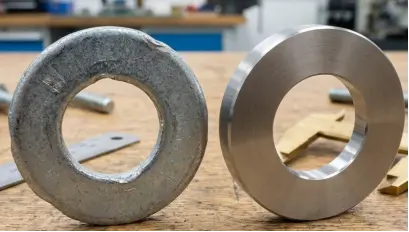
If your bolt, screw or shaft are not standard, it is necessary to customize flat washer with special inner diameter because the common washer chart just provides standard ID. The ID of the standard washers are usually 0.5mm to 1mm larger than the nominal bolt diameter for easy assembly. However, it is not good for precision system. The excess clearance can lead to the washer shift radially under vibration or loads. Tuofa CNC milling can customize the washer with smaller inner diameter can enhance the performance of the parts.
Customize Washer OD
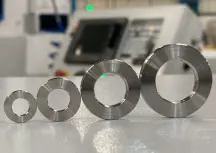
CNC machining can achieve high geometric tolerances and concentricity. Unlike stamping, it can reduce burrs on the washers, and achieve strict tolerance up to ±0.02. Some applications require a significantly enlarged OD to reduce the surface pressure to prevent cracking. Also, CNC machining can machine chamfer instead of sharp corner to make sure that the washer won't scratch surrounding components.
Customize Washer Thickness
In mechanical assemblies, gears, and bearings, a custom thickness is often required. Thicker washer can distribute the pressure or load to prevent the bolt from crushing into the joint. CNC machining is often used to customize thicker washer because it can easily machine hard materials like Inconel alloys and maraging steels.
Customize the Flat Washer Shape
In many cases shape of washer is also customised; for instance, in D-shaped washers in exhaust manifolds to prevent a standard round washer from sitting flat.
Conclusion
Understanding flat washer dimensions helps you make right decision for any application. For a proper fit of bolts and holding joints together. Right washer will distribute load effectively without uneven vibrations and material damage. When standard sizes cannot meet your design or performance requirements, custom-machined washers are there. They provide precise ID, OD, thickness, and material options for specialised projects.
FAQs
How to calculate Flat Washer Weight?
You can calculate flat washer weight by using this formula:
Weight = (π ÷ 4) × (Outside Diameter² − Inside Diameter²) × Thickness × Material Density
Where:
- Outside Diameter (OD) = Outer diameter washer
- Inside Diameter (ID) = Diameter of center hole
- Thickness (T) = Washer thickness
- Material Density (ρ) = Density of washer material (e.g., steel = 7.85 g/cm³)
Are SAE and USS Flat Washers Interchangeable?
No, both cannot be interchanged, as both are manufactured for specific requirements. SAE washers are thin and suitable for light load-bearing; USS are thicker and stronger for heavy loads.
What Difference Between ISO 7089 and ISO 7093?
ISO 7089 specifies normal-series flat washers with standard outside diameters. Whereas ISO 7093 covers large-series flat washers, which have significantly larger outside diameters to spread clamping loads over a wider area,
When Do I Need a Custom Flat Washer?
Custom washers are commonly used when you need a specific inside diameter, outside diameter, thickness, material, or shape
 Quality Testing for CNC Machined Parts