Tel/WeChat:
  Email:


 Home
HomeEffective B2B Marketplaces Examples: From General to Industry-Specific

 Published:May 22,2026
Effective B2B marketplaces can be divided into several categories, including general wholesale platforms, industrial sourcing platforms, manufacturing marketplaces, and industry-specific supplier networks. Well-known examples include Alibaba for large-scale global sourcing, Thomasnet for industrial supplier discovery, Amazon Business for enterprise purchasing, and specialized manufacturing platforms focused on CNC machining, rapid prototyping, or custom production.
Different marketplaces are suitable for different procurement needs. General B2B platforms are often used for broad product sourcing, while industry-specific platforms are more suitable for technical projects that require engineering communication, custom manufacturing, material selection, or low-volume production support.
This article compares different types of B2B marketplaces and explains which platforms are more effective for manufacturing and CNC-related sourcing.
General Global B2B Marketplaces for Industrial Sourcing
General B2B marketplaces are usually the first place people search when looking for manufacturers, industrial products, or custom components. These platforms aggregate thousands of suppliers across multiple industries and countries, making them useful for broad supplier discovery and price comparison.
However, not all general marketplaces are equally effective for manufacturing projects. Some work better for standard products, while others provide better support for custom machining services and engineering communication.
Alibaba
Alibaba remains one of the largest global B2B marketplaces for industrial sourcing. It supports suppliers from CNC machining, casting, injection molding, electronics, and packaging industries.
Key advantages include:
- Large supplier database
- Flexible MOQ options
- RFQ systems for custom projects
- Strong global visibility
- Integrated trade assurance systems
Alibaba works well when you need to compare many suppliers quickly. However, CNC machining projects often require deeper technical discussions, CAD reviews, tolerance analysis, and material recommendations that may not be efficiently handled through standard inquiry systems.
Global Sources
Global Sources focuses more on verified manufacturers and export-oriented factories. Compared with larger open marketplaces, supplier quality control is generally more structured.
It is commonly used for:
- Industrial equipment sourcing
- Electronics manufacturing
- Precision metal parts
- OEM manufacturing
The platform is useful when production reliability matters more than simply finding the lowest quotation.
Made-in-China
Made-in-China is widely used for industrial machinery, fabricated metal parts, CNC components, and custom manufacturing services.
One advantage is its strong industrial categorization, which helps narrow searches for:
- CNC machining suppliers
- Metal fabrication factories
- Surface treatment providers
- Large equipment manufacturers
For manufacturing-related sourcing, this platform often provides more factory-oriented information than general eCommerce-style marketplaces.
Vertical Manufacturing Marketplaces for CNC and Custom Parts
As manufacturing projects become more technical, general marketplaces may no longer provide enough engineering support. This is why industry-specific manufacturing platforms have become increasingly important.
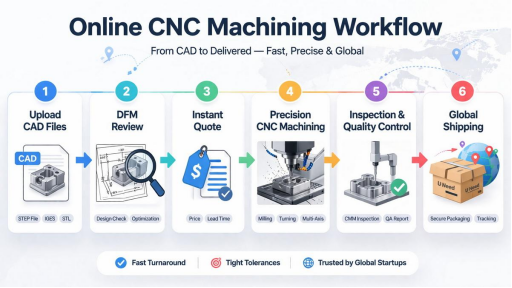
Unlike broad B2B directories, vertical manufacturing marketplaces are designed around engineering workflows, CAD file uploads, manufacturability analysis, and custom production management.
Xometry
Xometry is one of the most recognized digital manufacturing marketplaces for CNC machining and rapid prototyping.
Its strengths include:
- Instant quotation systems
- CAD-based price estimation
- Wide manufacturing network
- Material and finishing selections
- Prototype-to-production scalability
This platform is effective for projects that require fast quoting and rapid turnaround. It is especially useful for aluminum machining, prototype CNC parts, and low-volume production.
|
Xometry Strengths |
Recommendation |
|---|---|
|
Instant quotation system |
⭐⭐⭐⭐⭐ |
|
CAD-based price estimation |
⭐⭐⭐⭐⭐ |
|
Wide manufacturing network |
⭐⭐⭐⭐☆ |
|
Material & finishing selections |
⭐⭐⭐⭐☆ |
|
Prototype-to-production scalability |
⭐⭐⭐⭐☆ |
|
Fast turnaround projects |
⭐⭐⭐⭐⭐ |
Protolabs
Protolabs is known for high-speed manufacturing services, especially in rapid CNC machining and prototyping.
The platform works well for:
- Fast engineering validation
- Prototype iterations
- Short lead-time projects
- Functional prototype testing
Its automated manufacturability feedback system helps identify machining issues before production starts.
|
Protolabs Strengths |
Recommendation |
|---|---|
|
Fast engineering validation |
⭐⭐⭐⭐⭐ |
|
Prototype iterations |
⭐⭐⭐⭐⭐ |
|
Short lead-time projects |
⭐⭐⭐⭐⭐ |
|
Functional prototype testing |
⭐⭐⭐⭐☆ |
|
Automated manufacturability feedback |
⭐⭐⭐⭐⭐ |
Fictiv
Fictiv combines digital manufacturing services with supply chain management tools.
It performs well in projects involving:
- Precision machining
- Production tracking
- Inspection documentation
- Complex assembly projects
For projects requiring higher quality traceability, Fictiv provides stronger workflow visibility than many traditional marketplaces.
Hubs
Hubs connects users with manufacturing partners specializing in CNC machining, injection molding, and additive manufacturing.However, Hubs has been acquired by Protolabs.
The platform is particularly useful for:
- Engineering prototypes
- Functional test parts
- Multi-process manufacturing
- Surface finishing coordination
One major advantage is centralized project management, which simplifies communication during multi-step production.Below is the comparison between these platforms.
|
Platform |
Price Level |
Cost Visualization |
|---|---|---|
|
Xometry |
Medium to High |
⭐⭐⭐⭐☆ |
|
Hubs |
Medium |
⭐⭐⭐☆☆ |
|
Fictiv |
High |
⭐⭐⭐⭐⭐ |
|
Protolabs |
Very High |
⭐⭐⭐⭐⭐ |
|
Rapid Axis |
Medium to High |
⭐⭐⭐⭐☆ |
These platforms reduce communication gaps by standardizing manufacturing processes and quotation systems.
When Direct Manufacturing Cooperation Becomes More Efficient
Although marketplaces are useful for supplier discovery, many manufacturing projects eventually require more direct communication.
This usually happens when projects involve:
- Tight machining tolerances
- Complex assemblies
- Continuous production orders
- Confidential product development
- Custom material selection
- Long-term production stability
In these cases, working directly with a professional CNC manufacturer can reduce communication layers and improve technical efficiency.
Why Direct CNC Manufacturer Matters
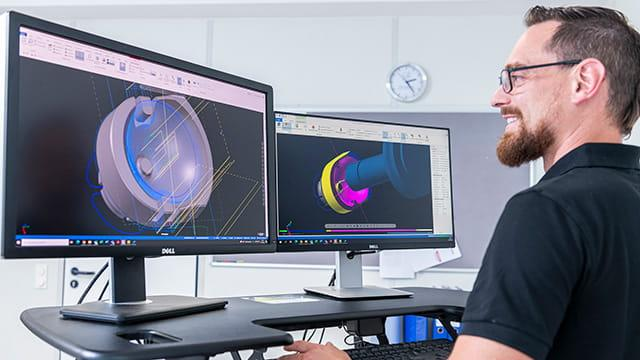
Working directly with a CNC manufacturer often improves machining efficiency because communication becomes faster, clearer, and more technically accurate. Instead of relying only on marketplace inquiry systems, you can discuss drawings, tolerances, materials, and machining details directly with engineers and production teams.
Faster Engineering Feedback
Direct CNC manufacturers can review CAD files and machining features immediately after receiving your drawings. If there are issues such as:
- Thin walls that are difficult to machine
- Tight tolerances that increase machining complexity
- Deep cavities requiring special tooling
- Materials unsuitable for certain processes
The engineering team can provide suggestions before production starts. This reduces redesign cycles and helps avoid unnecessary production delays.
More Stable Production Consistency
When you repeatedly work with the same CNC supplier, the manufacturer gradually becomes familiar with your:
- Dimensional standards
- Surface finish requirements
- Inspection expectations
- Packaging preferences
- Assembly compatibility requirements
This accumulated production knowledge helps maintain more consistent quality across multiple orders and reduces batch-to-batch variation.
Easier Design Modifications
During prototype development and low-volume production, design updates are common. Direct manufacturers can often respond to modifications more efficiently because they control the machining workflow internally.
For example, they can quickly adjust:
- CNC programming
- Fixture design
- Tool paths
- Machining sequences
- Inspection procedures
This flexibility is especially important for rapid prototyping and engineering validation projects.
Better Process Optimization
Direct communication also allows manufacturers to recommend improvements that increase manufacturability and production efficiency.
These recommendations may include:
- Alternative machining strategies
- Better material selections
- Simplified geometries
- More suitable surface treatments
- Cost-efficient tolerance adjustments
In many cases, these suggestions help reduce machining time and production costs without affecting part performance.
More Flexible Scheduling
Marketplace platforms often follow standardized production workflows, while direct manufacturers may provide more flexible scheduling options for:
- Urgent prototypes
- Small-batch production
- Partial shipments
- Engineering samples
- Ongoing production adjustments
This flexibility becomes valuable when project timelines change frequently or when fast iteration is necessary.
For custom CNC machining projects, effective engineering communication is often more important than simply comparing quotations because production success depends heavily on technical understanding, machining experience, and long-term process stability.
Professional CNC Manufacturers Like Tuofa
Tuofa CNC Machiningfocuses on custom CNC machining services including:
- CNC milling
- CNC turning
- Aluminum machining
- Stainless steel machining
- Prototype production
- Small-batch manufacturing
Compared with large marketplaces, direct manufacturers can sometimes provide more detailed engineering discussions, especially for custom parts requiring tolerance control, surface finishing coordination, and machining optimization. This approach is often more suitable when projects require long-term production stability instead of one-time sourcing.
How to Choose the Right B2B Marketplace for Your Project
Choosing an effective B2B marketplace depends heavily on project type, production volume, technical complexity, and communication requirements.
For General Supplier Discovery
General marketplaces are useful when:
- Exploring supplier options
- Comparing manufacturing regions
- Requesting multiple quotations
- Sourcing standard industrial products
For Engineering and Prototype Projects
Manufacturing-focused platforms work better for:
- CNC prototypes
- Product development
- Engineering validation
- Rapid iterations
For Long-Term Production
Direct manufacturer collaboration is often more efficient when:
- Production repeats continuously
- Technical communication is complex
- Quality consistency is critical
- Process optimization matters
The most effective sourcing strategy is not always using the largest platform. In manufacturing industries, effectiveness usually depends on engineering communication quality, manufacturing transparency, and production reliability.
Conclusion
Effective B2B marketplaces range from large global sourcing platforms to highly specialized CNC manufacturing networks. General marketplaces help compare suppliers broadly, while vertical manufacturing platforms provide stronger engineering support and production coordination. For CNC machining projects involving precision tolerances, rapid prototyping, or long-term production, direct collaboration with professional manufacturers such as Tuofa can sometimes provide more efficient technical communication and production stability than marketplace-based sourcing alone.
 Advantages of Thread Milling over Tapping for Aluminum Parts