Tel/WeChat:
  Email:


 Home
HomeHow to Get Waterproofing Products? From Design to Machining

 Published:Aug 22,2026
Numerous components around us are exposed to the outside environment. Some components are only prone to damage by water or dirt ingress. Others have a far more vulnerable situation. As examples, under-sea components need to work in standing salty water. Some other industries like oil and gas might need more stringent protection. Components manufactured with waterproofing ratings incorporate features that can accommodate sealings while blocking all leakage pathways. Let's learn more about this topic here.
What Are Waterproof Products in CNC Machining?
In CNC machining, these are components that have machined glands or seats to accommodate waterproofing products. They are used in a wide variety of applications, such as enclosures, connector housings, valve bodies, sensor covers, battery cases, and hydraulic equipment. Waterproofing is provided by full assembly, not just the machined body.
Waterproof Products vs Waterproof Sealant Products
The two common solutions for protecting against water ingress, i.e., waterproofing products and waterproof sealants, are often confused. Waterproofing products include O-rings and gaskets. They are installed on mating surfaces or inside glands. They may require CNC-machined features as seats. On the other hand, waterproofing sealants are gel-like chemical compounds applied between parts. Common examples include silicone and polyurethane sealants.
Common IP Ratings for Waterproof Products
Ingress Protection is defined by the “International Electrotechnical Commission”. On the IP code, the first digit identifies protection against solid elements. The second digit identifies protection against liquids. The below picture explains the nomenclature of the most common IP rating i.e, IP65.
The following table shows some IP ratings.
|
IP rating |
Solid- object protection |
Water protection |
Examples |
|---|---|---|---|
|
IP54 |
Low-level dust |
Splashing Water |
Control panels inside buildings |
|
IP65 |
Dust proof |
Water jets |
Flood lights |
|
IP66 |
Dust- resistant |
Heavy water jets |
Washdown equipment |
|
IP67 |
Dust resistant |
Immersion in water up to 1 m for 30 minutes |
Outdoor electronics and EV components |
|
IP68 |
Dust- proof |
Continuous immersion in water under conditions agreed by the manufacturer and customer |
Submerged sensors and marine equipment |
|
IP69 |
Dust-resistant |
High-pressure, high-temperature water jets |
intensive washdown systems |
Key CNC-Machined Features for Waterproof Products
Each potential leak acts as a hurdle in waterproof product design. Liquids could leak in via cover joints, fastener holes, connector openings, threads, or a porous seal. Drawings should specify sealing geometry, compression, surface finish, flatness, tolerances and assembly load.
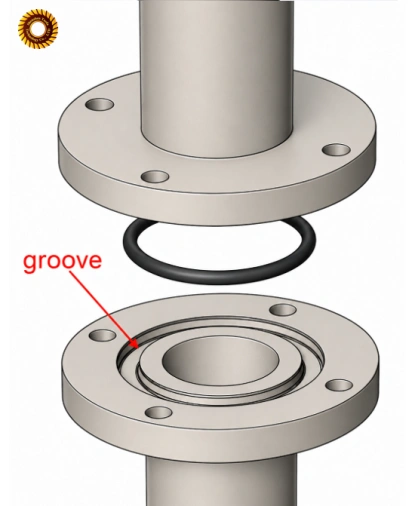
O-Ring Groove Design
Importantly, many waterproof products are designed and machined with O-ring groove for preventing water. The most utilitarian sealing features on reusable CNC-machined assemblies are O-ring grooves. They can be applied as a flat face subjected to axial compression or around a cylindrical feature subjected to radial compression.
How O-Ring Grooves Achieve Waterproof Sealing
To achieve good waterproof sealing performance, the O-rings groove of the waterproof product is typically machined through CNC machining. A high-precision O-ring groove allow the tight mating of the O-ring.
O-rings are installed between mating surfaces. They are squeezed due to compressive stress generated by tightening the fitting components. As O-rings fit tightly, they seal off fluid leakage paths. Depending on the operating conditions, appropriate materials are selected. Factors like O-ring size, compound, pressure, temperature, and service motion are optimized.
CNC Machining Requirements for O-Ring Grooves
CNC machining parameter need a good quality control. These include groove width, depth, corner radius, concentricity, and surface finish. If machining is not done properly, O-rings can degrade. Microscopic water passages can be created at tool marks that traverse the sealing path. Parker's O-ring handbook gives guidance for groove design. These are helpful guides, but actual values should be based on the information from the seal supplier that you have chosen.
Gasket Sealing Surface
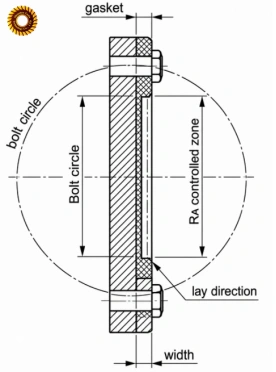
Gasket sealing surface is also one of the common CNC-machined features for waterproofing. Flat gaskets can be used for large covers and irregular profiles, as well as enclosures It can be made of silicone, EPDM, neoprene, PTFE, or cork composite. To achieve waterproof performance with a gasket, the mating parts must incorporate properly designed sealing surfaces and gasket-retention features.
How Gasket Surfaces Prevent Water?
When tightened, a gasket compresses between the two mating faces. This compression fills in small surface irregularities. It forms a continuous compression belt around the area to be protected. The spacing of bolts is important as the joint should apply even pressure.
CNC Machining Sealing Surfaces for Gaskets
CNC machining can create sealing lands, gasket grooves, locating steps, and fastener holes on mating parts with high precision. These features position the gasket and control its compression, helping form a continuous seal around the joint.
Threaded Sealing Structures
Why Threaded Features Matter?
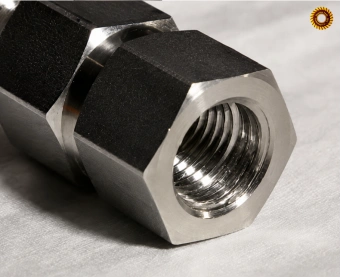
A standard thread typically provides a helical clearance for water to flow. It securely attaches components, but it is not necessarily liquid-tight. On the other hand, tapered pipe threads provide an interference fit between the matching threads. They are designed to be pressure-tight. A proper thread sealant or sealing element may still need to be used.
CNC Machining for Threads
Machinists control pitch diameter, depth, taper, lead, entry chamfer, and position. Tapping is done on holes to make internal threads. Fit check is performed with thread gauges. Leak test should be included in the inspection plan.
Other Designs for Waterproof Performance
A stepped joint makes it more difficult for water to get into the enclosure interior. A raised lip prevents direct spraying of the gasket and aids in cover location. A labyrinth introduces several curves which slow water ingress. These can help protect against damage but do not necessarily supersede any seal that is needed for immersion protection. Drain channels, drip edge, concealed vents, blind fastener holes, and isolated fasteners can also limit potential leakage.
Common Materials for CNC Machined Waterproof Products
Material characteristics such as corrosion resistance, stiffness, weight, heat transfer, chemical compatibility, and machining cost are considered in the selection process. The key concern in this selection is to complement the waterproofing characteristics.
Aluminum Alloys
Aluminum 6061 is commonly used in waterproofing products due to its low weight, high specific strength, good machinability, and thermal conductivity. It is ideal for control boxes, communication equipment, battery housing, and sensor bodies outdoors. Aluminum resists corrosion. If it is meant to be used in electronics, then insulation or earthing may be required. Aluminum can be anodized or painted to create different appearances.
Stainless Steel
Stainless steel is suitable for environments containing moisture. 304 stainless steel, being a widely available grade, is the most commonly used. 316 grade stainless steel is mainly used in marine applications such as offshore platforms or ships.
Brass for Waterproof Parts
Brasses are ideal for CNC machined waterproofing products. They offer high machinability that gives pinpoint precision. Brasses usually have a smooth surface, which complements waterproofing products' sealings.
Plastic
Common plastic materials for waterproofing products include POM, PEEK, nylon, polycarbonate, and PTFE. Their properties vary in terms of chemical resistance, insulation, friction, and temperature. Plastic waterproofing products can be used for prototypes, low-volume enclosures, insulating parts, and in chemical handling equipment. However, tolerances for swelling due to moisture pick-up should be specified.
Applications of Machined Waterproof Parts
Waterproofing products are used to protect electrical systems, control liquids, resist washdown, etc. The waterproof enclosure design depends on the application. All ports, fasteners, cover joints, vents, cables, and service openings should be identified during design review.
Hydraulic and Fluid Control Systems
Hydraulic and fluid control systems need high precision machining to accommodate waterproofing product features. Some examples include bores, O- ring glands, face seals, and pipe threads. These are found in valve bodies, manifolds, pump housings, and threaded adapters.
Marine Equipment
Marine equipment is often subjected to seawater, high moisture, and chlorides. Ordinary materials tend to corrode very quickly. So high-quality anodized aluminum, 316 grade stainless steels, or plastics are used for marine sensors, navigation housings, and underwater instruments. Protective measures like raised lips, O-rings, corrosion-resistant fasteners, and isolation of dissimilar metals are taken.
Electric Vehicle Systems
EVs need waterproofing products for battery monitoring units, inverter housing, charging components, sensor enclosures, and so on. Features like gasketed covers, sealed connectors, blinds, and drainage passages help to cope with liquid ingress. So, detrimental conditions such as vibration, thermal cycling, road splash, and pressure washing are prevented.
Industrial Machinery Equipment
Industrial machinery often handles water, chemicals, food, oil, gas, etc. Numerous machines need protection against harsh outdoor environments. So CNC machining incorporates features like gasket faces, O-ring grooves, cable glands, etc. in enclosures.
Is Surface Treatment Important for Waterproof Products?
Yes, the CNC machined waterproof products enhance their durability and functionality through surface treatment. It enhances their ability to repel corrosion and prolong lifespan. But surface treatments won't make a poorly designed component waterproof! Good seal geometry, good machining, suitable gaskets, and proper assembly are all crucial to reliability.
Common Surface Treatments for Waterproof Products
Anodizing
Anodizing forms a protective layer of aluminum oxide on aluminum waterproofing products. It increases hardness, lowers surface friction, and enhances corrosion resistance. It adds both functionality and aesthetics. Quite a few types of colors and hues beautify the waterproofing products like electronic enclosures, EV enclosures, sensor bodies, control boxes, etc. But anodizing should be specified in the early design stage. Machinist leave some extra space for the added anodizing layer thickness.
Passivation
Stainless steel waterproofing products are usually passivated after machining. Free iron left on the surface by cutting tools can lead to staining if it is not passivated. It also strengthens the protective passive layer of stainless steel. Before passivation, all the parts must be completely cleaned. Any residual oil, chips, or chemicals will affect the quality of the passivation.
Nickel Plating
Nickel plating coats waterproofing products made up of brasses or steels with a lustrous silver-gray color. It enhances appearance, hardness, wear resistance, and corrosion resistance. Electroless nickel plating may be chosen for complex CNC parts. The thickness desired for the plating must be given early on. An uncontrolled plating layer may change the fit of the thread, the diameter of the hole, or the sealing dimensions.
The following table shows the common treatment substrates, benefits, and main considerations.
|
Treatment |
Substrate |
Benefit |
Main applications |
|---|---|---|---|
|
Anodizing |
Aluminum |
Corrosion protection, wear resistance and appearance |
EV housings, electronic enclosures |
|
Passivation |
Stainless steel |
It not only cleans and repels corrosion |
Marine parts, valve bodies, washdown equipment |
|
Nickel Plating |
Brass, steel |
Corrosion resistance, hardness and appearance |
connectors, fittings, valves and sensor components.
|
How to Inspect CNC Machined Parts for Waterproof Performance
Inspection of CNC machined parts verifies geometry, dimensions, tolerances, and surface quality. It validates the specifications of waterproofing products. A dimensional report is not a substitute for an ingress test. So, in addition to a dimensional report, an ingress test should be performed.
Check Thread Fit and Depth
It is tested by using calibrated thread plug or ring gauges. Thread depth can be verified with a depth gauge, micrometer, or CMM.
Check the Surface Quality
Visual inspection is the first test in this regard. Thoroughly review sealing areas under good light and magnification. Burrs, dents, and scratches can damage a seal. A profilometer is used to measure surface roughness of waterproofing products. Flatness can be evaluated using a CMM or surface plate.
Check Hole Diameter and Position
Holes are checked with pin gauges, bore gauges, and micrometer screw gauges. Accurate hole position and diameter give accuracy in fastener alignment, cover loading, connector fit, and gasket compression. However, test conditions should be specified. These include pressure, time, temperature, immersion depth, and permissible limit for pass/ fail.
Advantages of Custom CNC Machined Waterproof Products
Custom machining allows to have full control over sealing geometry, interfaces, material, and inspection requirements. Leak-tight dimensions and interference fits can be created. The flexibility of design and high precision are the key takeaways of CNC manufacturing.
Flexible Waterproof Design
CNC machining gives a lot of flexibility in design. The dimensions and locations of features can be easily modified in the CAD. A high level of customization is possible in the manufacturing of waterproofing products. Only a single housing can be made to incorporate O-ring glands, connector holes, mounting bosses, drainage paths, and recessed covers.
Various Material Selection
The selection of materials is affected by the applications. In general, customers choose custom waterproof products because there is only standard materials for the target products in the market. However, CNC machining can be used to process a wide range of metals and engineering plastics with different mechanical properties. CNC machining supports High mix, low volume manufacturing project. Therefore, in one project, evaluating multiple materials is provided by Tuofa CNC machining service. In practice, the selection of materials can also be affected by the desired surface finishes.
Higher Precision
CNC machining enables precise control of critical sealing and assembly features, including sealing-face flatness, groove width and depth, thread geometry, mounting-hole diameter, and true position. By maintaining the required relationships among these features, CNC machining helps ensure consistent sealing, proper fit, and reliable assembly.
Prototype or Small Batch Production
There is no need to pay high-cost moulding tools when in use of CNC machining. Prototypes can be produced even in small batches because CNC machining is a computer numerical control machining. The machining program can be set one time and start machining automatically. At the early stage of product development, CNC rapid prototyping and small-volume production is the cost-effective choice.
How to Choose a CNC Manufacturer for Waterproof Products
A competent supplier should realize that waterproof performance is provided by the 'waterproof system'. At least when ordering, provide the manufacturer with your drawing, CAD file, desired IP rating, material, finish, seal information, quantity and inspection criteria.
Experience with Waterproof and Sealing Components
Seek expertise in O-ring groove work, gasket faces, valve bodies, enclosures, and threaded ports. Experience in manufacturing these features is a plus. Tuofa has provided custom CNC machining service for many years (20+), very experienced in complex and high precision part manufacturing.
Professional DFM Analysis Capability
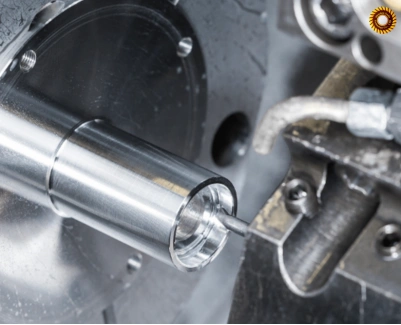
Suppliers equipped with tools and personnel who can carry out a DFM analysis can create waterproofing products professionally. They review parameters like: tool access, corner radius, wall thickness, and groove geometry. DFM advice typically does not involve the full product development. But rather it acts as an enhancement to an existing design. Tuofa has helped customers optimize drawings for many times to improve the manufacturability of parts and reduce the machining costs.
Stable Machining Capability
The correct supplier should maintain a consistent quality. The facility should have stable machining capability. Tuofa is equipped with many advanced machines such as 5-axis machining machine. The quality and lead time can be guaranteed. We have finished and deliver products on time over 20 years and we maintain a high level of customer satisfaction.
Conclusion
Water ingress is a matter of concern for various products in many industries. Designers are in pursuit of making their products safe from water ingress. Machinists take precautions to precisely create seats and glands for proper fitting of seals. Waterproofing products are governed by the IP rating system.
FAQ
Why do waterproof machined parts leak?
Common causes include:
- damaged O-rings
- poor surface finish
- warped gasket faces
- uneven loading of bolts
- loose connections
- improper thread sealing
- thermal distortion
What materials are best for CNC machined waterproof parts?
Typically used materials include aluminum, stainless steel, brass, POM, PEEK, and other engineering plastics.
Is aluminum good for waterproof enclosures?
Yes. Aluminium has a high machinability. It is inherently corrosion resistant. It's possible to create more surface protection with anodizing.
Can CNC machining achieve IP67 or IP68 waterproof performance?
Yes, CNC machining is a great way to create the required grooves, sealing face, threads and interfaces for an IP67 or IP68 enclosure.
 What Is Thread Depth? Design and CNC Machining Guidelines for Accurate Threads