Tel/WeChat:
 Email:



 Home
Ceramic Cutting Tools: Advantages & Impact on Machining Results

 Published:Nov 12,2026

Tool choice is a key to determine the machining speed, tool life, and surface finish. Ceramic cutting tools are common in difficult machining processes that might be influenced by temperature and stress. Knowledge of their varying types, applications, and limitations enables proper selection of a tool for reliable machining. This article will help you understand how ceramic cutting tools work and which grade should be selected.
What Are Ceramic Cutting Tools?
Ceramic cutting tools are typically used in CNC machining for removing materials from workpieces. They are made of sinered ceramic. They can achieve ultra-high cutting speed, while they are relatively brittle, making them easy to chip under impact.
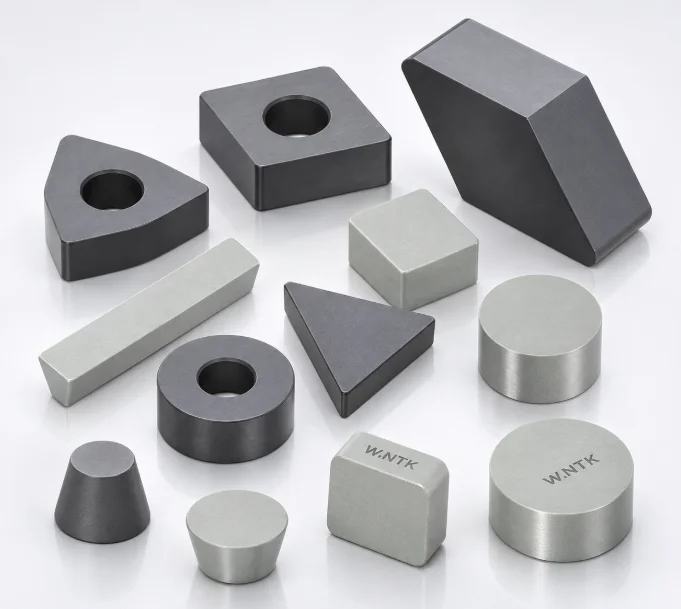
Ceramic cutting tools that first came into use in industry in the form of indexable inserts only after 1950 are produced by the process of powder metallurgy utilizing alumina powder in almost pure form. Therefore, they are highly resistant to corrosion, adhesion, and wear.
Types of Ceramic Cutting Tools
There are different varieties of ceramic tool materials which are usually categorized into two groups based on the major concentration of constituent elements, namely Alumina and Silicon Nitride. In this case, 95% of the ceramic tool materials used for cutting purposes are alumina, whereas 5% is silicon nitride.
Alumina-Based Ceramic Cutting Tools
Alumina Ceramic Cutting Tools are the most commonly used ceramic tools in the whole world. Its main component is aluminum dioxide. With increase in alumina, the performance of the ceramic cutting tools also increases. The alumina ceramic cutting tool is highly heat resistant in nature and can work in the oxidation environment even at the temperature up to 1950℃. Therefore, the best operating conditions for alumina ceramic cutting tools will be high speed machining of brittle and hard metals, such as chilled cast iron and hardened steel, copper alloys, graphite, engineering plastics and composite materials.
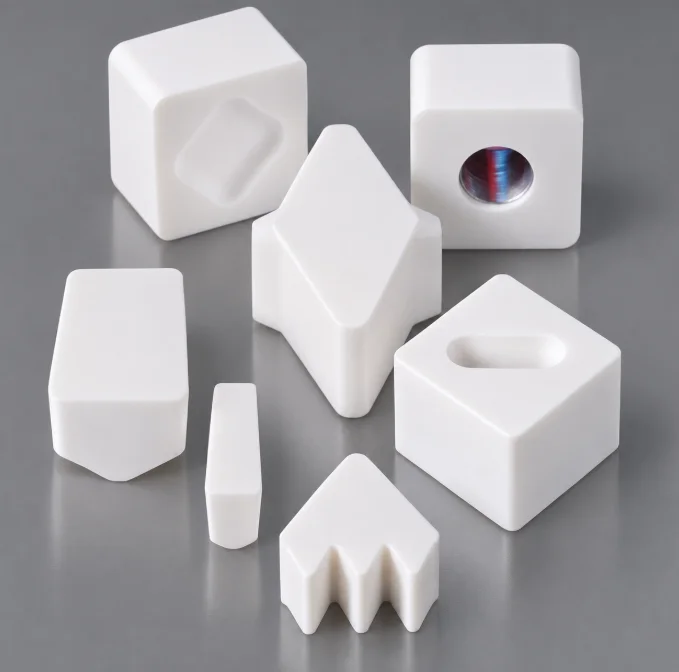
Silicon Nitride-based Ceramic Cutting Tools
Silicon Nitride-based Ceramic Cutting Tools has Si3N4 as its main component. Silicon nitride is a covalently boded structure consisting of SiN4 tetrahedrons. These tools have needle like structure shape and possess better properties such as pull-out effect, crack bridging, and crack deflection, which result in higher fracture toughness. They also exhibit excellent strength, specific strength, and specific modulus. Also, they can endure thermal shock and shock loading. Silicon nitrides also are used to mill cast iron, even with positive tool geometries.
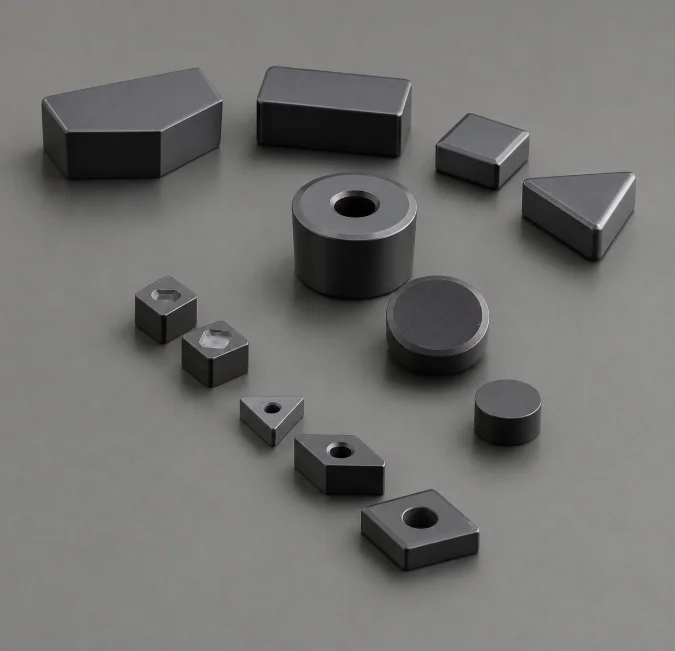
Pure Alumina Ceramic Cutting Tools
The Al2O3 composition of this type of ceramic cutter is more than 99%. By adding 0.1%-0.15% of glass oxide (MgO, TiO2, CrO3), the cutting tools of this category become very brittle and easily susceptible to chipping. Pure Al2O3 possesses low ceramic bending strength and low impact resistance, and micro collapse of its cutting edges. However, it has good performance at high temperatures, especially when used with low feed rate and semi-finishing operations on cast iron and steel materials.
Advantages of Pure Alumina
Advantages of pure alumina are as follows:
- It maintains its hardness even when cut at temperatures of 1000-1200°C, while carbide and HSS quickly soften.
- Pure Alumina is chemically stable and does not react easily with iron.
- Hardness ranges between 92-94 HRA providing long tool life with abrasive materials.
How Does It Affect the Machining?
The use of pure alumina proves ideal in continuous machining, specifically in finishing of cast iron and hard steels. Pure alumina ensures surface finish is retained and that its operation can continue for long without suffering from flank wear. However, issues may arise during sudden changes of cutting parameters. These include cracks that form at the tool's edge due to such conditions as interrupted cuts and varying cutting depth. Pure alumina, therefore, becomes unsuitable for milling and heavy roughing. In other words, pure alumina ceramic cutting tools are suitable for stable and continuous precision machining.
Mixed Alumina Ceramic Cutting Tools
When Al2O3 is used as a second-phase material such as carbide or nitride (TiC, WC, TaC, NbC, Cr3C2), the strength and toughness of the ceramic may be enhanced. These are known as “black ceramics.” In order to reduce the grain size and increase the density, such ceramic cutting tools are produced through hot pressing method. Compared with pure alumina, mixed alumina is added with hard phases to improve wear resistance.
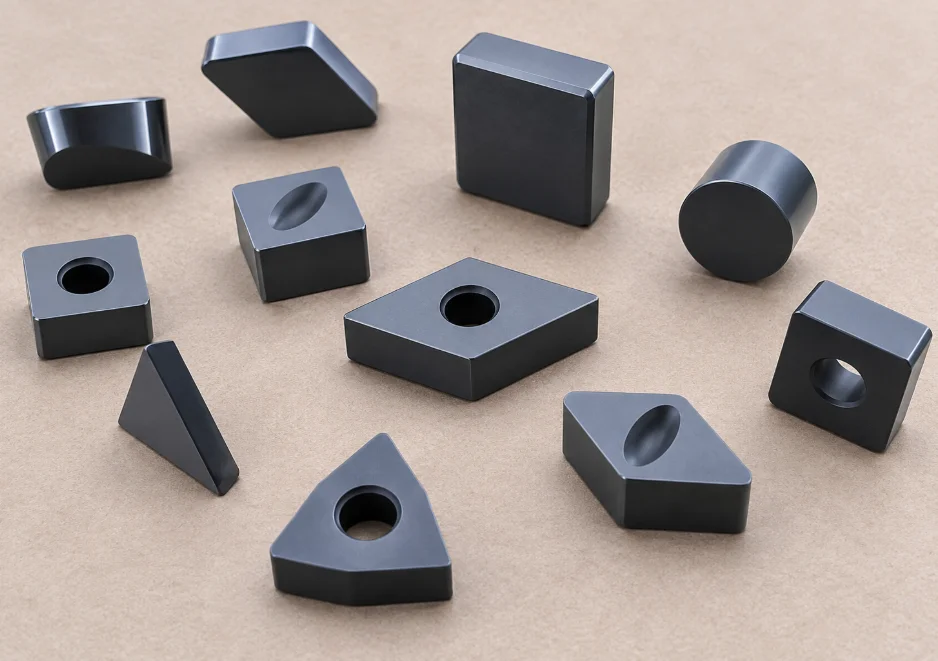
Advantages of Mixed Alumina
The use of titanium carbide or titanium nitride as additional alloying elements to mixed alumina provides the following advantages:
- Increased toughness and hardness
- Resistant to edge cracking & interrupted cuts: Can withstand light interrupted cuts that will break pure alumina.
- Reliable performance: Fewer edge failures provide reliable performance of the tool.
Impact on Machining
Mixed alumina can be considered an excellent material when high speed cutting and uniform finish of the machined surface are needed. It works very well on finishing hardened steel and cast iron and retains the cutting edge for longer. When compared to pure alumina, it shows better resistance to changes in temperature during the cutting process. But mixed alumina should not be used for roughing operations because high feed and difficult cutting conditions could harm the cutting edge.
Whisker-Reinforced Alumina Cutting Tools
Al2O3-based ceramic reinforced by SiC whiskers is the strongest and most thermally shock-resistant. SiC whiskers employed for reinforcement are discontinuous rod-like fibers having diameters from 0.1 to 1 mm and lengths from 5 to 100 mm. The addition of SiC whiskers to ceramic composites leads to an enhancement in mechanical properties, toughness, thermal conductivity, thermal shock resistance, and resistance to creep at elevated temperatures.
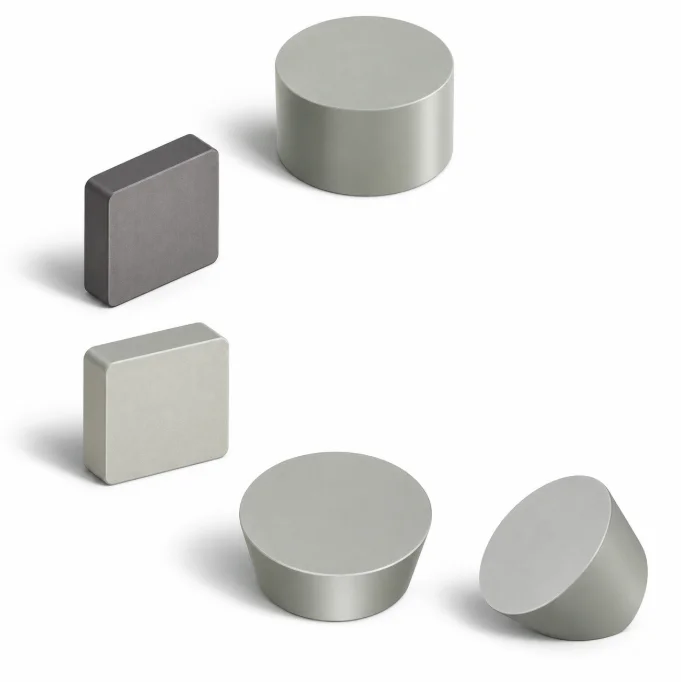
Advantages of Whisker-Reinforced Ceramic Cutting Tools
Benefits of whisker reinforcement include several enhanced properties of alumina ceramics, which make them more resistant to harsh machining processes.
- High fracture toughness normally ranging from 6-8 MPa.m½ depending on the grade
- Higher strength and can withstand a higher cutting load than any other grade of alumina.
- Good resistance to thermal shock and wear.
- High-temperature stability of alumina and silicon carbide enables the cutting tool to preserve its beneficial mechanical properties when exposed to difficult cutting conditions.
- Increased thermal conductivity due to the whisker reinforcement
- The cutting tool is ideally suited for high-speed machining of aerospace alloys such as Inconel 718.
What Are the Impacts on Machining?
Alumina reinforced with whiskers proves helpful in case of machining of challenging metals like Inconel 718. With their help, machining can be done at an increased speed as well as cutting loads. It is suitable for semi-precision machining. The overall time spent on machining is decreased. Moreover, it decreases the risks of chip formation and abrupt tool wear during hard machining processes. Thus, this type of cutting material proves helpful in machining of aerospace industry where the use of nickel-based alloys is common. Nevertheless, rigid machine construction is also necessary here.
Zirconia-Toughened Alumina (ZTA) Cutting Tools
In zirconia toughened alumina, there are particles of zirconium oxide distributed in aluminum oxide. In case a crack starts to propagate through the matrix, zirconia particles transform from tetragonal to monoclinic. This leads to stress accumulation at the tip of the crack. This process is called transformation toughening, which slows down the propagation of cracks and increases their fracture toughness. ZTA tools have excellent resistance to cracking and edge chipping.
These tools are made hard for phase transformation, chemically inert and wear and heat resistant. These tools are suitable for continuous machining (finishing and semi-finishing) at low feed rate. Some of the typical operations that these tools are used for including turning and machining carbon steel, alloy steel and tool steel.
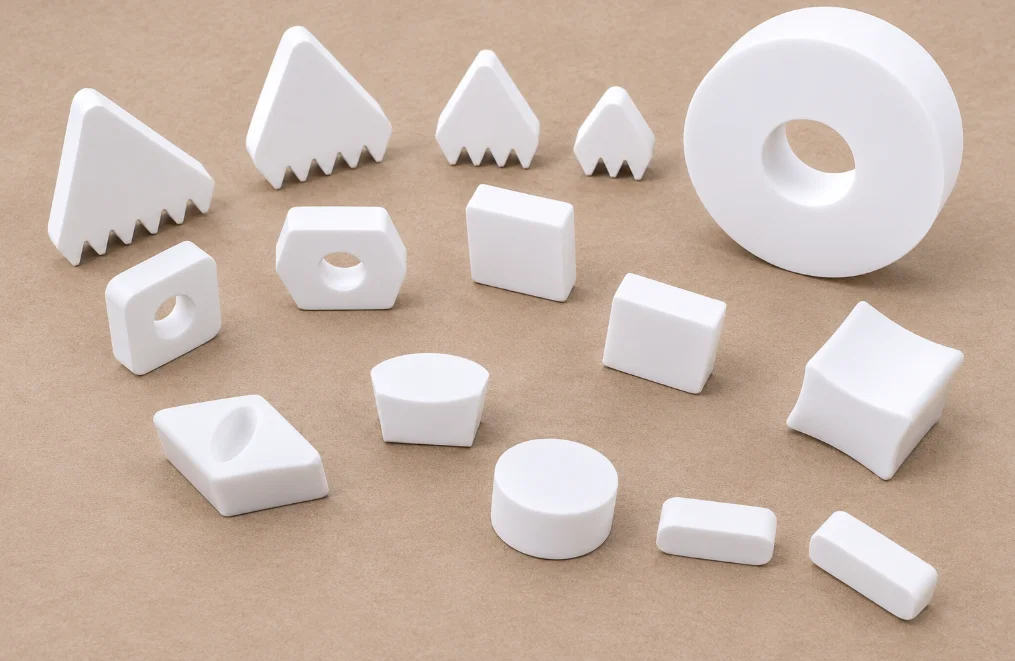
Advantages of Using ZTA Cutting Tools
ZTA has a good balance of toughness and hardness. Here are few characteristics of zirconia toughened alumina:
- Toughness of 4.5-6 MPa·m½, depending on the type.
- Hardness of 1,700-1,900 HV.
- Better crack and chipping resistance than in case of pure alumina.
- Higher strength and chemically stable
- Resistance to Thermal Shock
- Comparatively cheaper than whisker reinforced type
How Does It Influence Machining?
Zirconia toughened alumina assists in minimizing the risk of edge chipping and early failure of the tool while machining. It is capable of enduring any change in cutting force and temperature; therefore, it makes the process of cutting more dependable than when using pure alumina. Nevertheless, it is not ideal for machining operations that involve interruptions as they may lead to fracture of the tool.
Silicon Nitride Ceramic Cutting Tools
Advantages of Silicon Nitride Ceramic Cutting Tools
Advantages of silicon nitride include:
- High toughness: Usually its toughness stands at about 6-7 MPa·m½ depending on the grade.
- High thermal shock resistance
- Sharp cutting edge: This material can deal with heavy loads and some interrupted cutting operations.
- Strength at high temperatures: It maintains its strength and hardness at high temperatures.
- Heavy and rough cutting: Due to toughness, it can withstand large depths of cut and feed.
- High machining speeds: Silicon nitride permits to cut cast iron at very high speeds.
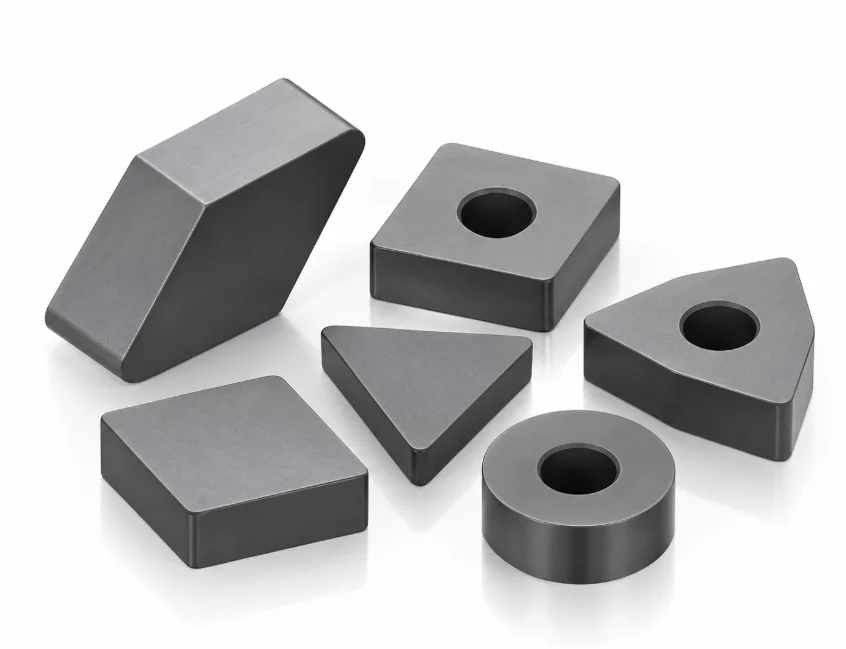
Machining Influence of Silicon Nitride Ceramic Cutting Tools
Silicon nitride performs very effectively in heavy-duty machining and interrupted cutting of cast iron. However, this tool is not preferred for machining steel. It is possible to use high feed and deep cutting, thus making it possible to machine more material in a shorter period of time. The other advantage of this type of tooling is that it works effectively under variable cutting depths in operations. It is very suitable for wet machining because it is less prone to chipping under coolant shock.
The fact is that the silicon nitride is less prone to formation of thermal cracks than standard alumina. But it will not work effectively in finish machining because of poor flank wear resistance.
SiAlON Ceramic Cutting Tools
SiAlON ceramic cutting tools are produced through the alteration of silicon nitride with aluminum and oxygen in order to make them perform better in machining process. These materials differ from ordinary ceramic grades in that they are meant to perform well in tough machining conditions, particularly while machining heat resistant alloys like superalloys based on nickel.
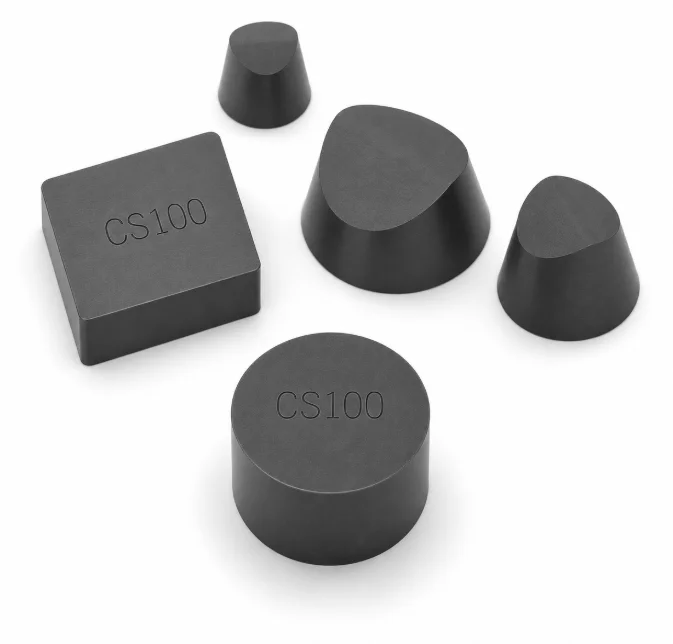
Advantages of SiAlON Ceramic Cutting Tools
Advantages of SiAlON-based ceramic machining tools for high-speed applications include:
- High toughness level of 5-7 MPa·m½, dependent on the grade.
- Hardness even at high cutting temperatures.
- High thermal resistance and oxidation resistance.
- Wear resistance leading to higher service life.
- Increased tolerance to coolants compared with many alumina grades.
How Does It Affect Machining Results?
SiAlON finds special application in machining Inconel alloys. It ensures that machining takes place at high speed without compromising on the stability of the cutting edge in adverse conditions. Its cutting speed is much higher than that of cemented carbide. Some alpha-beta SiAlON materials even outperform conventional alumina materials in machining these alloys. Nevertheless, SiAlON may experience faster wear in finishing operations because its hardness is lower than alumina, making it not suitable for machining high-hardness hardened steel.
Inconel alloys are commonly used in aerospace, SiAION cutting tool is always selected to machine nickel-based alloys rather than cemented carbide because the latter delivers low cutting speeds and short service life.
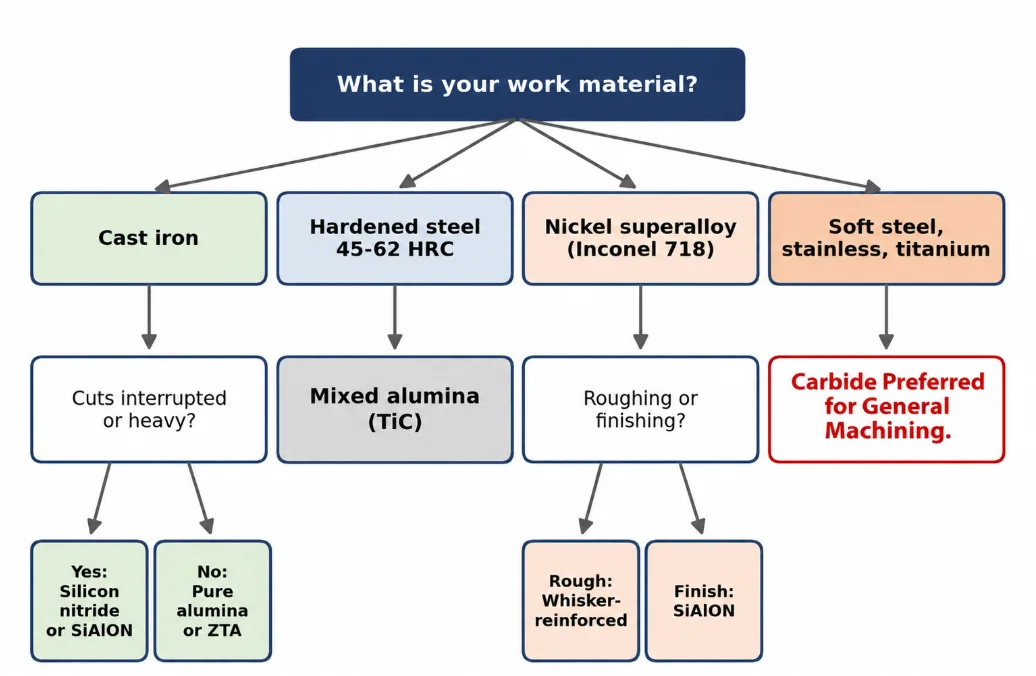
Selecting Ceramic Cutting Tools: Trade-offs for Target Machining Outcomes
The selection of a ceramic cutting tool cannot be based only on the hardness or thermal stability of the tool alone. Factors that need to be considered include the material to be machined and the process to be performed, as each grade will have unique advantages and disadvantages.
Matching Ceramic Grade
Choosing the ceramic grade will depend on the material of the workpiece and cutting process.
- Silicon nitride would be the suitable ceramic grade when machining cast iron.
- Amixture of alumina is appropriate when machining hardened steel.
- Nickle alloys can be machined using whisker reinforced ceramics and SiAlON.
|
Work material |
Best-fit grade |
Why it works |
Coolant |
|---|---|---|---|
|
Gray cast iron |
Silicon nitride for roughing and interrupted cuts; pure alumina for finishing |
Withstands high cutting speeds and thermal shock |
Dry |
|
Ductile cast iron |
Silicon nitride, SiAlON |
Extra toughness copes with the tougher, stringier chip |
Dry |
|
Hardened steel |
Mixed alumina (Al₂O₃ + TiC) |
Stays hard at cutting temperature and reacts little with iron |
Dry |
|
Nickel superalloys (Inconel, Waspaloy) |
Whisker-reinforced for turning; SiAlON for roughing and milling |
Resists high heat and depth-of-cut notching |
Often used with these grades; check the grade sheet |
|
Soft steel, stainless, titanium |
Coated carbide |
Ceramics offer no real gain and wear or react quickly |
Follow the carbide data provided for the selected grade |
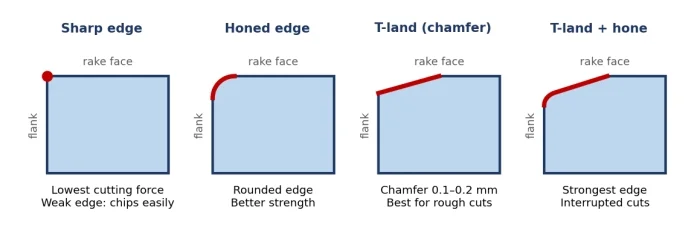
How Does Insert Geometry Affect Machining Results?
The choice of insert shape and edge geometry would have an impact on the cutting forces, the tool life and the surface finish.
- The round insert would help in distribution of the cutting forces while reducing the generation of chips.
- The acute angle would help in cutting using low forces although it is more susceptible to failure.
- The honed edge would help in strengthening the edge while the negative rake would help support the edge.
Ceramic vs Carbide vs CBN: Machining Impact Comparison
Ceramic cutting tools are one of the tools that lie in between the category of carbide cutting tools and CBN cutting tools. The ceramic tool can work faster than the carbide tool while machining cast iron and heat-resistant alloys. In addition to that, the ceramic cutting tool is relatively cheaper than the CBN cutting tool. But the carbide tool is tougher and is applicable to a variety of operations. The CBN tool is preferred for machining hard steels.
|
Factors |
Ceramic |
Carbide |
CBN |
|---|---|---|---|
|
Hardness |
1,500-2,200 HV |
1,300-1,800 HV |
3,000-4,500 HV |
|
Toughness |
Low to medium |
High |
Low to medium |
|
Speed on cast iron |
Very high, up to 10× carbide data |
Moderate |
Very high |
|
Cost per edge |
About 2-3× carbide |
Baseline |
Highest |
|
Best use |
Cast iron, superalloys, hard steel |
General work, interrupted cuts |
Hardened steel, sintered iron |
Conclusion
Ceramic cutting tools have the potential to enhance the machining rate, tool life, and productivity of machining processes, their effectiveness is dependent on choosing the most appropriate material grade for each specific application.
The alumina grades are ideal for use in stable machining operations, whereas silicon nitride and SiAlON materials are recommended for high-speed machining of cast iron and selective alloy materials. For tough materials like nickel-based superalloys, reinforced ceramics would be better choices. Nonetheless, other elements such as interrupted cuts, machine stiffness, insert design, and cutting parameters should also be considered when evaluating the performance of a ceramic grade. At Tuofa, we can assist you in evaluating your machining needs and choosing suitable materials and designs of cutting tools.
FAQ
Can ceramic cutting tools be used for interrupted cuts?
Yes, for cases of interruptions while cutting, go for tough ceramics such as silicon nitride and SiAlON. Go for rounded inserts with a honed edge and feed lightly. Ensure the rigidity of the tool holder. Do not go for alumina because of its greater tendency to chip. For heavy interruptions, carbide and CBN inserts are ideal.
What causes chipping on ceramic cutting inserts?
Chipping happens mainly due to sudden shock, high cutting forces, vibration and insufficient clamping force. Edge preparation, rigidity and grade should be proper.
Are ceramic cutting tools more expensive than carbide inserts?
Yes, indeed, ceramic inserts are twice or three times more expensive than regular carbide inserts owing to the composition, process and sintering of the inserts. The cost of a whole part should be considered rather than the cost of each insert. A costly ceramic insert might actually have more value for money.
 Tier 1 vs Tier 2 Supplier Engineering Authority