Tel/WeChat:
  Email:


 Home
HomeTool Manufacturing: Materials, Techniques & Suppliers

 Published:Apr 30,2026
Tools are everywhere! From small DIY kits to large industrial setups, tools are the basis for setting up useful work. In installations, construction, and manufacturing, tools play a vital role. Just as important tools are, the tool manufacturing facilities are even more important. Reliable tool manufacturers produce tools that cater to the demands of various industries. There is a big list of products in the tool category that they manufacture. There are a lot of machines and materials involved in tool manufacturing. Let's learn about the basics of tool manufacturing in this article.
How to Manufacture Tools: Step-by-Step Guide
Tool manufacturing begins with a good design. Functional requirements are considered in the design process. Then comes ‘material selection', which plays an important role in the durability of tools. A relevant manufacturing method based on the desired characteristics is employed for tool manufacturing. Finishing operations are applied to tools to impart aesthetics and other attributes like hardness, corrosion resistance, and wear resistance. Finally, inspection and testing assure the quality of tools.
Design the Tools
Designing tools is the most critical step in tool manufacturing. Only a well-thought-out design serves the purpose in the long run. Engineers take into account the load conditions, materials, ergonomics, and manufacturability while designing tools. Standard tool manufacturing follows a standard approach. Custom tool production needs more consideration in design. The engineers specify aspects like geometry, dimensions, tolerances, and materials. In precision tool manufacturing, usually a CAD model encapsulates all design features. Automated machines like CNC or 3D printers then use these CAD files to manufacture tools.
Select Suitable Materials for Tools
Material selection is another important step in tool manufacturing. Materials not only define the functionality of tools, but they also influence various other factors. Hardness, toughness, corrosion resistance, and wear resistance are intrinsic properties of materials. They determine the durability and functionality of tools in specific operating conditions. As a result, materials such as tool steels, high-speed steel, carbides, and ceramics have their own suitability for specific applications.
Choose Right Tool Manufacturing Methods
Common tool manufacturing methods such as CNC machining, forging, casting, and powder metallurgy are employed depending on the application, tool design, and material.
- CNC machining is known for high precision and dimensional accuracy.
- Forging produces a fine-grained microstructure that adds toughness to the tools.
- Casting makes complex-designed tool manufacturing cost-effective.
- Powder metallurgy adds specialized features, such as self-lubrication, to tools.
Inspecting and Testing Tool Quality
Inspection and testing verify the performance of the manufactured tools. The feedback from inspection and testing improves the tool manufacturing process. Well-equipped labs having calipers, micrometers, CMMs, Rockwell hardness testers, corrosion meters and various NDT tools, etc., can make the inspection process reliable.
Enhancing Tools through Surface Treatment
After tools have been shaped, they might undergo surface treatment processes to enhance aesthetics and functionality.
- Grinding and polishing smoothens the tool's surface and adds sharpness to edges.
- Galvanization and painting protect the tools against corrosion.
- Hard ceramics and carbides increase the hardness of the tool surface.
Materials Used in Tool Manufacturing
There is a wide range of materials used in tool manufacturing. Each material has its own suitability for a specific application. The most common material in tool manufacturing is tool steel. Then comes the ultra-hard material like carbides and ceramics that are used in specialized tasks. Other common materials include aluminum alloys, bronzes, brasses, and steels.
Tool Steels for Manufacturing Tools
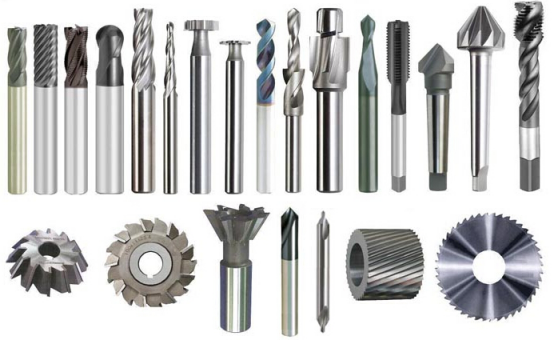
Tool steel are very versatile in terms of manufacturability, cost effectiveness, toughness, and wear resistance. Although tool steels cannot match the hardness and high temperature stability of carbides, they are well-suited for most practical uses. Excellent manufacturability and cost effectiveness are the most prominent features of tool steels. That is why tool steel is used in the manufacturing of a lot of tools, like cutting tools, dies, molds, and hand tools.
Ultra-Hard Materials for Making Tools
Tools made up of ultra-hard materials are often required for high-speed machining of hard metals like cast irons. Carbides and ceramics are common examples in this category. Carbides offer a good balance between toughness, high temperature stability, and hardness. They are often employed for most situations requiring high hardness. On the other hand, ceramic tools are even superior to carbides in terms of hardness and high temperature stability. However, their brittleness limits their use only to predictable conditions.
CNC Machinable Materials for Tool Manufacturing
Some materials are selected specifically for their excellent machinability and functional advantages in certain tooling applications. They are used for special applications like rapid tooling, prototype molds, jigs, and fixtures. Here is a brief comparison of the materials:
|
Material |
Hardness |
Wear Resistance |
Machinability |
Cost |
Applications |
|---|---|---|---|---|---|
|
Tool steels |
High |
high |
Moderate |
Medium |
Cutting tools, dies and molds |
|
Carbides |
Very high |
Very High |
Low |
High |
CNC cutting tools and inserts |
|
Ceramics |
Extremely High |
Very High |
Very Low |
High |
High-speed machining |
|
Aluminum alloys |
Low |
Low |
Excellent |
Low |
Prototype molds and fixtures |
|
Copper Alloys |
Low- Medium |
Low |
Excellent |
Medium |
EDM electrodes and heat transfer tools |
|
Stainless Steels |
Medium |
Medium |
Moderate |
Medium |
Corrosion- resistant tooling |
Aluminum Alloys
Aluminum and its alloys are soft, and they offer good machinability. They are lightweight and corrosion-resistant. Their ability to be quickly machined makes them suitable for prototype molds, soft tooling, and rapid production.
Copper Alloys
Copper alloys like bronzes and brasses have a good machinability. Their high electrical and thermal conductivity makes them suitable for making soft jaws, but not for making CNC cutting tools because copper is softer then most of aluminum. It is also ideal for making base plate and locating blocks due to the excellent thermal conductivity of copper.
Stainless Steels
Stainless steel is corrosion-resistant, strong, and cost-effective. It is often used to manufacture mold, die, locators, supports, and tool shanks, etc.
Common Techniques for Manufacturing Tools
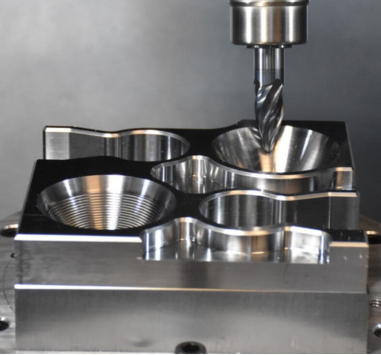
Tool manufacturing uses various techniques. Some techniques are used in synchronization with other techniques. While others may be used individually. The choice of tool making techniques depends on factors like cost, manufacturability, precision, and materials.
Grinding
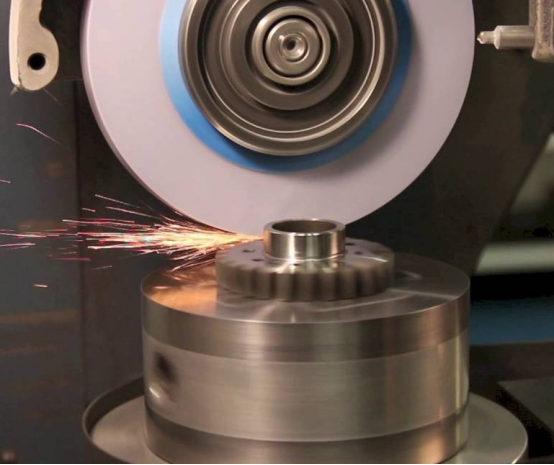
Grinding is often regarded as a finishing step after primary tool manufacturing takes place. It uses abrasive wheels to smooth the surface. Griding is also used to fine-tune the dimensions. Usually, hard materials like cast iron or hardened steel are machined to slightly larger dimensions. Then they are ground to accurate dimensions.
EDM
EDM stands for ‘Electrical Discharge Machining'. Electrical sparks between the electrode and the workpiece melt and knock off material in a controlled manner. As no physical cutting is needed, complex geometries can be made easily as per CAD. Fine details and complex features are easily incorporated in tool manufacturing. The only limitation is that EDM can be used for electrically conductive materials such as steel, superalloys and copper, etc.
Additive Manufacturing
3D printing is an example of additive manufacturing. It builds up the tool layer by layer. It is a highly automated process that is computer-controlled. It can fulfil a high level of design complexity in tool manufacturing. As the setup cost is not too high, it is ideal for rapid prototyping and low-volume tool production. 3D printing is compatible with metals, polymers, and composites.
CNC Machining
CNC machining is an automated and computer-controlled manufacturing technique. In tool manufacturing, it offers incredible consistency in quality, precision, and dimensional accuracy. It works best on numerous materials. Some CNC machine types, like 5-axis machines, allow very high design complexity. In addition to other manufacturing jobs, CNC machining is extensively used for rapid prototyping. Once a prototype is finalized, the same CAD files can be used for mass production.
Standards for Tool Manufacturing
Internationally recognized standards give the framework for material selection, dimensions, tolerances, limits and fits, finishing, and quality management. Compliance with these standards gives repeatable results no matter what the scale of production.
Material Standards
There are some internationally recognized standards like ISO, DIN, JIS, ASTM, GB, NZS, AS, etc. Tool materials must be hard and wear-resistant. These standards specify requirements for the tensile strength, hardness, and yield strength of materials. Manufacturing tools should be based on these standards.
Standards for Tolerance
Standards for tolerance specify the permissible variations in dimensions. Commonly, ISO 286 is used to define limits and fits for holes and shafts. On the other hand, ISO 2768 is generally used for tolerances. Compliance with these standards ensures proper fitting of tools in the assembly stage. It also ensures interchangeability of components.
Surface Finish Standards
Surface finish standards like ISO 1302 give specifications for surface roughness and texture. It affects the performance, friction, and wear resistance of tools.
Standards for Quality Inspection
ISO 9001 is a universally agreed standard for quality management systems. It gives guidelines for inspection procedures and lays down SOPs. It gives both preventive actions and corrective actions for mitigating errors. Proper process flow as per ISO 9001 ensures high repeatability and consistent quality in tool manufacturing.
Advantages of CNC for Tool Manufacturing
CNC is a precision manufacturing process for tool making. It is efficient, precise, and repeatable. Moreover, a level of customization opens up enormous options for manufacturing specialized tools. High consistency, accurate dimensions, low human intervention, and high customization make CNC a lucrative process for tool manufacturing.
High Manufacturing Efficiency
This automation brings out consistent results with minimum scrap generation. Less manual intervention means fewer human errors. CNC supports efficient tool manufacturing through:
- High-speed cutting
- Optimized CAM strategies
- CNC turning, milling and grinding for creating different features in short time
High Precision Machining
Tight dimensional tolerance in the micron range is possible. Even complex geometries can satisfactorily meet their strict tolerance requirements. CAM supports generating high-precision tool paths.
Keep Consistent Quality
Identical products with the same quality can be machined over and over again. The entire process follows the same program for each manufacturing job. As long as the program remains unchanged, the quality remains consistent.
Challenge of Tool Manufacturing
While simple tools are easy to manufacture, there are challenges in meeting the demands of high-tech industries. Tight tolerances, complex shapes, and hard materials are often difficult to manufacture.
Extremely High Precision
Critical components used in high-tech industries like aerospace, automotive, and medical require an extremely high level of precision. Even a micron-level deviation in some components renders them useless. Factors like machine limitations, thermal expansion, tool wear, and vibration make this task even more challenging.
Hard Materials
Many machine tools are made of hard materials like tool steels, carbides, and ceramics. Simple machining techniques might not be suitable tool manufacturing. The common used manufacturing methods include CNC machining, grinding, EDM, etc. As for CNC machining, hard materials are difficult to machine easily by removing materials due to their high strength, wear resistance, and poor machinability.
More Complex Geometries
As complexity increases, tool manufacturing becomes more difficult. Maintaining features such as cutting edges, internal cooling channels, and multi-axis contours is challenging. Tool manufacturers might have to resort to advanced techniques like 5-axis CNC machining.
Why Is Rapid Prototyping Important for Manufacturing Tools?
Rapid prototyping promotes development efficiency. Instead of wasting time and resources on corrective actions, rapid prototyping prevents any such wastage. Design validation in tools prototyping reduces costs and shortens lead times.
Validate Design Feasibility
Prototype tools help tool manufacturers to test and evaluate designs before mass production. Issues in fit, function, and performance can be identified early on. Engineers then correct the design flaws and optimize geometries.
Reduce Costs
Tools prototyping reduces costs related to errors and redesigns. Instead of wasting expensive material in trial-and-error cycles, design flaws are addressed early on. Low scrap generation and low R&D attention during redesign in actual production reduce costs dramatically.
Shorten Lead Time
Tools prototyping accelerates product development. With all the validation and testing before actual production, fewer interruptions in tool manufacturing occur. Rapid prototyping makes the transition to mass production quick.
Why Choose Custom Tool Manufacturing Service?
In certain conditions, specific performance requirements urge the need for custom tools. Custom tool manufacturing enables the inclusion of tailored requirements in tools. From a performance standpoint, custom tools bring efficiency.
Meet Specific Requirements
Standardized tools fail to meet application requirements in certain cases. Unique performance requirements need customized solutions. Custom tool production is tailored to exact requirements. Features like specialized cutting angles and unique profiles can be incorporated in tools. It enhances the compatibility of tools with the applications.
Improve the Quality of Tools
Custom tool manufacturing involves extensive consideration of application requirements. The quality of customized tools is always better than that of standard tools. Design and material selection take all aspects of tool usage into account. So, tool manufacturing is better optimized for the applications.
Save Costs
Although setup costs for custom tool manufacturing are higher, it pays off in the long run. Performance efficiency due to tool optimization gives longevity to the tool life. Perfect tooling means fewer defects and reduced downtime.
The table below gives a comparison between standards tools and custom tools:
|
Aspect |
Standard Tools |
Custom Tools |
|---|---|---|
|
Design |
Pre-defined |
Application specific |
|
Performance |
Generic |
Optimized |
|
tolerance |
Standard |
Application specific |
|
Initial Cost |
Low |
Higher |
|
Long term Cost |
Higher |
lower |
|
Flexibility |
Limited |
Highly |
|
Production efficiency |
Standard |
Higher |
|
Lead time |
Immediate availability |
Longer |
|
Complexity handling |
limited |
Excellent |
How to Choose Suitable Tool Manufacturing Suppliers?
Clients are often in the quest to find the right tool manufacturer. All suppliers are not the same. Product quality, consistency, reliability, and after-sales are some of the parameters to find in a supplier.
Manufacturing Capability
A good tool manufacturing supplier should be well-equipped with all the relevant manufacturing equipment. It is best if all services are in-house. The tool manufacturer should be capable of custom tool production. CNC machines, grinding systems, and EDM are important in this respect. 3+2-axis or 5-axis CNC machines might be required for a high level of design complexity.
Quality Control System
Quality control systems are instrumental in maintaining consistency and repeatability. They enable tool manufacturers to give a reasonable deadline and manage orders and claims. Traceability systems develop customer confidence. Normally, a tool manufacturing supplier compliant with ISO 9001 offers better services than others.
After-Sale Service
A reliable supplier not only delivers good products but also provides efficient solutions afterwards. In addition to maintenance and repair options, customers often require technical assistance. Good suppliers fulfil these customers' demands.
Advanced Tuofa CNC custom services provides customers with stable small-batch production based on our mature machining techniques. Start your tool manufacturing project with Tuofa for rapid cooperation.
Conclusion
Tools are important in a lot of work around us. From small household toolkits to various industrial setups, tools are everywhere. Design, validation, and material selection play an important role in perfecting tool manufacturing. Customization in tool manufacturing is often needed for specialized tasks. Well-equipped manufacturers are the most likely to meet performance requirements for tools. There are various internationally recognized standards. Reliable manufacturers often comply with these standards to deliver the best.
FAQ
What is the tooling process in manufacturing?
It involves the design, development and production of tools.
What is tooling in manufacturing?
Tooling refers to the production and use of tools, dies, molds, and fixtures used to shape parts.
What is tooling vs tools?
Tooling is a broader term that includes a collection of dies, molds, jigs, and fixtures. On the other hand, a tool often refers to a single object, for example, a
 Understanding Plate Machining: From Processes to Applications