Tel/WeChat:
 Email:



 Home
Thermal Conductivity of Aluminium: Guide for Material and CNC Machining

 Published:Nov 20,2026

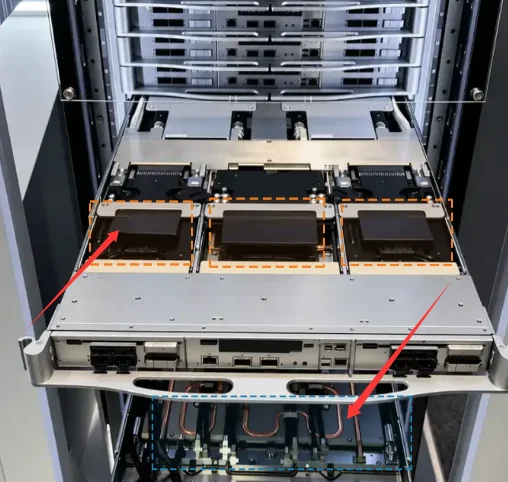
There are a number of GPUs in the AI servers. They generate heat continuously, increasing the risk of downtime. With the rise of AI servers, the need to cool components has increased dramatically. Aluminum is regarded for its high thermal conductivity. It is also low-cost, lightweight, and easy to machine. If you are planning to design a CNC-machined conductive aluminum component for AI servers and want to learn the thermal conductivity performance of aluminum, read this guide carefully.
What Is the Thermal Conductivity of Aluminium?
Aluminum has very useful thermal properties. In AI servers, aluminum is used only for its high thermal conductivity. It is often used for making cooling components instead of load-bearing structural parts in AI servers. Learning the thermal conductivity of different aluminum grades can help you choose suitable one for your parts based on the requirement of removing heat.
Thermal Conductivity of Pure Aluminum
The thermal conductivity for 100% pure aluminum is around 237 W/m·K at 20°C . The main principle of heat transfer is the mobility of electrons. The atomic arrangement in pure aluminum is orderly. All atoms are almost of the same size. There are minimal distortions. So, this crystal lattice has only a few obstacles. Consequently, pure aluminum has a high thermal conductivity. Let us provide the thermal conductivity of some pure aluminum grades:
|
Grade |
Min Aluminum Content |
Typical Thermal Conductivity at 20°C |
|---|---|---|
|
1100 |
99.00% |
~222 W/m·K |
|
1050 |
99.50% |
~229 W/m·K |
|
1060 |
99.60% |
~234 W/m·K |
|
1070 |
99.70% |
~236 W/m·K |
|
1080 |
99.80% |
~236.2 W/m·K |
|
1085 |
99.85% |
~236.5 W/m·K |
|
1090 |
99.90% |
~236.7 W/m·K |
|
1199 |
99.99% |
~236.9 W/m·K |
From the table, it indicates that no 100% pure aluminum in practical manufacturing. And the little differences between these pure aluminum can affect their applications. According to our machining experience, 1060, 1070 and 1050 aluminum are suitable for manufacturing cooling parts like cold plates, heat sinks used for GPUs.
However, 1100 aluminum is not suitable for components used for high-power GRU cold plates due to its low thermal conductivity compared with other grades. 1080, 1085, 1090, and 1199 are expensive, commonly used for special cooling components used in laboratory or semiconductor.
Thermal Conductivity of Aluminum Alloys
Compared with pure aluminum, aluminum alloys are always a practical choice because cooling parts used in AI servers require not only thermal performance, but also strength or other properties. The aluminum grades selected for your components should keep a good balance.
In aluminum alloys, atoms are of different sizes. Their arrangement is not very orderly. The mismatch of atomic sizes causes distortion. This distortion hinders the movement of electrons. It also affects the atomic vibrations. Overall, it impacts the thermal conductivity for aluminum. The table below compares the thermal conductivities of aluminum alloys:
|
Aluminium grade |
Alloy series |
alloying elements |
Thermal conductivity (W/m·K) |
Applications |
|---|---|---|---|---|
|
2024 |
2xxx |
Cu, Mg |
121-151 |
Not ideal for thermal dissipation |
|
3003 |
3xxx |
Mn |
163 – 193 |
Radiators, HVAC, and heat exchangers |
|
3004 |
3xxx |
Manganese, magnesium |
163 |
beverage cans, and roofing sheets |
|
5052 |
5xxx |
Mg, Cr |
138 |
Marine equipment and fuel tanks |
|
5083 |
5xxx |
Mg, Mn |
117- 120 |
Shipbuilding |
|
6061 |
6xxx |
Mg, Si |
167 |
Cold plates, mechanical structural parts |
|
6063 |
6xxx |
Mg, Si |
200 |
Extruded heat sinks, fin radiators |
|
6082 |
6xxx |
Mg, Si, Mn |
167 |
bridges, structural components |
|
7075 |
7xxx |
Zn, Mg, Cu |
130 |
Not ideal for thermal dissipation |
What Is the Coefficient of Thermal Expansion for Aluminum?
It is a measure of how much a material expands or contracts with a temperature change. Aluminum has a high CTE. It is 23.1 µm/m·°C for pure aluminum. It means that for every kelvin increase in temperature, aluminum will expand by 23.1 microns per meter.
CTE varies between different grades. For small variations, the expansion or contraction is negligible. However, if variations are large, the change is more impactful. As an example, if a heatsink changes temperature from 20C to 100C, the expansion would be 1.848mm per meter. So, this factor should be considered during design.
What Factors Affect the Thermal Conductivity of Aluminium?
At times, the thermal conductivity for aluminum falls short of expectations. Thermal conductivity for aluminum does not remain constant in all circumstances. Different alloy compositions have different conductivities. Factors like operating temperature, temper condition, and microstructure also affect thermal conductivity for aluminum.
Aluminum Alloy Composition
Alloy composition greatly affects aluminum thermal conductivity. For example, Si, Mg, Cu, Zn and other alloying elements can be added into the aluminum, which can definitely affect its thermal conductivity.
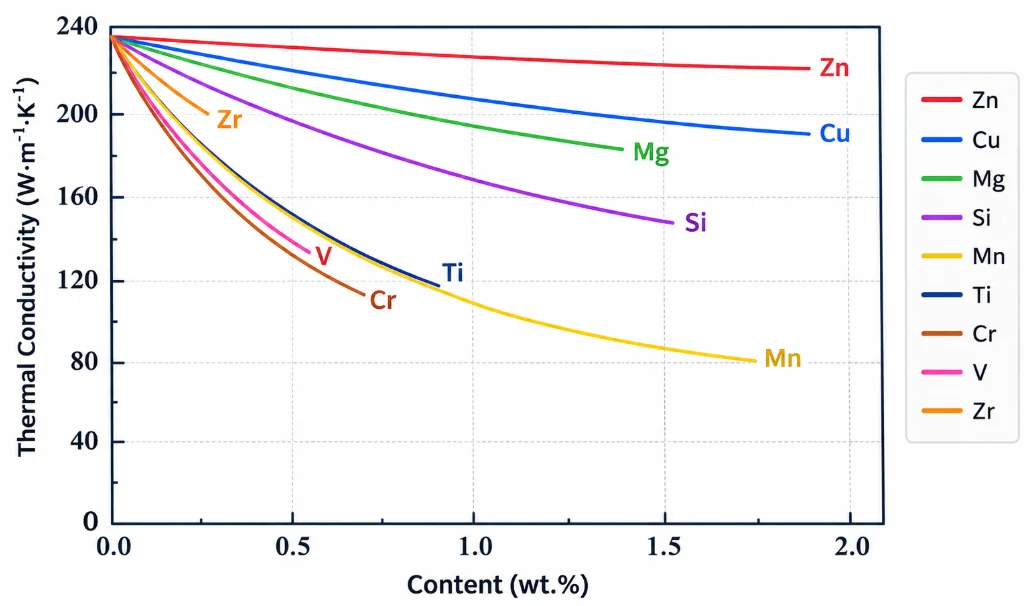
Alloying atoms disturb the regular arrangement of atoms. This increases electron scattering. The more the electrons are hindered from moving, the lower the thermal conductivity for aluminum.
Operating Temperature
As temperature increases, atoms tend to vibrate vigorously. This increase in atomic vibrations reduces electron flow. Thermal conductivity for aluminum decreases with an increase in temperature. This graph provided by NIST illustrates the thermal conductivity of 1100 pure aluminum changes as the temperature changes. For pure aluminum (Al 1100), thermal conductivity begins to decrease as temperature rises above approximately 40 K (−233°C).
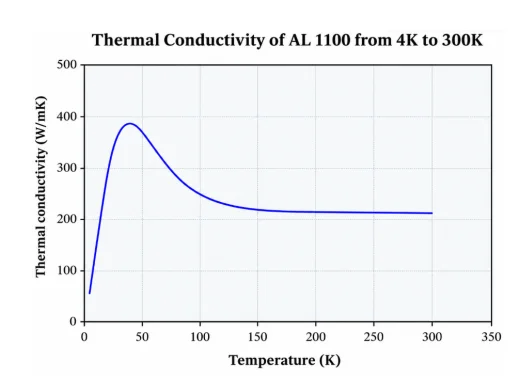
Therefore, when you are choosing aluminum grades, you should consider the number of GPUs, which can affect the operating temperature. This can avoid overheating of the GPU or failure of aluminum components in AI servers.
Temper Condition
Aluminum comes in 4 main temper conditions:
- O (annealed)
- H (strain - hardened)
- T4 (naturally aged)
- T6 (artificially aged)
Temper changes the distribution of alloying elements. It also affects the density of defects and dislocations. As an example, in the aged condition, alloying atoms leave the aluminum matrix. They form intermetallic phases. As the concentration of alloying atoms decreases in the aluminum matrix, thermal conductivity increases.
Microstructure
During manufacturing, the microstructure can be modified. The arrangement of phases and grain boundaries is modified. It affects the thermal conductivity for aluminum.
Why Does Aluminum Have High Thermal Conductivity?
Out of a big list of metals, aluminum stands out in thermal performance. It transfers heat quickly. The main mechanism of heat transfer is the movement of free electrons. Aluminum has more free electrons than many other metals.
Free Electrons
For each atom of aluminum, there are three valence electrons. In metallic bonding, these free electrons form a cloud around the atoms. As aluminum gets heated, these electrons get energized. They gain kinetic energy. A flow of electrons from the hotter end to the colder end starts.
Relatively Low Electron Scattering
There is an ordered arrangement of aluminum atoms. So, there are fewer obstacles in the movement of electrons. This makes the thermal conductivity for aluminum high.
Face Centered Cubic (FCC) Lattice Structure
Face-centered cubic is a closely packed atomic arrangement. It creates fewer obstacles for electrons. Electron movement is the principal reason for thermal conductivity. Vibration of atoms is also responsible for heat transfer. FCC keeps vibrations favorable for high thermal conductivity for aluminum.
What Parts Are Made from Aluminum for Its High Thermal Conductivity?
A lot of cooling components are made from aluminum. Components like CPUs, GPUs, processors, power supplies, voltage-regulation modules, and memory modules need stable operating temperatures. The high thermal conductivity for aluminum helps in prompt temperature stabilization.
Aluminum Heat Sinks
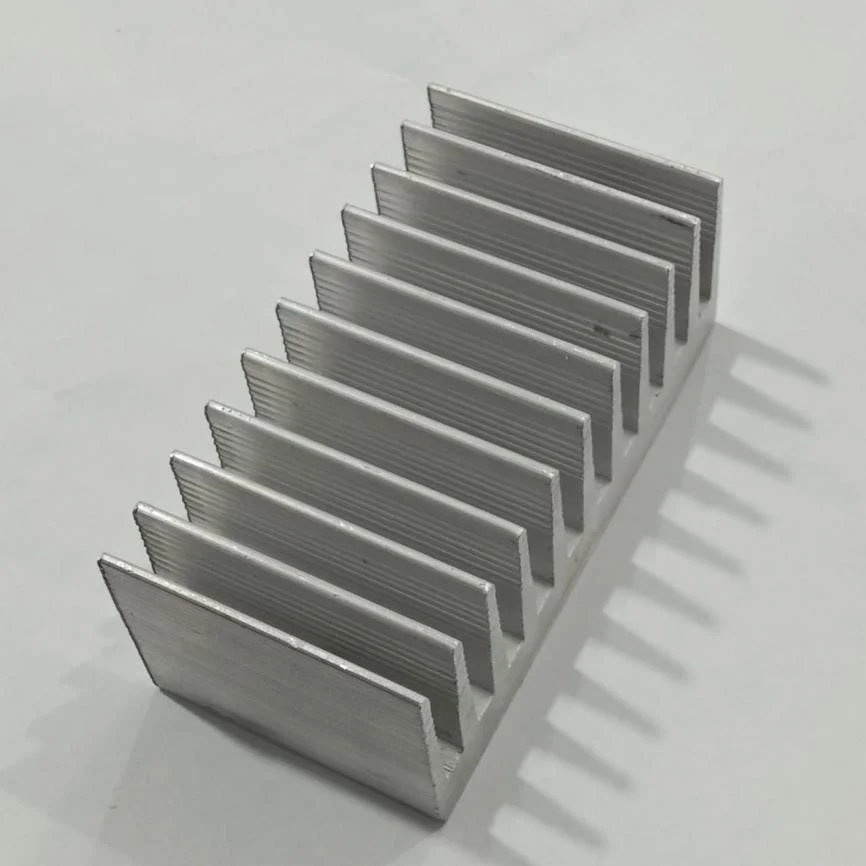
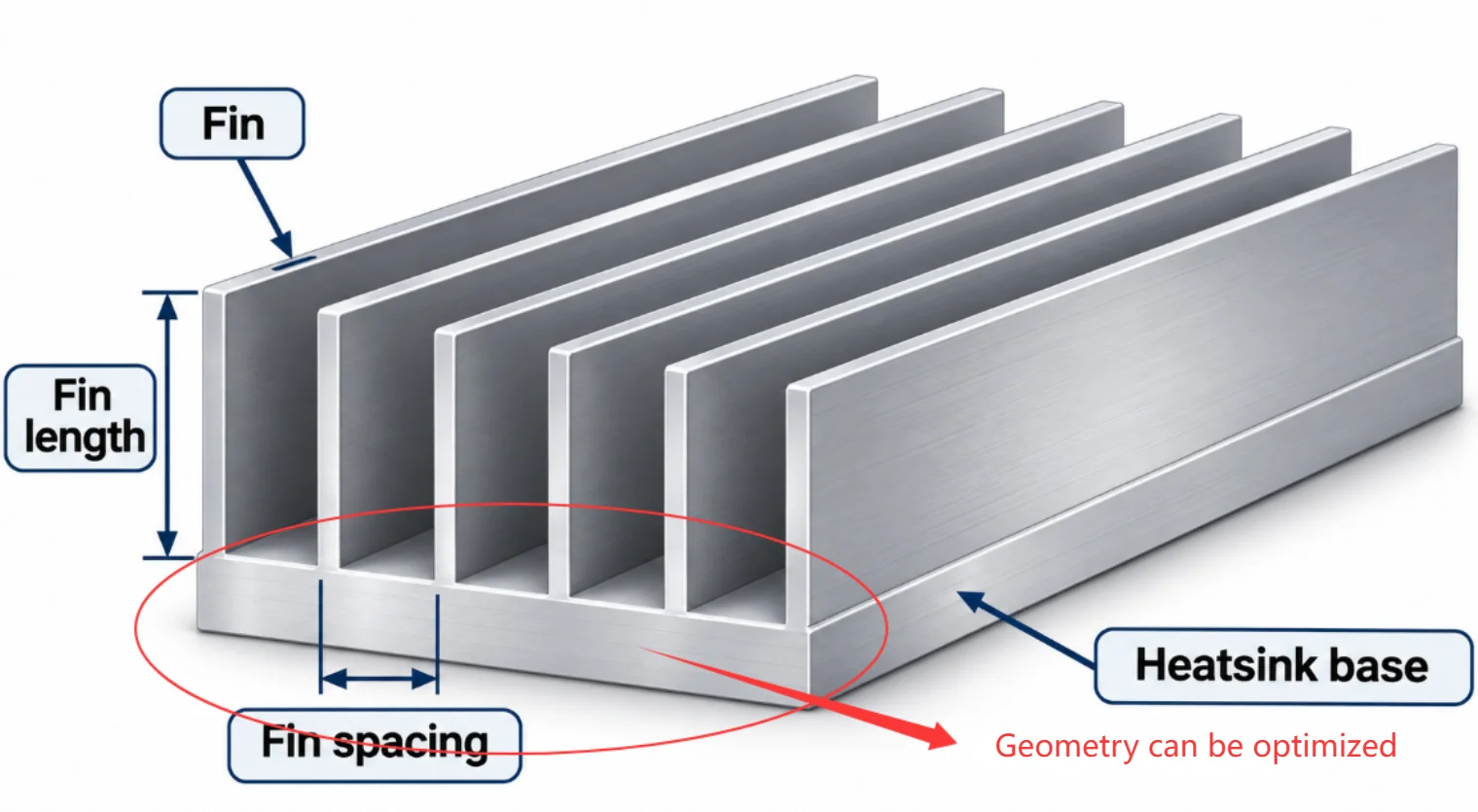
Aluminum heat sinks have base plates. They conduct heat from heat sources like CPUs or GPUs. Their cooling fins increase the surface area for heat dissipation. Either natural or forced convection is used to remove heat.
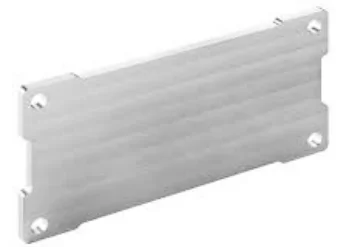
Aluminum Thermal Base Plates
Thermal base plates are flat plates with large surface areas. They are attached to the hot spots. Attaching a thermal base plate increases the surface area for more heat dissipation. In this regard, thermal properties, thickness, and surface area is important.
Aluminum Liquid Cold Plates
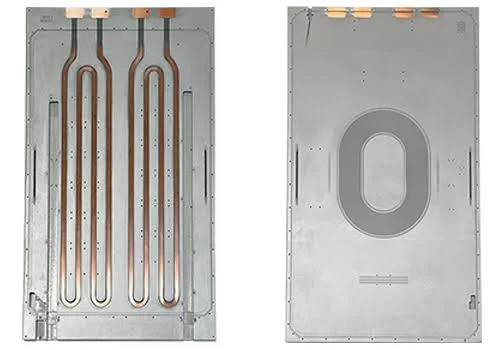
Liquid cold plates have internal channels through which the coolant circulates. Heat is first conducted to the cold plates, which is then transferred to the circulating coolant. The coolant carries that heat away. Internal channels may have complex features. So, good machinability alloys with high thermal conductivity are preferred. Mainly, aluminum 3003 and aluminum 6063 alloys are used for these applications.
How Does Aluminum's High Thermal Conductivity Affect CNC Machining?
When designing aluminum parts like cold plates for AI servers, you must consider the manufacturing methods. Also we have introduced the good machinability of aluminum before, but can its thermal conductivity affect the CNC machining. Let us explain in detail.
Cutting Temperature and Tool Wear
As the cutting tool cuts material, it generates heat. Owing to the high thermal conductivity for aluminum, heat gets dissipated away quickly. So, the temperature of the cutting zone remains stable. This helps limit thermal loading. Local concentration of heat is prevented. So, cutting action remains stable.
Machining Speed and Efficiency
High thermal conductivity for aluminum allows for high machine speeds. As local buildup of heat is less likely, machining speed can be increased. It increases the material removal rate. So shorter machining cycles lead to higher productivity. With optimized feed rates and cutting depths, machining efficiency can be further increased. Tuofa's experienced aluminum machining capability allows us to support faster lead time for custom aluminum parts.
Thermal Deformation
Thermal stresses can accumulate if the workpiece has local variations in temperature. As thermal conductivity for aluminum is high, variations in temperature are low. So, distortion or warping is less likely. However, the coefficient of thermal expansion of aluminum is high. So, a change in temperature leads to a change in dimensions. Tuofa engineers control the cutting heat and supply aluminum parts with correct dimensions for you.
How Geometry Affects Heat Transfer in Aluminum Parts?
Aluminum is by nature an excellent material for heat transfer applications. Optimization of the geometry of heat transfer components can further enhance its performance. Tuofa provides DFM analysis to help you optimize the part design to improve the thermal performance and strength of aluminum parts for AI servers. Let us learn what features should be optimized.
Wall Thickness
As a rule of thumb, “the rate of heat transfer through a flat wall is inversely proportional to its thickness”. Ideally, in heat transfer applications, the wall should be as thin as possible. But reducing thickness below an optimal threshold can cause low structural rigidity, low dimensional stability, and difficult machining. In detail, too thin wall are prone to chatter marks and edge chipping during CNC milling.
Heat Transfer Path Length
Ideally, the heat source should be as close to the heat dissipation area as possible. In DFM analysis, heat transfer path length is checked. Especially in AI servers, the coolant channels and fins should be placed close to the GPUs.
Heat Spreader Geometry
We advise you to design square, round or stepped heat spreaders. Heat spreaders are needed to disburse heat over large areas to disband hot spots. As an example, the GPUs in AI servers create hot spots by localizing heat in small areas. If the cold plate attached to it is not truly flat, the contact area would be smaller. So, in such cases, a flat and large contact area transfers heat more efficiently. Similarly, geometry needs to be optimized for other heat spreading applications as well.
Cooling Channel Geometry
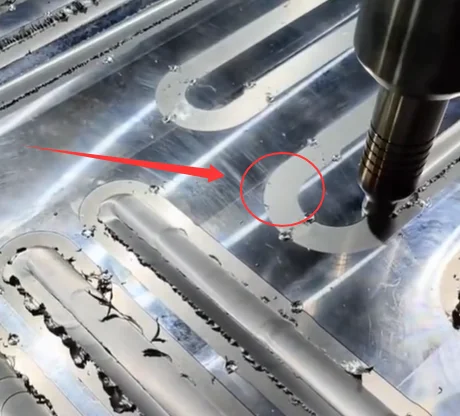
Cold plates or cooling plates are common components used for AI servers. Their typical features are cooling channel geometries. They are often straight grooves, serpentine channels, and microchannels.
To ensure the heat of GPUs can be transferred perfectly, we recommend use corner radius for the corner of channels instead of 90° sharp corners, which can make the water flow smoothly and quickly.
Can Surface Finishes Affect Aluminum Heat Transfer?
The answer depends on the type of surface finish. If it is the natural oxide layer, the effect is negligible. However, for non-metallic and thick coatings, there is a profound impact. Polymer coatings like paint or powder act like a thermal insulator.
Natural Aluminum Oxide Layers
Aluminum naturally has a protective oxide layer over its surface. It is only a few microns thick. Generally, it does not affect the bulk thermal conductivity of aluminum. However, the small surface irregularities over the oxide surface increase contact resistance. So, thermal grease or gap-filling pads can be used to address this problem.
Anodizing Aluminum
Anodizing creates an oxide layer that is thicker than that found naturally. So, it affects the heat transfer efficiency more. Here anodizing is mainly done either for passivation or functional requirements not appearance.
Thermal Conductivity of Copper vs Aluminum
Copper is usually the main contender for aluminum when it comes to heat transfer applications. The competition between them is logical. On one hand, copper has a thermal conductivity higher than that of aluminum. On the other hand, aluminum offers low weight, low cost, and easier manufacturing.
Conclusion
Aluminum has a higher thermal conductivity than many common metals. It is used in numerous applications due to high thermal conductivity, low weight, low cost, and easier machining. The high thermal conductivity of aluminum is present due to its high mobility of free electrons and orderly atomic arrangement. This thermal conductivity varies from alloy to alloy. In CNC machining, a lot of heat transfer components like base plates, cold plates, and heat sinks are made out of it.
FAQ
Is aluminum heat resistant?
Aluminum generally conducts heat faster than a lot of materials. It too has an intrinsic thermal resistance. But that is way lower than many materials
Is aluminum a good heat conductor?
A big yes. Aluminum is a very good conductor of heat.
What is aluminium thermal diffusivity?
For pure aluminum, it is 9.7 × 10⁻⁵ m2/s
Copper or aluminum: which one for your cooling parts?
Copper is mainly preferred for its high thermal conductivity. In numbers, it is 390 W/m.k. On the other hand, the thermal conductivity for aluminum is 237 W/m . K. So, copper tends to consume a smaller space for the same heat conduction in comparison to aluminum. However, copper is more than 3 times denser than aluminum. It is way more costly than aluminum. Copper's machinability is less than that of aluminum.
 Comparison of Brass Nuts and Steel Nuts: Materials, CNC Machining & Applications