Tel/WeChat:
  Email:


 Home
HomeNickel Plating for CNC Parts: Types, Process, Applications & Advantages

 Published:Dec 02,2025
Nickel plating is a finishing process used to deposit a thin nickel layer on the based part to get a good appearance, or prevent parts from corrosion, wear resistance, and improve durability and increase strength. Nickel electroplating and electroless nickel plating are methods for nickel plating.
In this guide, you can learn what are types of nickel plating, how to achieve, where it is used and what are the advantages.

What Is Nickel Plating?
Nickel plating is an electrochemical process that deposits a thin metallic nickel coating onto the surface of a component, protecting the metal or plastic parts from corrosion, improves wear resistance and decorative appearance. In CNC machining, nickel-plated parts are widely used in medical devices, industrial equipment, automotive and aerospace devices.
Nickel Plating vs. Anodizing
Nickle plating is an electrochemical process depositing nickel onto a substrate. While in anodizing natural oxide layer of metal is thickened through an electrochemical process. Different from nickel plating, anodizing is mainly used for aluminum parts. Therefore, if you want to get a silvery appearance for your aluminum parts, nickel plating can be your first choice instead of anodizing.
|
Factor |
Nickel Plating |
Anodizing |
|---|---|---|
|
Surface Layer |
Nickel or nickel-alloy coating |
Oxide layer |
|
Electrical Conductivity |
Conductive |
Non-conductive |
|
Color |
Typically silver |
Commonly black |
|
Applicable Part Materials |
Suitable for various metals |
Mainly used for aluminum |
Types of Nickel Plating
Nickel plating can be divided into two main types, electrolytic and electroless plating which are further sub-divided into more forms. These are explained below:
Electrolytic Nickel Plating
As mentioned above, electrolytic nickel plating uses electric current to deposit nickel onto the substrate. The types of electrolytic nickel plating are:
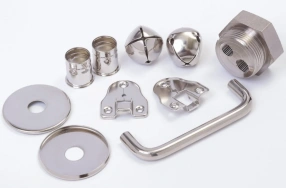
Bright Nickel Plating
It is a decorative plating which has a shiny and mirror-like appearance and it is mainly used for visible CNC parts such as automotive trim, control knobs, connector housings and consumer electronics. However, it does not hide machining marks or scratches. Polishing may be needed before plating in order to get a smooth surface.
Dull / Satin Nickel Plating
This plating is non-reflective with a matte finish and is often used in architectural and outdoor applications such as:
- instrument housings
- machine hardware
- control components
- optical equipment
Black Nickel Plating
Black nickel plating is a decorative finish that provides a dark or black appearance. It is often used for aesthetic purposes.It is mainly used for:
- decorative parts
- Cameras
- optical instruments
- electronic housings
- low-reflective components
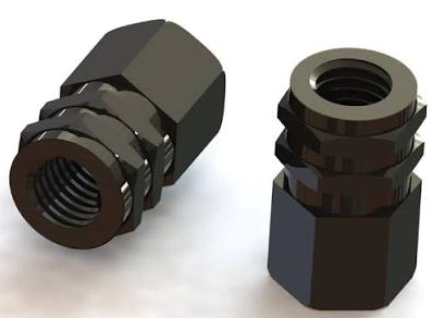
It is mainly used for appearance but not wear resistance, so it is not a good choice for parts protection.
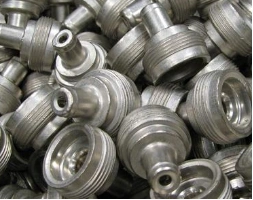
Nickel Sulfamate Plating
It is a type of electroplating that uses external electric current, but its formulation is based with sulfamate anions. These anions provide high ductility and can be used to create thick, stress-free deposits. Common applications include:
- worn shafts
- bearing seats
- mold inserts
- CNC parts that require grinding or polishing after plating
Electroless Nickel Plating
Electroless plating is done without an electrical current. A uniform thickness of nickel-phosphorus alloy coating is deposited through a chemical reaction of reducing agents causes nickel ions to deposit on a part. Common types of electroless plating are as: The most common electroless nickel coating used for CNC machined parts is a nickel-phosphorus alloy. It is generally classified as:
- Low-Phosphorus Electroless Nickel
- Medium-Phosphorus Electroless Nickel
- High-Phosphorus Electroless Nickel
Applications of Nickel Plating
Nickel plating is one of the widely used plating applied to parts used for industrial machinery, decorative items, automotive components, aerospace, and medical devices.
Industrial Machinery Components
Nickle plated industrial parts like gears, cylinders, valves, fasteners. Nickle coating is also used on parts that are exposed to harsh environments. Its purpose is to improve durability and protect against wear and corrosion from moisture and chemicals.
Decorative Parts
Nickle plating, especially bright nickel finish, is used for various consumer goods like household fixtures and jewelry. The purpose is to provide a bright and polished appearance and to resist corrosion or tarnishing.
Automotive Components
Nickle plated automotive parts like gears, cylinders, valves, fuel system components, drive shafts, and brake parts. It improves corrosion resistance, wear resistance, and overall durability for critical car components.
Aerospace Parts
Nickle plating is common for aircraft parts like turbine blades, landing gear components, and other high-stress parts. It improves strength, corrosion resistance and resistance to high-stress environments.
Medical Devices
Nickle coating is used widely for medical devices like surgical and diagnostic instruments. It improves corrosion resistance, chemical resistance, and forms a smooth and easy-to-clean surface for sterilization.
How Does the Nickel Plating Process Work for CNC Machined Parts?
Nickel coating on the CNC-machined parts is often for nickel-plated parts with silvery appearance or improving the durability of parts. It is usually performed after CNC machining because adding coating on parts can easily change the dimensions of parts. Here let us learn the detailed processes of nickel plating.
Inspect the Machined Parts
Before beginning nickel plating, it is necessary to check the surface situation of the parts. In generally, after machining the parts, it is prone to occur the following issues:
- Burrs
- Scratches
- sharp edges
- machining defects
- Dimensional problems
Because adding a coating on the parts can easily influence the dimension, it is important to make sure the part is machined with correct dimension and right tolerance before plating nickel.
Clean and Move the Contamination from the Parts
The surface quality of parts easily affect the quality of nickel layer. Therefore, it is very critical to clean the machining marks and remove contaminants like oil or dust from the parts so that the nickel ally electroplating layer can adhere firmly to the part surface.
Activate the Surface
Surface activation removes oxides and passive films, allowing a separate nickel or nickel-alloy coating to bond firmly to the unchanged substrate. Different materials require different pretreatments.
For example, aluminum commonly requires a zincate process, while stainless steel may require acid activation or a nickel strike.
Mask Areas that Don’t Need to be Coated
Critical features like threads, electrical contact areas, sealing surface are needed to be covered when plating nickel. This is important for assembly and performance of parts.
Deposit the Nickel Coating
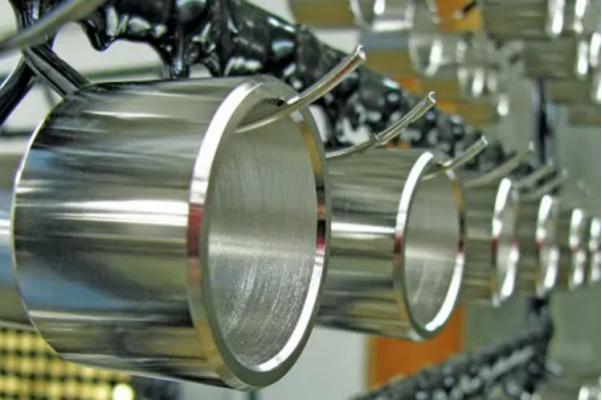
Place the part in a nickel plating solution and allow the nickel layer to be deposited on its surface by using electrolytic plating or electroless plating.
Common Materials That You Can Nickel Plate
Common materials that can be nickel plated are stainless steels, copper alloys, aluminum alloys and others. Nickle plating in CNC machined parts gives better results in terms of improving their performance and efficiency in aggressive environments. The following materials are suitable for nickel plating for different purposes.
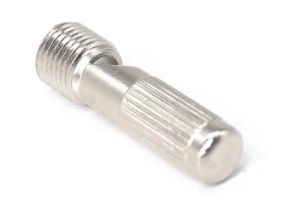
Stainless Steel
Nickel plating is used on stainless steel parts to improve wear resistance, reduce galling, and increase surface hardness. To ensure good coating adhesion, the stable passive film on the surface must be removed before plating.
Copper Alloys
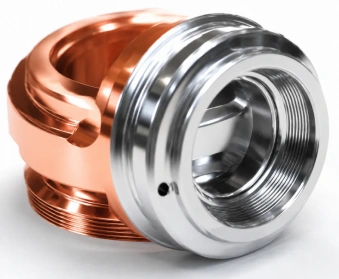
Nickel plating is mainly used on copper parts to prevent oxidation and discoloration. Before plating, copper oxides and surface contaminants must be removed to ensure good coating quality.
Aluminum Alloys
Nickel plating gives aluminum alloy parts a harder, more wear-resistant, and more corrosion-resistant metal surface. However, aluminum oxide bonds strongly to the surface, so deoxidizing treatment is usually required before plating.
Zinc Alloys
Nickel plating is mainly used on zinc parts to improve their appearance. It can also improve surface durability and corrosion resistance.
Can Plastic Parts Be Nickel Plated?
Yes, nickel plated plastics are common, but the plating itself is a multi-step process. Plastic surface is prepared first to make it conductive before applying the coating. Common types of plastics like Acrylonitrile Butadiene Styrene (ABS), Polypropylene and Nylon are plated for a durable, decorative, and functional finish.
Advantages of Nickel-Plated Parts
Nickel plated parts offer a variety of advantages like better corrosion resistance, harsh environments resistance, wear resistance and are aesthetically appealing. Details of the advantages of nickel plated parts.
Great Corrosion Resistance
Nickle finish forms a protective layer against moisture and chemicals to protect it from corrosion. It is best for electronic connectors, food processing equipment, and marine applications for salt water or harsh chemicals protection.
Excellent Wear Resistance
Nickle coating is hard and durable and significantly reduce wear on parts that experience friction. It is ideal for automotive components, engine parts, and tooling, where parts are in repeated motion and contact.
Enhanced Appearance
Nickle plated parts have a bright, shiny, and elegant finish and also be semi-bright or matte finish depending on the application. It is used for automotive industry, for consumer products like coinage, and for hardware.
Improved Surface Functionality
Nickle finish improves the performance of a part. For example, it increases conductivity for electronic applications like circuit boards, solderability, ductility, and smoothness by filling small holes and cracks on the surfaces.
Chemical & Temperature Resistance
Nickle coating provides resistance to a wide range of corrosive substances and to elevated temperatures. For example, it is crucial for part used in chemical processing and aerospace industries to increase their high temperatures resistance.
Factors to Consider when Choosing Nickel Plating
The selection of plating process depends on the intended use or required properties, applications needs and its compatibility with the base metal. To get the optimized results of nickel plating, choose the process wisely.
Required Properties
Nickle plating is done to enhance certain properties like corrosion resistance, wear resistance and appearance. For example, for maximum corrosion resistance against harsh and alkaline environment, for high wear resistance for parts that are subjected to high friction and for a functional matte look, Nickle plating is the best choice.
Application Requirements
Electroless nickel plating gives a uniform thickness in a complex geometry. Similarly, for high-temperature applications, high melting point of nickel can be a great advantage. Other than that, types of electroplating (electrolytic or electroless) can affect properties like electrical conductivity or thermal conductivity
Budges & Costs
Depending on the type of electroplating, budget and cost of the process can vary. For example, electroless plating costs more because of high uniformity, wear resistance and have a long-term saving. While electrolytic plating is cheaper, the lack of uniformity can be costly in the long run. Furthermore, nickel has high durability which reduces the overall lower maintenance and replacement costs.
How to Choose the Right Nickel-Plating Supplier
There are many different surface finishes, and choosing the right one for your parts is very important. There are some factors to consider when choosing a nickel-plating supplier. Evaluate their capability to handle the required application, material compatibility and required plating standards. Inquire about the lead time, factory capacity, and quality assurance processes so that it meets your delivery schedule and quality requirements. Select the supplier based on long-term value, for example, do not go for the cheaper options. It will have the potential risks of a poor-quality finish and can cost you more from maintenance costs.
Tuofa Tips for Nickel Plating Parts
To make your parts nickel plated completely, Tuofa provides mature nickel plating service through the following processes:
- Evaluate whether the parts can be nickel plated according to your surface treatment requirement.
- Control the thickness of the nickel layer to ensure the reasonable tolerance
- Confirm the uncovered areas to ensure the assembly and functions
- Two full inspection for ensuring the surface quality of parts before and after plating nickel.
Conclusion
Nickel plating improves corrosion resistance, hardness and provides a better base of other coating in CNC machined parts. The overall process involves preparing the surface, then using either electrolytic or electroless plating to deposit the nickel layer depending on the requirements. Electrolytic plating is cost-effective but has less uniformity and electroless plating has highly consistent coating results on complex internals shapes with a durable finish. But it is at a higher cost.
FAQ
Does nickel plating rust?
No, Nickel plating is highly corrosion resistant. It only corrodes if the plating is damaged.
How to maintain nickel plating
Regularly clean the surface with mild soap and a soft cloth, dry it immediately, and polish for shine to maintain Nickle plaiting.
When to use electroless nickel plating?
Electroless Nickle plating is used when high corrosion resistance, wear resistance, hardness and uniform coating in parts with complex geometries.
How to clean nickel plating?
If you want to clean nickel-plated parts, it is better use soft clean methods. For example, you can clean your nickel-plated parts with a soft cloth, warm water and soft chemical detergent. In this way, you won’t hurt the nickel layer.
 Fatigue Limit: Understanding Material Durability