Tel/WeChat:
  Email:


 Home
HomeIs Aluminum Magnetic? Yes or No: Explore the Science

 Published:Jun 08,2023
No, aluminum is non-magnetic. Aluminum isn’t ferromagnetic material, but paramagnetic material. This feature make aluminum become ideal material in electronic devices, precision instrument and sensor components, etc. Then why aluminum is non-magnetic, and what are the benefits? This article can help you decide whether to choose aluminum materials.
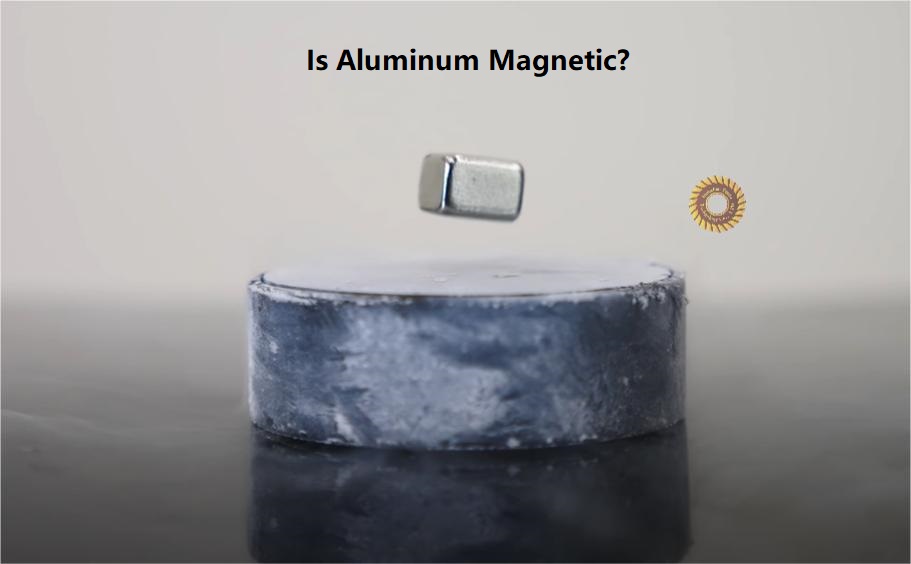
Is Aluminum Magnetic?
No, pure aluminum is not magnetic. It cannot create its magnetic field neither be attracted to magnets under normal conditions. But aluminum alloys can be made magnetic depending on their combination like nickel and iron are magnetic.
The magnetism of aluminum depends on its valance electrons. It has 1 unpaired electrons in its outermost shell.These electrons exist in the s and p orbital of aluminum atom. The presence of unpaired electrons in orbital turns any metal into paramagnetic. Paramagnetic materials are those which have slight attraction only in the presence of magnetic field. But they are still nonferromagnetic which are magnetic materials. If the valence electrons are paired, they are termed as diamagnetic. When a magnet brings close to it aluminum, it slightly attracts the magnetic field but becomes non magnetized as soon as the magnetic field is removed. This phenomenon in aluminum is normally observed at low temperatures.
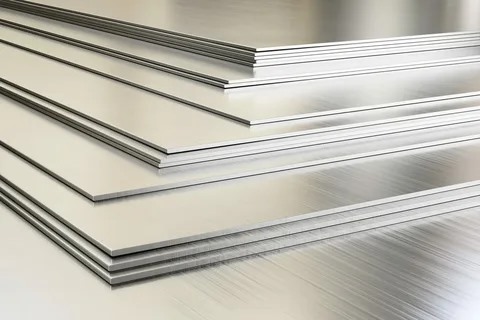
Do Magnets Stick to Aluminum
No, magnets do not stick to aluminum. Aluminum is a paramagnetic material, which means the electrons in aluminum can’t align properly within a magnetic field, resulting in insufficient magnetic force to overcome gravity.
Detailed Explanation:
It has a weak attraction towards magnetic fields. The existence of an uneven number of electrons in its atomic structure results in this magnetic behavior. It is important for the electrons to be aligned with each other when a magnetic field is nearby. But in aluminum, they are randomly organized.
This alignment of electrons is termed magnetic domains or dipoles, which has an attraction between its positive and negative ions. Dipoles are magnetized poles with opposite charges separated at a very small distance. in paramagnetic material (like aluminum), this feature is absent. Ferromagnetic materials have magnetic domains aligned straightly in the presence of magnetic field. This causes the material to be magnetized or stick to magnets.
Why is Aluminum not Magnetic?
Aluminum is not considered magnetic because it is paramagnetic.For a magnetic metal, the metal must be attracted towards the magnetic field. This phenomenon is absent in aluminum.
Aluminum is not ferromagnetic
It has unpaired electrons in its atomic structure which contributes to its paramagnetic properties. Paramagnetic materials are different than ferromagnetic (magnetic) materials. The paired electrons spin in the opposite way and cancel their dipole moment. In paramagnetic materials, the electrons have their spinning which is not canceled out by net dipole moment.
Aluminum’s magnetic attraction is extremely week.
The more the unpaired electrons, greater will be their attraction towards magnetic fields, as in case of ferromagnetic materials. Aluminum consists of only 1 unpaired electron and that causes a very weak magnetic attraction.
Aluminum does not stay magnetized.
Furthermore, it does not sustain this magnetism when the magnetic field is removed. This property in any material is measured by magnetic susceptibility. It is the ability of material to support the external magnetic fields.
Aluminum’s magnetic susceptibility is very low.
Aluminum has 2.2B.M magnetic susceptibility. Magnetic susceptibility greater than zero or positive means that material has some response to magnetic field. However, 2.2 is still a very low magnetic susceptibility to being a magnetic material. That is the reason aluminum is not magnetic rather than termed as paramagnetic.
Aluminum vs Magnetic Materials
Magnetic materials are of three types. Diamagnetic, paramagnetic, and ferromagnetic materials.
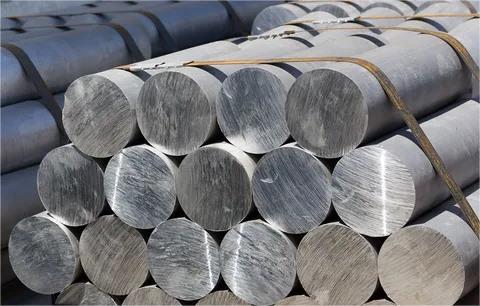
Diamagnetic materials are those which have paired electrons in their shell. These electrons are spinning in opposite directions. This opposition cancels the net dipole moment and refutes he magnetic capabilities of a material. When an external magnetic field is applied, these materials repel the field. The dipoles aligned in the opposite direction to the magnetic field and negated the magnetism.
Therefore, they do not attach or stick to magnets. Interesting fact is all the materials show diamagnetic material. but the degree to which these are diamagnetic is a different subject. Like iron, being a strong magnetic field, it also shows diamagnetism at very negligible level. Other diamagnetic materials are gold, mercury, and the most common water.
Ferromagnetic materials have unpaired electrons on their valance shell. These electrons contribute a huge share in magnetism because no other electron is present to refute this property. The magnetic dipoles of these magnetic materials are aligned with each other in the presence of magnetic field. These are also known as magnetic domains which are in order of 1012 - 1015.
These magnetic materials have the most prominent behavior in the presence of magnet. They are the strongest attraction towards magnets. This magnetism remains in the material even if the magnet is removed unlike the paramagnetic materials. Most popular ferromagnetic materials are iron, nickel and cobalt.
Comparison of Aluminum's magnetic properties with ferromagnetic and diamagnetic materials
|
Property |
Aluminum |
Ferromagnetic Metals |
Diamagnetic Materials |
|---|---|---|---|
|
Magnetic behavior |
Weakly paramagnetic |
Strongly magnetic |
Weakly repels magnetic fields |
|
Magnet sticks? |
No |
Yes |
No |
|
Examples |
Aluminum, magnesium, titanium |
Iron, nickel, cobalt, steel |
Copper, gold, water |
|
After magnet is removed |
Does not stay magnetized |
May remain magnetized |
Does not stay magnetized |
|
Practical meaning |
Non-magnetic in normal use |
Suitable for magnets and magnetic parts |
Non-magnetic in normal use |
Key differences between Aluminum and magnetic materials
- Aluminum is paramagnetic while iron, nickel, cobalt, and many steels are ferromagnetic.
- Aluminum is paramagnetic while magnetic materials are ferromagnetic.
- Aluminum cannot t stick to magnets while magnetic materials can stick to magnets.
- The weak magnetism removed in aluminum as the magnet remove while magnetic materials remained magnetized.
- The magnetic moment in aluminum is not aligned while magnetic moment in magnetic materials is straightly aligned in the direction of magnetic field.
- The magnetic susceptibility of aluminum is 2.2×10⁻⁵ while the magnetic susceptibility of magnetic materials is 3×10⁻⁴.
Applications of Nonmagnetic Aluminum
Aluminum’s non-magnetic nature makes it widely used in many applications, especially suitable for parts that need to be lightweight, corrosion-resistant, conductive and unlikely to interfere with magnetic fields. Importantly, aluminum is suitable for custom CNC parts for magnetic systems.
|
Products |
Description |
Images |
|
Aluminum Magnetic catch |
They are useful for heavy-duty applications in larger cabinet doors and small cabinets. It can be used in domestic and commercial cabinets. |
|
|
Aluminum Magnetic door |
They can withstand heavy forces and provides high double-sided protection for secure areas. |
|
|
Aluminum Insulator |
Aluminum foils and sheets are great insulators for composite and are highly durable. |
|
|
Aluminum Sensor |
The common aluminum sensors are used for wind speed detection in weather stations, ships, and docks and for environmental protection. |
|
|
Aluminum foil |
Aluminum foil is mostly used in food storage in wrapping and protecting food from losing moisture. |
|
|
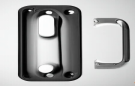
Aluminum Bard door catch |
These have easy grip, ease in installation, are lightweight, and protect children and elders from injury. |
|




Is Aluminum Foil a Conductor
Yes, aluminum foil is conductor. Aluminum is a metal and is a good conductor of electricity due to presence of free electrons. Aluminum foil is mostly used as conductor in electrical application. Foil is generally delicate and not suitable for heavy duty applications. Bu it has a great a use in conduction in electrical wiring.
Is Aluminum Foil Magnetic?
No, aluminum foil is not magnetic. Aluminum is a paramagnetic material. It is weakly attracted towards magnetic field when a magnet is nearby. The magnetic behavior of aluminum is prominent only in the presence of a very strong magnetic field. but it readily gets non magnetized as soon as the magnet is removed.
Conclusion
Aluminum metal is one of those materials, without them our lives would be difficult. It is one of the most abundant elements found in earth crust. It has many interesting features that make it useful for many applications in domestic and industries. It is a lightweight metal and is a good conductor of electricity. It has high ductility and malleability. It can be bent easily to any shape without applying heavy force and without being cracked or fractured. It is commonly used in food packaging, storage, for kitchen utensils and accessories. In industries, it is used in construction, architectural, civil and in oil and rigs mainly for supporting heavy structures.
It is nonmagnetic in nature. It has 1 unpaired electron which causes a slight attraction when a magnet brings nearby. This makes it paramagnetic material. Furthermore, it does not sustain this magnetism when the magnetic field is removed. When a magnet brings close to it aluminum, it slightly attracts the magnetic field but becomes non magnetized as soon as the magnetic field is removed. This phenomenon in aluminum is normally observed at low temperatures.
Tuofa Utilizes the nonmagnetic nature of Aluminum to Design Parts
Tuofa provides a guide for a variety of metals including aluminum. Furthermore, it provides testing, post treatment or surface finish and assembly of aluminum parts can be used for variety of applications. Tuofa offers anodizing of aluminum that can be used for protection and decoration purposes. It provides high speed laser cutting aluminum parts, precision custom aluminum machining parts, metal stamping 6061 aluminum alloy, anodized aluminum brackets aluminum heatsink for industrial aluminum, Aluminum Extrusion Heatsink for LED Light, Medical Devices and many more.
FAQs about Aluminum Magnetic
Is anodized aluminum magnetic?
Anodized aluminum is not magnetic. It has some interaction when placing near to magnets. In the presence of strong magnetic field, the anodized aluminum shows weak magnetism and slightly attracted towards magnets. This magnetism removes as soon as the magnet is removed. Therefore, it is nonmagnetic in normal conditions but can be magnetic in exceptional cases.
Is cast aluminum magnetic?
Cast aluminum is not magnetic. The casting process is carried out in the absence of magnetic field. as aluminum is also nonmagnetic. Therefore, in normal cases, cast aluminum is not magnetic.
Is galvanized aluminum magnetic?
The galvanized aluminum is not magnetic. Galvanization involves zinc coating over the aluminum. zinc is paramagnetic just like the aluminum. Therefore, they both do not contribute anything to magnetic properties of galvanized aluminum. It can be said that galvanized aluminum is paramagnetic.
 Is Magnesium Magnetic? Advantages & Applications of Magnesium in CNC Machining