Tel/WeChat:
  Email:


 Home
HomeSpiral Machining: The Ultimate Guide

 Published:Aug 06,2023
Spiral machining is a method employed in manufacturing to achieve continuous patterns on materials such, as metal or wood. This technique utilizes a cutting tool that rotates and gradually removes material along a path leading to the creation of visually pleasing designs suitable, for a wide range of industrial uses.
What is Spiral Machining
In this method a tool, with cutting edges shaped like spirals is employed to trim the materials. This technique is also referred to as Spiral milling or helical machining. Spiral machining is extensively used in CNC (Computer Numerical Control) machining to fabricate shapes, on surfaces and contouring workpieces.
Importance of Spiral Machining In Modern Manufacturing
The use of machining plays a role, in today's manufacturing industry. It offers advantages such as optimizing material removal improving tool lifespan and ensuring cutting forces. By following a spiraling tool path it effectively reduces vibrations. Enhances the surface finish of the products. This technique holds value in sectors like aerospace, automotive and medical industries where precision and efficiency are paramount. Spiral machining enables production, and minimizes tools. Allows for intricate designs. Consequently, it has become a method, for producing high-quality components that meet the demanding requirements of these industries.
Understanding Spiral Machining Process
Spiral machining is an excellent cutting method, in the manufacturing industry. It entails rotating a cutting tool along a path to gradually remove material from the workpiece. This technique is highly effective in creating shapes and achieving surfaces and it finds wide applications in industries such, as aerospace, automotive, and medical.
Explaining the Spiral Toolpath
The spiral toolpath is a technique used in computer numerical control (CNC) systems, for machining. It involves cutting a pattern that follows a trajectory, either inward or outward. This method aims to optimize efficiency and minimize tool wear by ensuring a tool engagement with the workpiece. As the tool moves in a motion along the Z axis it gradually covers the machining area. Spiral toolpaths find applications in contouring, pocketing, and roughing operations across industries, like aerospace, automotive, and manufacturing.
Key Components Involved In Spiral Machining
Cutting Tool Selection
The selection of cutting tools depends heavily on the type of material which is going to be machined. It impacts the performance of Spiral Machining. Usually, High-quality cutting tools are made from durable materials. These help to enhance productivity and reduce machining costs. Smooth and efficient machining can easily be achieved using High-performance cutting tools with excellent chip evacuation capabilities.
There are several tools available for spiral machining. Below are some of them:
End-milling
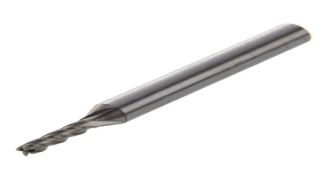
A milling cutter, an end mill, is used in industrial milling applications. These cutting tools are useful in profile milling, tracer milling, face milling, and plunging applications.
Spiral drill
Spiral drill bits vary in tip geometry and size. Diameter, core course, and taper are important factors to consider.
Spiral taps
Spiral fluted taps are designed with flutes that spiral the tap's axis. These taps are typically used for tapping threads in blind holes.
CNC Machines and Control Systems
CNC is the automated control of machine tools by a computer. It replaced manual operation and utilizes processes like milling to create finished products. The programming language that translates an NC program into precise machine tool movements is known as G-code.
CNC Programming
CNC machines execute precise and complex tasks on different materials given below:
- Milling: where the spindle rotates removing material.
- Turning: The cylindrical workpiece rotates while the spindle remains fixed, resulting in the removal of material.
- Drilling: A hole has been cut into the workpiece.
- Grinding: It involves the rotating wheel that grinds away small quantities of material through abrasion.
- Sawing: It involves cutting material into smaller parts using a blade.
- Surface finish:
This process involves removing small amounts of material through grinding, sawing, and combining. It also includes polishing and brushing to create a smooth /shiny surface using abrasive methods.
Workpiece Materials and Considerations
Understanding the workpiece material is fundamental as it gives picking the cutting tools and machining parameters. The workpiece is normally a piece of somewhat rigid material like wood, metal, plastic, or stone. After a processing step, the workpiece might be continued toward additional means of procedures. For instance, a section can be made from bar stock and later become a piece of a semi-completed item. It might likewise get different surface medicines and finishes. Other considerations contain cost, accessibility, and environmental effect.
Feeds, Speeds, and Cutting Parameters
In spiral machining, feed speed states the rate at which the cutting tool travels along the part being machined. A complex feed speed results in quicker machining times but it can lead to condensed accuracy while a lesser feed speed results in lengthier machining times and leads to better accuracy.
Cutting parameters states the type of tool being used, the depth of cut, and the spindle speed.
Both the feed speed and cutting parameters need to be wisely balanced for good results in terms of precision, excellence, and efficiency.
Pros and Cons of Spiral Machining
|
ADVANTAGES |
DISADVANTAGES |
|
Spiral machining enables an interaction, between the tool and the material leading to the removal of material |
Spiral machining might not be an option when dealing with shapes or sharp corners. |
|
Having a consistent engagement, with the tool helps in minimizing any marks left by it thus enhancing the quality of surface finishes. |
Employing spiral toolpaths necessitates the usage of specialized CAM software and may present more challenges compared to conventional methods |
|
The continuous path followed by the tool reduces wear and tear thereby increasing the lifespan of cutting tools. |
When performing cuts evacuating chips could become more problematic resulting in chip accumulation and damage, to the tool. |
|
By incorporating a motion vibrations are reduced, resulting in enhanced stability and accuracy during machining. |
Engaging in cutting can generate heat, which might have an impact, on the workpiece material and potentially cause thermal concerns. |
When Should You Use Spiral Machining for CNC Parts?
Spiral machining is most useful when a CNC part needs gradual tool entry, smoother cutter engagement, or controlled material removal around a curved feature. It is not necessary for every milled part, but it can reduce machining risk for pockets, cavities, circular profiles, thin walls, and surfaces where tool marks may affect fit or appearance.
Parts with Pockets, Cavities, and Circular Features
Use spiral machining for internal pockets, round cavities, counterbores, ring grooves, bosses, and circular profiles. For example, a 6061 aluminum housing with a 60 mm diameter, 18 mm deep circular pocket and a required bottom surface of Ra 1.6 may use spiral machining to remove material progressively instead of direct plunging. This helps control cutter load, side-wall marks, and chip evacuation.
Parts That Need Smoother Tool Engagement
Spiral machining is helpful when sudden cutter engagement may cause vibration, tool marks, or unstable cutting. This is common in aluminum, stainless steel, titanium, and engineering plastics. The final result still depends on tool selection, feed rate, spindle speed, coolant, and chip evacuation.
Thin and Vibration-Sensitive Features
Due to the continuous, smooth, and low-impact nature of its toolpaths, spiral machining is a viable option for parts featuring thin and vibration-sensitive geometries.
Thin-wall parts may benefit from a more gradual cutting strategy. Removing material too aggressively can cause vibration, deformation, or dimensional drift. Spiral machining can help reduce cutting shock, but fixture design, machining sequence, wall thickness, and tolerance requirements still need to be reviewed together.
When Spiral Machining May Not Be Necessary
Spiral machining may not be needed for simple flat surfaces, open slots, straight profiles, or rough non-critical areas. If the part does not require controlled tool marks, tight tolerance on curved features, or difficult pocket machining, conventional milling may be faster and more cost-effective.
Applications of Spiral Machining
- Spiral machining is widely used across industries because of its capabilities.
- It plays a role, in manufacturing by cutting complex shapes, which helps reduce production time and costs.
- The aerospace sector benefits, from its ability to produce strong parts.
- Medical device manufacturers rely on it for creating implants and prosthetics. In the woodworking industry, it ensures detailed designs.
- Even artists utilize this technique to craft sculptures and decorative pieces.
- Overall spiral machining has revolutionized fields by improving precision and fostering creativity.
How to Spiral Machining
Spiral machining is a technique where you use circular tool paths to make efficient cuts, in materials. To make it work you need to program your CNC machine with the parameters for the path. This will ensure transitions and proper removal of chips from the cutting area. It's important to maintain the tool speeds and feeds to achieve an accurate finish.
Design Details to Send for a Spiral Machining Quote
A spiral machining quote is more accurate when the supplier understands the geometry and function of the machined feature. Pocket depth, tool access, wall thickness, internal radius, material behavior, surface finish, tolerance, deburring, and cleaning requirements can all affect machining cost and risk. Here are some tips before sending a quote to Tuofa:
3D Model and 2D Drawing Requirements
Send a STEP file for geometry review and a PDF drawing for critical dimensions. The 3D model shows the pocket, cavity, hole, or curved feature, while the 2D drawing tells the supplier which tolerances, datums, surface finishes, threads, and inspection points are functionally important.
As a custom CNC machining company, we machine parts based on customers technical drawings or samples. So if you want to machine parts with spiral features, send us your drawings (2D & 3D in STEP/STL/IGS format) or samples will get our quick reply. info@tuofa-cncmachining.com is our formal email address for all kinds of quotes, and we will assign your projects to a professional salesperson from product department within 8 hours. (If you do not receive a timely response, it may be due to email filtering; please check your spam folder or resend your email to info@tuofa-cncmachining.com. We will follow up with you until the issue is resolved.)
Pocket, Hole, and Internal Feature Details
Mark pocket depth, opening size, bottom surface requirement, internal radius, wall thickness, and corner limitations. If the feature includes islands, ribs, bosses, steps, or narrow internal areas, show them clearly. These details affect tool diameter, tool reach, machining sequence, and chip evacuation.
Material, Tolerance, and Surface Finish Notes
Confirm the material grade before quotation. Aluminum, stainless steel, titanium, steel, brass, and plastics respond differently to spiral machining. Separate critical and non-critical tolerances, and specify measurable surface finish requirements such as Ra 1.6 or Ra 0.8 when the surface affects fit, sealing, or appearance.
What Should Be Checked After Spiral Machining?
Spiral machining quality is not only decided by the toolpath. After machining, burrs, trapped chips, coolant residue, tool marks, and edge conditions may still affect assembly, sealing, appearance, or later surface treatment. These details should be checked before parts are approved for shipment.
Burr, Chip, and Cleaning Risks
Spiral machining can reduce cutting shock, but it does not eliminate burrs, trapped chips, or coolant residue. For deep pockets, blind holes, grooves, or precision mating surfaces, confirm edge break requirements, deburring method, chip removal, cleaning process, and packaging protection before shipment.
How Tuofa Avoid These?
Tuofa CNC Machining has not served customers for only one or two years. Since 2006, we have built our machining experience through real projects, customer feedback, and continuous process improvement.
In earlier projects, customers sometimes gave us detailed feedback about visible appearance issues. For example, water marks were found on cosmetic surfaces after anodizing. Instead of treating this as only a surface complaint, we turned it into internal improvement actions:
- Strengthen the cleaning process after anodizing;
- Add air-blowing checks for blind threaded holes before shipment;
- Use a 10x magnifier to inspect whether stains remain inside blind threads.
These small actions can affect assembly, visual inspection, and buyer confidence after delivery. For Tuofa, quality improvement is not only about finishing one order. It is about learning from feedback and reducing the same risk in the next production run.
Inspection Points Before Delivery
Check pocket depth, circular profile accuracy, wall condition, bottom surface finish, burr control, and visible tool marks. If the feature affects assembly or sealing, request dimensional inspection or surface finish confirmation before delivery. This prevents small post-machining issues from becoming assembly problems later.
Spiral Machining Skills
Proficiency, in machining involves the mastery of cutting techniques specifically using helical tool paths for manufacturing purposes. This innovative method allows for the production of components with enhanced precision and productivity. Spiral machining expertise holds importance across industries, like aerospace, automotive, and medical technology. To excel in this field engineers must have an understanding of CAD/CAM software, machine tool operation, and tool selection. Acquiring these skills empowers engineers to explore horizons in machining practices.
Why Choose to Tuofa Custom Spiral Machining Service
Select Toufas Custom Spiral Machining Service, for efficient and dependable solutions. With machinery and experienced technicians, we provide notch custom spiral machining services that cater to your unique requirements. Our dedication to achieving tolerances guarantees consistent results in every project. Whether it large scale production you can rely on us to deliver outcomes within the designated timeframe and budget. Discover the quality of Toufas machining service, for all your manufacturing needs.
Conclusion
In conclusion, spiral machining is a manufacturing technique that offers benefits across various industries. Its ability to enhance productivity and reduce machining time. Improve surface quality makes it an appealing option, for intricate and complex components. By using tool engagement and maintaining a chip load spiral machining minimizes tool wear and extends its lifespan resulting in cost savings for businesses. Moreover, this technique enables the creation of geometries making it indispensable in sectors such as aerospace, and medical fields. Embracing machining technology has the potential to revolutionize manufacturing processes by unlocking possibilities and fostering innovation, in the Advantages in the field of engineering.
FAQ
What is the difference between spiral machining vs helical interpolation vs trochoidal milling?
The most obvious difference is what each one is mainly used for. Spiral machining is used to create a smooth spiral toolpath for pockets or curved surfaces. Helical interpolation is used to machine holes or round pockets by moving in a circle while feeding down. Trochoidal milling is used for roughing while keeping cutting load low.
Does spiral machining always improve the surface finish?
No. Spiral machining can make tool movement smoother, but surface finish still depends on the material, cutter condition, feed rate, step-over, coolant, and finishing pass. If the surface is functional or visible, mark the required Ra value on the drawing.
 Standard Machining Tolerances: Learn Ultimate Guide