Tel/WeChat:
  Email:


 Home
Home18/8 Stainless Steel: Properties, Uses & Comparisons

 Published:Sep 02,2024
18/8 is also known as 304 stainless steels. AISI standard has designated the steel as 304 grade, and 18-8 is its another name because of its chemical composition. It is one of the most common and versatile materials in stainless steel grades. It has high corrosion resistance, durability and aesthetically appealing due to chromium oxide layer and nickel content.
What Is 18/8 Stainless Steel?
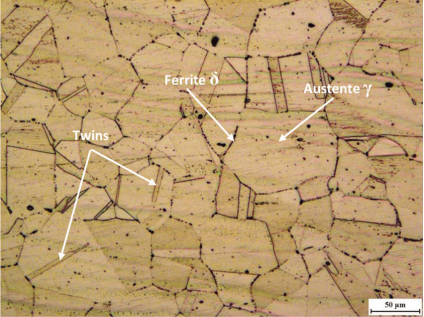
18/8 stainless steel has an austenitic structure. It is also famous as chromium steel 18/8. It is named as 18-8 because it has 18% chromium and 8% nickel content. Its high content of Cr allows it to form a chromium oxide layer over a surface, which creates a self-healing process for corrosion and rust. Nickle content increases the strength, formability and durability in 18/8 stainless steel.
It is non-magnetic in nature. It has good response to welding techniques and heat treatment particularly annealing. It also has a food safety feature and extremely hygiene for the use in food processing industries and for food packaging.
Is 18/8 Stainless Steel Good Quality?
18-8 stainless steel has great corrosion resistance, the chromium oxide layer makes it highly corrosion resistant. Nickle content makes it high quality material with incredible durability, formability and strength. However, it is not a marine grade material. It is prone to pitting corrosion failure under seawater.
Is it safe to drink from 18/8 stainless steel?
Yes, it is safe to drink from 18/8 steel. the austenitic structured 304 type steel is a food grade material because it provides food safety and high hygiene.
Is 18/8 steel food safe?
18/8 austenitic structure steel is a food-grade material. It is a hygiene and food safety material which can be used in utensils, cookware and for cooking worktops.
Common Designations and Standards
|
Country |
standard |
grade |
|
US |
ASTM |
A240, A240M |
|
EU |
EN-1008801 |
X5CrNi18-10 |
|
ISO |
ISO15510 |
X5CrNi-18-10, X2CrNi19-11 |
|
Japan |
JIS |
SUS304 |
|
China |
GB/T20878 |
0Cr18Ni9 |
Cost and Availability
Cost and Availability depends on factors like raw material cost, supply and demands, market conditions, logistics and shipping. 18/8 stainless steel is usually raged from $0.86-16.50/pc.
18 8 Stainless Steel Chemical Composition
18-8 ss (AISI 304) is widely used in various industries because of its superior corrosion resistance. Now learn what chemical composition it has. The following table has shown all chemical compositions of it.
|
Element |
Content |
Functions |
|---|---|---|
|
Chromium (Cr) |
18–20% |
Forms a protective chromium oxide layer to improve corrosion resistance |
|
Nickel (Ni) |
8–10.5% |
improves toughness and ductility |
|
Carbon (C) |
≤0.08% |
Increases strength and hardness |
|
Manganese (Mn) |
≤2% |
Improves strength |
|
Silicon (Si) |
≤1% |
Enhances oxidation resistance |
|
Phosphorus (P) |
≤0.045% |
Related to corrosion resistance and strength |
|
Sulfur (S) |
≤0.03% |
Related to machinability and corrosion resistance |
From the table, you can know exactly the concrete content of each chemical composition. Meanwhile, each chemical composition can affect the properties and performance of 18-8 stainless steel. Also, various grades of stainless steels can be the alternatives of 18-8 ss with similar chemical compositions. You can read the detailed comparison between 18-8 ss and 316 ss, or other stainless steel for deeper understanding.
Advantages and Disadvantages of 18/8 Stainless Steel
The chromium steel 18/8 has some benefits and drawbacks. These are as:
Advantages of 18/8 Stainless Steel
The advantages of 18/8 stainless steel and benefits are as:
- The chromium oxide layer provides high corrosion resistance for harsh environments, moisture, chemicals, acids and other common corrosive substances.
- High nickel content provides high tensile strength and can withstand heavy loads and impacts
- The surface finishes of chromium steel 18/8 has resistance to bacterial growth. Therefore, it is easy to clean and has strong hygiene properties.
- It has food safety features and is non-risky to use in kitchen accessories, food packaging and food processing industries.
- It gives good response to heat treatment and annealing conditions. It improves strength and durability.
- It is non-magnetic in nature, and easily formable, machined and welded from conventional welding techniques.
Disadvantages of 18/8 Stainless Steel
The limitations of chromium steel 18/8 are as:
- The austenitic structured chromium steel 18/8 can be expensive choice due to high nickel content.
- The chromium steel 18/8 is non-magnetic in annealing conditions. It can become magnetic by cold working but not desirable in many applications.
- The chromium steel 18/8 performs well at normal temperatures. But it is not suitable for elevated temperatures.
- In some harsh environment, it may require additional surface finishes treatment to preserve surface properties and chromium oxide layer over the surface. It normally occurred in chloride environments.
How 18/8 Stainless Steel is Made
The 18/8 stainless steel manufacturing occurs through smelting in an electric arc furnace (EAF). The process is same as for conventional steelmaking process. The raw material are chromium, nickel and manganese and molybdenum. The scrap is melted by electric arc. Alloying agents are added while smelting to balance the properties. Then the molten metal goes to refining process. Once the required chemical composition is achieved, the molten metal is casted and ready for hot rolling or cold rolling processes.
Properties of 18/8 Stainless Steel
The properties of chromium steel 18/8 are as:
Corrosion Resistance
Chromium steel 18/8 has high corrosion resistance. It offers good pitting corrosion and stress corrosion cracking resistance due to chromium oxide layer. the presence of Mo in small amount improves its marine environment resistance. however, in chlorinated environments, it may show some signs of corrosion.
Physical Propertie of 18-8 SS
The physical properties of chromium steel 18/8 are as:
|
Physical properties |
Values |
|
Density |
7.93 kg/cm3 |
|
Melting point |
1400-1450℃ |
|
Electrical resistivity |
0.72μΩ.m |
|
Conductivity |
2.5 %IACS |
|
Thermal conductivity |
16.92 W/m.K |
|
Specific heat |
500J/Kg.K |
|
CTE |
17.8 x10⁻⁶/K |
|
Magnetic permeability |
1.02 |
Mechanical Properties of 18-8 Stainless Steel
|
Mechanical properties |
Values |
|
tensile strength |
515Mpa |
|
yield strength |
205Mpa |
|
shear strength |
High |
|
Elongation |
70% |
|
Hardness |
262Hb, 85HRB |
|
Fatigue Strength |
31.2ksi |
|
Impact Strength |
High |
Other Properties
Chromium steel 18/8 has austenitic structure. It is non-magnetic. It has good surface finishes but cannot be hardened by heat treatment. But it has high machinability and weldability. It can be welded by conventional welding techniques like TIG and MIG.
It has high formability and machinability rating up to 48%.
However, the heat resistance is moderate. It cannot work at temperatures higher than 1697°F for longer time.
Applications of 18/8 Stainless Steel
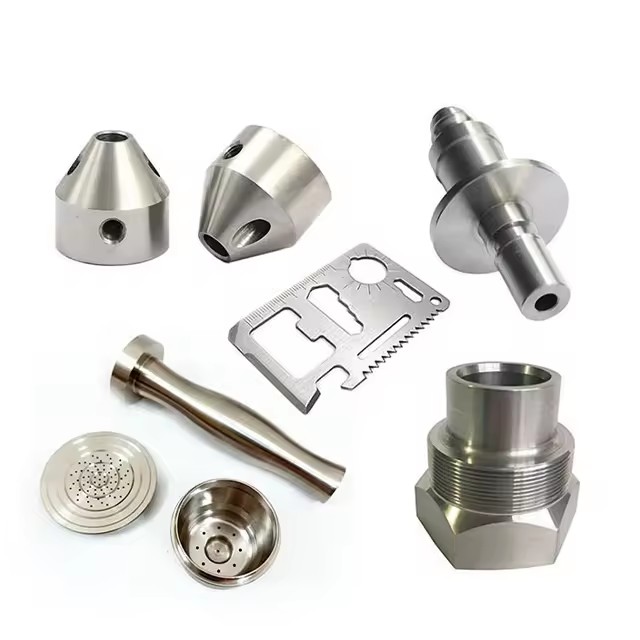
The 18/8 stainless steel applications and uses are as:
- It has high corrosion resistance due to chromium oxide layer. This corrosion resistance feature makes it not easy rust in general environment, the lifespan of stainless steel components can be prolonged and the maintenance cost can be reduced
- Chromium steel 18/8 has high hygiene nature and food safety features. The nickel content can affect the surface brightness of stainless steel parts. 18-8 ss and 18-10 ss is usually used to make a comparison for their different content of nickel. 18-8 ss is also food grade material that can be used in utensils, cookware and other kitchen accessories. Here is the simple listing of food-grade 18-8 stainless steel parts:
- 18 8 stainless steel pan
- 18 8 stainless steel bolts
- It is used making equipment in food processing industries like tanks, pipes, and convers belts
- It is used in architectural elements like doors, window frames and for decorative features.
- It is used in automotive industries in making exhaust systems, trim, grills and body panels.
- It is used in making medical and surgical tools due to biocompatibility and strong hygiene.
18/8 Stainless Steel vs. Other Ferritic or Martensitic Grades
Chromium steel 18/8 has an austenitic structure. It is non-magnetic. It gives good response to all the welding techniques, heat treatment and specially annealing. Whie ferritic grades are magnetic and non-hardenable. They have lesser corrosion resistance than 18/8 stainless steel. the chromium steel 18/8 is more versatile than ferritic grades.
Martensitic grades have high carbon and hardness and strength. but has poor corrosion resistance than chromium steel 18/8. The chromium steel 18/8 has better surface finishes properties.
18/8 Stainless Steel and CNC Machining
Chromium steel 18/8 is commonly used for CNC machining part. It has high machinability up to 48% and can be precisely machined to create interictal parts. It shows high tolerance and good chip formation. It has less risk of tool wear and has overall smooth machining operation. It is important to select appropriate machining parameters to achieve good results.
CNC Machining Tips for 18-8 Stainless Steel
Select Suitable Tools
It is better to choose high-speed steel (HSS) or carbide end mills with polished surface, in this way, the built-up edge (BUE) can be reduced. Selecting suitable tool coatings such as TIN, TIAIN can prolong the lifespan of tools.
Adjust Cutting Speed
Choose moderate cutting speed to avoid work hardening which can easily happen because of too high speed.
Chip Evacuation
Remember to remove proper chip because 18-8 ss produces long and stringy chips which can scratch the workpiece.
Conclusion
18-8 stainless steel, also called AISI 304, is a common and widely-used metal, named from its 18% Cr and 8% Ni. As food-grade stainless steel, 18-8 ss is usually used for manufacturing fasteners such as bolts, nuts, screws, cookware, and tableware. It also has good machinability in CNC machining. If your project needs to customized stainless steel precision parts, don’t hesitate to contact Tuofa.
 Damascus Steel vs. Carbon Steel Knives: Which is the Better?