Tel/WeChat:
  Email:


 Home
Home18/10 vs 304 Stainless Steel: Which Triumphs?

 Published:Jun 11,2024
Stainless steel is well known for its outstanding properties and numerous applications, especially in the realm of materials science. It comprises of various grades which are categorized based on their distinct properties and usage. In this article, a comprehensive comparison between 18/10 and 304 stainless steel that are famous for properties like corrosion and heat resistant along with other characteristics. So, regardless of your educational background, this article will provide you with a base to select the respective material for your application
What Does 18/10 Stainless Steel Mean
18/10 SS is considered as one of the high-quality steels with chromium and nickel as its major alloying elements. It comprises of properties like good heat resistance, corrosion resistance with ease of fabrication. Moreover, it is nontoxic in nature and does not trickle into food. Major applications include cookware, cutlery etc.
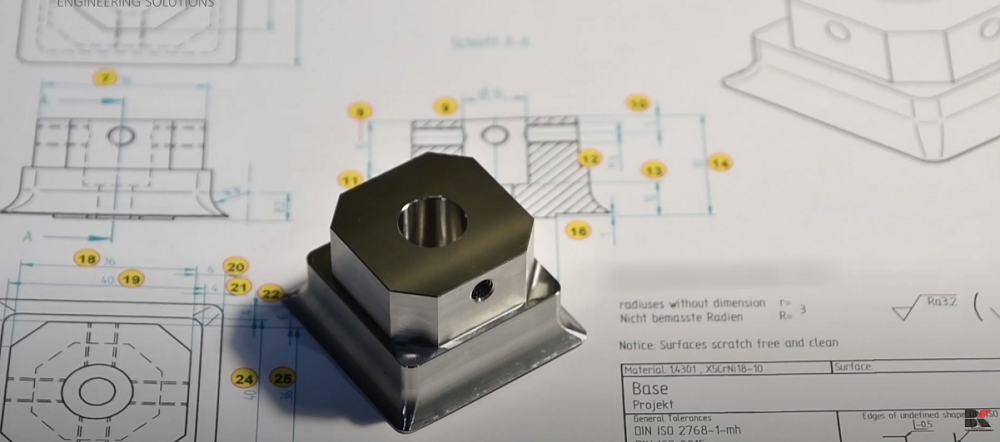
Figure 1: 18/10 SS grade
Is 18/10 Stainless Steel Rust Proof?
The presence of chromium and nickel in its composition makes it resistant to rust as well as corrosion. A passive layer is formed on the surface of 18/10 SS due to chromium which helps it against rusting. In addition, nickel contributes to adding lustrous finish and provide resistance against corrosion. However, it may alter its behavior in aggressive conditions.
SS 304 Stainless Steel
SS 304 constitutes of chromium, nickel, and iron along with other alloying elements. This austenitic SS is usually non-magnetic in nature along with high corrosion resistance. Furthermore, it can withstand elevated temperatures without altering its properties. Additionally, it offers ease of fabrication and hygienic properties which allows it to be utilized in commercial as well as industrial sectors. Major applications include kitchen appliances, automotive etc.
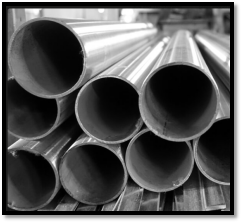
Figure 2, 304 grade stainless steel.
Are 304 and 18/8 the Same?
As far as chemical composition is concerned, both grades comprise of somehow similar composition but there are other factors in terms of properties and cost which makes a little difference. 18/8 is best for mildly corrosive environment while 304 SS is exceptional when aggressive conditions must be tailored. Moreover, 18/4 is less expensive than 304. Apart from this, 18/8 is mostly suitable for general applications i.e., cookware, flatware etc. while 304 grade is ideal for highly corrosive environments.
Advantages and Disadvantages 18-10 and 304
Choosing which one is good for you? Learning their pros and cons respectively from the following tables.Let us explore their key differences in the following content.Below are some of the pros and cons of both grades:
18/10 Stainless Steel
| Advantages |
Disadvantages |
| High corrosion resistant | Non magnetic |
| Aesthetic appeal | Susceptible to chlorides |
| Durability | Higher costs |
| High heat resistant | |
| Non reactive surface |
304 Stainless Steel
|
Advantages |
Disadvantages |
|---|---|
|
Versatility |
Easy to scratch |
|
Good corrosion resistant |
/ |
|
Fabrication ease |
/ |
|
Non magnetic |
/ |
|
Recyclable More cost-effective |
Stainless Steel Selection:304 vs 18/10
From the above table, you can identify your specific requirements and compare their features. 18/10 is more expensive than 304 because it has higher Ni content, which can make it more ductile. Also, in CNC machining, there are other key differences especially their properties you need to consider. We will discuss that in the next part.
18/10 vs 304 Stainless Steel: Mechanical Properties
Corrosion resistance has great impact on functions of CNC machined metal parts. However, CNC machining have little influence on the chemical properties of materials. What can be affected is the mechanical properties of materials. Meanwhile, mechanical properties comprise of a great importance in material structural integrity. Below is the description of major mechanical properties of both 18/10 and 304 SS:
Tensile Strength
18/10 SS demonstrates a tensile strength between 500 to 700 megapascals (MPa), which is like 304 SS which indicates their capability to withstand pulling forces.
Yield Strength
Both steel grades show similar yield strength of 200 to 350 MPa showing their ability to bear mechanical stresses without deforming permanently.
Compressive Strength
Both steel grades show similar compressive strength of 1000 to 1500 MPa showing their ability to bear compressive stresses without buckling occurs.
Shear Strength
18/10 SS demonstrates a shear strength between 300-500 MPa, which is like 304 SS which indicates their capability to resist shear forces that leads to material failure.
Young's Modulus
Both steel grades show similar young’s modulus of 190 to 210 GPa.
Shear Modulus
The shear modulus value for both 18/10 and 304 SS is 70-80 GPa indicating their resistance against shear deformation.
Fracture Toughness
18/10 SS grade comprises of higher fracture toughness as compared to 304 SS grade and is more resistant to cracking.
Elongation
Both steel grades have adequate amount of elongation i.e., 40-60% demonstrating their capability to stretch without failure.
Impact Strength
18/10 SS grade comprises of higher impact strength as compared to 304 SS grade showing their capability to absorb energy during sudden impact.
Resilience Modulus
The modulus of resilience of both these SS grades is comparable showing their capability to absorb energy as well as resistance against fatigue.
Machinability of 18/10 vs. 304 Stainless Steel
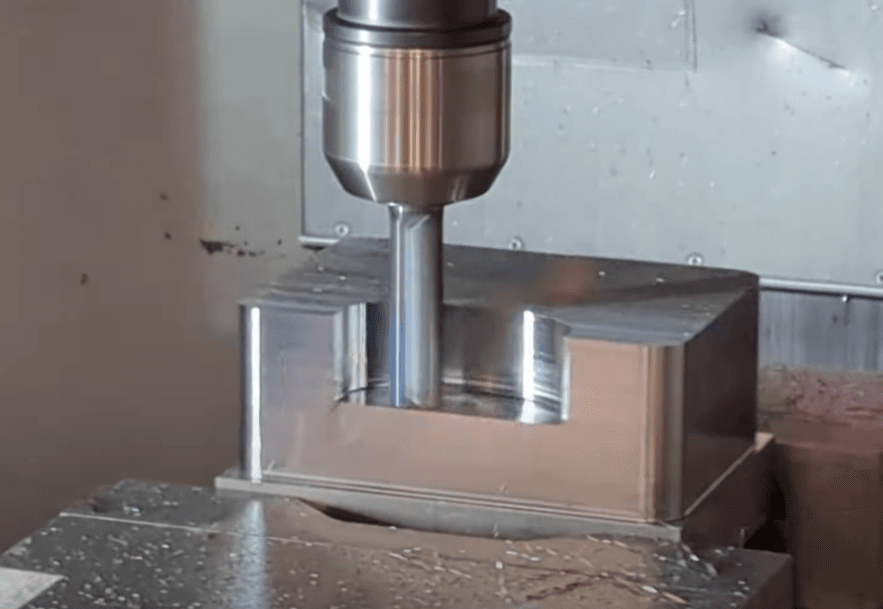
18/10 grade SS is difficult to machine as it constitutes of high Ni content while 304 SS has remarkable machinability especially in annealed conditions.
|
CNC Machining |
304 Stainless Steel |
18/10 Stainless Steel |
|---|---|---|
|
Machinability |
excellent |
poor than 304 |
|
Cutting Resistance |
Lower |
Slightly higher |
|
Work Hardening |
Moderate |
Slightly stronger |
|
Surface Finish |
Good |
Better |
|
Tool Wear |
Lower |
Slightly higher |
|
Common Applications |
Structural parts, enclosures, brackets |
Aesthetic parts, food-grade housings, mirror-finish components |
Applications and Parts
Both grades have numerous applications. Some of them are mentioned below:
18/10 SS:
- Jewelry
- Pharmaceutical
- Decorative Elements
- High-End Appliances
- Kitchenware
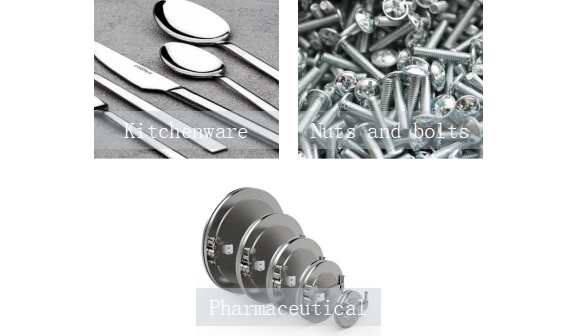
Figure 3: 18/10 SS Applications
304 SS:
- Marine
- Architectural
- Healthcare and Laboratory
- Automotive
- Food and Beverage
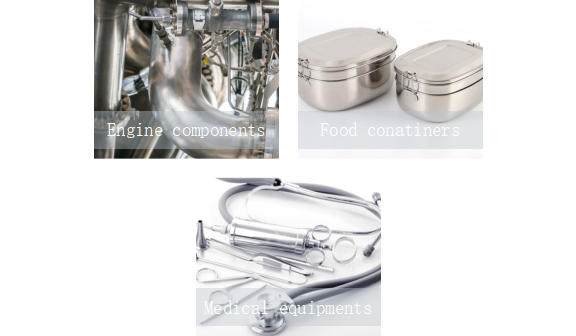
Figure 4: 304 SS Applications
Food grade stainless steel
This grade of stainless steel is designed to meet the performance criteria particularly for food related applications. It can maintain necessary food safety standards such as hygiene and resistance to corrosion to avoid contaminants and other harmful chemicals to mix up with food. Common grades include 304, 316, 18/10 etc.
18-10 and 304 Stainless Steel: Chemical Composition
Many people may be confused about 18/10 and 304. It is also frequently ask in custom part manufacturing. In fact, they are very similar with a little difference on chemical compositions. All 18/10 stainless steel are 304 SS, but not all 304 stainless steels are 18/10. You can understand easily from the chemical composition of both grades of stainless steel:
Table 1: Chemical composition
|
Elements |
18/10 SS |
304 SS |
|---|---|---|
|
Cr |
18% |
18-20% |
|
Ni |
10% |
8-10.5% |
|
Fe |
Balanced |
Balanced |
|
C |
≤0.08% |
≤0.08% |
|
Mn |
≤2% |
≤2% |
|
Si |
≤1% |
≤1% |
|
P |
≤ 0.045% |
≤0.045% |
|
S |
≤0.030% |
≤0.030% |
The chemical composition differences between 304 and 18/10 make them have a little different performance of properties.
AISI 304 stainless steel vs 18/10: Corrosion Resistance
304 SS grade offer exceptional corrosion resistance due to high content of Cr (about 18-20%). When chromium is exposed to oxygen in the air, a very thin (2-5 nm) transparent passive layer, which can prevent 304 stainless steel rust. It is the core reason why 304 ss grade has great corrosion resistance.
Compared with 304, 18/10 high-nickel stainless steel has little superior corrosion resistance than 304 due to 10% Ni.
18/8 Stainless Steel vs. 304 Stainless Steel: Physical Properties
As we have explained before, 18/8 is almost the same as 304, so their physical properties are the same. Below are some of the physical properties of 18/8 and 304 SS grade:
Density
18/8 SS and 304 SS grade has a density of around 7.9 g/cm³.
Melting Point
Both 18/8 SS and 304 SS grade has melting point ranges from 1,400 to 1,450°C.
Magnetism
Both grades are nonmagnetic in annealed condition therefore suitable for applications like food processing.
Thermal Conductivity
Both 18/8 and 304 SS grade has a low thermal conductivity of about 16 W/m·K making them suitable for heat resistant applications.
Coefficient of Thermal Expansion
18/8 SS as well as 304 SS grade constitute of a similar coefficient of thermal expansion which is 17.2 µm/m°C.
Electrical Resistivity
Likewise, both grades have almost same electrical resistivity of around 0.72 µΩ·m. Hence, suitable for non-conductive applications.
Differences Between 304 and 18 10 Stainless Steel
Table 2: Comparative analysis
|
Major Properties |
304 Grade SS |
18/10 Grade SS |
|---|---|---|
|
Chemical Composition |
18% Cr, 8% Ni |
18% Cr, 10% Ni |
|
Corrosion Resistance |
Excellent |
Better |
|
Strength |
can resist deformation, yield strength~205 Mpa, tensile strength~515 Mpa, elongation 40-60% |
can resist deformation, yield strength~205 Mpa, tensile strength~515 Mpa, elongation 40-60% |
|
non-magnetism |
non-magnetic |
non-magnetic |
|
Applications |
Food processing
|
Kitchen ware |
|
Cost |
Less expensive |
More expensive |
Is 304 or 18 10 Stainless Steel Better
It totally depends on your application requirements which grade is more convenient and sustainable. Both grades are exceptional in their own aspects yet there are some factors based on which both can be differentiated effectively. If your major requirement is good corrosion resistant along with high strength and good budget, then 304 SS is better. In contrast, if you want cost effective material along with durability for mildly corrosive environment then 18/10 SS is better choice.
Conclusion
Although many people make a comparison between 18/10 and 304, actually they have very little differences. In many applications, 304 and 18/10 stainless steel can be used interchangeably. Only when you require ultimate bright appearance, 18/10 is the your first choice. However, if your budget is limited or if you require a large volume, 304 is better due to its lower costs. Tuofa can machine stainless steel precision parts with high quality, we will continue to share important knowledge of engineering materials and their machinability.
FAQ
Which is better 18/8 or 18/10 stainless steel?
They have very few differences. But in some applications involving contact with food like cookware, 18/10 is considered the better stainless steel.
Is 18/10 stainless steel safe for cooking?
Yes, certainly. 18/10 stainless steel is very safe for cooking because it has 10% Cr and 10% Ni, which can form an oxide layer to prevent from rust. That is why it is widely used for cookware, pots, pans, etc.
Is 18/10 stainless steel toxic?
No, 18/10 is usually used in daily life. It is food-grade approved.
Can 18/10 be machined by CNC machining?
Yes. 18/10 is a grade of stainless steel with good machinability. However, its Ni content may cause work hardening. It is more suitable for manufacturing decorative parts.
 Mild Steel vs Stainless Steel: Which is Better